
The History of Sierra Entertainment, Part 3

Title: | The History of Sierra Entertainment |
Developer: | Sierra Entertainment |
Publisher: | Sierra Entertainment |
Release: | 20.10.2025 |
The sale of Sierra On-Line cost the company its independence and was one of the first steps toward its collapse. It wasn't the only company affected by CUC's actions, either. Alongside Sierra On-Line, CUC bought Davidson & Associates, Inc, which already included Blizzard Entertainment. CUC also had plans to acquire LucasArts and Brøderbund, but those didn't pan out. After the merger of Sierra, Davidson & Associates, and CUC, their game divisions were to come together as CUC Software. Its board would include Ken Williams and Michael Brochu from Sierra, Walter Forbes and Kirk Shelton from CUC, and Bob Davidson from D&A. Davidson was put forward as CEO. But something else happened that the Williamses hadn't seen coming.
The part of the new company that used to be Davidson & Associates took on most of the marketing and distribution, including for Sierra On-Line's games. Williams and his team were pushed aside, and some of his people were even fired. It didn't help Williams that in all of 1996, Sierra couldn't release anything that came close to Phantasmagoria's sales, while Blizzard was putting out one masterpiece after another. Funny enough, the Sierra label still went on all sorts of games, since it was the new company's most recognizable brand.

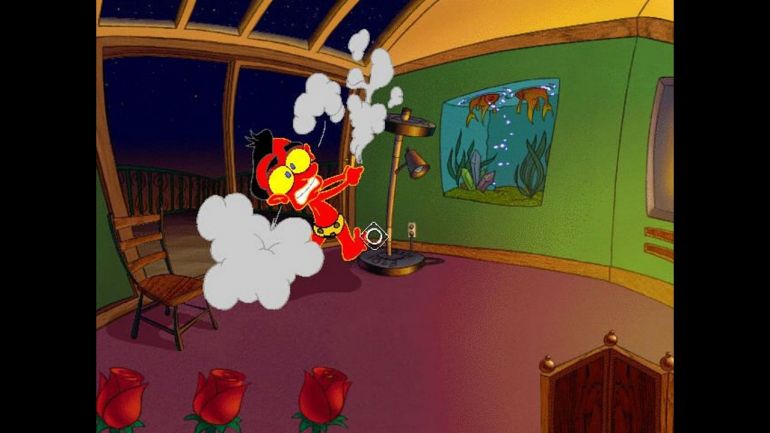
For now, let's get back to the games Sierra On-Line released in 1996. For starters, Sierra itself kept putting out sports sims and the card, gambling, and board games in its Hoyle series. Despite the new trends at the studio and its new facility for shooting FMV, the next entry in the adult comedy series Leisure Suit Larry, subtitled Love for Sail!, stuck with the classic hand-drawn style. Any other approach would have stripped away its comic charm and turned it into something excessively vulgar. Ironically, a different game was aiming squarely for that territory.
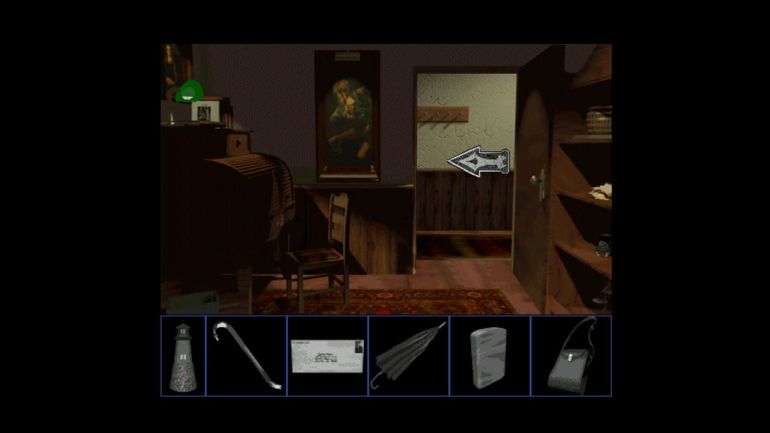
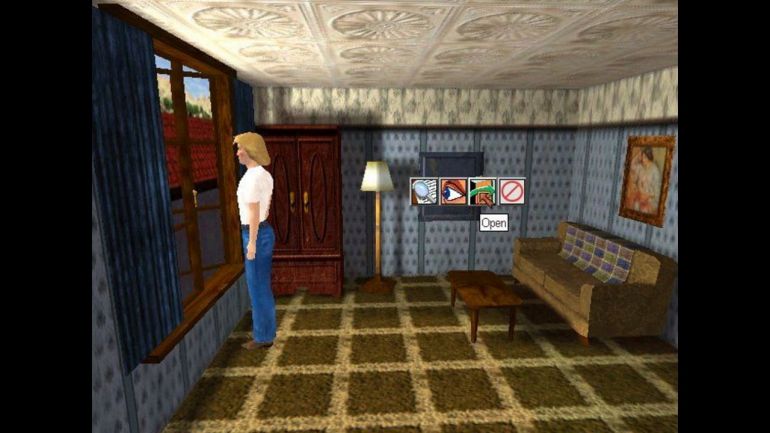
Another adventure that year, Lighthouse: The Dark Being, also went without FMV. That was a stylistic choice too, as the game looked a lot like Myst. In fact, Sierra made no secret that it was taking cues from Cyan's adventure. Lighthouse presented its locations as static rendered images and used a point-and-click interface to interact with the environment. Of course, it all revolved around puzzles, which drew criticism for being illogical and obscure. Business as usual for Sierra, really.
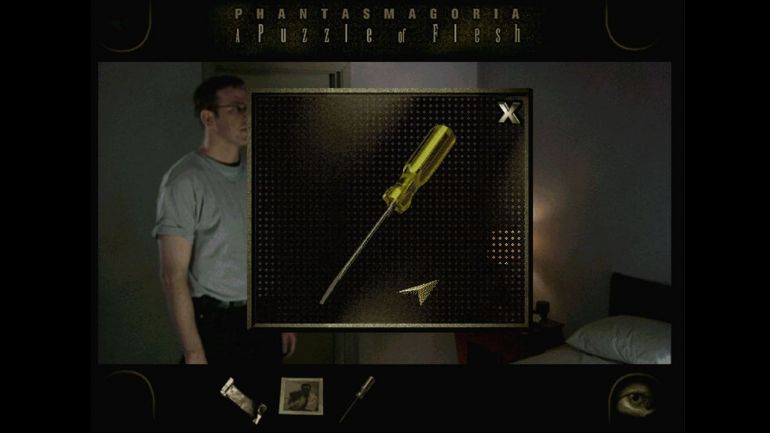
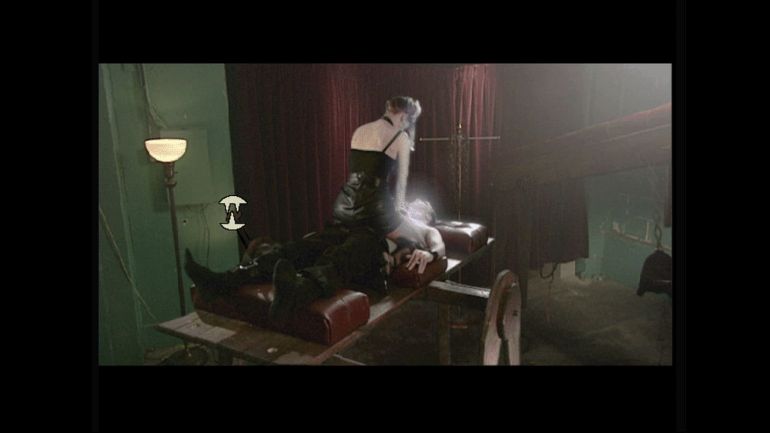
Phantasmagoria got a sequel in 1996, too. The new game, Phantasmagoria: A Puzzle of Flesh, had nothing to do with the first one, and Roberta Williams wasn't involved in its development. The mantle of “Sierra's chief adventure scribe” passed to Lorelei Shannon, who had written for King’s Quest VII and The Dagger of Amon Ra. Under her direction, the game turned out about as provocative as it could possibly be. The genre shifted from supernatural to psychological horror. Shannon herself spoke fondly of “Jacob's Ladder ” and the work of Clive Barker.
which inspired Team Silent to create the Silent Hill series
Like its predecessor, it has a simple point-and-click interface and uses live-action footage for its cutscenes. Most of the protagonist's actions are followed by short video clips. With those influences informing the story, Puzzle of Flesh became a genuine interactive movie steeped in paranoia, sadomasochism, bondage, and nudity.
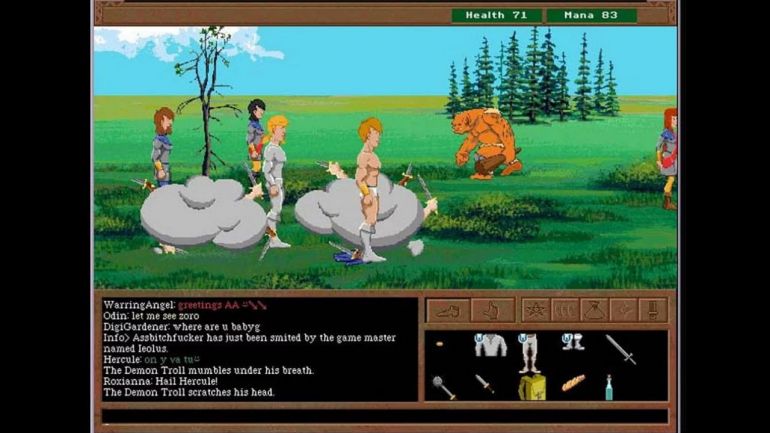
One of the most unusual games Sierra released in 1996 was the MMORPG The Realm Online, the studio's answer to what a multiplayer King’s Quest might look like. Unlike other popular multiplayer games such as Meridian 59 or Ultima Online, The Realm put the emphasis on chatting and socializing with other players. It drew on ideas from the studio's earlier project, The Sierra Network. It was made byDavid Slayback and Stephen Nichols, who had worked on TSN itself.
Players started out in a home of their own, with no need to claim or buy one first. The interface was reminiscent of the studio's later point-and-click adventures. Despite the focus on socializing, there were monsters to fight in turn-based battles. Player-versus-player combat was out altogether. Exploring the world, decorating your home, and dressing up your character took precedence over killing and stealing. As a result, the overwhelming majority of players were women. There were 25,000 players in all, about a third of the entire MMO market.
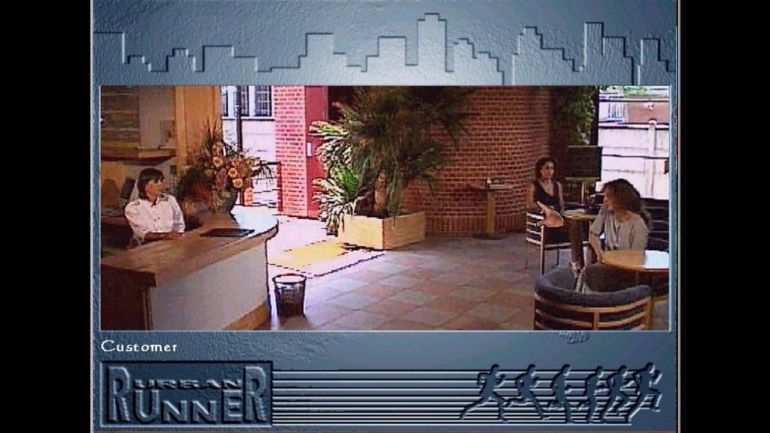
The other studios under Sierra On-Line were keeping up too . Coktel, for example, put out just one game, the FMV adventure Urban Runner. The recently acquired Papyrus Design Group, Inc. produced a pair of racing sims, IndyCar Racing II and NASCAR Racing 2. And Impressions Games put out several strategy games: the business sim Space Bucks, the turn-based wargame Robert E. Lee: Civil War General, its own take on “Civilization” in The Rise & Rule of Ancient Empires, and Lords of the Realm II, a blend of turn-based economic strategy and real-time battles.
though some were busier than others
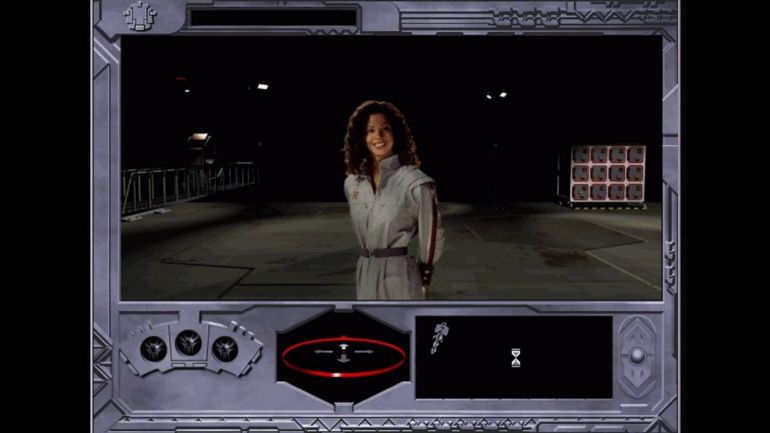
Dynamix remained the most productive studio and kept branching out into new genres, as it had in previous years. Its 1996 releases included the fighting game Cyber Gladiators, turn-based tactics game MissionForce: CyberStorm, FMV sci-fi adventure Rama, combat flight sim Silent Thunder: A-10 Tank Killer II, side-scroller Hunter Hunted, and EarthSiege 2, a mech sim that continued the Metaltech series.
Late in 1996, something else happened at Sierra On-Line that arguably changed the whole game industry. Williams met with the people at a very young company called Valve Software, founded by two former Microsoft employees, Gabe Newell and Mike Harrington. The meeting was a turning point for them. Sierra On-Line and Valve signed a contract to develop one first-person shooter using the licensed Quake engine from id Software. Sierra put up a $1 million advance in exchange for 100% of the game's intellectual property and 30% of its sales revenue. You already know what happened to Valve after that.
In January 1997, Bob Davidson caught everyone off guard by announcing his departure. Rumor had it that Davidson demanded Forbes spin off all the software divisions into a separate company, but his ultimatum didn't work. Things stayed as they were. This could have been a good opportunity for Ken Williams, but once again he was passed over. One of the old CUC employees, Chris McLeod, took over instead. In August that year, after yet another board meeting at which his ideas were ignored, Williams resigned. Management took the news calmly and gave him what he wanted . He did still have to stay on until November.
probably for the first time since Sierra was sold

While things were getting heated behind the scenes at the top of CUC, Sierra kept quietly expanding. In spring 1997 it acquired Books That Work to broaden its already considerable presence in educational entertainment. CUC bought Berkeley Systems and put it under Sierra as an in-house developer. Then, in December 1997, it also bought Pyro Technix.
Late in 1997, CUC and all its acquisitions merged with another large company, HFS Incorporated. The two were then reorganized as Cendant Software. A couple of months after the merger, a major scandal broke inside the new company over CUC's activities. More on that shortly. By then, Ken Williams had already left the company. Michael Brochu and Jerry Bowerman handed in their resignations a little later.

Sierra On-Line was going through some rough waters, but the games kept coming. There were no big hits in 1997, either. Impressions Games put out another pair of strategy games: the wargame Grant, Lee, Sherman: Civil War Generals 2 and the hybrid Lords of Magic, which combined turn-based play reminiscent of Heroes of Might and Magic with Lords of the Realm-style battles. Sierra itself produced the horror adventure Shivers II: Harvest of Souls and the Eye of the Beholder-style RPG Betrayal in Antara.
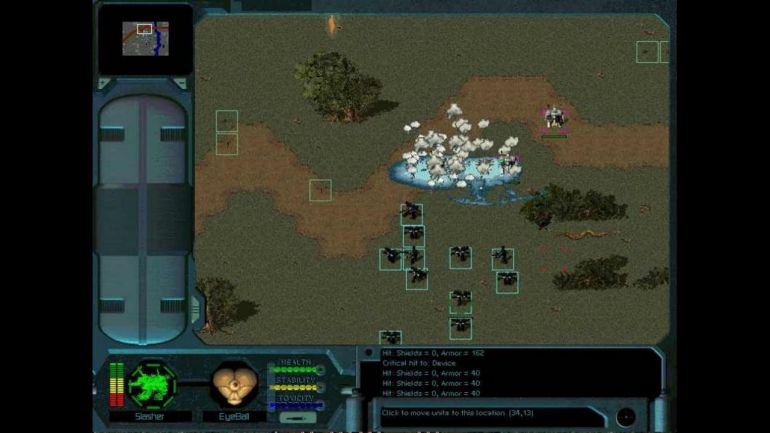
Dynamix was still putting out a hefty number of games in all sorts of genres. The military flight sim Red Baron got a sequel. Another flight sim, Sierra Pro Pilot, also came out, along with the space colony strategy sim Outpost 2: Divided Destiny and the tactical strategy game Cyberstorm 2: Corporate Wars. And that was far from the full list.

Naturally, the Sierra name was something the other companies owned by CUC were happy to use too. The Williamses' publishing label put out the comedy racing game Davidson & Associates made, Eat My Dust. Sierra On-Line also published the expansion for the first Diablo, Hellfire, developed by its in-house studio Synergistic Software, which it had acquired in 1996. Blizzard kept a tight grip on the expansion's development and vetoed a ton of content, saving it forDiablo II.
Ken Williams left the company in November 1997, but Roberta stayed. She was working on the next King’s Quest. Point-and-click adventures no longer looked like a promising genre, so Roberta decided to do something completely different with the series. Naturally, the SCI engine most Sierra games were built on was completely unsuited to the new project. Instead, the team borrowed an engine developed by Dynamix. There was also pressure from the bosses at CUC, who wanted Sierra to make something like Diablo .
and just as profitable
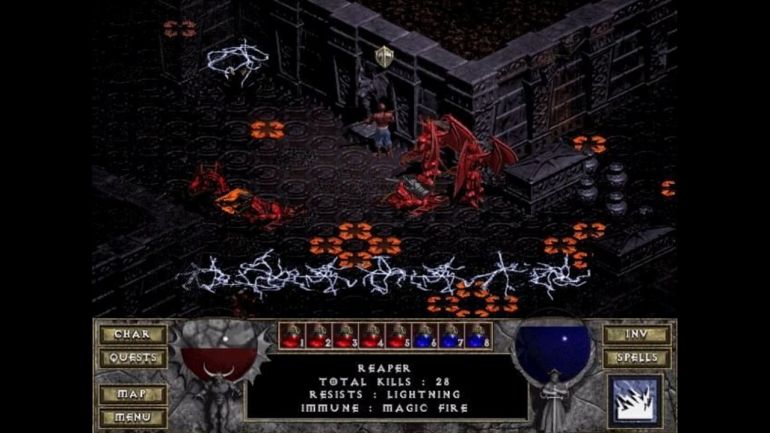
The studio's major releases all arrived toward the end of 1998. November brought King's Quest: Mask of Eternity. The lack of a number in the title was deliberate: this was now an action RPG set in the same world. It went fully 3D and combined point-and-click controls, puzzle solving, and combat, which also relied on mouse clicks. Critics received it warmly, but it was a commercial failure and the last game in the King’s Quest series. Roberta Williams followed her husband out of the company they'd once owned.
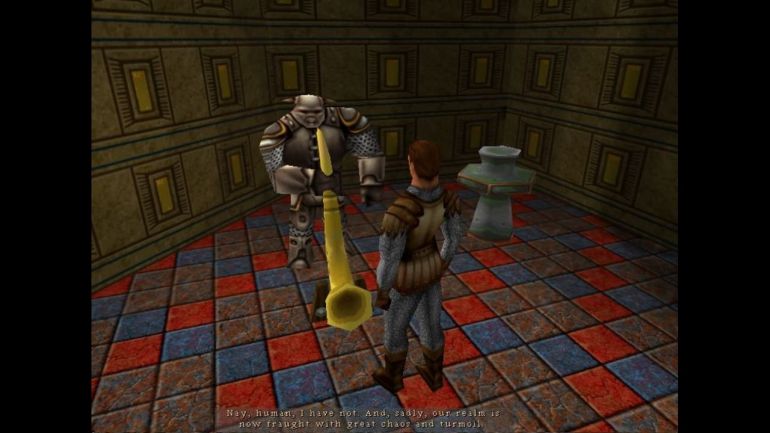
1998 also marked the end of Quest for Glory. The fifth game was subtitled Dragon Fire . Following the trends of the day, it went partly 3D and changed how combat worked. The earlier games had used separate screens for tactical battles. In Quest for Glory V, combat used the same point-and-click interface as exploration. It leaned more heavily into its RPG side than before. As with Mask of Eternity, critics received it warmly and it flopped commercially. Quest for Glory V: Dragon Fire was also Sierra On-Line's last adventure game.
Quest for Glory V: Dragon Fire
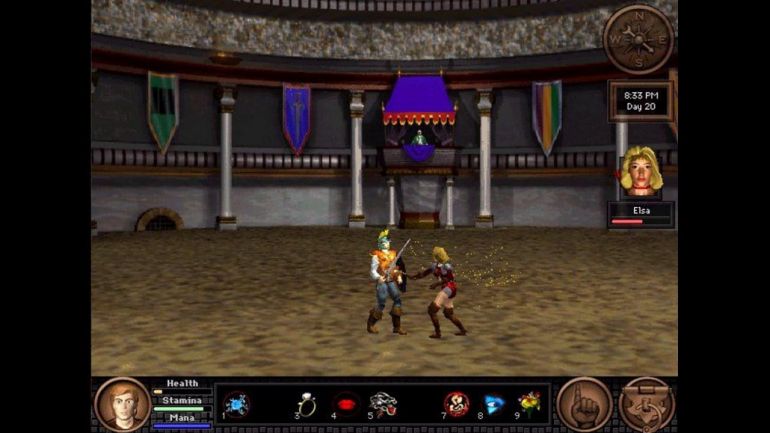
The Police Quest series also got a new game in 1998. It had started experimenting after the fourth game, shifting its focus from regular police work to SWAT operations. The first game with that subtitle, released in 1995, merely broke up the usual adventure mechanics with point-and-click first-person shooting. Police Quest: SWAT 2 went much further. It was now a full-fledged top-down tactical shooter.
Pyro Technix, Inc released exactly one game under Sierra, the RPG Return to Krondor, a sequel to Betrayal at Krondor from Dynamix in 1993. The game took a pretty interesting route to release. After Betrayal at Krondor, Dynamix started work on a sequel, but the project was canceled shortly afterward and development lead John Cutter was let go along with some of the staff. In 1995, 7th Level picked up the license. Then Sierra had a change of heart and started work on an unofficial sequel to what was effectively its own game. The result was Betrayal in Antara, which became a direct competitor to Betrayal at Krondor. 7th Level laid the groundwork for the new game and then approached Pyro Technix, which Sierra bought in 1997. And so the sequel came full circle.

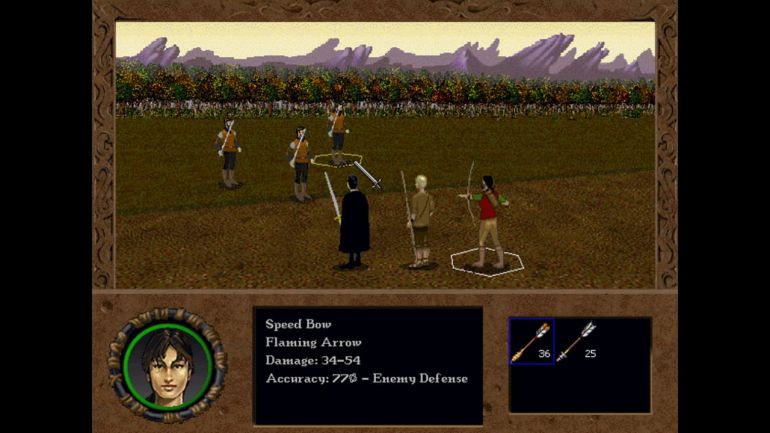
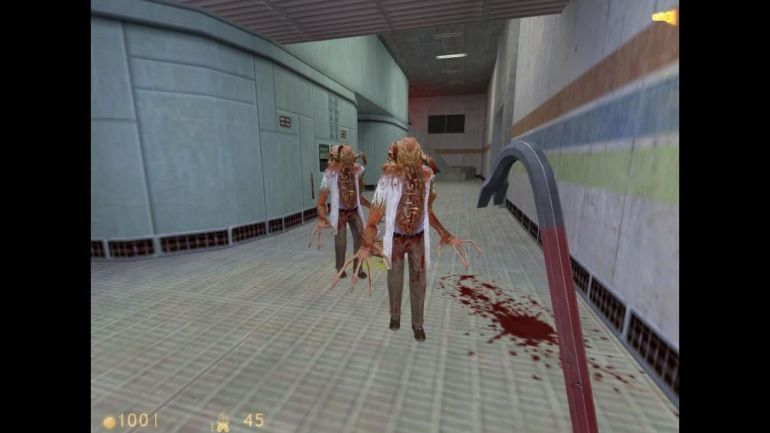
Of course, the runaway success of 1998 was Valve's Half-Life. The developers were expecting sales of 180,000 copies. It sold half a million in the first two months alone. The game landed on practically every best-of list, and Half-Life was the studio's debut. What's funny is that Sierra didn't want to promote it, to the point that Valve had to threaten to walk away from the contract. The draconian terms Newell and Harrington had agreed to later led to a string of legal battles between the companies.
Around the same time, the first problems with the deal between Sierra and CUC started to surface. The merger with HFS, which turned the two companies into Cendant Corporation, helped bring them to light. Former HFS chief Henry Silverman had temporarily taken over as CEO of the combined company. He noticed that CUC seemed reluctant to share its accounting records and that Forbes himself was actively standing in the way, trying to preserve the autonomy of his side of what was now Cendant.
CUC and HFS had agreed to take turns in the CEO role
In March, Silverman sent his chief accountant to the former CUC headquarters. A review showed that the company's reported earnings didn't match the real figures, and the gap was substantial. Amusingly enough, CUC's accountants suggested that HFS use the merger to cover the $165 million shortfall. Naturally, that didn't fly. And that was only the beginning. It later turned out that CUC's accounting tricks had conjured more than half a billion dollars out of thin air.
After an internal investigation, Silverman went public with the problem, softening the news a little, of course. The announcement said Cendant's 1997 earnings would have to be revised down by $165 million. It also mentioned that further adjustments might be needed. Sure enough, in the following weeks Cendant announced that earnings would be cut by $260 million. After that spectacular press release, the stock price was nearly halved , the company's market capitalization dropped by $14 billion, and about 70 lawsuits were filed against Cendant. Despite all that, HFS's profitable prior years helped Cendant ride out the crisis. Forbes was fired, and in 2006 he was sentenced to 12 years in prison and fined more than $3 billion.
and later fell to a quarter of its original value

Sierra On-Line did fairly well in those difficult times, even without any major hits. In fact, the merger of CUC and HFS was an incredible stroke of luck for the Williamses' former family business. It kept the company afloat. But there were consequences. Silverman had little interest in the game divisions he'd inherited, and when trouble struck, they were the first things he planned to get rid of. Before that, he wanted to put out whatever was close enough to finished. That's why potential bestsellers like King's Quest: Mask of Eternity and Quest for Glory V: Dragon Fire were rushed over the finish line.
Then, in November 1998, Cendant announced the sale of its consumer software division, Cendant Software, to Paris-based Vivendi for $1 billion. The first three months after the purchase were quiet. Then the layoffs began. The Yosemite Entertainment office in Oakhurst shut down completely*. Staff were offered transfers to Bellevue, but there were complications there too. Very few accepted, and even those who did came to regret it. That ended Sierra's 16 years in Oakhurst. Every project in development was canceled, including a pretty ambitious MMORPG based on “The Lord of the Rings.”
*Fortunately for the Sierra employees who chose to stay, Codemasters announced in September 1999 that it was buying the Yosemite Entertainment offices and hiring former studio employees.

Pyro Technix and other smaller development teams were shut down next, and Dynamix lost 30 employees. Havas's new business model for Sierra On-Line was simple: the company would focus entirely on publishing games and stop developing them. The only reason for that approach was how recognizable the brand had become thanks to its earlier games. Sierra On-Line continued its sweeping reorganization and split into three divisions called Core Games, Casual Entertainment, and Home Productivity. Naturally, layoffs came with all of it.
Given all that, it's almost surprising how many decent games the company managed to put out in 1999. Sierra developed Gabriel Knight 3: Blood of the Sacred, Blood of the Damned in-house, with work starting back in 1996. It was also the last game in its series and a commercial disappointment, even though the press reviewed it favorably. One notable detail was that Tim Curry returned to voice the lead.
Another in-house game continued the Police Quest series: SWAT 3: Close Quarters Battle, now firmly part of the new SWAT series. The genre had changed again, and this time it was a first-person tactical shooter. Unlike a typical FPS, SWAT 3 focused on realistic police methods and tactics, including close-quarters combat, appropriate use of force, and, ideally, arresting suspects instead of simply shooting them. It turned out great and critics loved it, but sales weren't particularly good. Just 40,000 copies by spring 2000.
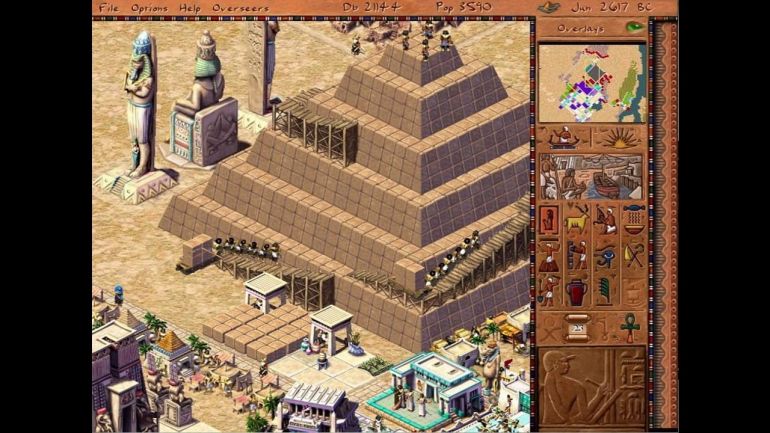
Impressions Games released one game, the economic strategy title Pharaoh, which was much like Caesar III . The only reasonably big game from Dynamix was the mech sim Starsiege. Otherwise, the studio put out the next fishing sim, Trophy Bass 3D, a new flight sim, Curse You! Red Baron, and a few other smaller releases.
apart from the ancient Egyptian setting

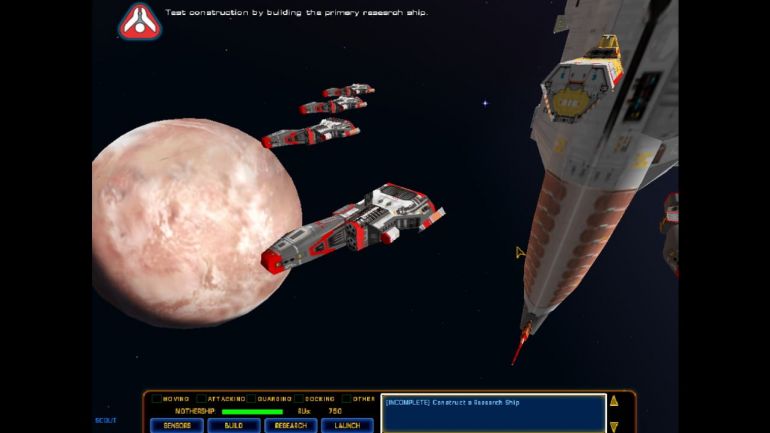
Sierra On-Line's one truly big success was the release of Homeworld, a strategy game from Relic Entertainment. You took command of a space fleet led by a mothership, gathering resources, conducting research, and upgrading and reinforcing the fleet. The single-player campaign ran for 17 missions, and then you could keep playing in multiplayer. It was the best game of 1999. It sold more than half a million copies in its first six months.
The cuts at Sierra On-Line continued into the new millennium. In 2001, the highly productive Dynamix shut down, and another 150 employees at the Bellevue headquarters lost their jobs. By then Sierra On-Line had stopped developing games and focused entirely on publishing them.
Enjoyed this article? Found it helpful? Support GameSpirit.org and help us create more great content.
Author: Godlike_Goblin for GameSpirit.org


