
The History of Sierra Entertainment, Part 1

Title: | The History of Sierra Entertainment |
Developer: | Sierra Entertainment |
Publisher: | Sierra Entertainment |
Release: | 20.10.2025 |
Sometimes it doesn't take much to turn the world upside down. Show up in the right place at the right time, make one small but crucial decision, and voilà: you've founded one of the most important companies in the game industry. That's more or less how the story of Sierra Entertainment began.
Just two people started Sierra: Williams and Williams, Ken and Roberta. They decided to get into video games in 1979. By then they'd been married for five years and had already produced a couple of kids. Ken worked as a freelance programmer and consultant on CDC mainframes*, while Roberta took care of things at home. Ken also had plans for a business of his own, so in 1979 he founded On-Line Systems, intending to use it to distribute his own software.
*A mainframe is a large, high-performance, fault-tolerant general-purpose server with substantial input/output capacity and large amounts of RAM and external storage. It's designed for mission-critical systems that handle intensive batch and online transaction processing.

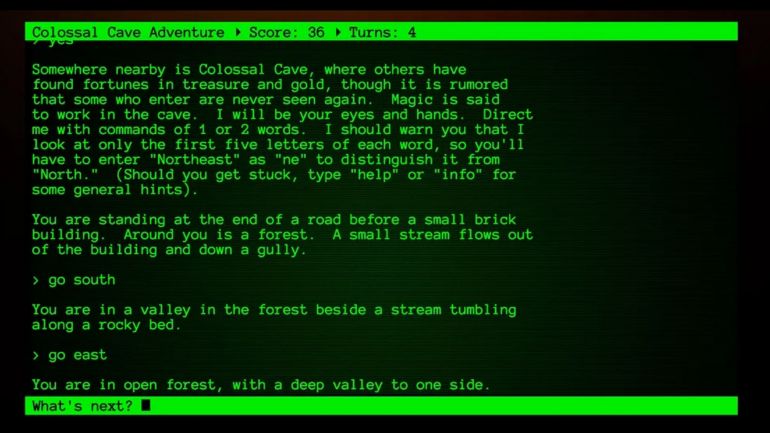
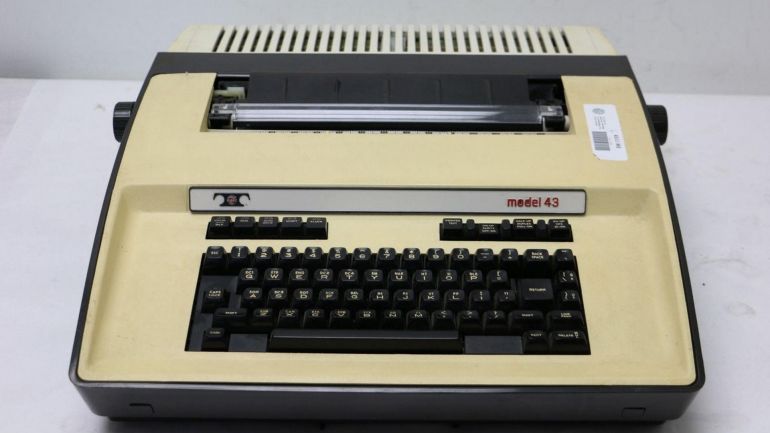
Mr. Williams was up to his ears in modern technology, while his wife had little to do with it. That changed when a teleprinter* appeared at home, connected remotely to one of the mainframes at Ken's workplace. At first, Ken was the only one using it, and only for work. Then he decided to show Roberta a game called Colossal Cave Adventure. She took to it and was hooked for nearly a month.
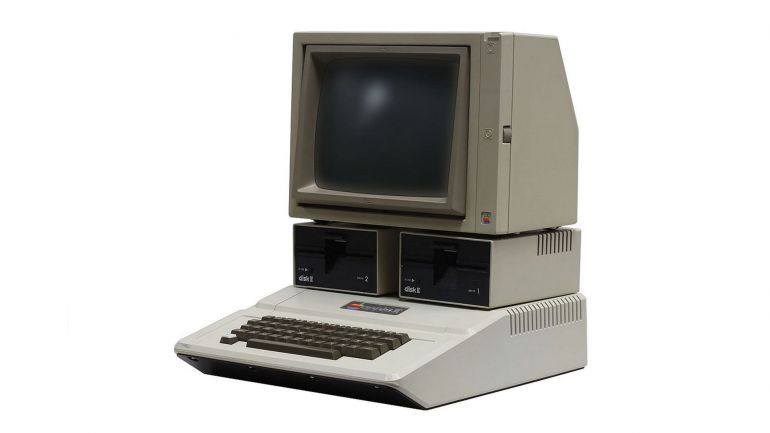
At the very beginning of 1980, the Williams household got an Apple II, along with text adventures from Adventure International, written by Scott Adams , and Softape. Roberta was every bit as captivated. The longer she spent on these virtual adventures, the more she thought she could come up with a story just as good. She had no programming experience, so she started nudging her husband. At first Ken didn't share her enthusiasm. He thought of computer games as something akin to a children's pastime and saw little potential in them.
Adventureland, Pirate Adventure, and others
*Teleprinters were originally electromechanical devices for sending and receiving text messages over various communications channels in point-to-point and point-to-multipoint setups. When computers came along, the machines were adapted to send typed data to a computer and print its responses. Some models supported punched tape. A modem let the machine exchange data over telephone lines. The generic name teletype came from Teletype, a company that made these devices, much as Xerox lent its name to copying equipment.
Ken still wasn't especially interested in games. Around the time they bought the Apple II, he started learning Fortran . Writing software for computer hardware was where he saw the commercial potential. Roberta's enthusiasm eventually softened his view of games. He also noticed how quickly video game developers were getting rich. And it helped that their home computer could display bitmap graphics. That's when the pieces clicked into place.
a high-level programming language geared toward scientific and engineering calculations
The Williamses got to work on their first game. By then Roberta had sketched out a text adventure built around a closed-circle murder mystery, inspired by Agatha Christie's “And Then There Were None.” A detective story was something new for the industry, but another text game was hardly going to get much attention. Ken figured it needed a hook. That hook would be pictures, and they had to be interactive.

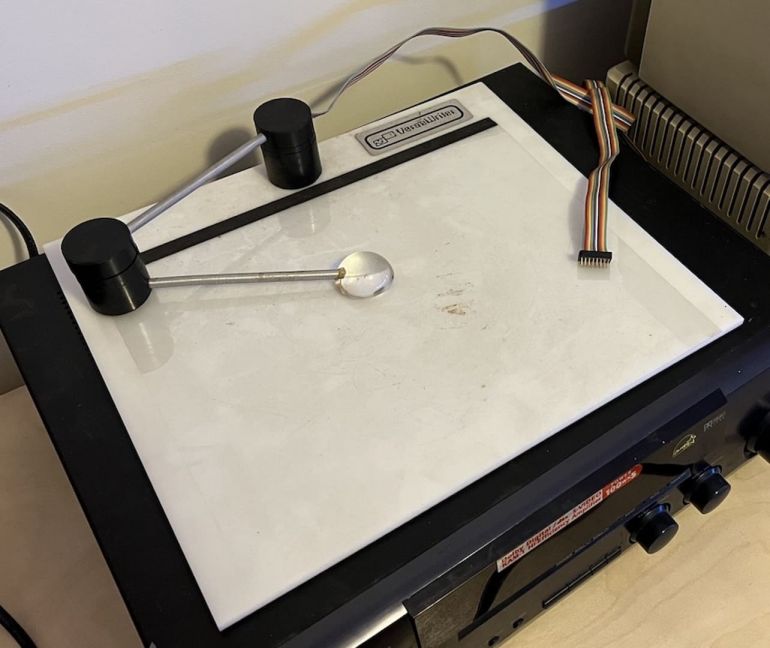
To get a sense of how much trouble they were in, consider how hard it was to create pictures on an Apple II. There were no graphics editors, and the first graphics tablet for the Apple II was still three years away . On top of that, neither Ken nor Roberta was an artist. They had to improvise. They came up with an unusual solution and bought a Versa Writer, a device that could transfer diagrams, drawings, and other schematics to their home computer.
the Koala Pad wouldn't come out until 1983
Roberta drew sketches by hand, and Ken digitized them by tracing them with the stylus on the Versa Writer. He even wrote his own software to record the movements of the stylus as he traced and convert them to code that could redraw the image later. That also solved the problem of fitting the game's illustrations on one floppy disk. Every picture was stored as code. The game would redraw it whenever needed instead of displaying an image saved in its directories. Ken also developed his own programming language, Adventure Development Language , which served as the game engine.
ADL
Remarkably, with no development experience at all, the Williamses took just a month to make their first game. Mystery House was released by On-Line Systems in May 1980. They started selling it through ads in computer magazines like SoftSide and Micro. For $24.95, they'd mail you the floppy disk in a zip-top bag. Then they started visiting computer stores in person to get the game on shelves. Mystery House was an instant hit, despite how often the things happening on screen made no sense. Who cared? It had interactive pictures! Sales quickly hit 10,000 copies and then 15,000 in America alone. Mystery House went down in industry history as the first graphical adventure with interactive illustrations and one of the first horror games.
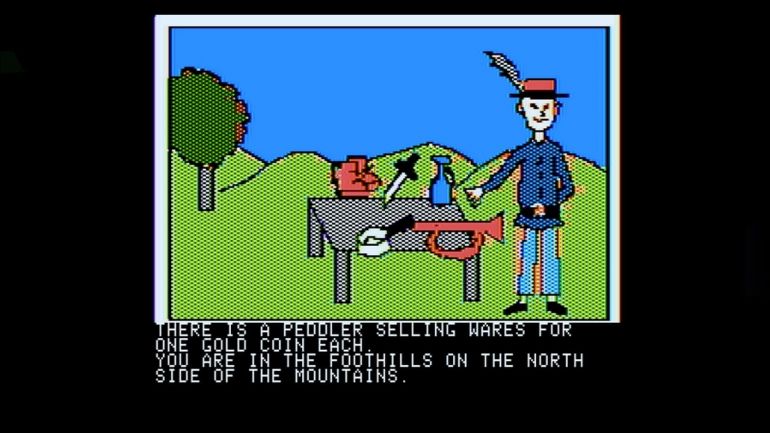
Mystery House started a craze for games with graphics, and other developers immediately started churning them out. Naturally, Ken and Roberta weren't about to fall behind after setting the bar. They put out two more games in 1980, Wizard and the Princess and Mission Asteroid. Their second game, The Wizard and the Princess, had more colorful graphics and a huge game world .
for the time
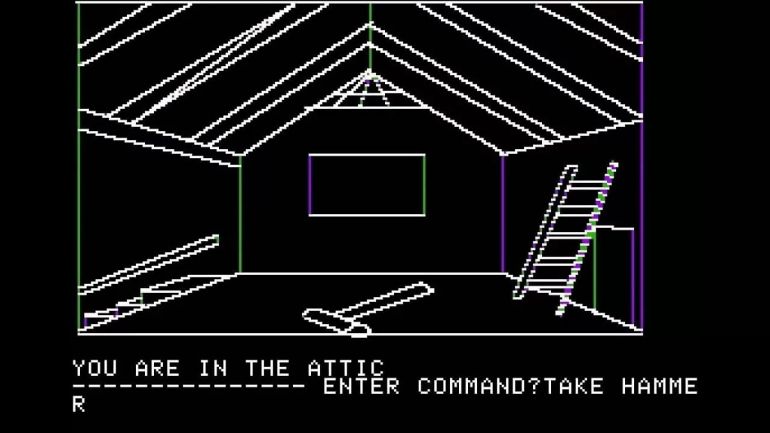
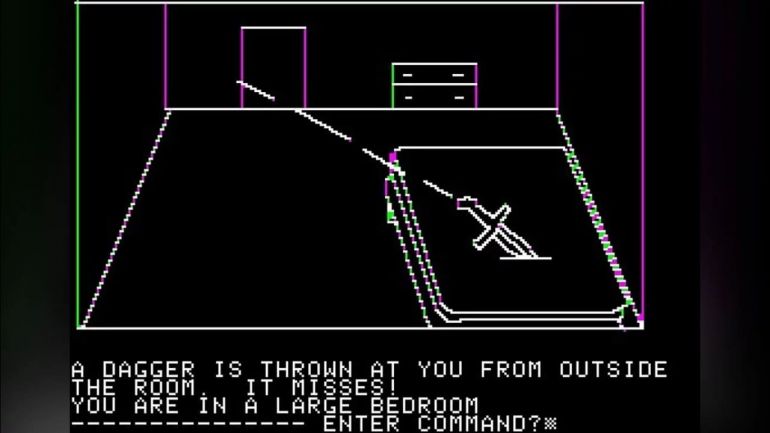
All three releases were immediately grouped into the Hi-Res Adventure series, which would go on to get three more entries. Oddly, for whatever reason, the numbering went Hi-Res Adventure #0: Mission Asteroid, Hi-Res Adventure #1: Mystery House, and Hi-Res Adventure #2: The Wizard and the Princess. It was a little confusing.
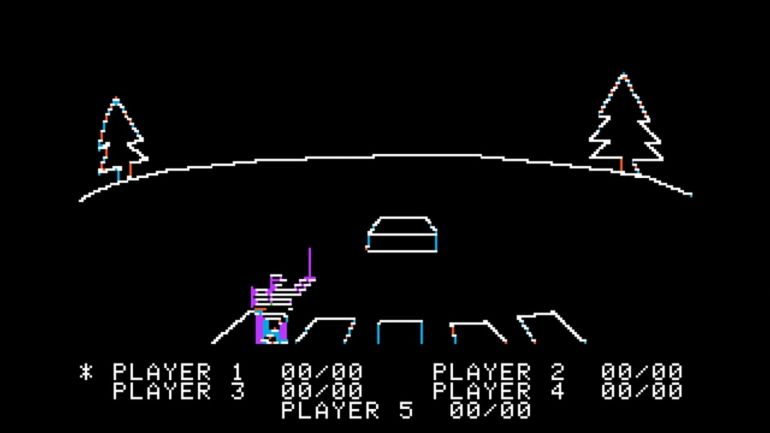
Meanwhile, On-Line Systems got into publishing games from other developers. Its 1980 releases included the simple shooters Skeet Shoot and Trap Shoot by Keith Wild, the card game Cribbage by Warren Schwader, and the American football sim Hi-Res Football by Jay Sullivan.
The Williamses were now able to move On-Line Systems out of their house and rent its first office in the town of Coarsegold. It was close to the house they'd only recently moved into thanks to the success of Mystery House. They were able to hire their first employees, too. In 1981, On-Line Systems kept publishing both games made in-house and titles by outside developers. For our purposes, we'll stick to the company's own games.
The Hi-Res Adventure series addedCranston Manor and Ulysses and the Golden Fleece. The arcade shooter Threshold, which looked an awful lot like Space Invaders, also came out in 1981. The big release that year, though, was Softporn Adventure, written by programmer Chuck Benton. It was an adult comedy text adventure about an unnamed protagonist trying to seduce three women. The cover was also notable for featuring On-Line Systems employees, including Roberta Williams .
she's on the right
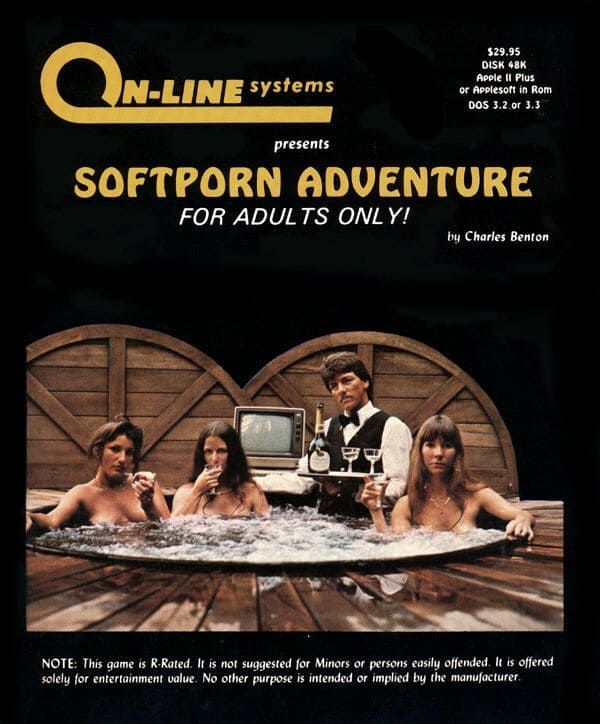
Softporn Adventure cover
In 1982, On-Line Systems changed its name to Sierra On-Line. The company's headquarters moved to Oakhurst, California, at the same time. The new name came from the nearby Sierra Nevada mountain range, and the new logo used a photograph of Half Dome. In-house releases that year included another Pac-Man clone, Mouskattack, the space action game Marauder, and another adventure game, Time Zone.
It's also worth mentioning that Sierra On-Line published Ultima II and developed and released Ultima: Escape from Mt. Drash for the VIC-20. The company sold the latter as just Ultima in hopes of boosting sales, with the blessing of series creator Richard Garriott. When Ultima II came out for IBM computers, though, a minor flap over royalties broke out between Siera On-Line and Garriott. It ended with Garriott founding his own company, Origin Systems, to distribute his games.

By 1983, the US video game industry was in a serious crisis. The hugely popular Atari 2600 had prompted a practically unchecked flood of games, most of them outright garbage. E.T. the Extra-Terrestrial was arguably the pinnacle of the whole sorry mess. It went down in history as one of the most-returned games, after which most copies of E.T. and other Atari 2600 games were sent to a mass grave at a landfill near Alamogordo, New Mexico.
As console game developers went bust one after another, Sierra On-Line was doing pretty well. A big reason was that it focused on games for home computers. There were still a few problems, though. First, there were far too many models, and new hardware wasn't always compatible with old hardware even from the same manufacturer. That made it impossible to reach a broad audience, so the company had to pick particular models. Second, hardware went out of date quickly as computer technology raced ahead. Take the VIC-20 from Commodore and the TI-99/4 from Texas Instruments, both of which Sierra On-Line developed games for throughout 1983. By the end of that very year, both models were considered obsolete.

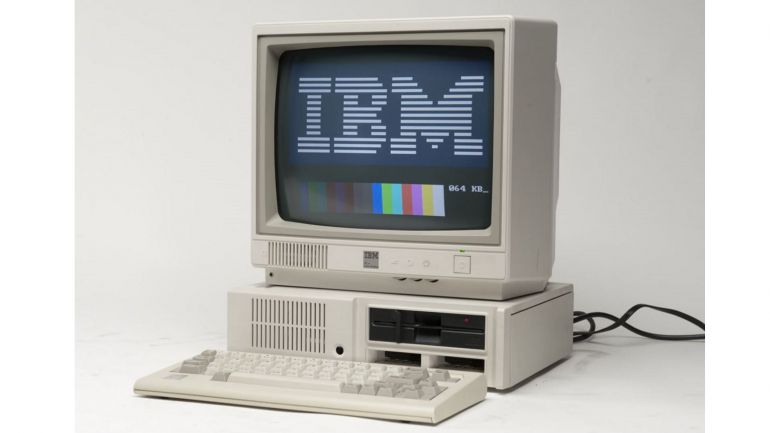
A revolution in home computers was already well underway, though, starting with the release of the IBM PC in 1981. That machine ushered in the era of IBM PC-compatible hardware, or simply personal computers . IBM and Sierra On-Line teamed up in a big way in 1983, when the computer giant approached the Williamses' company about making a game for its upcoming PCjr. IBM promised to fund development, pay for marketing, and pay royalties. All Sierra On-Line had to do was put out a game, which was what it did all the time anyway. That game wouldn't come out until 1984, so we'll come back to it in a bit.
though there are a few nuances
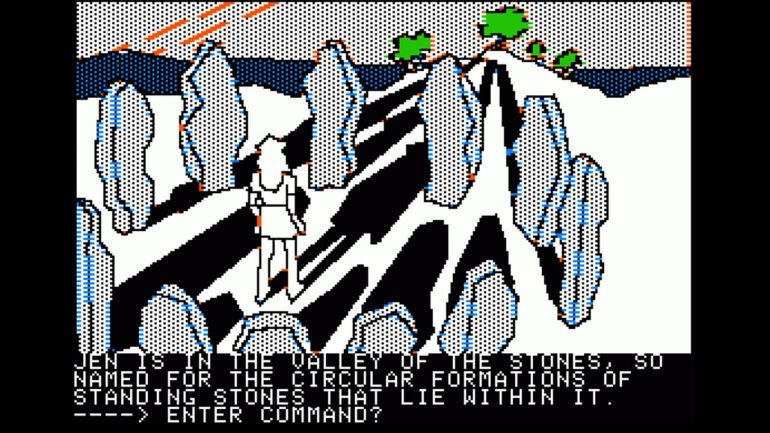
For now, let's look at what else Sierra On-Line released in 1983. Its in-house games included two action platformers, Apple Cider Spider and Sammy Lightfoot. There were the arcade action games Oil's Well, Mr. Cool, and Mine Shaft, the side-scroller BC's Quest for Tires, and the educational game Learning with Leeper. Two adventure games rounded things out: Troll's Tale and Hi-Res Adventure's final entry, The Dark Crystal, based on the film of the same name, “The Dark Crystal.”
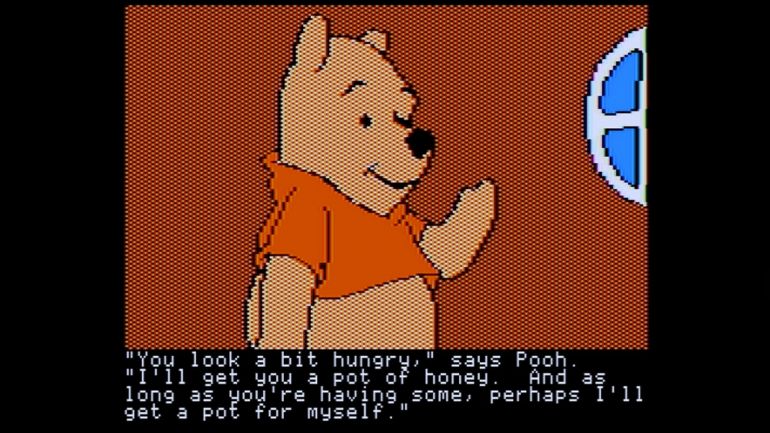
1984 wasn't exactly brimming with interesting releases. But that was the year Sierra On-Line landed a Disney license to make games featuring its animated characters. The deal produced the educational adventures Donald Duck's Playground, Mickey's Space Adventure, and Winnie the Pooh in the Hundred Acre Wood. Beyond those, Sierra On-Line went all out to reach more kids with educational releases like Learning with Fuzzy WOMP, Wizard of Id's WizMath, and Wizard of Id's WizType. Funny how priorities had shifted since the scandalous Softporn Adventure three years earlier.
The big game of 1984 was unquestionably the one funded by IBM: King’s Quest. It laid the groundwork for both the series and the graphical adventure genre as a whole. Unlike in earlier adventure games, in King’s Quest you could move the protagonist around the screen in eight directions, giving exploration a three-dimensional feel. He could disappear from view behind objects, gravity affected him, and he had unique animations for actions like picking up items, falling, and swimming.
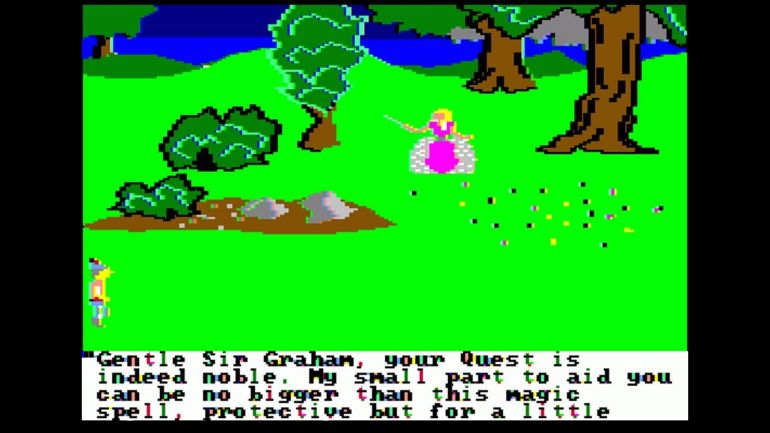
Ken Williams and his colleague Jeff Stephenson made full use of the capabilities of the PCjr and IBM by developing the Adventure Game Interpreter . It became the main engine for the first generation of games in the unofficial Quest series. Roberta led development of the game itself, with a team of about ten artists and programmers reporting to her by then. The game also drew on an earlier Williams title, Wizard and the Princess.
AGI
Unfortunately, the PCjr never caught on, and King's Quest sales were low as a result. The solution was to release the game on other platforms, including the Tandy 1000 and Apple II. Those versions took off and vaulted Sierra On-Line straight into the big leagues, making it one of the biggest players in the video game market.
thanks to its steep price
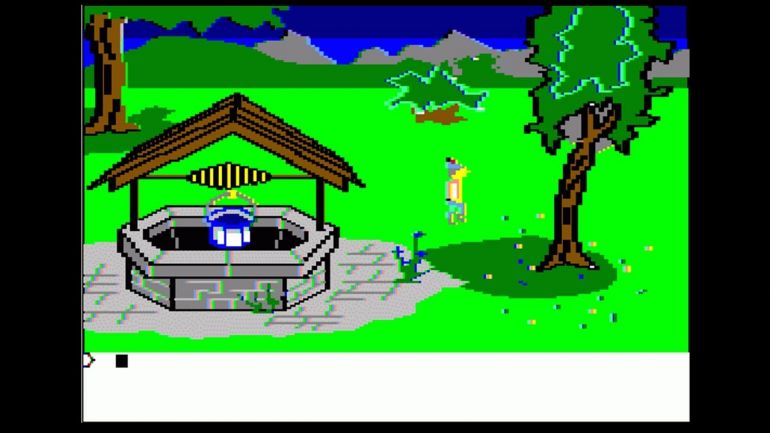
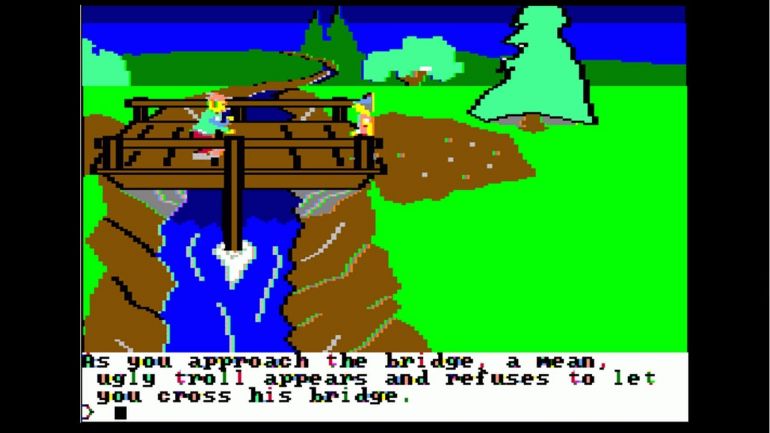
It came as no surprise when King’s Quest got a sequel just one year later. King's Quest II: Romancing the Throne came out in 1985. The developers didn't try to reinvent the gameplay. They followed the classic recipe for a successful sequel and made it bigger, richer, and a little better.
Another adventure released in 1985 was The Black Cauldron, based on the Disney animated film “The Black Cauldron.” It differed from earlier Sierra On-Line adventures in its simpler controls, which assigned a different action to each function key. The idea was to make the game accessible to kids too. Programmers Al Lowe and Scott Murphy and artist Mark Crowe were heavily involved in development. All three would go on to play major roles in the history of Sierra On-Line.
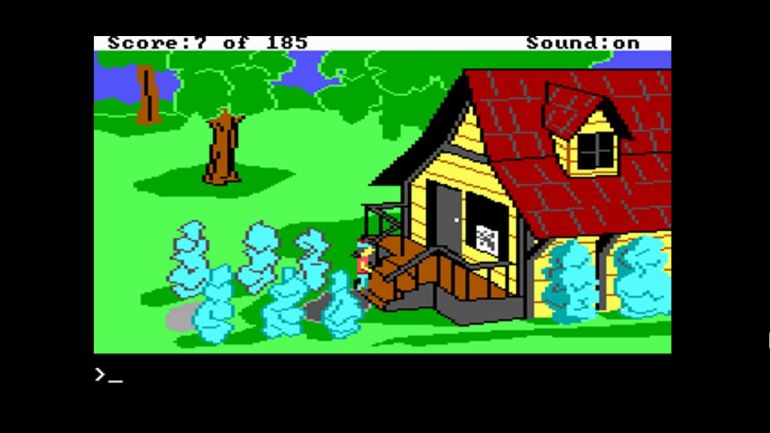
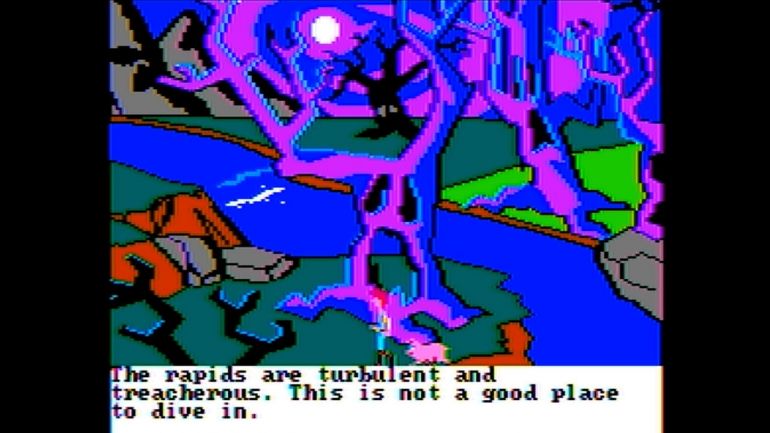
In 1986, Sierra On-Line kept its focus on releasing a few better games instead of a larger batch of mediocre titles from outside developers. Naturally, another King’s Quest was in the mix. The third game was subtitled To Heir Is Human. Once again, the gameplay was largely the same. Like the second game, it was bigger and better than its predecessor, and a little tougher too.
The year's second adventure, Space Quest, was a different story. Scott Murphy and Mark Crowe did most of the development. Both loved science fiction and wanted a less serious, almost comedic story packed with references to contemporary sci-fi movies and books. The gamble paid off for the Two Guys from Andromeda, as they called themselves in the Space Quest credits. It was another hit for the company and went on to get several sequels.
for the time
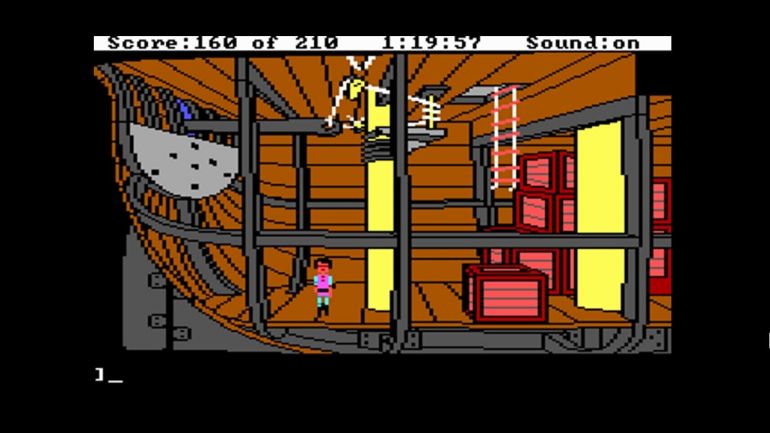
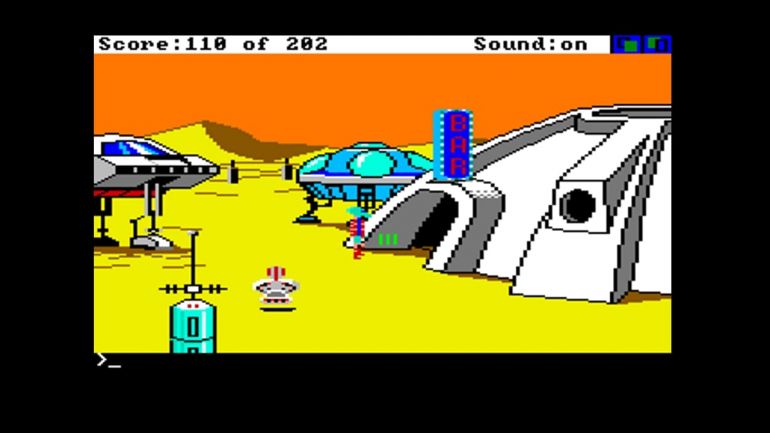
Right on cue, one year after “Space Quest” came Space Quest II: Vohaul's Revenge. Just as with the fantasy adventure King’s Quest and its sequels, there was no reason to tamper with a formula that worked. They made the game a little better, polished up the graphics, and made the puzzles ever so slightly harder. Players and critics liked it, so that was another hit.
That same year, 1987, brought another couple of big names to Sierra On-Line's adventure catalog, both of which would become long-running franchises. Al Lowe, one of Sierra's programmers, suggested giving their most provocative game, Softporn Adventure, a makeover with the company's new tools. Ken Williams gave him the go-ahead. And so 1987 saw the birth of Leisure Suit Larry in the Land of the Lounge Lizards, now a fully graphical comedy adventure for adults. Amusingly enough, it sold very well without any advertising at all.
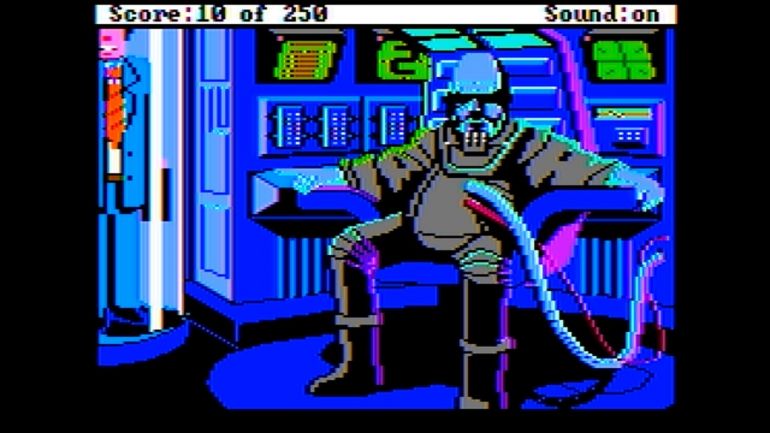
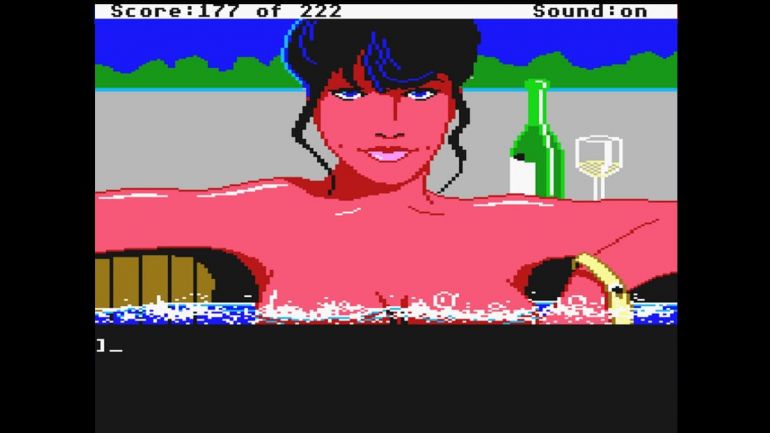
Another interesting wrinkle in the story ofLeisure Suit Larry was how popular it turned out to be with pirates. You could tell because Sierra On-Line sold considerably more copies of its own strategy guide than it did copies of the game.
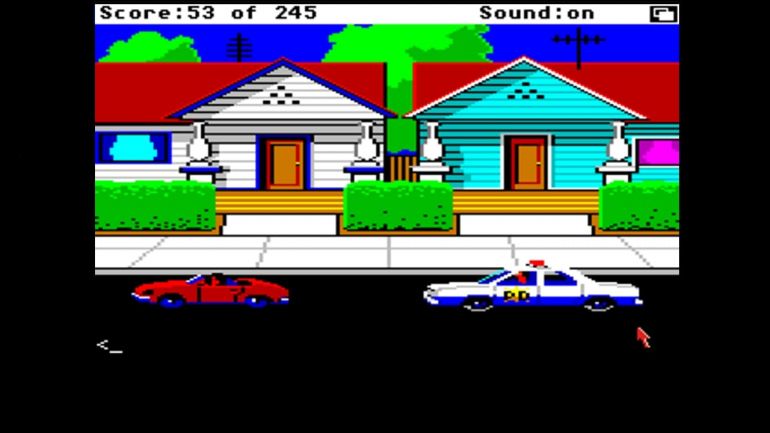
The second game was Police Quest: In Pursuit of the Death Angel. In one sense it was a typical Sierra On-Line adventure built on AGI. What made it stand out was its realistic setting, achieved by working with retired police officer Jim Walls, and the fact that you had to follow actual police procedures to the letter. The story of Police Quest was based entirely on Walls's accounts of his time in law enforcement. He made cameo appearances in every game in the series until he left the company. Pretty much the whole Sierra all-star team worked on it too: Ken Williams himself, his wife Roberta, Mark Crowe, Scott Murphy, and Al Lowe. It was another big hit and got several sequels of its own.
In 1987, Sierra On-Line also started publishing its own magazine. Coming up with a name was a bit tricky, since the American environmental organization Sierra Club already put out its own publication, Sierra Magazine. So Sierra On-Line initially called its magazine The Sierra Newsletter. It changed names several times after that, to The Sierra News Magazine, then The Sierra, then Dynamix News Magazine. The magazine covered the company's current and upcoming games and published interviews with developers. It lasted more than ten years, all the way to 1999.
The biggest event of 1988 for the company was a new game engine, Sierra's Creative Interpreter , developed by Ken Williams and Jeff Stephenson. It replaced the aging AGI and supported the EGA* standard, a 16-color palette, resolutions up to 320×200, and a new, more advanced text parser capable of handling more complex commands. It also added mouse support.
SCI
*EGA (Enhanced Graphics Adapter) is a standard for IBM PC video adapters and monitors that sits between CGA and VGA in terms of capabilities. IBM released it in August 1984 for its new IBM PC/AT personal computer.
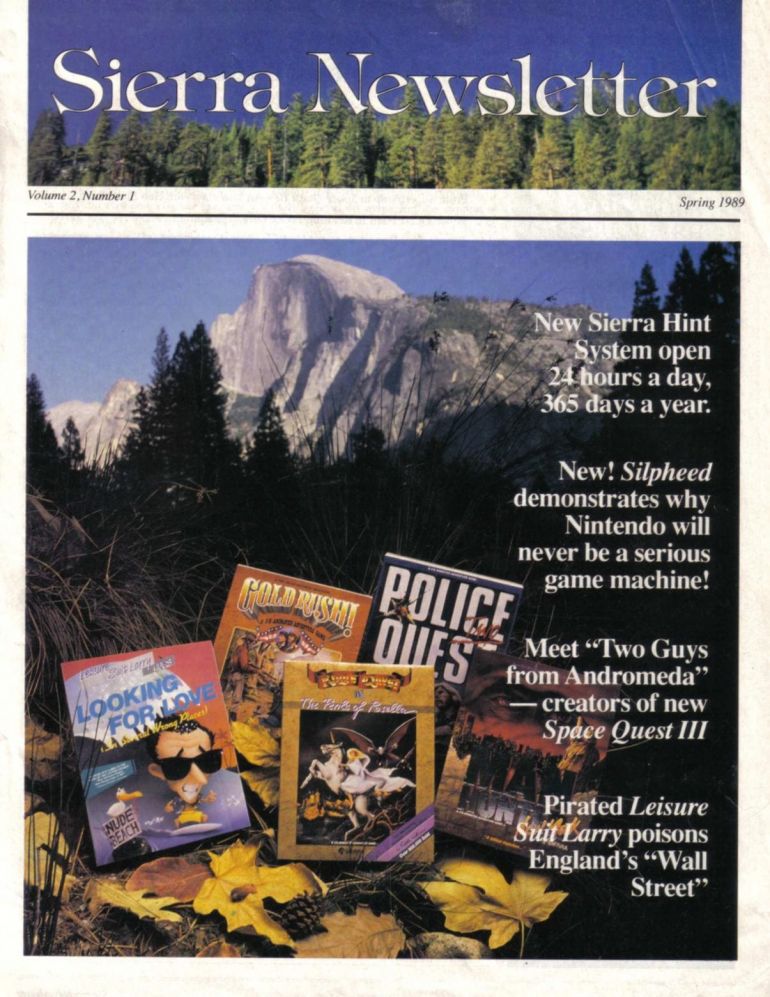
Sierra Newsletter magazine
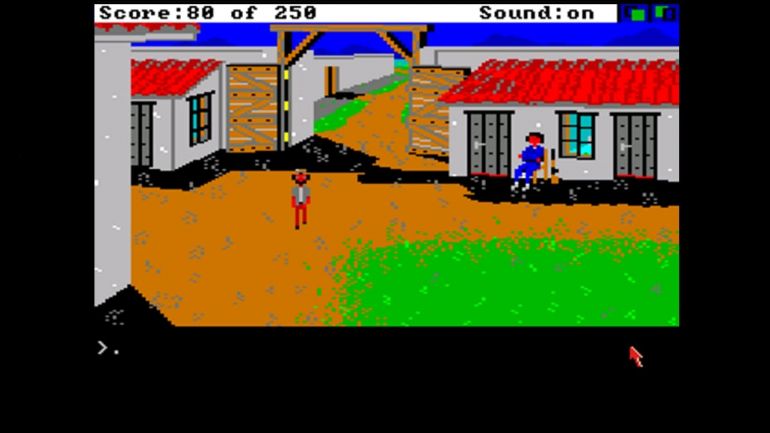
Some of the games released in 1988 were built on the old AGI engine. One was the adventure Gold Rush!, made by brothers Doug and Ken MacNeill. Incidentally, it's considered one of the toughest adventures in the Sierra On-Line lineup, and it could also boast a branching story with three possible routes through the game. The other was Manhunter: New York, developed by Evryware, the family operation of Barry, Dave, and Dee Dee Murry. It was built on AGI but swapped the engine's text parser for a simple point-and-click interface.
Sierra On-Line planned to release three adventures on the new engine by Christmas 1988: King’s Quest IV, Leisure Suit Larry II, and Police Quest II. And that's pretty much what happened. The new King’s Quest, the flagship series, also came out on the old engine for less powerful hardware, to show what could be done with SCI. Unsurprisingly, the SCI version was much prettier overall. King's Quest IV was also the first commercial game for IBM PC compatibles to support sound cards, meaning it could use more complex sound effects and play music. You could use a mouse to control it, too. It was also the first Sierra game with a woman as its lead and a day-night cycle. The two releases sold 100,000 copies in two weeks, while combined sales of the King’s Quest series topped 12 million.
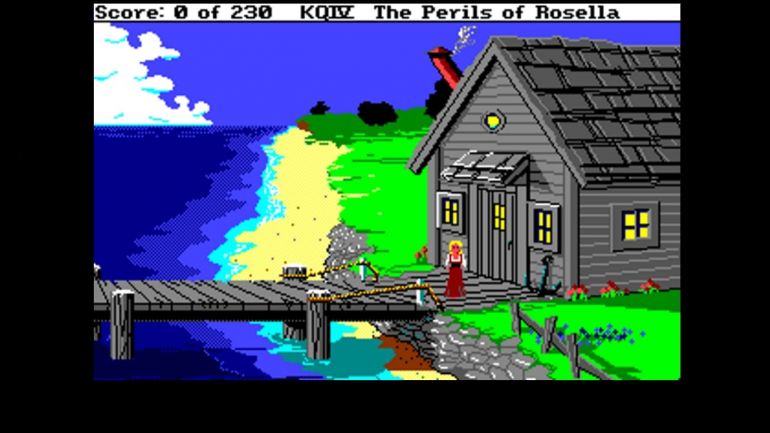
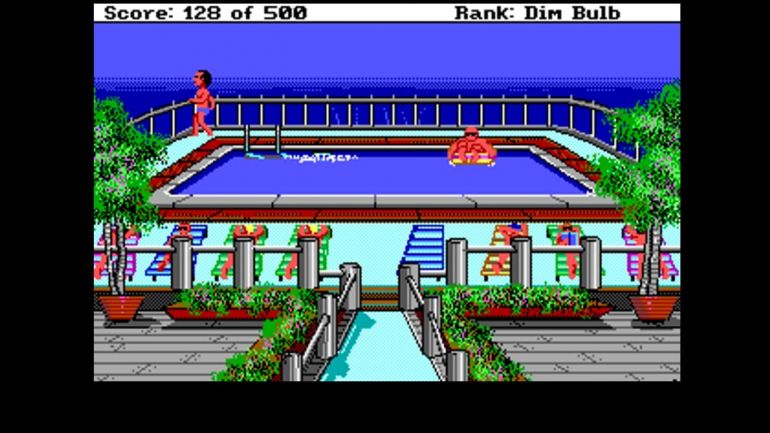
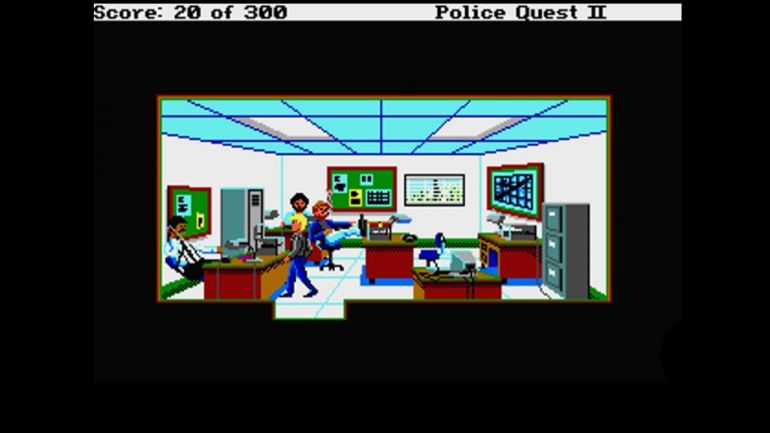
Leisure Suit Larry got a sequel in 1988 with LSL Goes Looking for Love, as did Police Quest 2, which was subtitled Revenge. The mechanics of both games remained largely intact. They were simply brighter, better-looking, and bigger. The approach to storytelling changed a little, though, and the games became more linear. Police Quest 2, for instance, dropped the driving sequences.
That year, Sierra On-Line also began building a new office complex in picturesque Oakhurst next to the old one. It used cheaper materials than its predecessor: 40,000 square feet of prefabricated metal framing that, depending on who you asked, looked like a warehouse or an aircraft hangar. It was a much less pleasant place to work than the lovely redwood building that now sat empty, but that, apparently, was the price of progress.
By 1988, the company had a proper quality assurance department, with three employees who polished the games and software Sierra On-Line put out. In October of that year, the company made a second attempt to go public. Its first attempt had been in October 1987, right around Black Monday*. This time Sierra came prepared with a strong release lineup: King’s Quest IV, Leisure Suit Larry II, and Police Quest II. Things went smoothly and Sierra went public with 1.4 million shares of common stock priced at $9 apiece. Within a year, the price was up to $20.
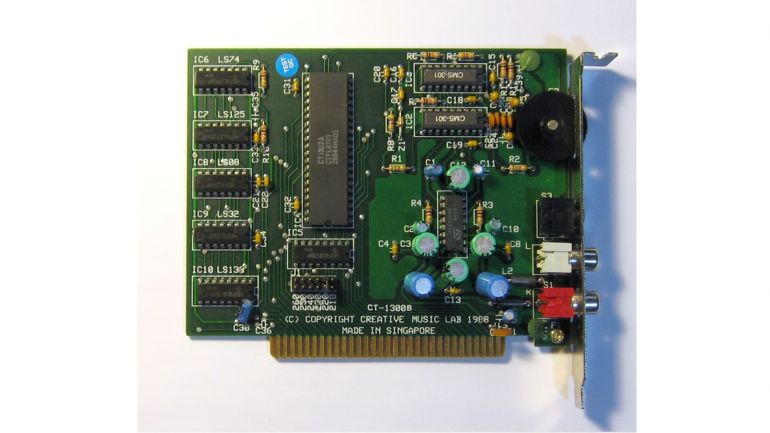
With new games out on the updated SCI engine, Sierra On-Line started touting sound as one of the biggest selling points of its products. In 1989, it actively teamed up with audio hardware makers. The Williamses' company first struck a deal with Roland, which made electronic musical instruments and software. Next came partnerships with sound card makers AdLib of Canada and Creative Music Systems of Singapore. As you'd expect, Creative fared best, first with its Game Blaster sound cards and then with the Sound Blaster line.
*Black Monday, October 19, 1987, saw the biggest drop in the history of the Dow Jones Industrial Average. The crash hit the United States and quickly spread around the world.
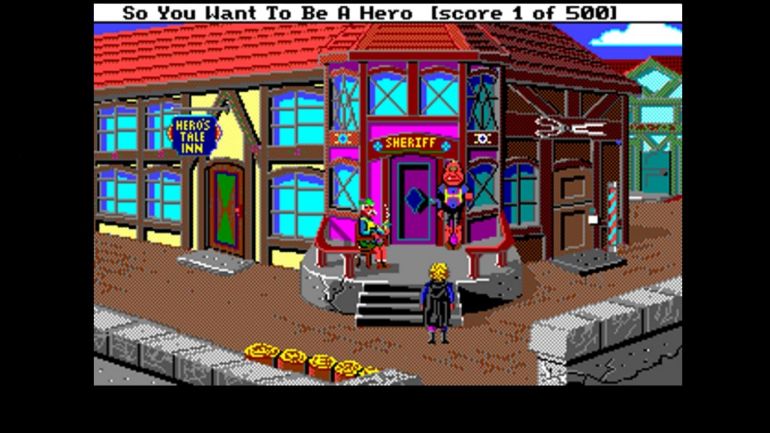
In the last year of the '80s, Sierra On-Line added Space Quest III: The Pirates of Pestulon, Manhunter 2: San Francisco, Leisure Suit Larry III: Passionate Patti in Pursuit of the Pulsating Pectorals, The Colonel's Bequest , and Code-Name: Iceman to its adventure catalog. The game that really deserves a mention, though, is Hero's Quest: So You Want to Be a Hero. What made it interesting was the way it blended RPG and adventure elements. Alongside the usual exploration, conversations, and puzzles, you had to fight and develop your character. You chose your character class at the start, and that shaped how you played the rest of the game. Later entries would go out under the name Quest for Glory because HeroQuest was already taken by Milton Bradley.
the series is unofficially known as Laura Bow
One of the company's standout hires was Bill Davis, who became creative director at Sierra On-Line. He'd previously worked in advertising, directing commercials for Burger King, Toyota, NBC, and other big companies. He'd also worked on entertainment shows of all sorts, including children's programs like Sesame Street. Bill brought Hollywood to the company. The game artists began drawing storyboards, and the rest of the development team, from programmers to sound designers, got involved in discussing them.
It was an eventful first decade for On-Line Systems. The success of its early games let the company expand, attract talented developers, and create popular series. The two-person family operation became one of the leading video game developers and laid the groundwork for the graphical adventure genre.
Enjoyed this article? Found it helpful? Support GameSpirit.org and help us create more great content.
Author: Godlike_Goblin for GameSpirit.org


