
The History of the Xbox 360

Title: | Xbox 360 Console |
Developer: | Microsoft |
Publisher: | Microsoft |
Release: | 28.04.2025 |
Before the Xbox 360
The sixth console generation landed at the turn of the millennium. Sega got off to a strong start with the Dreamcast, but Sony won that generation's console war hands down. Its incredibly successful DVD player, the PlayStation 2*, went on to become the best-selling console of all time. Nintendo, meanwhile, turned in pretty middling results for the second generation running. It did manage to fix some of the bigger mistakes it had made with the Nintendo 64 while working on the GameCube.
and it still holds the title
Microsoft managed to get in just under the wire in the sixth generation, and it came in swinging with the most powerful console of its day. It brought Microsoft nothing but losses, but it did fairly well, especially at home in North America. Luckily, Microsoft could afford that kind of experiment, and the company was ready for another round.
*The second PlayStation's ability to play DVD movies helped drive sales, particularly since it cost less than some DVD players.
Development
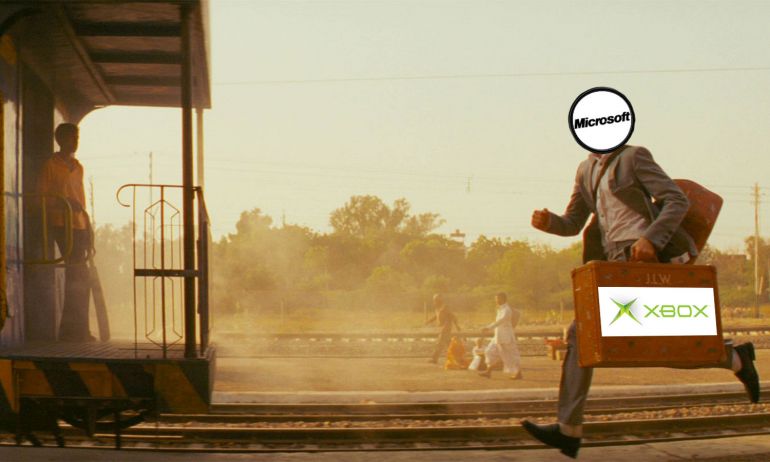
Work on the Xbox successor began in earnest in early 2003. The console's first working name was Trinity. Robbie Bach led the project, with J Allard as technical lead. Unfortunately, some of the people responsible for Microsoft's first console had already left. One was Kevin Bachus, who departed in May 2001 over differences of opinion about what Microsoft's console should be. After the console launched, the father of the Xbox, Seamus Blackley, followed in April 2002, and a few more employees left after him.
New people stepped in, something Microsoft had no trouble with either. George Peckham took over from Bachus, while Blake Fischer, formerly an editor at Next Generation, replaced Blackley. As with the original Xbox, the future Xbox 360 team was a big, varied bunch. It included programmers who'd worked on Windows, Microsoft marketing staff, and even people from Sega and Nintendo of America. Peter Moore came from the former, while NOA alumni included Akilla Redmer and Ken Lobb.
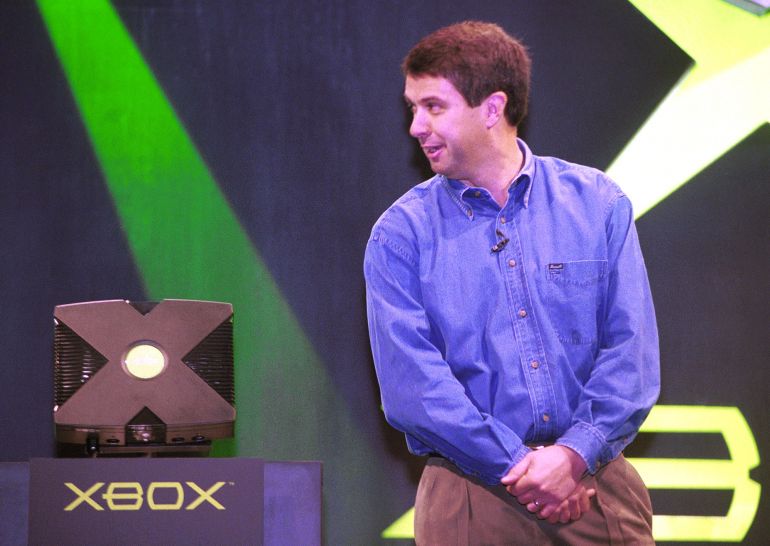
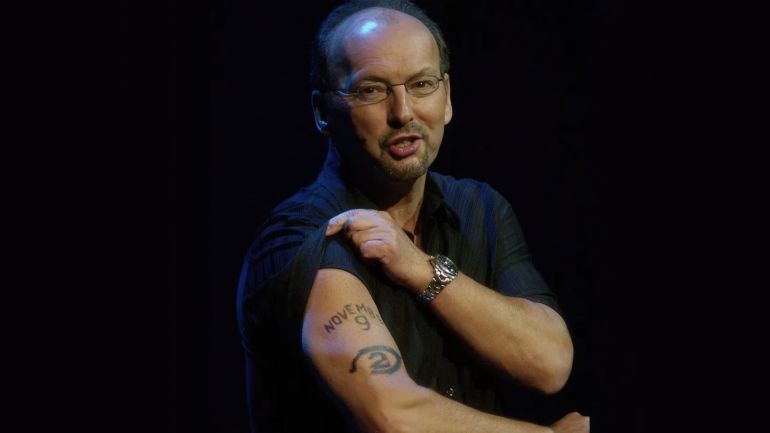
The Xbox team also added quite a few people from MSN TV, known as WebTV until 2001. Microsoft had bought the company in 1997, along with its digital television projects that were something between a PC and a TV. Remember that the WebTV developers had once gone up against Blackley's team, pitching their own vision for a Microsoft console and openly criticizing the DirectXbox approach. In the end, Blackley and his team made the more convincing case to Bill Gates, and that settled it.
After losing the battle over the concept, the WebTV team switched to working on hardware for the upcoming console. They started developing a graphics chip with GigaPixel . That didn't work out, either. Neither had much credibility, and most of the game developers Blackley surveyed picked the already established Nvidia without much hesitation. The Xbox's chief champion got the deal through, and in March 2002 Microsoft and Nvidia signed an agreement to develop the Xbox graphics hardware. It gave Nvidia much-needed funding. That was the second time WebTV screwed up, and it wouldn't be the last. The outcome for GigaPixel was funny, too. After Microsoft passed, it had to sell to 3Dfx, which Nvidia bought a year later with the money it got from Microsoft.
a company developing its own graphics processors
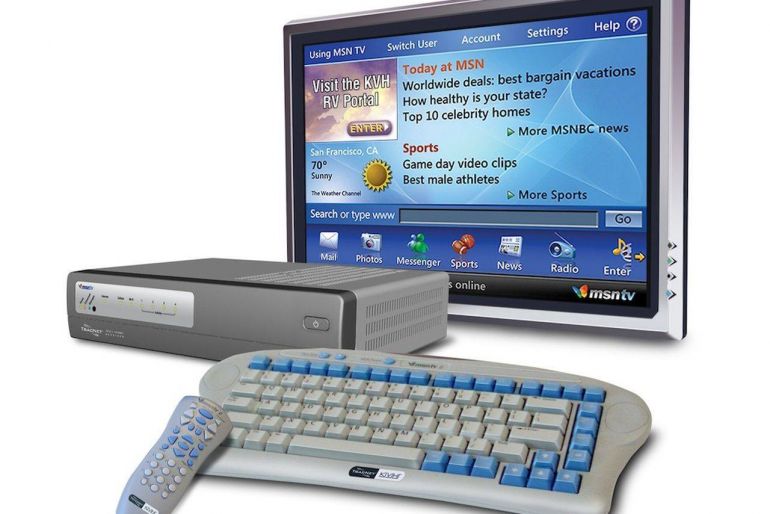
After two misses, the MSN TV group started a new television project, UltimateTV. It didn't generate much excitement inside Microsoft or out. In early 2002, UltimateTV was shut down, and the staff were offered work on the new Xbox. Among them were Nick Baker and Jeff Andrews, both of whom had worked on the 3DO.
When it came time to work on the hardware, Microsoft reconsidered its relationships with Nvidia and Intel. Problems had surfaced during long-term support for the first Xbox, when Microsoft was doing everything it could to lower the cost of its money-losing console and neither company had any interest in helping. The partners also refused to hand over their intellectual property to Microsoft, limiting its ability to adapt the hardware to the next console's needs. On the first Xbox, that ultimately helped make the console hackable.

The company didn't want a repeat, so it started weighing other options. The CPU had to meet a few conditions. First, it needed multiple cores, unlike the single-core Pentium III in the original Xbox. Second, the manufacturer had to give Microsoft full documentation and the freedom to change the chips as it saw fit. That would let Microsoft modify chips and make new ones with outside manufacturers. It went to Intel first, but Intel wasn't interested on those terms.
The search eventually took Microsoft to IBM. Funnily enough, IBM had announced a partnership just a couple of years earlier with Sony and Toshiba to develop Cell processors for future supercomputers and, of course, the upcoming PlayStation 3. Microsoft didn't need to know about that last part, and it didn't . Either way, the three-way STI agreement let any of the companies use their shared technology. In that sense, work on the PS3 processor influenced the chip in the Xbox 360. The collaboration between IBM and Microsoft eventually produced the XCPU, or Xenon .
or it did a good job pretending
Sony, Toshiba, IBM
no relation to Intel's Xeon chips
Around the time Microsoft started working on the new processor with IBM, the console project got a new name. One reason was that Trinity was also being used for other projects at the company, including a new version of Windows . From then on, the project took the processor's name, Xenon.
which never came out
The graphics chip for Microsoft's console has a pretty interesting story, too. Its partner this time was ATI, a direct competitor to Nvidia. Nvidia itself was already working with Sony by then, supplying chips for the PS3. By 2002, ATI had released its new R300 graphics processors with full DirectX 9.0 support. They formed the basis of the Radeon 9000 series of graphics cards.
as well as the X3**, X5**, X6**, and others
That was possible in part because ATI had bought ArtX in early 2000, bringing in the engineers who worked on the Flipper graphics processor in the Nintendo GameCube. They now handled chip supply for the Big N's consoles. The R300 processors evolved into the R400 series in 2004, which became the basis of the Xbox 360's graphics chip, Xenos. The most common subseries of that generation was the R420, which powered the X800 line of graphics cards.
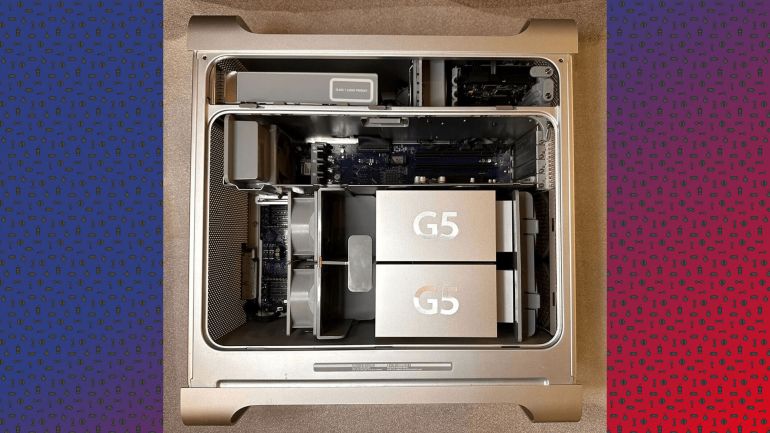
The first Xenos dev kits were ready in spring 2004. The interesting part is that they ran on completely different hardware. The Xenon from IBM and the Xenos from ATI were still being refined. The early kits used Macintosh G5 computers from Apple, with IBM PowerPC 970 processors and Radeon 9800 graphics cards. The similar CPU architecture was the reason for that choice. These were the same kits used to show off what the console could do at E3 in 2005.
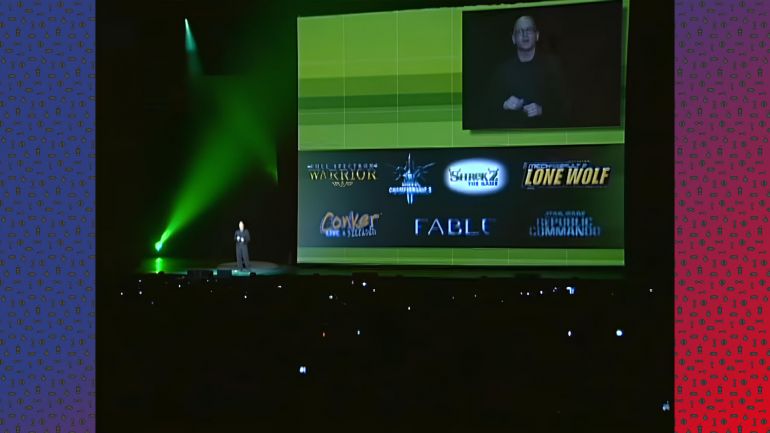
At E3 2004, Microsoft mostly talked about Xbox Live and Halo 2 for the Xbox. Meanwhile, Sony and Nintendo were showing off their new handhelds. Sony had the PlayStation Portable, while the Big N was proudly showing off its dual-screen Nintendo DS. Luckily for Microsoft, the handheld battle between the Japanese companies forced Sony to push the PlayStation 3 to 2006. That's despite the Cell chips being ready by spring, meaning it could theoretically have launched by the end of 2004.
There was still no word about the console at CES at the start of 2005. By the end of January, though, IBM had finished developing the Xenon processors, and ATI later reported that its Xenos chips were ready, too. Production of the console itself started in September 2005, only a few months before launch.
Consumer Electronics Show
The Reveal
In March, Microsoft started getting people interested in the new console with a viral campaign called Our Colony. At first there was no obvious link to Xbox, but the hints kept piling up. Visitors to OurColony.net could complete challenges to earn screenshots of upcoming games and even pieces of an image of the console. It all ended on May 12, when a video appeared on the site with J Allard announcing the new console.
That evening, the new Xbox got its full reveal on MTV, in a full-fledged entertainment show hosted by actor Elijah Wood. The show took a quick look back at the game industry , revealed the console's name, Xbox 360, showed its final design, and talked about upcoming games. There was no price yet. Prices for every region came a little later. In America, the base Xbox 360 was set to start at $299.
mostly American
There were several more ad campaigns through 2005, right up to launch, including viral campaigns such as OrigenXbox360.com and HEX168. The latter gave away 360 new consoles along with invitations to the Xbox 360 launch party, which took place a day before release.
Launch
The Xbox 360 went on sale on the morning of November 22, 2005, in the US and Canada only. The day before, November 21, brought a big event, the Xbox 360 Zero Hour Launch Party. It took place in hangars at a former air base in Palmdale, California. It was open to the public, and anyone could buy a ticket. The catch was that no consoles were scheduled to go on sale at Zero Hour. The only ones handed out were contest prizes. Most attendees had counted on snagging one a day early, and that became the event's biggest criticism.
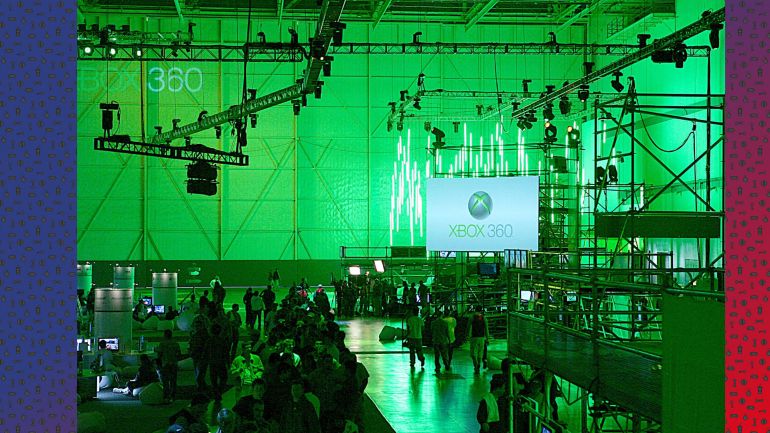
After the US and Canada came Europe on December 2. Japan had to wait until December 10. In 2006, the console reached South America, Asia, Africa, Australia, and Eastern Europe. Russia didn't get the Xbox 360 until February 2007. By some counts, more than 350,000 consoles had sold in North America by the end of November. After the European and Japanese launches, the entire stock set aside for release sold out. That led to an ugly situation with scalpers charging more than double the retail price.
A word about prices. At launch, the Xbox 360 came in two versions. First was the $299 Xbox 360 Core, a stripped-down console with no hard drive. You needed memory cards for saves. The controller was wired, and the box came with a standard composite AV cable that delivered a lower-quality picture. A proper cable was sold separately.
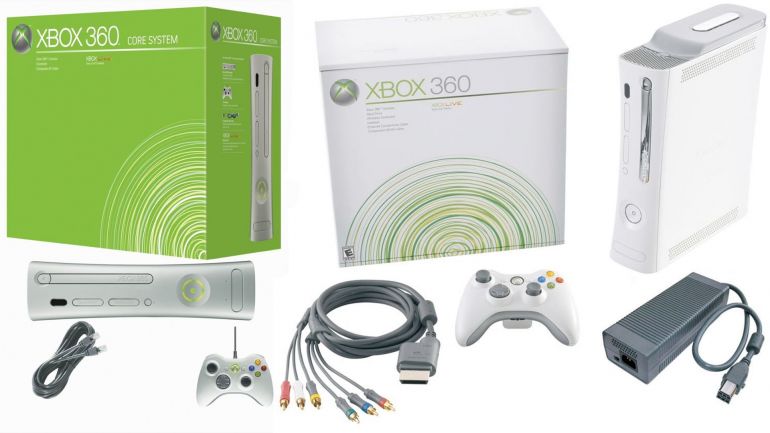
The other Xbox 360 option was the Premium package, with a 20 GB hard drive, a wireless controller, a wired headset, and a component cable that supported up to 720p or 1080i. That royal treatment cost another $100, for a total of $399.
Specs and Features
As mentioned above, under the hood the Xbox 360 had the IBM/Microsoft XCPU, also known as Xenon, running at 3.2 GHz. Broadly speaking, the Microsoft console's processor was a PowerPC-based, simplified take on the Cell in the PS3. It had three independent PPE cores, each of which could theoretically run the console's internals on its own. They all connected to the rest of the system via the XBAR bus, backed by 1 MB of L2 cache, which substantially sped up transactions between the PPE cores and the rest of the hardware.
PowerPC Processor Element
pronounced crossbar
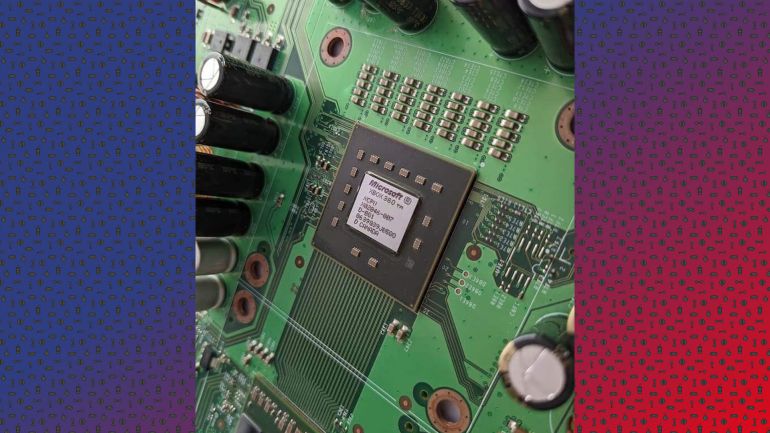
Another big difference between Xenon and Cell was the absence of the PowerPC processor storage subsystem. The XBAR now handled part of that communication, and all three blocks shared the L2 cache. IBM also improved the VMX module for vector and matrix processing, turning it into VMX 128 with more registers and opcodes. Each Xenon core supported SIMD instructions, meaning it could perform the same operation on multiple pieces of data at once. That was especially useful for graphics and physics.
PPSS
the SIMD block inside the PPE
Funnily enough, Xenon was never intended to work in isolation. The Xbox 360 processor was designed to work closely with the console's graphics chip, Xenos. The Xenos GPU was based on the R400 architecture, which never went anywhere beyond the Xbox 360. A direct connection let the CPU send commands and geometry to the GPU without first storing command buffers in external memory, saving bandwidth in main memory. That close integration is what let the Xbox 360 deliver such strong performance without expensive hardware.
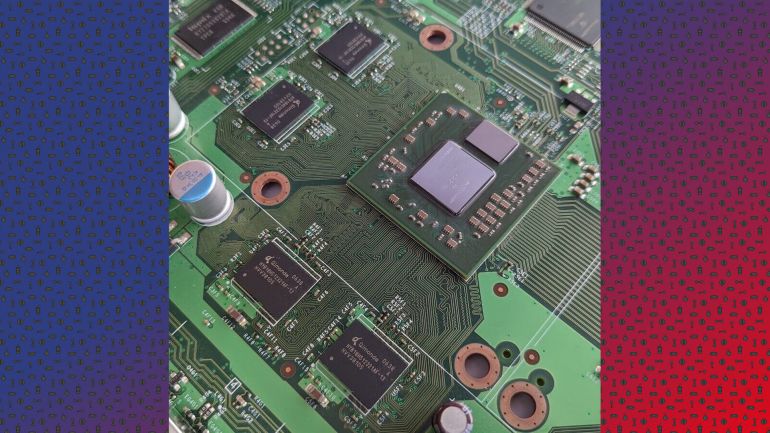
The Xbox 360's memory architecture is also worth a look. Several chips on the motherboard provide a total of 512 MB of GDDR3 SDRAM. The interesting part is that they sit next to the GPU instead of the CPU, where you'd usually find them. To render graphics, Xenos uses two different kinds of memory: those 512 MB of GDDR3 and a smaller but much faster chip with 10 MB of dynamic RAM . Although the second chip is in the same package as the main memory, only Xenos can access it. Funnily enough, EDRAM was also used in the PS2, PSP, and GameCube.
EDRAM
That setup gave the system more flexibility in how much memory it reserved for the CPU or GPU. It also meant higher latency when components farther away accessed memory. That's where the L2 cache came in, helping avoid those delays.
such as Xenon itself
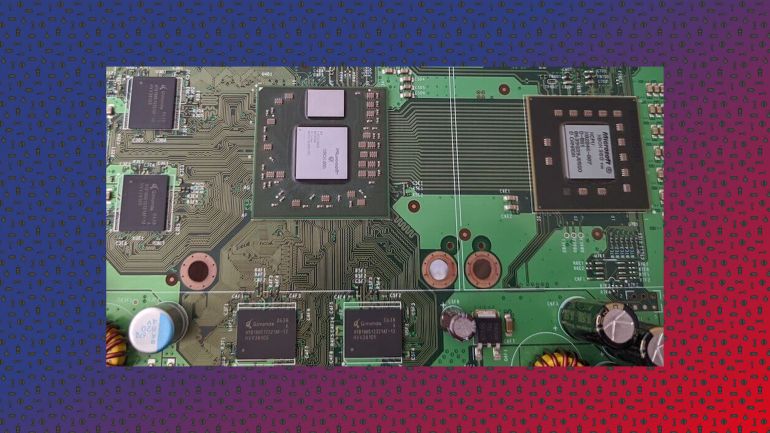
Advances in technology meant the console no longer needed the dedicated audio chip used in earlier generations. The CPU could do the job through a software audio pipeline. The Xbox 360 still had a hardware audio decoder tucked away in the Southbridge chip. It supported just one codec, Xbox Media Audio , a variant of Microsoft Windows Media Audio .
XMA
WMA
All input and output also went through the Southbridge, just as on the first Xbox. It connected to most, if not all, of the console's internal and external interfaces. The chip had no direct connection to the CPU, though. When it needed data from the Southbridge, Xenon had to go through Xenos.
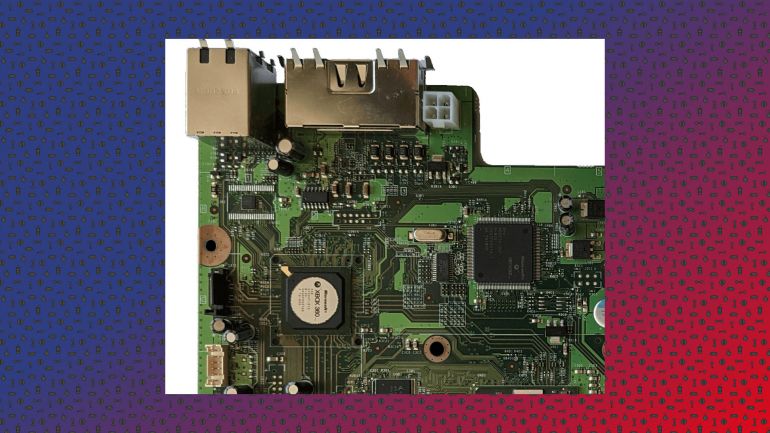
The close relationship between the CPU and GPU also saved a fair bit on Xbox 360 production. The original Xbox had sold at a substantial loss for Microsoft, and the company didn't want a repeat. It had to get manufacturing costs and the retail price as low as possible.
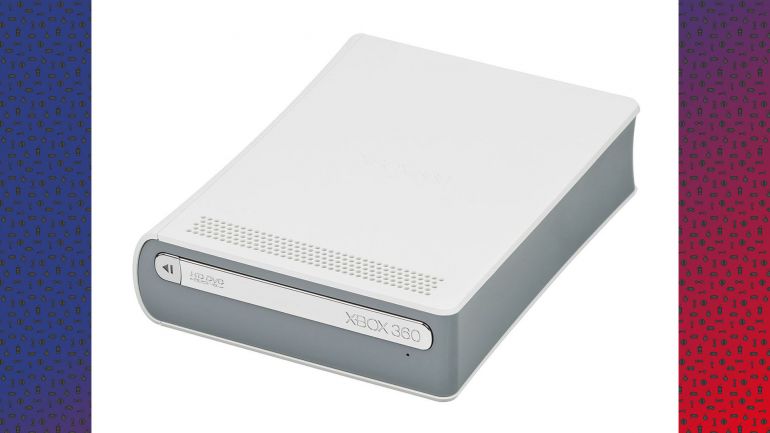
That's where the different packages came in. Leaving the hard drive out of the Core version saved money. The company also chose regular DVD drives over Blu-ray. Microsoft didn't even go with HD DVD drives and discs for game storage. The console did get an external HD DVD drive for watching movies in 2006, but Xbox 360 games shipped only on DVD through the end of its life.
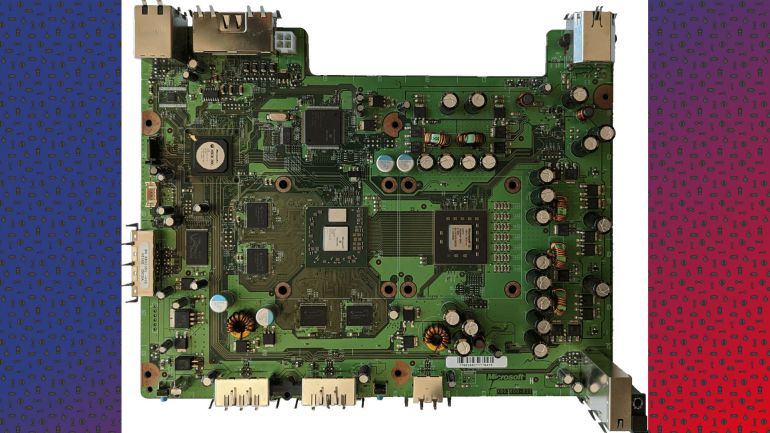
Early Xbox 360 revisions had component AV but no HDMI port. HDMI arrived after 2006 with the new Zephyr motherboard, for two reasons. First, HDMI hadn't become the dominant format yet, and the world was only gradually moving from analog to digital video. Second, Microsoft required developers to account for people who'd be playing their games on CRT screens.
The second console from Microsoft also had limited backward compatibility through software emulation. It wasn't as cool as the PS3 approach, which basically put the second PlayStation's guts inside, but it was cheaper and more thought-out. The emulator was called FU, short for Fusion. It kicked in every time you started a classic Xbox game on the Xbox 360, provided Microsoft had put the game on its allowlist and deemed it playable. System updates added more games to that list.
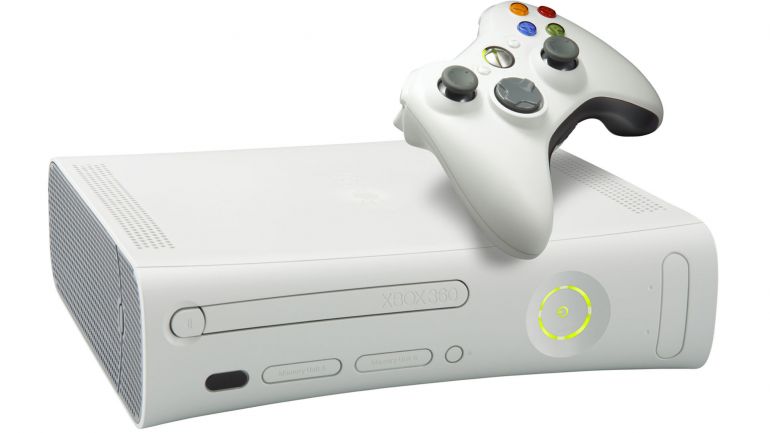
The Xbox 360 operating system was based on Windows NT. Naturally, the console version was heavily modified and stripped down. Its core utilities and apps were packed into 16 MB of NAND flash. The look of the OS changed substantially several times over the console's life.
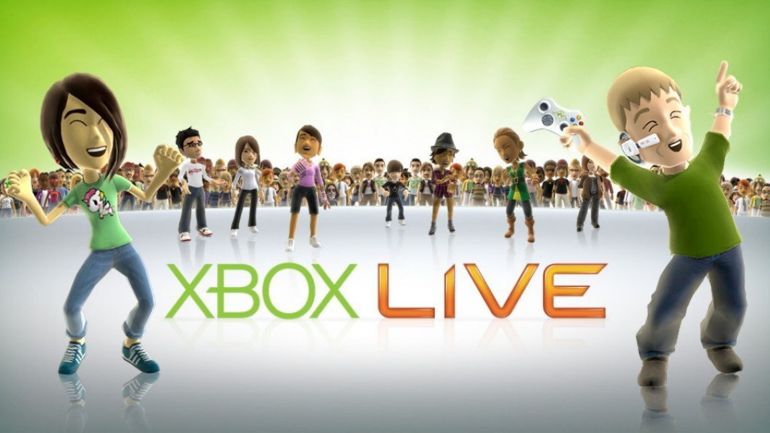
The online service Xbox Live kept evolving, too. With the Xbox 360 launch, it got an update to version 2.0 . The interface became more convenient and modern, and social features like finding friends and managing friends lists improved. A store let you buy digital games, add-ons, console themes, and user avatars. One of the biggest additions was achievements . The Xbox 360 was the first console to have them, and it also introduced the points system, Gamerscore.
an unofficial name
Xbox Live Marketplace
Xbox Achievements
The service added even more features later. You could make video calls and watch movies through Marketplace. It added integration with Twitter and Facebook, cloud saves, a family subscription, Kinect support, and plenty more.
Problems
Reports of hardware trouble started coming in as soon as the Xbox 360 launched. The best-known problem was a general hardware failure, nicknamed the Red Ring of Death after the three red LEDs that lit up around the power button. It was common on early consoles with Xenon and Zephyr motherboards. All sorts of things could trigger it. The ring could appear after a component failed, because of power problems, or because the Xenon processor, the Xenos GPU, or both had overheated.
Overheating was a big problem for the Xbox 360, too. The manual even recommended how to position the console to keep the Xbox 360 from getting too hot. That didn't help much. Users also reported graphics chip failures, visual artifacts, and even a complete loss of picture. Hard drives would hang, discs wouldn't read, and DVD drives had problems of their own, up to and including damaging discs. Microsoft had to spend money to limit the damage to its reputation and faced several lawsuits.
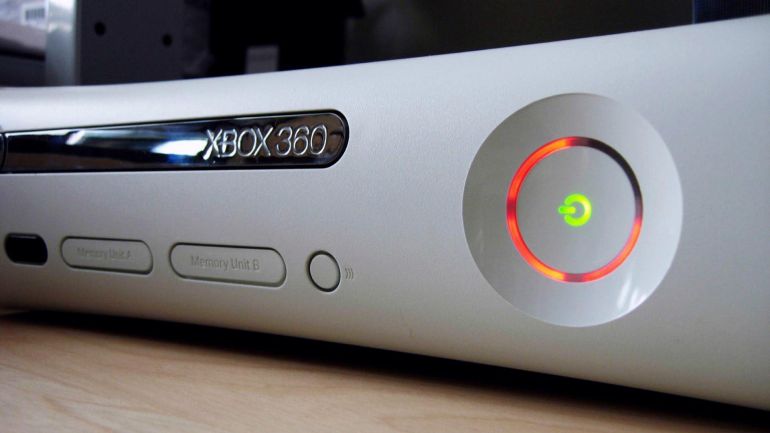
Luckily for both Microsoft and Xbox 360 owners, the company didn't leave customers to fend for themselves. The troubled Xbox 360 launch cost Microsoft a huge amount of money, but it managed to protect its reputation. The warranty went from one year to three, and every defective console was replaced, though it took until 2011 to finish the job.
Design and Models
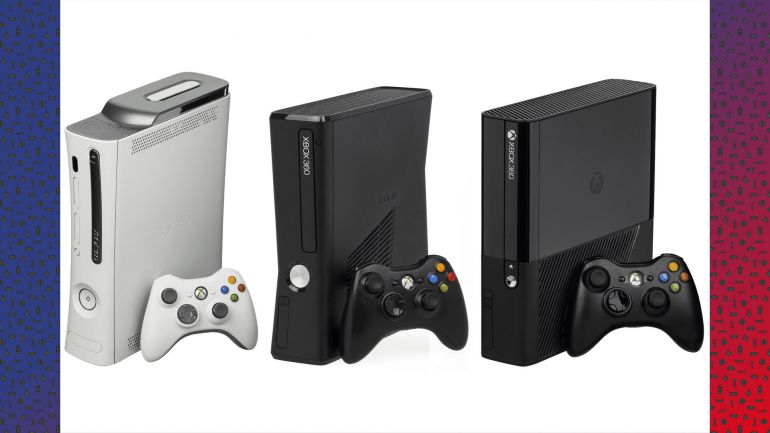
.As mentioned, the Xbox 360 launched with two bundles, Xbox 360 Core and Xbox Premium . The first was the cheapest console, with no hard drive, a wired controller, and a basic composite cable. The second was better equipped, with a 20 GB drive, a hybrid composite/component cable, a wireless controller, and a wired headset. Both versions used the original Xenon motherboard.
also known as Pro
and later 60 GB
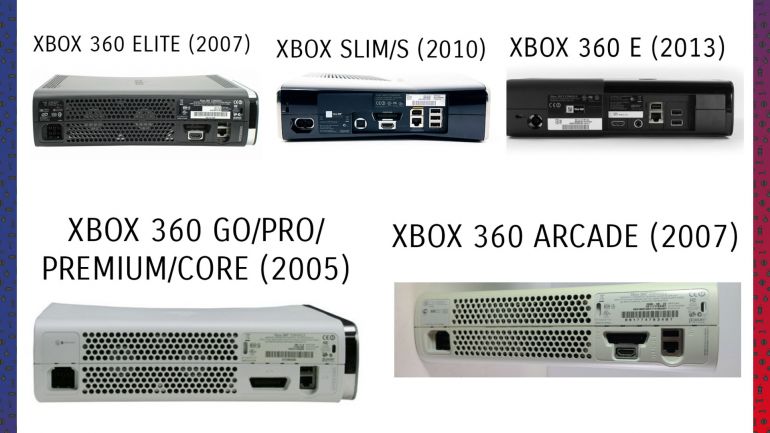
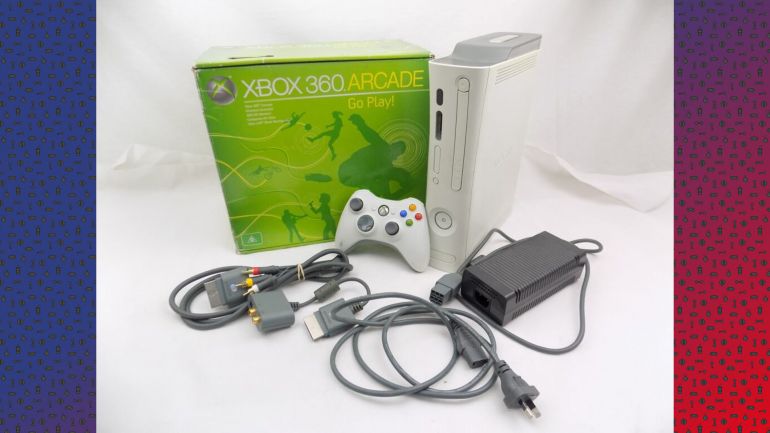
In 2007, consoles with the updated Zephyr motherboard went on sale, bringing an HDMI port and an improved GPU heatsink. The budget Xbox 360 Core gave way to the Xbox 360 Arcade. It still came with a composite AV cable, but the controller went wireless. It also included a 256 MB memory card, replaced by a bigger 512 MB card in 2008. Built-in NAND flash later replaced the card, starting at 256 MB and going up to 512 MB. That happened with the switch to Jasper motherboards in November 2008.
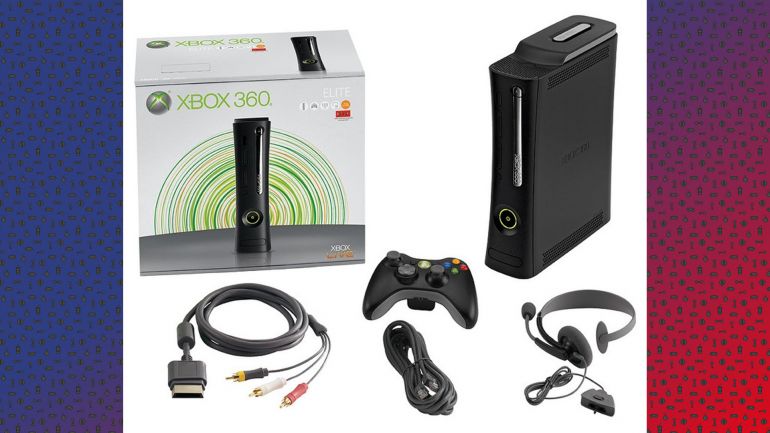
Spring 2007 also saw the Xbox 360 Elite, which stood out for its stylish matte finish and 120 GB hard drive. Inside was the new Falcon motherboard. The Xenon CPU moved to a 65 nm process and got a new heatsink. Consoles with that board used less power and ran cooler and quieter. The Elite box included a matching black controller and headset. It was also the first bundle to come with an HDMI cable. By the end of 2007, all the consoles described above were shipping with Falcon boards, which also made it possible to cut prices across the Xbox 360 line.
65 nm technology is a lithography process used to make CMOS semiconductors that was current in 2005. Printed lines can be as narrow as 25 nm on a nominal 65 nm process, and the spacing between two lines can exceed 130 nm
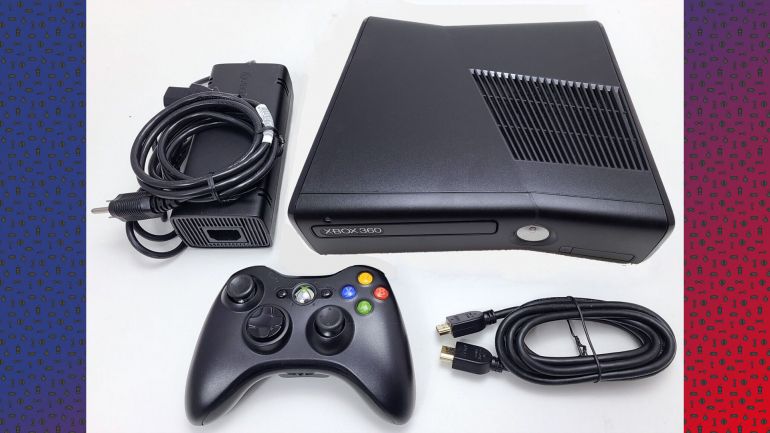
A smaller console went on sale in June 2010, the Xbox 360 S, or Xbox 360 Slim. Its redesigned case was considerably smaller and rounder, and the buttons became touch-sensitive. Inside was the Trinity motherboard with an updated hybrid processor, the XCGPU , which combined Xenon and Xenos on a single 45 nm die. The eDRAM was on a separate 65 nm die. This cut power consumption. Some models came with a 250 GB hard drive and a glossy black finish. Other Slim models had 4 GB of built-in flash storage and a matte black case. Later Xbox 360 S models came only in matte.
code-named Vejle
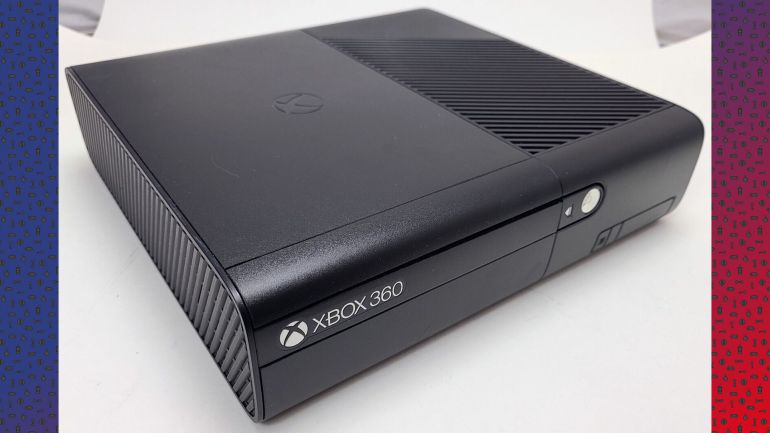
The final version of Microsoft's seventh-generation console was the Xbox 360 E, released in 2013. It was essentially a revised Slim with a case inspired by the upcoming Xbox One.
Naturally, there were plenty of special editions. As with the original Xbox, everyone on the team that worked on the new console got an Xbox 360 Launch Team edition with unique colors and engravings.
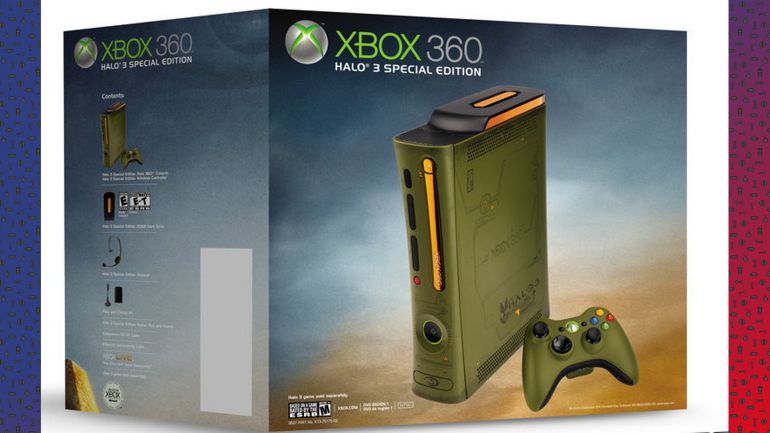
There were unique versions themed around specific games, too. In 2007, the dark green Halo 3 Special Edition Xbox 360 Pro came out. That same year, 100 consoles were made to coincide with the release of the animated The Simpsons Movie. They were bright yellow with artwork from the movie. They never went on sale and could only be won in a giveaway.
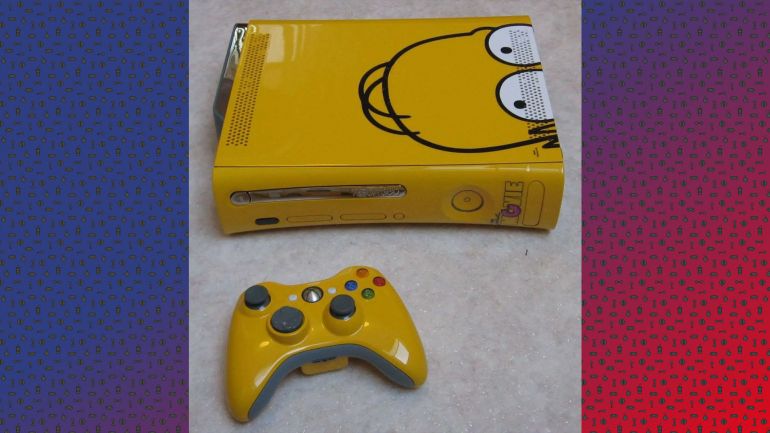
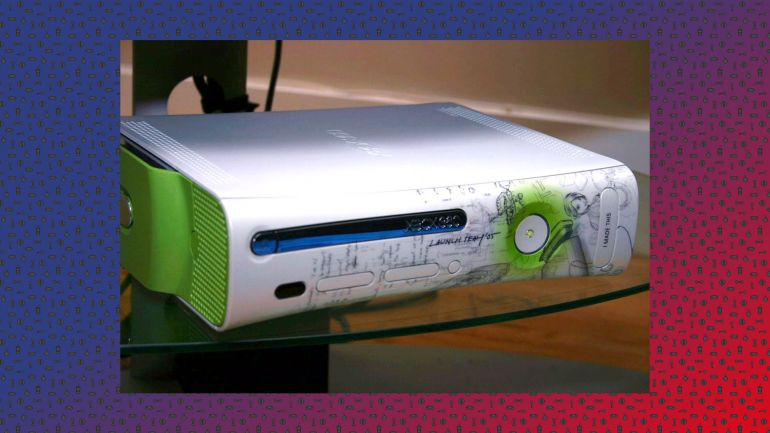
There were also Xbox 360 Elite editions for Call of Duty: Modern Warfare 2, Forza Motorsport 3, Resident Evil 5, Final Fantasy XIII, and Tom Clancy’s Splinter Cell: Conviction.
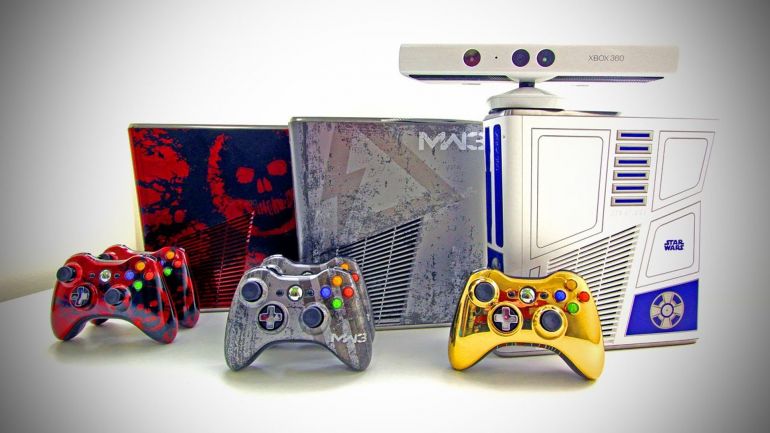
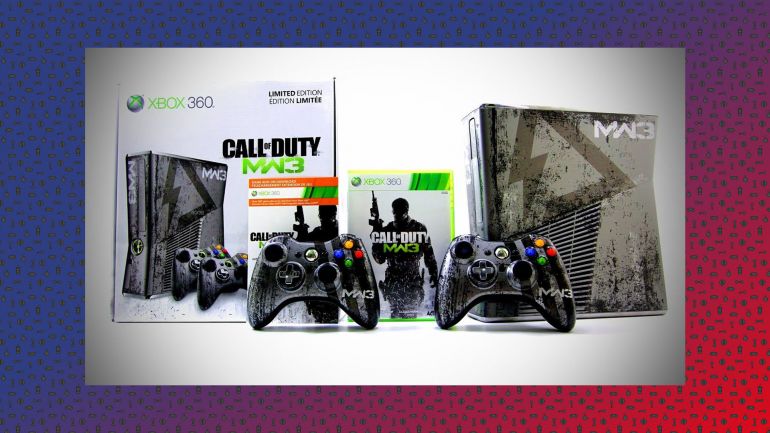
The Xbox 360 S got editions for Halo: Reach, Halo 4, Gears of War 3, and Call of Duty: Modern Warfare 3. There was also a Limited Edition Kinect Star Wars Bundle, which included a console and controller in unique colors, a Kinect sensor, and copies of Kinect Star Wars and Kinect Adventures.
Controllers
The Xbox 360 controller has a lot in common with the previous generation's Xbox Controller S. Even the layout is very similar, except two buttons moved to the bumpers, and Start and Back moved to the center of the controller. A TRS headset jack was added at the bottom.
The Xbox logo in the middle doubles as a button and status indicator. Pressing it opens a console menu where you can access text and voice chat or download content without leaving your game. Holding it down also brings up the Xbox 360 guide.
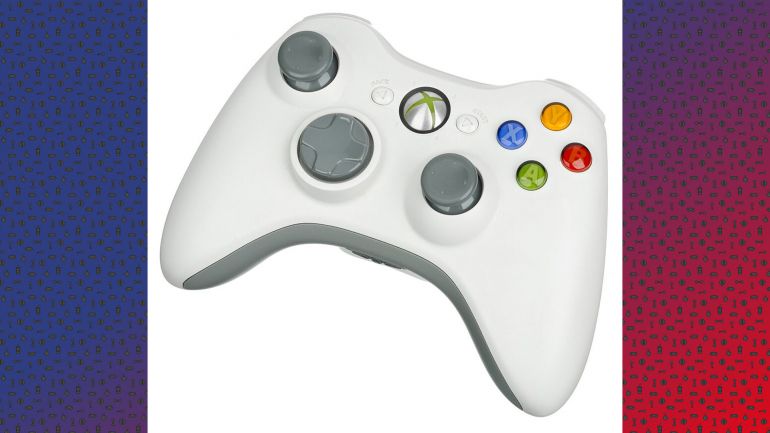
At the Xbox 360 launch, some bundles came with wired controllers. Later, all consoles came with wireless controllers powered by AA batteries .
or rechargeable batteries of the same size
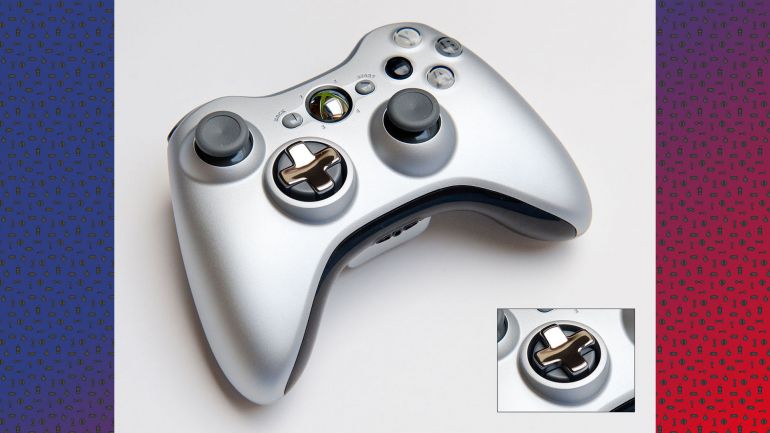
In 2010, special edition controllers arrived with a transforming D-pad. You could switch it between four-way and eight-way operation. They also had concave analog sticks and A, B, X, and Y buttons in unusual colors.
a standard cross shape
with active diagonal inputs
Accessories
The console naturally got all kinds of accessories: headsets, battery charging stations, cables, hard drives , and memory cards. And of course there was a whole pile of alternative controllers, from steering wheels, joysticks, and guitars to the Tony Hawk Shred Board skateboard.
both internal and external
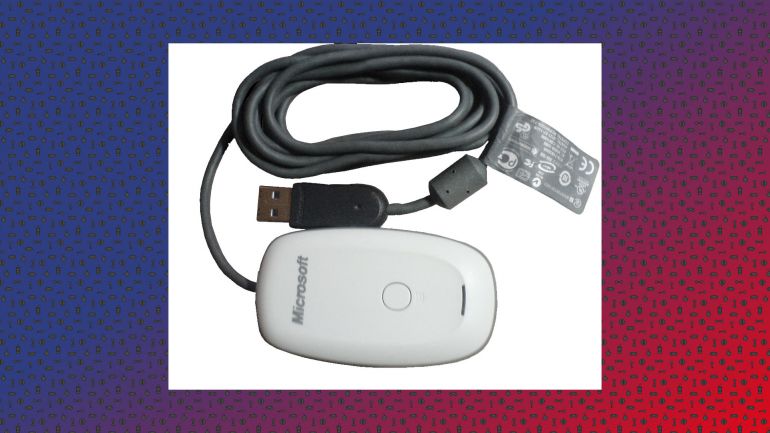
Wireless Gaming Receiver.
A receiver for connecting wireless controllers and other Xbox 360 accessories to a PC.
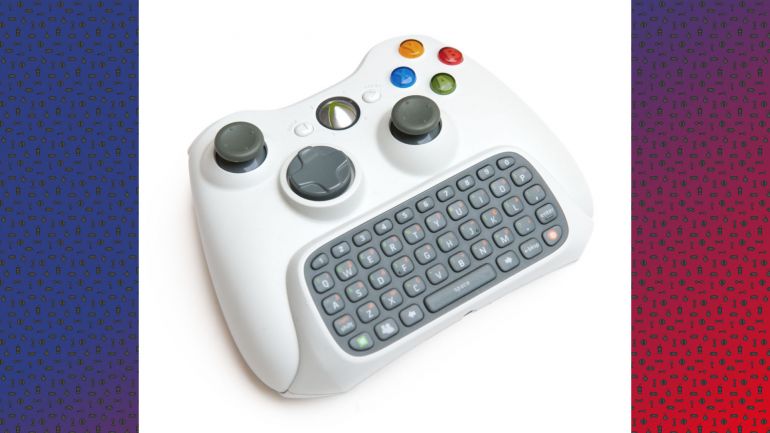
Messenger Kit.
A complete kit for chatting with friends on Xbox 360. It came with an updated headset and a Chatpad keyboard that attached to the controller.
HD DVD Player.
A detachable HD DVD player for watching HD DVD movies on Xbox 360.
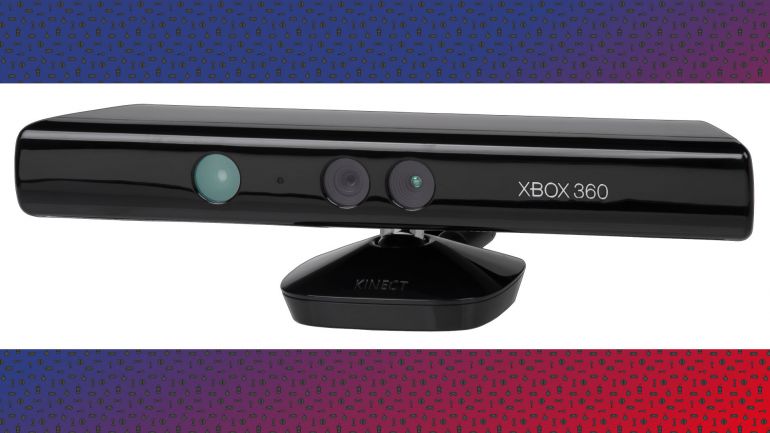
Kinect.
A real killer app for Xbox 360. Kinect was a revolutionary hands-free motion sensor that let you control games and the console with body movements and your voice, without a gamepad. It took inspiration from the Nintendo Wii's controls, as did PlayStation Move. With motion and facial recognition, Kinect turned players into the controllers, giving them a unique interactive experience. That opened up new possibilities for gaming, fitness, and entertainment and made the Xbox 360 more accessible and appealing to a wider audience. More than eight million Kinect units sold in two months.
Games
Microsoft took the next generation's library seriously, aiming to go toe-to-toe with Sony. Overall, you could say the consoles were more or less evenly matched. The Japanese company arguably pulled slightly ahead, though, thanks to an incredible lineup of exclusives, especially toward the end of both consoles' lives.
The Xbox 360 had the better multiplatform games, outperforming their PlayStation 3 counterparts. Xbox Live's online features were also far ahead of Sony's. The Japanese company at least offered free online play at launch, before picking up bad habits from Microsoft later.
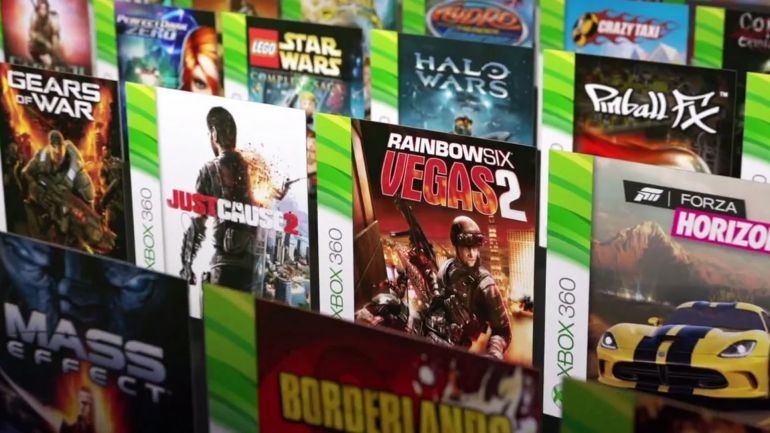
The Xbox 360 could boast two excellent shooter series, Halo and Gears of War. It was also the only console to get the first Saints Row.
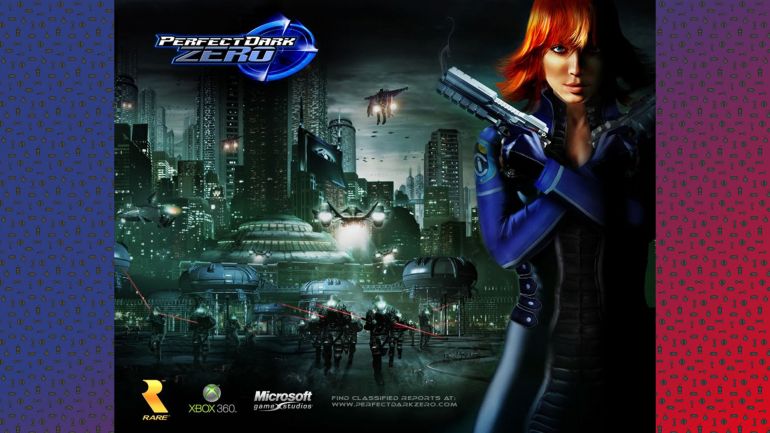
When it acquired Rare, Microsoft got the Perfect Dark franchise. Two games in the series came out on Xbox 360: a remaster of Perfect Dark and the prequel Perfect Dark Zero. Nintendo didn't get either one.
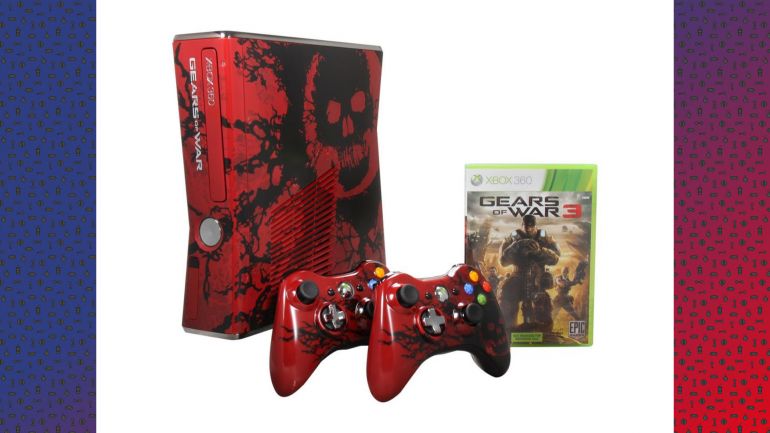
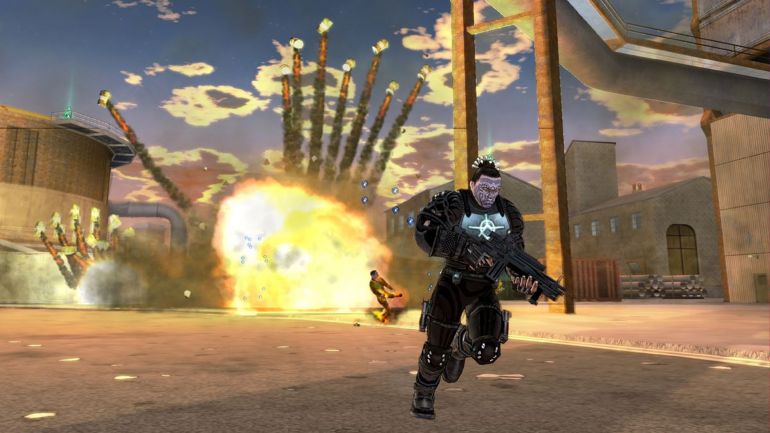
The superhero action series Crackdown sold pretty well and got two games on Xbox 360.
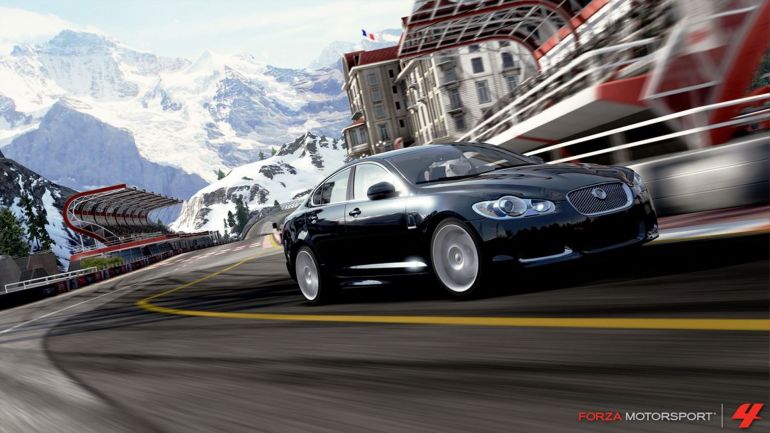
Forza Motorsport 4 is still considered the best in its series. It proved a worthy rival to Gran Turismo on PlayStation in the racing sim genre.
RPG fans had Fable II and Fable III to enjoy.
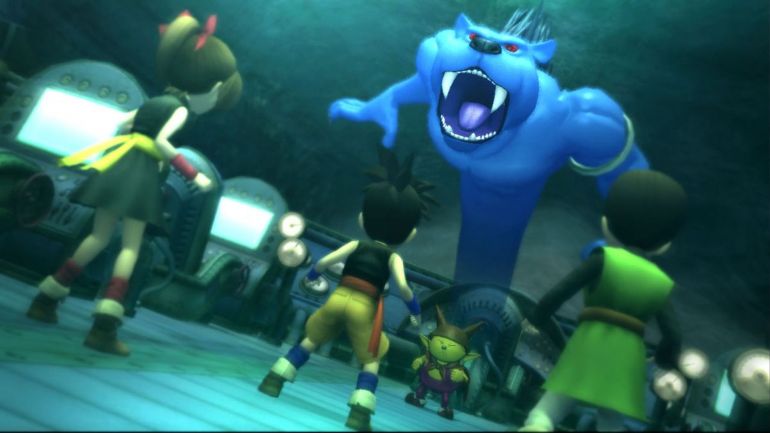
JRPG fans got the excellent Blue Dragon and Lost Odyssey.
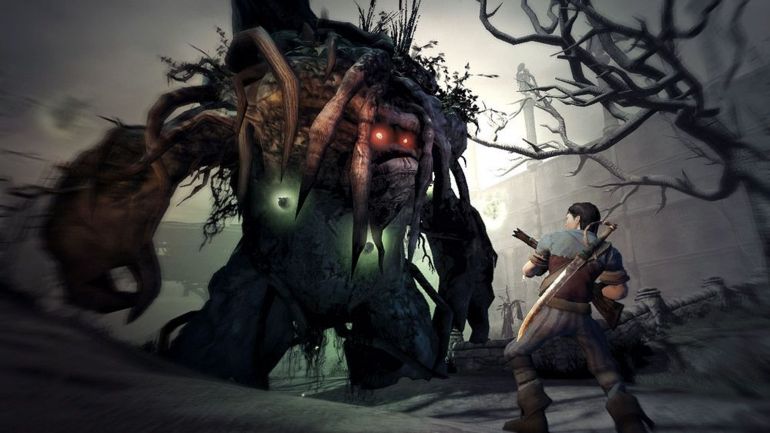
Too Human from Silicon Knights turned out pretty well, too, after jumping ship from the original PlayStation to Microsoft.
Alan Wake was also a timed exclusive.

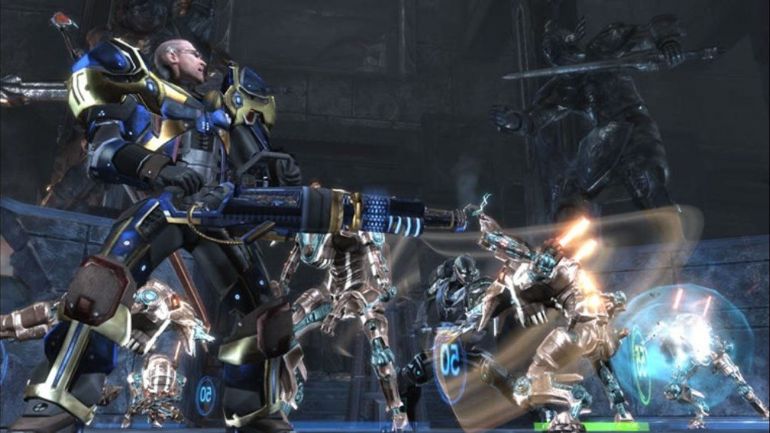
The console's big draw was its Kinect games. There were no real masterpieces in the bunch, but Kinect games were fairly popular because they appealed to such a wide range of people.
Piracy
The first successful Xbox 360 hack was documented in May 2006. It reflashed the Toshiba-Samsung DVD drive with Xtreme Firmware, tricking the drive into playing pirated discs. On later consoles, Microsoft started including drive firmware in its updates, which stopped the trick from working.
the method didn't work with other drives
In February 2007, the console's hypervisor gave way, too, thanks to 2005's King Kong, of all things. For reasons unknown, the game's vertex and pixel shader files were unencrypted and unprotected. Modified files on discs that would run in flashed drives opened up access to the console's RAM and, from there, the system call handler. It was a big step for homebrew developers. Luckily for Microsoft, it patched the hole before the information went public.
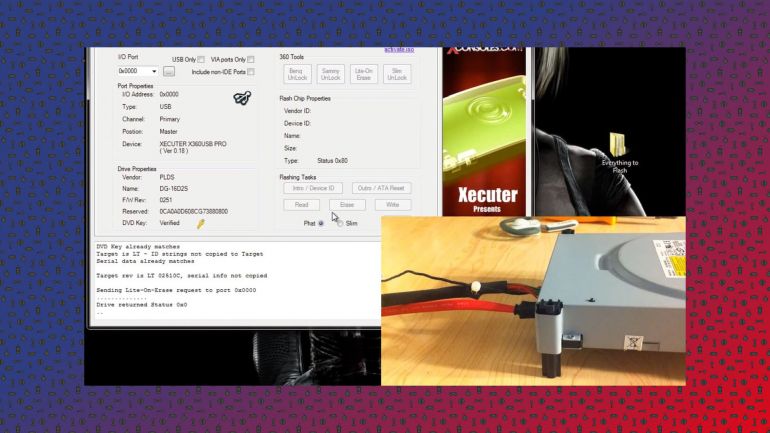
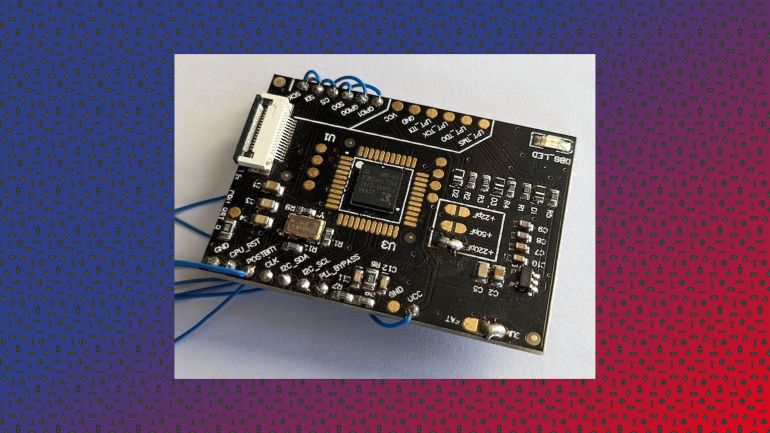
In 2009, the console was hacked using a method known as JTAG/SMC. It was fairly complicated and could brick a console with a later motherboard. It involved extracting an image from NAND memory, modifying it, and writing it back to NAND. It also meant doing a little soldering to add a couple of wires to the board. The result was a homemade launcher that started automatically when the console powered on.
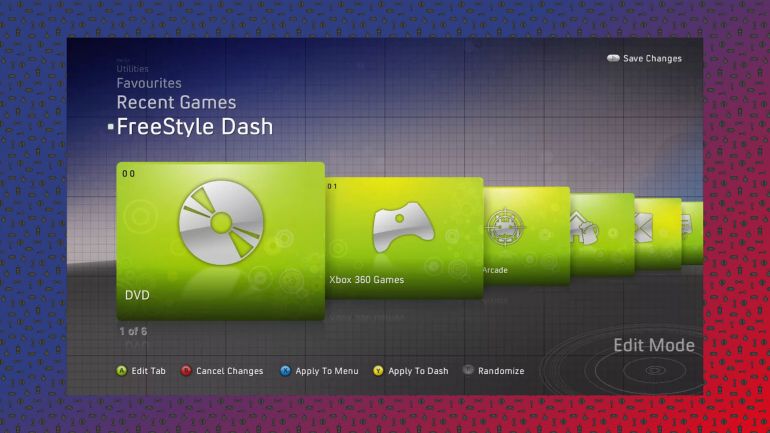
That paved the way for a whole host of homebrew software. There was the Linux-like bootloader XeLL, which could run the modified OS freeBOOT. There were new dashboards like FreeStyle and Aurora, launchers like XeX Loader and XeXMenu, and plenty more.
A full hardware hack followed in 2011, the Reset Glitch Hack . It used a dedicated chip on the console's motherboard. It worked regardless of firmware version but didn't work on the revised Xbox 360 S and E models, because some connection points on their boards had changed.
RGH
several different kinds were available
Later versions of the S and E weren't hacked until 2021. In August, RGH 1.2 was adapted to the Slim. November brought RGH 3.0, which didn't even need a chip, though it still called for soldering a couple of wires, as with the SMC/JTAG hack.
The Console in Russia
The Xbox 360 reached Russia in February 2007. The original Xbox had done reasonably well there, largely because people were so accepting of piracy, so Microsoft had fairly high hopes for the Russian market. Those hopes didn't pan out. Piracy had flourished on the first two PlayStation consoles, too, and they'd earned Sony a tremendous amount of goodwill.
Next to the reasonably affordable Slim versions of the PS2, the Xbox 360 looked outrageously expensive. Even the pricier PS3, which arrived three months later, had the advantage of a Blu-ray drive and a bigger hard drive for Sony. The PlayStation 2 also had an enormous library with plenty of exclusives, and the third PlayStation had backward compatibility, opening up access to the previous generation's games. The libraries of the Xbox 360 and the original Xbox were much thinner.
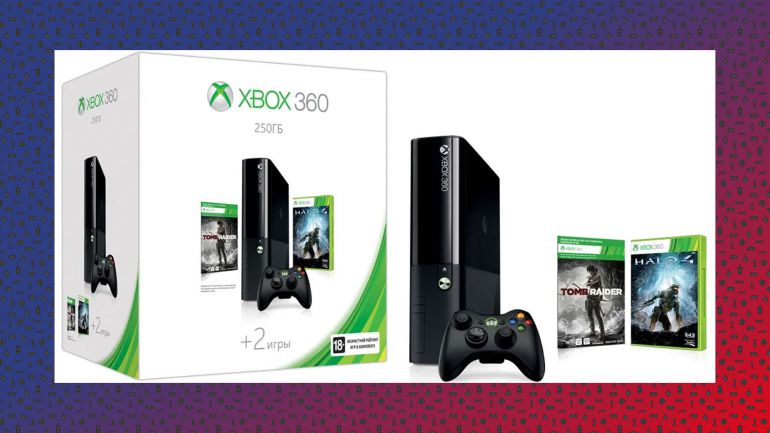
Things got a little better when Kinect launched. Heavy advertising and localized games helped, too. Far more multiplatform games got localized on Xbox 360 than on PS3. Price cuts also helped build a decent, loyal audience. And once the console was hacked and people could run game images off the hard drive, well, you can guess what happened next.
The Decline
Overall, the Xbox 360 did more than well, despite its rocky launch. It outsold the original Xbox, even in Japan, though sales of the American console were still poor there. As the first console of the seventh generation, with a full year before the competition arrived, the Xbox 360 stayed in the lead into 2008. It wasn't until that summer that the Nintendo Wii pulled ahead. In the end, it came last in its generation, though to be fair, it finished only just behind the PS3.
In a 2010 interview with MCV magazine, Microsoft VP Chris Lewis said that the Xbox360 was at the midpoint of its life and that the launch of Kinect that year could extend it. By 2011, rumors were circulating that Microsoft was hard at work on a new console. Work on improving the Xbox 360 kept going in the meantime.
In May 2013, Microsoft announced the next-generation Xbox, the Xbox One. It came out that November. Naturally, both Microsoft and game developers turned their attention to the eighth-generation console. Xbox 360 production stopped altogether in 2016 to free up manufacturing capacity for the upcoming Xbox One S and One X.
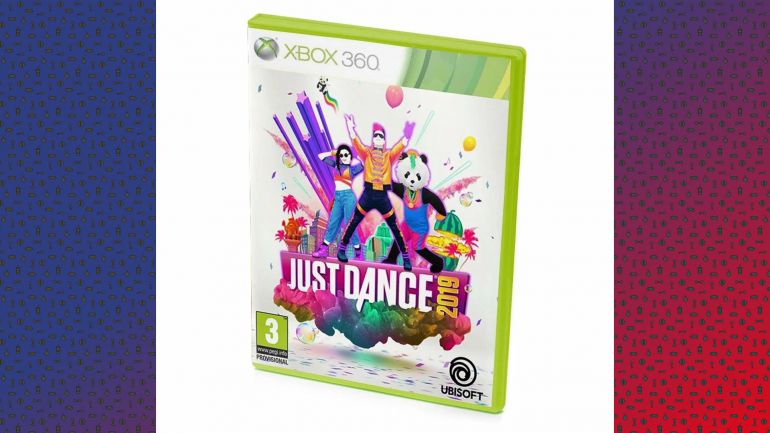
By then, far fewer games were coming out for the aging system. A few still trickled out through October 2018, when the last Xbox 360 game, Just Dance 2019, came out. The Xbox 360 Marketplace closed at the end of July 2024. Players lost the ability to buy digital copies of games, but the consoles could still connect to Xbox online services and even play some games online.
The Console Today
These days, the Xbox 360 comfortably belongs to the growing list of retro consoles. Its hardware is outdated and no new games are coming out, but it can still stir up warm feelings and a rush of nostalgia for plenty of players. Even if you missed its heyday, you can now buy an Xbox 360 and games for relatively little. And of course, there's always the option to fly the black flag and shamelessly run games straight from the hard drive .
for the record, we don't condone it
The Xbox 360 is also great for collecting. It's one of the more recent retro consoles , and games are easy enough to find, even limited editions. The console has an impressively large library with plenty of exclusives.
alongside the PS3
If buying the console and discs doesn't appeal to you, there's always emulation. It's come a long way over the past few years, and Xbox 360 emulators can run console games on modern computers.
Conclusion
The Xbox 360 still holds up, especially for players nostalgic for classic games. In its day, the Xbox 360 drove innovations that helped set the direction for modern gaming.
The console gave us things like in-game achievements and trophy hunting. The Xbox 360 also took Xbox Live further, with a huge impact on the industry. Online gaming became simpler and more convenient. Microsoft was the first company to launch a full-fledged digital game store on its Xbox 360. That era also laid the groundwork for services that let you keep saves in the cloud and sync them between consoles.
There were ugly parts, too. For all its innovations and cult status, the Xbox 360 is also remembered for how unreliable it was. The Red Ring of Death became synonymous with the console and spawned a huge wave of criticism and memes. And those paid subscriptions you now need to play online on consoles spread like a cancer from the Xbox 360 .
though they existed before it
Enjoyed this article? Found it helpful? Support GameSpirit.org and help us create more great content.
Author: Godlike_Goblin for GameSpirit.org


