
Worshippers of Cthulhu Review
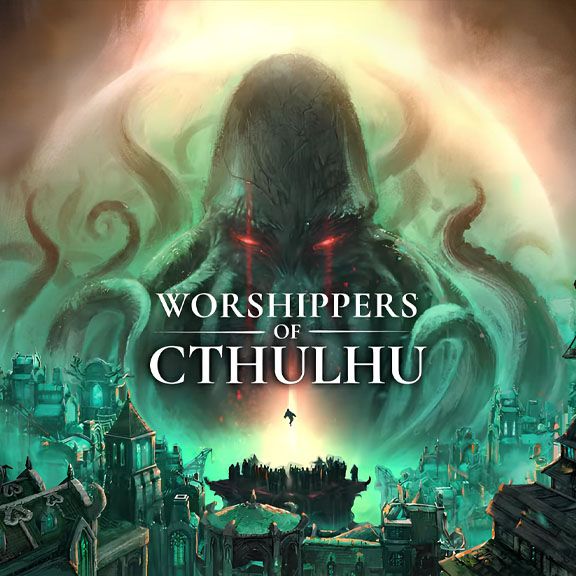
Title: | Worshippers of Cthulhu |
Developer: | Crazy Goat Games |
Publisher: | Crytivo |
Release: | 22.05.2025 |
Ever wondered whether the whispers in your dreams are more than a nightmare—a calling? An invitation to create something greater, powerful, and monstrous. A cult devoted to awakening and glorifying Cthulhu, for instance. If that thought has ever crossed your mind, you certainly should not pass up Worshippers of Cthulhu. Developed by Polish studio Crazy Goat Games, it is their second city builder. California-based indie specialist Crytivo handled publishing. The full release arrived in May 2025, after just over six months in Early Access, which began toward the end of 2024.
Worshippers of Cthulhu is a city builder, a colony development simulator, and a cult management sim all at once. Naturally, it comes with a Lovecraftian slant and all the accompanying delights: indescribable horrors and chthonic creatures. To put it in familiar terms, imagine an explosive mixture of Cult of the Lamb, Anno, a tiny drop of Frostpunk, and Cthulhus.
There is a story, centered on a cult working to awaken none other than Cthulhu, who sleeps peacefully in the ancient city of R’lyeh, buried beneath the Pacific. You play its leader and must guide your flock toward that cherished goal. The setting chosen for Worshippers of Cthulhu is a little unusual for Lovecraft’s work, though. Its world apparently has yet to experience even the Industrial Revolution.
Waking Cthulhu is no easy task. You work toward it across several story scenarios that throw all sorts of challenges your way. Worshippers of Cthulhu offers a wide range of situations. You must draw new cultists into your web, make first contact with ancient nightmare creatures*, fight fierce battles with other cults, perform horrifying rituals, conduct archaeological digs, and much more.
*One of your guides is a “black winged one,” also known as a “bat-winged devil.” These winged beings inhabit the swamps around New Orleans and associate with human cultists who worship the alien god Cthulhu. They were first mentioned in the story “The Call of Cthulhu.”
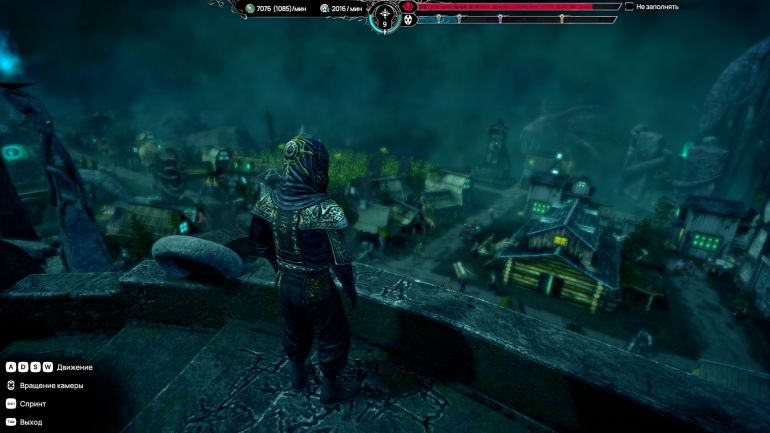
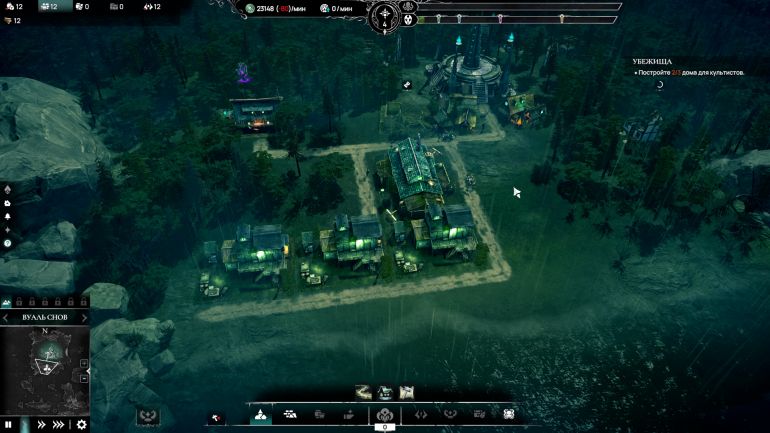
At first, the gameplay resembles a fairly traditional city builder. The story campaign also does a good job of easing you in, gradually introducing the mechanics instead of dumping them all on you at once. You begin with a small group of people and a loyal adviser, then build your first homes and basic production facilities to gather resources. Of course, you also need roads so your cultists can move around their settlements.
Every single follower has a specialization. Some are good with particular animals, some grow corn, and others cook porridge from it. More specializations appear as your service progresses. People working in their field gain experience and improve at their duties. A carpenter assigned to a sawmill, for example, works more efficiently than on a cornfield. Problems arise alongside this, however: beyond a certain point, the game increasingly gives you people with no defined specialty who gain no experience at all. You need to remake them through rituals, which we will discuss later.
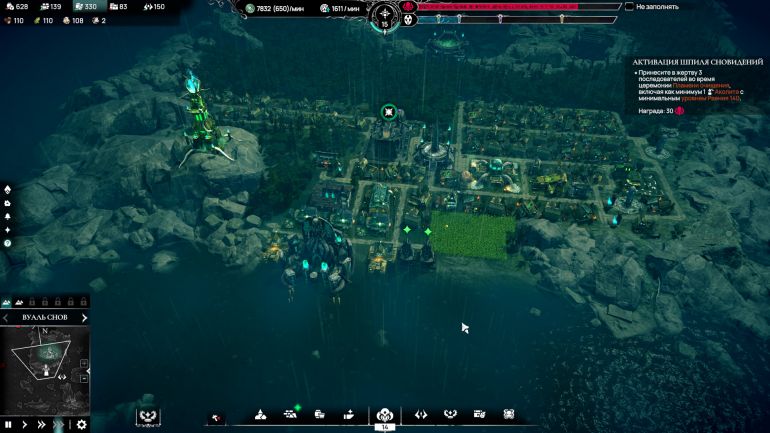
Although the game has a fairly extensive resource system, the most important resource is faith. Your cult’s followers generate it, and its growth depends on both their numbers and their quality of life. Throughout the game, you therefore need to keep your cultists’ needs as fully satisfied as possible. What they want is precisely those extra resources: various foods and robes. What kind of cult devotees would they be without stylish robes?
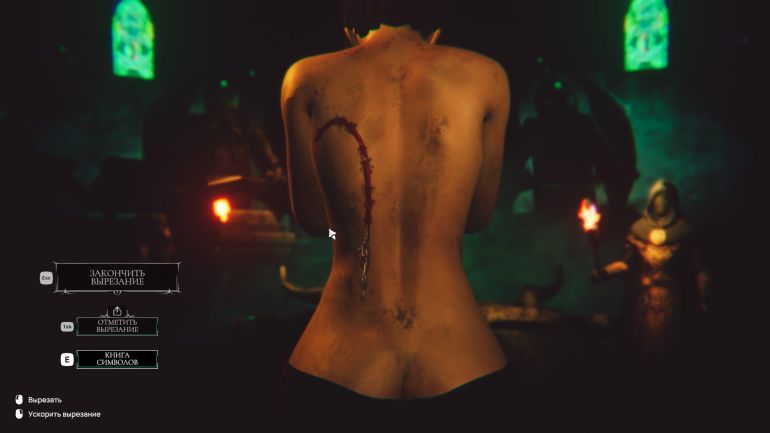
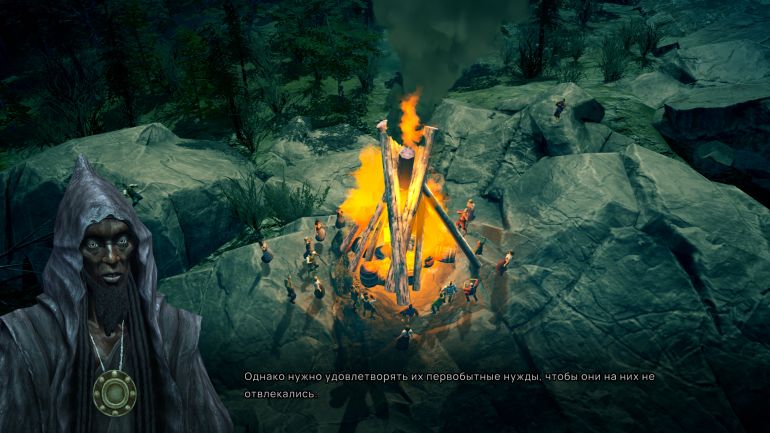
Life as an ordinary cultist in Worshippers of Cthulhu might seem full of joy and a leader’s loving care, if not for one big catch: participation in all sorts of rituals. Here, your followers usually become the expendable resources themselves. In Cthulhu’s glory, cultists burn on pyres, go under the knife, become vessels for summoning monstrous beings, and much more. Ritual participation does not always end in death, though. Sometimes it is enough to offer resources, carve a wooden or stone effigy of an Ancient One, or undergo ritual scarification to change professions.
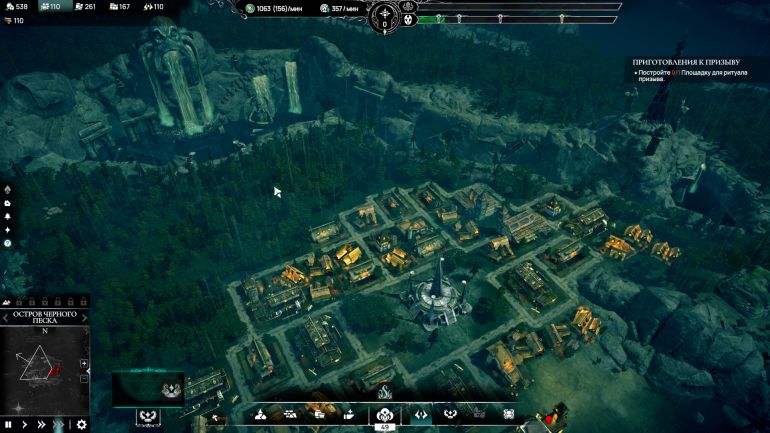
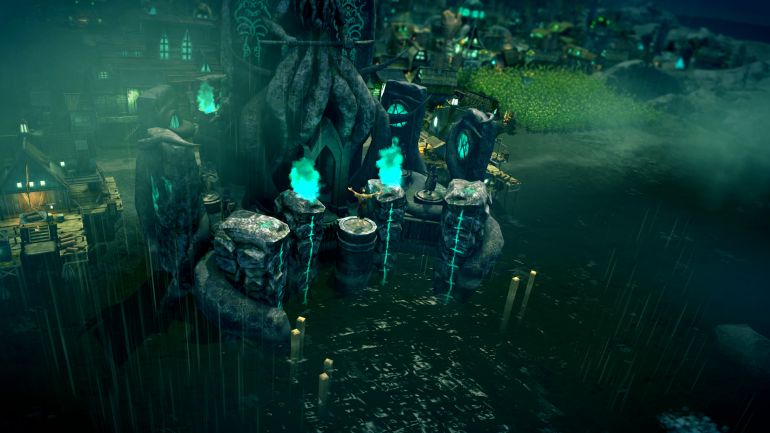
The ritual system is fairly well thought out and extremely striking to watch. What also stands out is that, as cult leader, you usually have to perform most rituals yourself. Worshippers of Cthulhu presents these as minigames. During scarification, for example, you make the cuts in your initiates’ bodies with a ritual knife. During ritual burnings, you choose the victims’ flame colors to obtain particular bonuses.
Settlement development and new buildings run through the technology system. It is fairly simple and relies on Eldritch Favor instead of faith. You earn it by completing tasks, through random events, and by performing certain rituals. Spend Favor to unlock new buildings, which you can then construct.
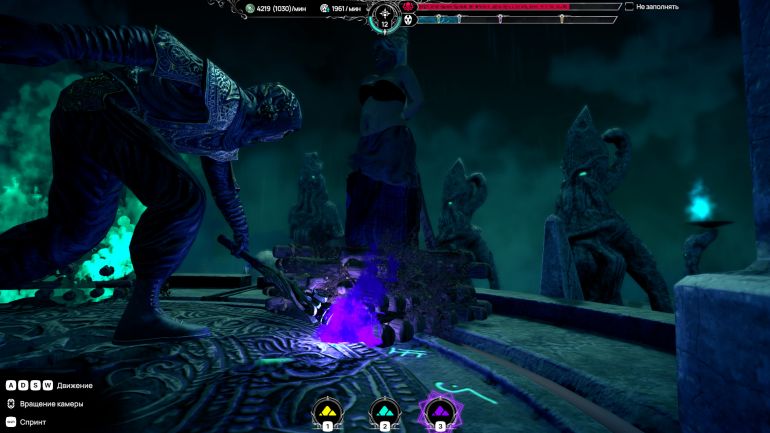
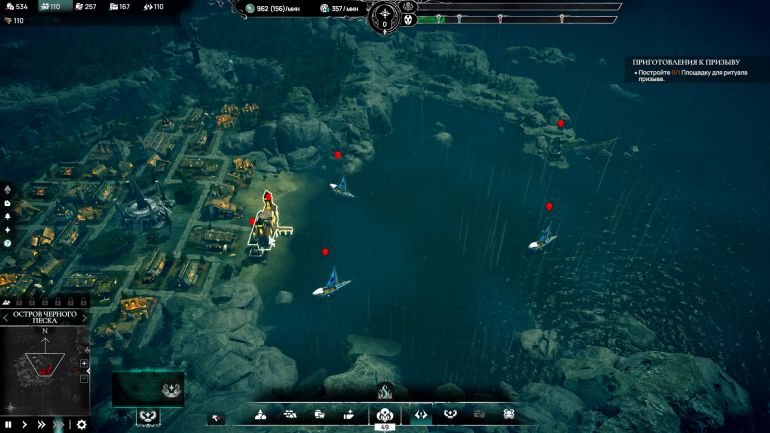
The very first scenario makes it clear that one settlement will not suffice. You must impose your will on other islands, clearing out nonbelievers and establishing colonies on their ruins. Islands have their own features. Some contain unique structures, others unique resources. Some have environmental buffs and debuffs that raise or lower production of particular resources.
Combat in Worshippers of Cthulhu is simple. You cannot raise armies, but you can certainly summon some horrifying creature and set it on your enemies. This requires rituals and sacrifices at a particular altar. Your summoned creature does not stay forever. It gradually loses health and eventually disappears, requiring repeated summoning rituals.


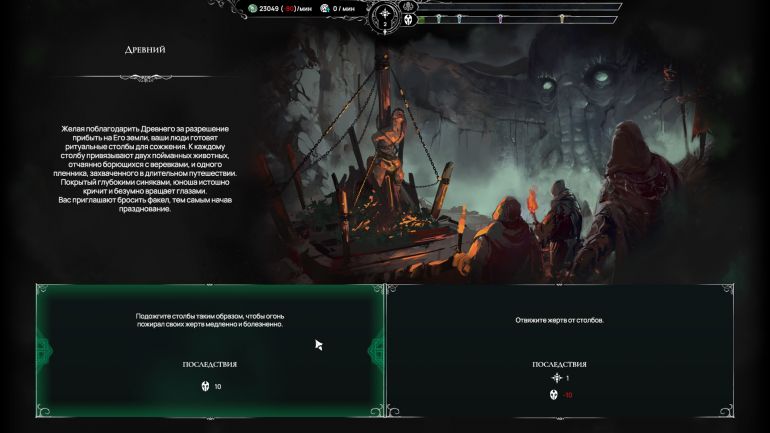
The game also constantly throws random events at you. Your cultists might get into trouble, a whale carcass might wash ashore, or one of the Ancient Ones might present a new trial, among plenty of other possibilities. In each case, you choose from several responses. The consequences are often spelled out clearly, but are sometimes hidden.
There is also a decree system reminiscent of passing laws in Frostpunk. Every choice brings an immediate benefit along with certain consequences, some lasting. Things are considerably less harsh here, though. Worshippers of Cthulhu may be fairly grim, but survival is hardly its focus. Nobody is going to torment you excessively. You can even disable Cthulhu’s patience meter .
which constantly drains and can cause serious consequences
There are reasons to criticize Worshippers of Cthulhu too. Its first and probably most serious flaw is its poorly balanced pacing. At certain points, it puts the brakes on your development hard, forcing you to wait frequently and at length for various conditions to be met, whether accumulating resources or performing actions. Even the built-in triple-speed option offers little relief. Repetition is another problem. Although the game keeps introducing new challenges, they do little to change the gameplay.
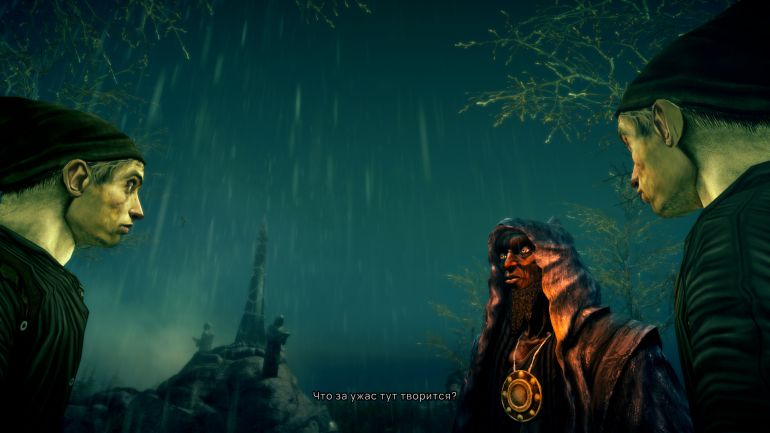
Its looks, however, deserve praise. Technically,Worshippers of Cthulhu is far from next-gen and does not look entirely modern. Character, building, and monster models are basic and hardly brimming with detail. Animations are stiff, and you can easily uncover an impressive number of small flaws. Even so, the game has a fairly remarkable visual style that creates an atmosphere you can confidently call Lovecraftian. The color filter is also well chosen and perfectly appropriate. There is little to say about the sound and music. They exist and complement the overall atmosphere nicely enough, but that is about it.
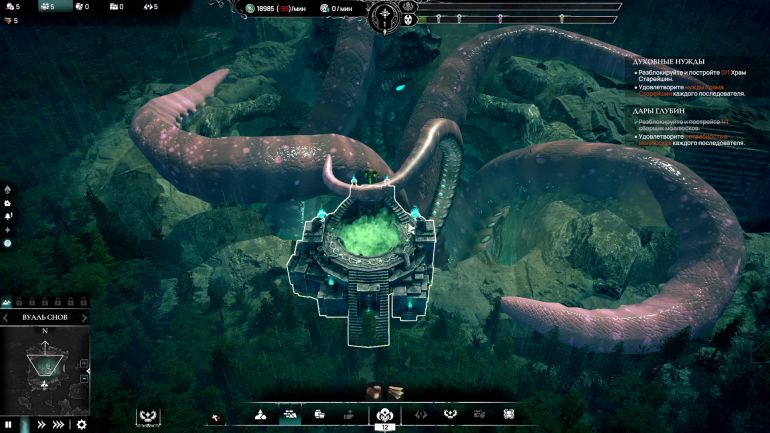
Overall, Worshippers of Cthulhu is a perfectly decent Cthulhu cult simulator that lets you develop settlements and perform horrifying rituals. If that is what your life has been missing, welcome aboard. If you have little interest in Lovecraft, though, the game is unlikely to surprise you. Strip away the Cthulhu Mythos and you are left with a fairly average city builder that lets you colonize the surrounding area.
Enjoyed this article? Found it helpful? Support GameSpirit.org and help us create more great content.
Author: Godlike_Goblin for GameSpirit.org


