
The History of The Suffering Series
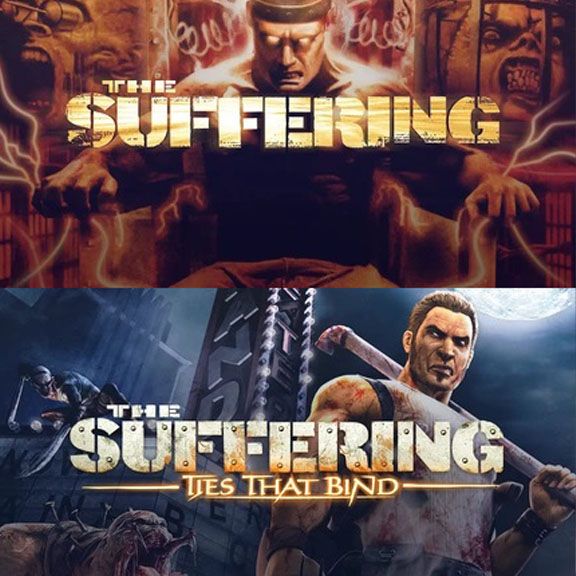
Title: | The Suffering Series |
Developer: | Surreal Software |
Publisher: | Midway Games |
Release: | 09.03.2004 |
In gaming history, The Suffering was one of horror’s brightest stars, but unfortunately one that burned out quickly. Even so, it managed to leave its mark. It all began with a very simple description, “A stylized horror shooter combining the furious gameplay of Devil May Cry with a setting in the vein of Resident Evil and the immersion of Half-Life.”
Surreal Software Before The Suffering
Before we get to the game itself, though, let’s briefly meet its developers. Surreal Software was founded in Seattle in 1995 by three friends, Mike Nichols, Alan Patmore, and Nick Radovich, who had attended Eastside Catholic School in Bellevue together. A fourth person helped establish Surreal Software, Stuart Denman, who met them on an online forum.
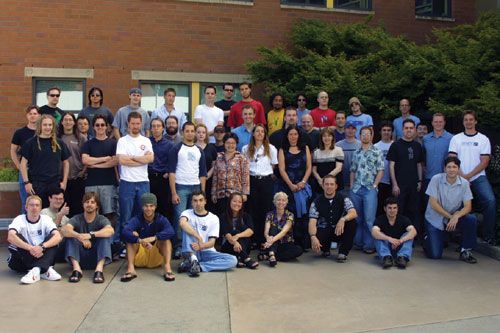
The fledgling team began by collaborating with Humongous, then one of the largest developers of children’s video games. The partnership didn’t work out, though, since they never made a game together. In 1996, however, Surreal Software built its own Riot Engine. Written in C++, it featured its own physics engine, rendering system, audio subsystem, and technology for creating large open spaces with varied terrain. It was also cross-platform, allowing games to be developed simultaneously for PC and current consoles.
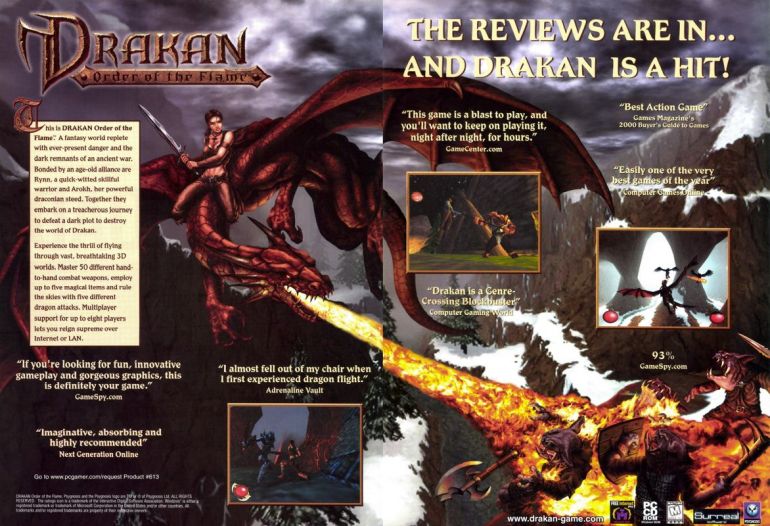
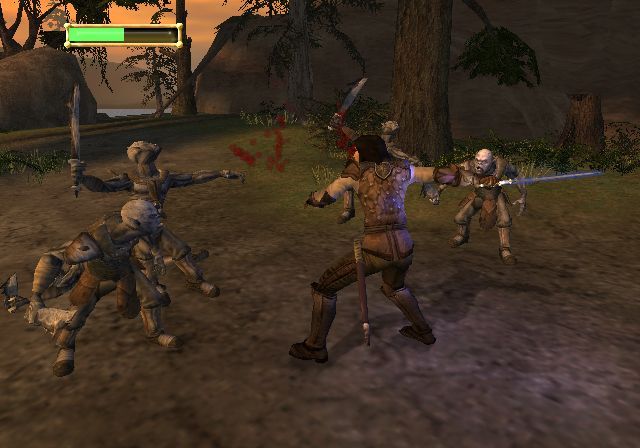
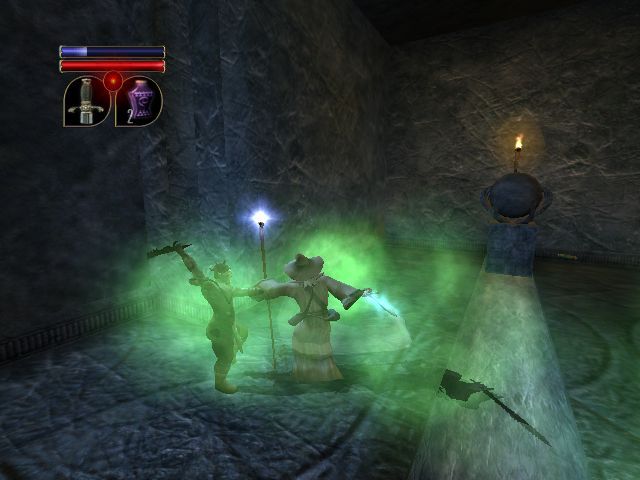
The first game built on it was 1999 action-adventure Drakan: Order of the Flame, combining dungeon exploration, hack-and-slash combat, and battles fought on dragonback. The game was successful and won players’ affection. A sequel soon followed. Although the first Drakan was a PC exclusive, its follow-up appeared only on PlayStation 2. That was where Drakan: The Ancients’ Gates launched in 2002, once again built on the Riot Engine.
The second Drakan wasn’t the only game Surreal released in 2002, though. The first game’s success had allowed it to expand and develop several projects in parallel. A timely collaboration with Sierra On-Line, which had acquired the rights to several The Lord of the Rings games, also came along. The American publisher planned a whole series covering the entire book cycle, including The Hobbit.
Initially, The Fellowship of the Ring was being developed by WXP exclusively for Xbox. Then Surreal joined the effort, developing a game for PS2 and Windows. Despite their apparent similarity and shared title, The Lord of the Rings: The Fellowship of the Ring, these were two completely different products, not least because different teams built them on different engines.
The Development of The Suffering
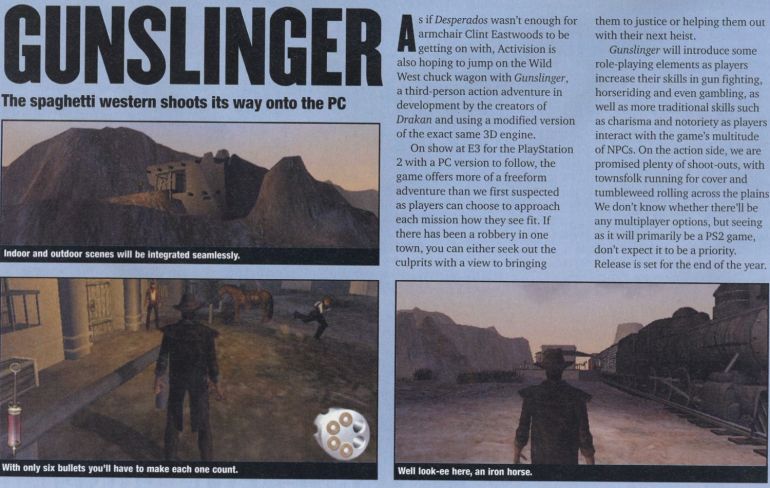
The release of The Lord of the Rings: The Fellowship of the Ring is where the story of The Suffering begins. Originally, Surreal Software had no plans to release a horror game. Its new project was supposed to be a spaghetti western for PS2, with a complex morality mechanic affecting gameplay. It also promised a highly immersive sandbox with a destruction system similar to Red Faction. Work on Gunslinger began, and a test build was even shown at E3 2000, with Activision set to publish. Ultimately, though, the project proved too ambitious to realize as envisioned on PS2. Development was simply canceled.
The entire team, including project lead Richard Rouse III, moved to a new project that became The Suffering. It was built around those ideas from the beginning of the article. In case you’ve forgotten, “A stylized horror shooter combining the furious gameplay of Devil May Cry with a setting in the vein of Resident Evil and the immersion of Half-Life.” Still rather vague, perhaps, but this time the game had a coherent vision and an understanding that some ambitions would have to be sacrificed.
First and foremost, The Suffering was meant to be an action-horror game, rather than part of the more popular survival horror subgenre. It would focus more heavily on fighting monsters and controlling the protagonist smoothly. The plan also called for abandoning familiar horror conventions, including long cutscenes, fragile protagonists, awkward controls, fixed camera angles, and limited ammunition.
The game initially used a lock-on system like those in DMC or Syphon Filter. At some point, though, it became clear that this approach wouldn’t work in its current form, making the game tedious instead of engaging. Unfortunately, development had already been underway for more than a year, and that time was gone for good. Fortunately, publisher Midway didn’t rush Surreal Software, and even granted extra time to polish The Suffering.
The Suffering also stood out for its storytelling, the depth of its narrative, and the symbolism woven through it, which could hold its own against even the legendary Silent Hill. Much of the story emerged indirectly through NPCs who helped the protagonist navigate the game’s world. Players could always kill any of these human characters, but would then miss the important story details they might have shared.
The focus on horror atmosphere also allowed for supernatural characters. But part of what makes The Suffering valuable as horror is that its creators understood that creepy monsters alone wouldn’t create a truly disturbing, oppressive story. They therefore turned to horrific real events. The narrative is threaded with the darkest aspects of American history, including prison life and culture, slavery, racism, unethical medical experiments, eye-for-an-eye retaliation, and executions. These are serious subjects for a video game, and they significantly heightened the horror.
For inspiration, Surreal Software turned to classic horror literature, naturally including Lovecraft. Take Dr. Killjoy and his experiments, for example. And what thoroughly American horror story could do without “His Majesty,” King? To better understand contemporary prison culture and the US penal system, the developers consulted Jack Abbott’s In the Belly of the Beast. Horror films also supplied inspiration. The Suffering shows the influence of The Birds, The Blair Witch Project, The Ring, and The Shining by Kubrick.
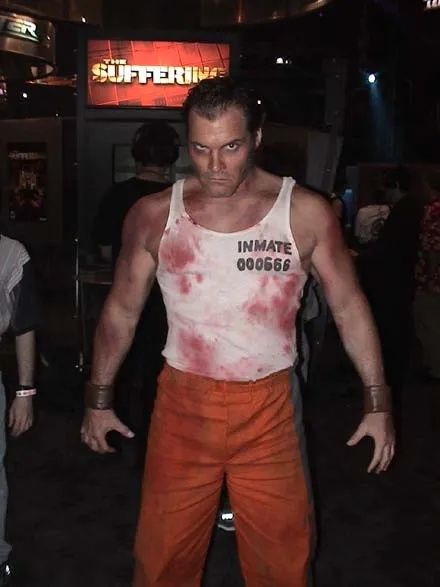
The Suffering first appeared publicly in March 2003, when Midway sent retailers lists of its tentative releases. The new Surreal Software game was among the upcoming titles, described as a survival horror game set in a prison. That was a little misleading. A late-2003 release was promised for PlayStation 2, Xbox, and GameCube. The full announcement of The Suffering came at E3 in May of that same year, after which the marketing campaign went into full swing. The developers first revealed that its setting, Abbott Penitentiary, was based on the famous Alcatraz prison and had an extremely dark history.
The original plans for a 2003 release didn’t come to pass. In September, Midway announced that The Suffering had moved to 2004, allowing final polish and a higher-quality result. During that time, Surreal Software refined the horror elements to make the game scarier, expanded the story a little, and improved the monsters’ AI.
Incidentally, a couple of preliminary builds of The Suffering, dated November 2003, unexpectedly surfaced online in 2021. These versions are only for Xbox and PS2, so trying them requires emulators. There aren’t actually that many differences from the release version. You can see a slightly different opening cutscene and new loading screens, with alternative sounds and textures in a few places. Overall, though, it’s the same The Suffering. Unfortunately, the build with lock-on targeting hasn’t survived.
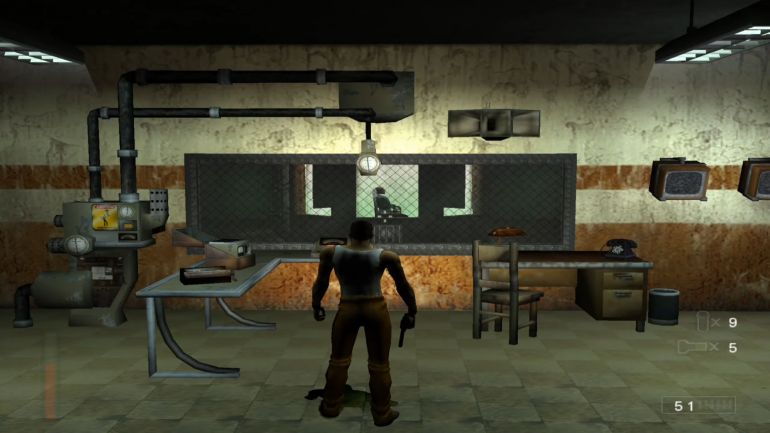
In October 2003, Midway staged an eccentric promotional event for The Suffering at a decommissioned West Virginia penitentiary. Journalists spent the night in the prison with representatives of Midway and Surreal Software. The presentation included a press demonstration and a full immersion in prison life. During the tour, journalists were chained up, locked in cells, and left with the lights off, letting them experience the “joys” of imprisonment firsthand. Naturally, the whole event had a horror atmosphere, since the prison was rumored to house plenty of ghosts.
That same month, Midway announced the cancellation of the GameCube version. The developers and publisher said the decision allowed them to focus on the leading gaming platforms, Xbox and PlayStation 2. The game went gold in February 2004 and launched in North America in March. The Suffering reached Europe in May, while the PC crowd had to wait until summer.

The game launched in Russia in July 2004 through publisher Noviy Disk. The two-disc jewel case offered Russian players a fully localized version of The Suffering. Beyond translated text and audio, even textures containing text were localized, which was seriously cool. Special mention goes to the wonderfully atmospheric single-voice dub by the legendary Leonid Volodarsky, which plunges you straight into the world of Russian video parlors and VHS tapes.
The Suffering Review
The story of The Suffering begins as a new death-row inmate arrives at Abbott Penitentiary, built on Carnate Island in Maryland. This is the protagonist, Torque, accused of murdering his entire family, his wife and two sons. Torque himself remembers nothing. Players have to discover what really happened. Most interestingly, the ending depends entirely on your decisions
.or Carnati
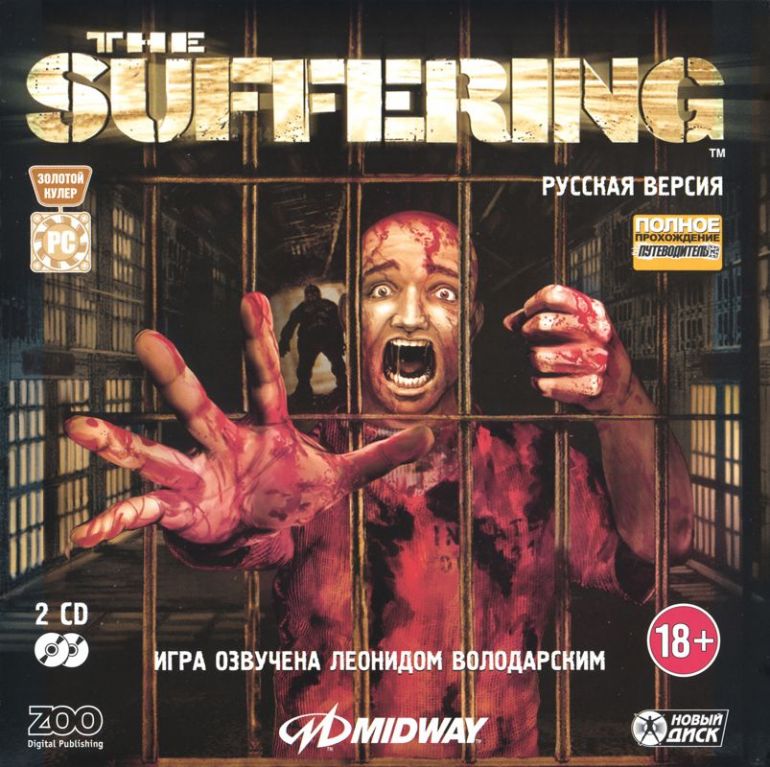
As soon as the protagonist settles into his assigned cell, a powerful earthquake sweeps across the island, followed by terrifying supernatural events. Strange monsters attack the prison, killing the other inmates in his cell block while he remains behind bars. Then one monster breaks Torque’s cell door, leaving him relatively free.
From there, players must make their own way, choosing between numerous routes and exploring optional locations for nonessential but fascinating story and lore details. You’ll often have multiple ways to complete the same task, or face an important decision affecting your fate and that of other characters. This forms the basis of the morality system, leading to one of three possible endings.
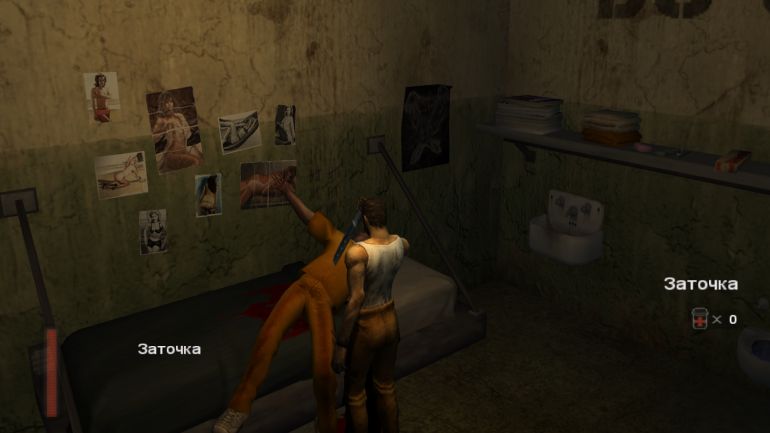
Torque’s behavior affects his appearance as well as the ending. Good deeds make him look healthier and more human, while a life of pure villainy gives him an increasingly frightening appearance. The family photo he always keeps in his pocket will either become cleaner or turn into a torn, filthy snapshot smeared with blood.
Beyond direct storytelling through player actions and cutscenes, The Suffering also offers plenty of indirect narrative. Throughout Abbott Penitentiary, you can find fragments from several journals revealing the history of the prison, the island, and their inhabitants. Abbott’s walls are full of other stories, too. You might catch part of a radio broadcast or hear an account from an inmate you meet. Torque himself, meanwhile, is constantly being torqued out of shape, if you’ll forgive the pun. His dead wife calls him on the phone, or visions suddenly overwhelm him.
Despite its supernatural beings, the setting is grounded in considerable realism. Carnate Island, where everything takes place, has a detailed and engaging history. Across different periods, it has witnessed monstrous events, from witch hunts in which even children were burned, to experiments on mentally ill patients and the mistaken execution of prisoners of war.
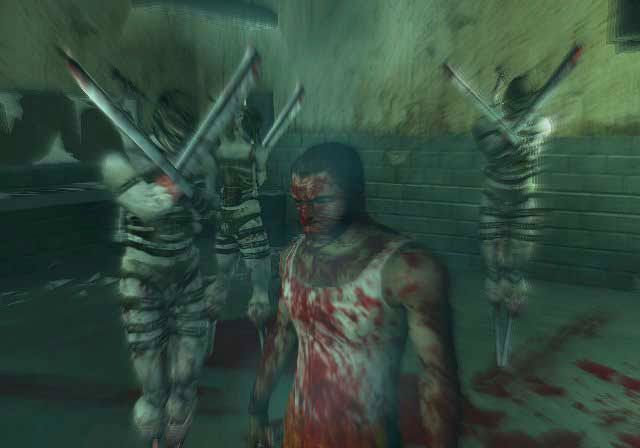
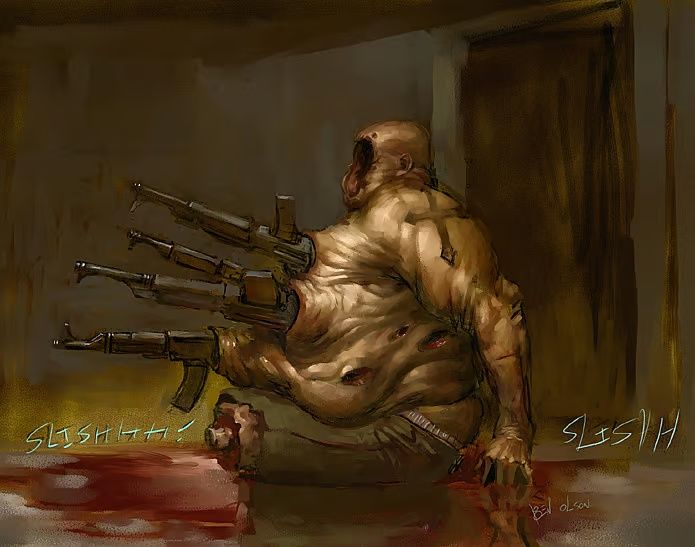
Carnate’s history is dark and full of horrors, and every chapter is reflected in its monsters. An enormous amount of work went into their designs, symbolism, and backstories. Each supernatural being has a dual nature, often embodying both the victims of particular execution methods and those who carried out those executions. One of the most remarkable facts about The Suffering is that genuine Hollywood rock stars of creature creation helped develop its monsters. We’re talking about Stan Winston Studio*, where creature artist Terry Wolfinger refined and finalized them all. The original concepts, however, were devised by Ben Olson. These creatures even have their own name within the series, “malefactors.”
from the Latin malus, evil, and facere, to do
*Stan Winston was an American visual and practical special effects artist. He founded his own effects company in 1972. Over his long career, he worked on films including The Thing, The Terminator, Aliens, Predator, Batman Returns, and many others.
Each creature differs in behavior as well as appearance. Some climb walls and ceilings, others emerge from puddles on the floor, and others attack by bursting out of the ground. Some prefer close combat, using parts of their bodies, while others fight only at range. The monsters in The Suffering are numerous and varied, and enjoy gathering in groups, combining their abilities to give players a real challenge.
In gameplay terms, The Suffering is pure, adrenaline-fueled third-person action-horror, with the option to switch to first person and play the entire game that way. Either perspective is perfectly viable. In third person, it offers traditional TPS gameplay along the lines of Max Payne, except Torque can’t slow time, at least at will. The game does use slow motion, but to heighten the atmosphere in a Kubrick-like manner. And one thing you can’t deny The Suffering is the fantastic work that went into creating its terrifying atmosphere and immersing you in it throughout.
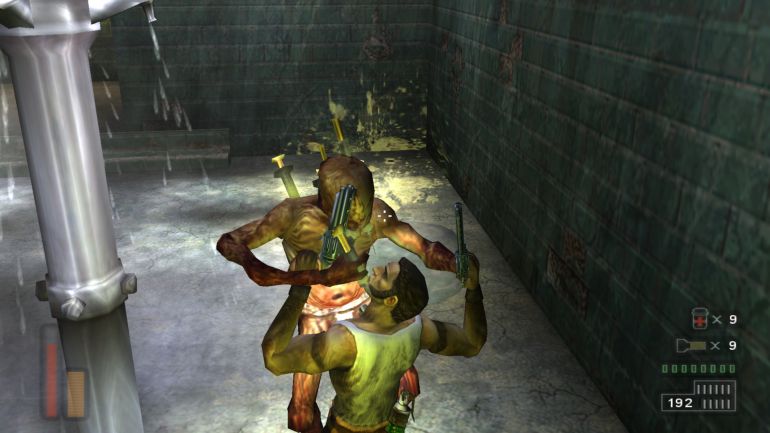
Although you can comfortably finish the game in either third or first person, the first-person view imposes certain limitations. These amount entirely to missing animations. When opening a door in third person, for example, Torque can ease it open or kick it down. Switch to first person, and the door simply opens without any animation. Shooting is easier, though. Overall, the controls in The Suffering are extremely comfortable, responsive, and smooth.
Torque proves himself a formidable individual from the outset. He survives encounters with monsters with remarkable composure, initially using only a shiv, then firearms, including pistols, a shotgun, and a Thompson submachine gun. The arsenal is hardly impressive, something the developers themselves acknowledged. Beyond conventional weapons, The Suffering offers several types of explosives and a flashlight that can slightly disorient certain monsters. A few times, you also get to man a stationary machine gun or a searchlight, since bright light can literally burn monsters.
flashbangs, fragmentation grenades, dynamite, and Molotov cocktails
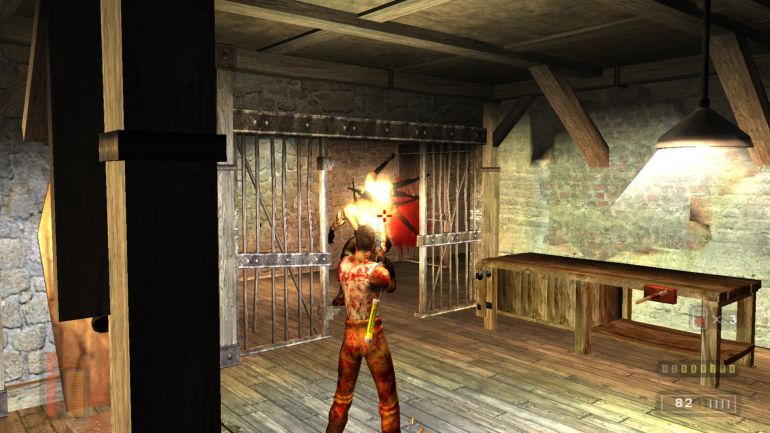
The most effective way to dispatch enemies, though, is “rage mode.” You can activate it only after killing enough foes. Torque transforms into an enormous monster capable of shredding enemies in groups, but also becomes quite vulnerable to certain monsters and attacks. The beast can be upgraded, too. The more enemies you kill in this form, the stronger Torque’s “inner beast” becomes. The funniest part of his transformation is that other characters don’t react at all, continuing to treat him as an ordinary man. In other words, only Torque sees himself as a monster.
Alongside exploration and monster battles, the gameplay in The Suffering successfully incorporates small puzzles. You might need to drag something somewhere, switch something on or off, or turn something. Even the handful of boss encounters are presented as puzzles rather than proper battles, something the game was criticized for. All these tasks are simple, though, and preserve the relatively fast pace, alternating beautifully with tense exploration and frantic combat.
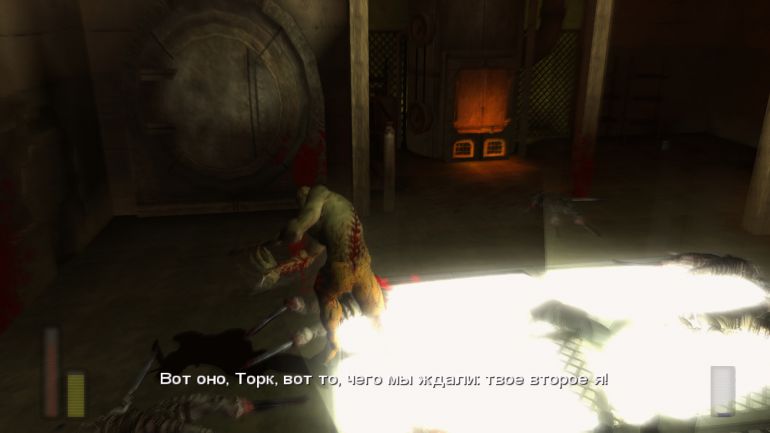
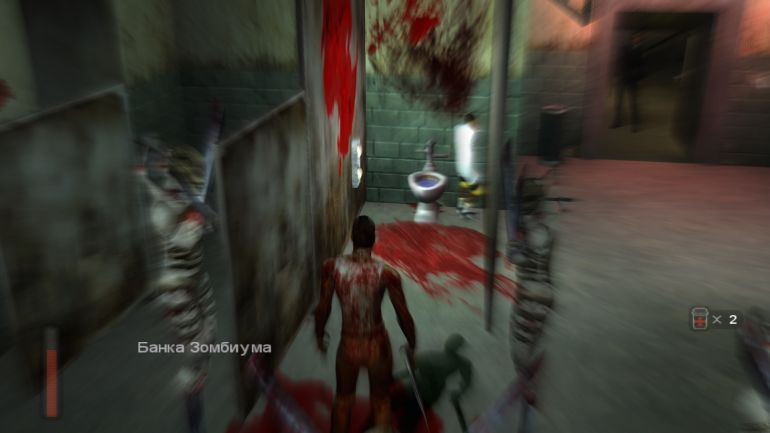
For its time, the visuals in The Suffering were impressive and capable of inspiring real dread. It features some of the most striking creatures in the genre’s history, with effects on the level of feature films. Torque’s hallucinations, ghosts flickering at the edge of your vision, phantoms, and strange glimpses of the prison’s horrifying past all contribute. And the blood splatter effect is excellent. Blood flies everywhere and sticks to every model, including the protagonist. At times, Torque is literally covered from head to toe.
The grim atmosphere also owes much to the abundance of dark locations with occasional light sources casting long, flickering shadows. The only disappointment is that the high level of detail is reserved for indoor locations. Outside, the graphics lose some of their quality and very blurry textures appear.
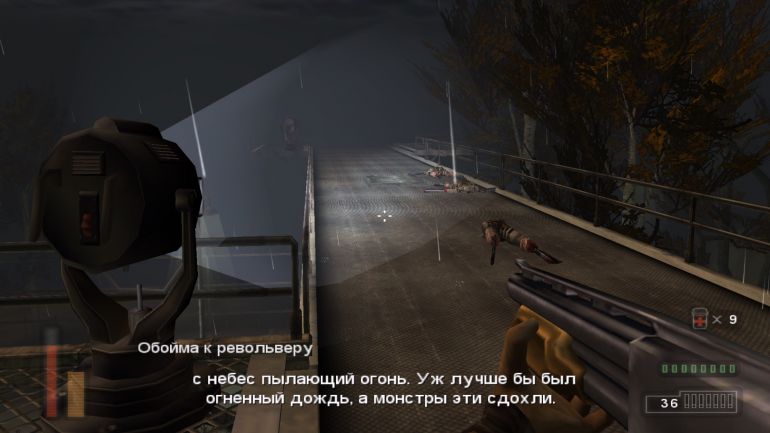
The sound design is excellent, too. Much of what you encounter in The Suffering can be heard long before you see it. Monsters have distinctive sounds that warn you when they’re nearby. Expect plenty of horrifying screams from behind doors, walls, and ventilation grilles. The voice acting is excellent as well. Many lines are crude, but this is a harsh prison setting wrapped in supernatural horror, hardly a children’s fairy tale.
The music, though, may offer little to praise. The situation is somewhat double-edged. On one hand, it’s very restrained, without a single memorable track. On the other, that approach strengthens immersion. Stylistically, composer Erik Aho and sound designer Christopher Mellroth take an approach very similar to the young Akira Yamaoka , using enormous numbers of chilling sounds. The ambient audio in The Suffering creates an unsettling soundtrack all its own.
around the time of the first Silent Hill
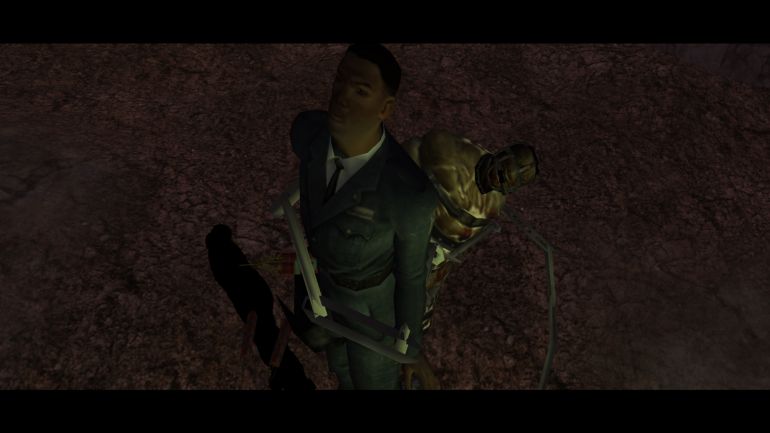
The Suffering became a truly outstanding action-horror game, with every element fitting together beautifully. It offers a rich atmosphere and an exquisite sense of when to ease off and when to go all out, essential when you’re trying to scare someone to death. It also boasts clean, finely tuned gameplay alongside superb graphics and sound. And we mustn’t forget the story, with its multiple endings. The Suffering succeeds at all of this, and the result is freaking fantastic.
The Aftermath of The Suffering
The game was a critical success, but an even greater testament to its quality was the affection of players, who bought more than 1.5 million copies of The Suffering worldwide across all platforms. For the first time since 2000, publisher Midway stopped losing money. In April 2004, it decided to buy Surreal Software and promptly did so. Naturally, Midway wanted its new studio for one thing, developing an equally successful sequel to The Suffering.
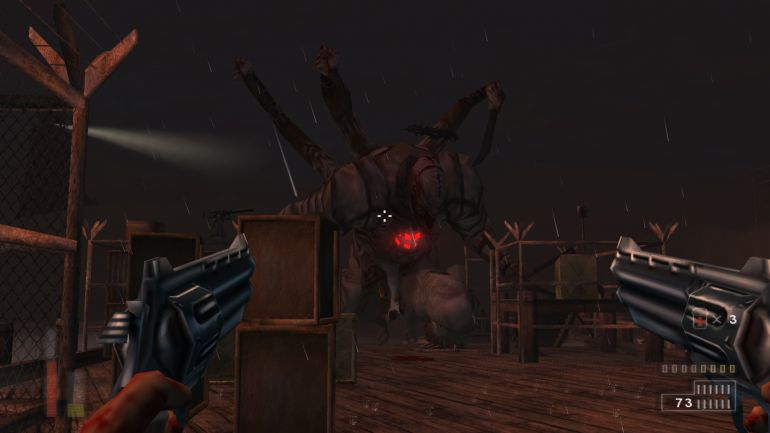
Developing The Suffering: Ties That Bind
Unsurprisingly, work on the next game began almost immediately after the first was released. A sequel was first discussed publicly in late 2004. By then, Surreal already had some work done and plans for a series, possibly even an anthology in which every new game would tell a separate story. Ultimately, the developers chose to continue Torque’s story, and the new game received the subtitle South of Heaven.
The next chapter would be set in Maryland’s largest city, Baltimore. To capture its atmosphere authentically, a group from Surreal Software took a full research trip, visiting the historic center, remote troubled neighborhoods, the city’s ports, and Baltimore’s state prison. Despite studying the city closely, the developers weren’t trying to recreate particular parts of Baltimore precisely. Their main goal was to capture its sense of decline and overall mood.
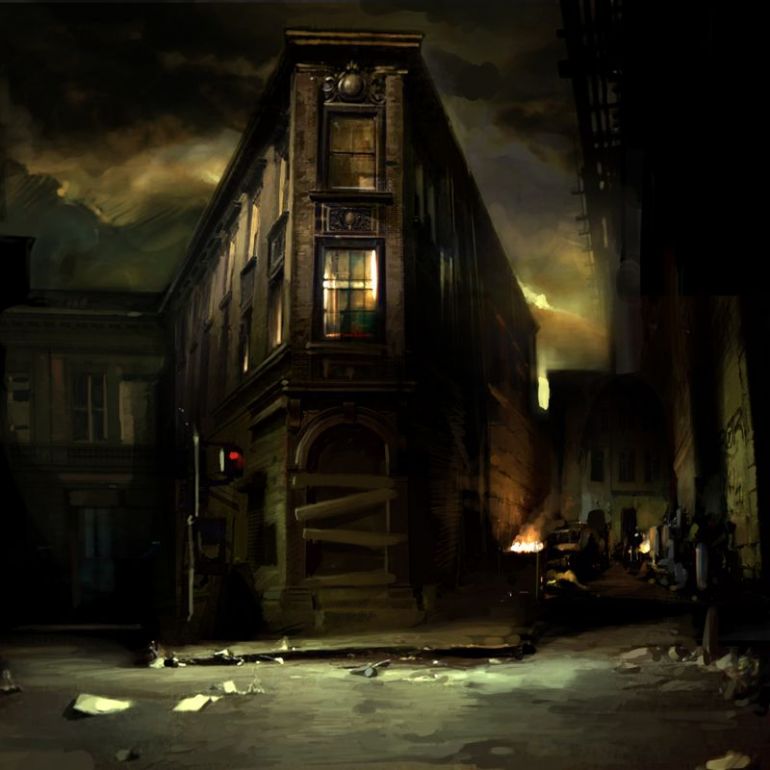
The well-received morality paths returned, and players could also use saves from the first game. Depending on the ending you received in The Suffering, its sequel would open with one of several prologues. Together with a new series of moral choices, this would eventually lead to one of the new The Suffering’s endings.
The range of inspirations Surreal Software drew from also expanded. Baltimore had endured many dark chapters, including slavery, hunger during the Great Depression, epidemics, fires, riots, and crime. The developers found reflections of these events in A People’s History of the United States by Howard Zinn and Discipline and Punish by Michel Foucault.
Among films, Kubrick’s The Shining remained a major influence, alongside Hitchcock’s The Birds and Psycho. New sources cited by the developers included Rosemary’s Baby by Roman Polanski and films by David Lynch, Blue Velvet and Mulholland Drive. A wave of contemporary Japanese horror had also reached the US, including Ring and Dark Water by Hideo Nakata, and Ju-On: The Grudge by Takashi Shimizu. To get a better feel for Baltimore, Surreal Software watched crime series The Corner, Homicide: Life on the Street, and The Wire.
at the time
Development of the second The Suffering moved extremely quickly. By January 2005, Surreal already had a working demo titled The Suffering: Oblivion, which fully satisfied its new management at Midway. This build differed from the release version a little more than the first game’s prototype had. The story was conceptually unfinished, the locations were only prototypes, and the interface was completely different.
The game was officially announced on January 19, 2005. Midway said it was being developed exclusively for PS2 by the same studio, Surreal Software. Who could do it better, right? It also received a page on the developer’s website and its final title, The Suffering: Ties That Bind. By that point, incidentally, the mention of a PS2 version was already accompanied by an Xbox release. In February 2005, PC owners received good news when a Windows version was promised.
Unfortunately, Stan Winston Studio wasn’t involved this time, since the developers felt they had gained enough experience to manage without it. The result wasn’t bad, but the sequel had fewer successful monster designs than the first game, and mostly reused its enemies. Ties That Bind still had a Hollywood connection, though, with voice performances by actors Michael Clarke Duncan and Rachel Griffiths .
from The Green Mile
from the series Six Feet Under
In August 2005, Midway showed the final PlayStation 2 and Xbox versions at its own press conference in Chicago. On September 19, the master copy of The Suffering: Ties That Bind went gold, ready to reach US game stores a week later. This time, all platforms launched almost simultaneously. Console versions arrived on September 26 and PC versions on September 30. European players, however, had to wait another month, until October.
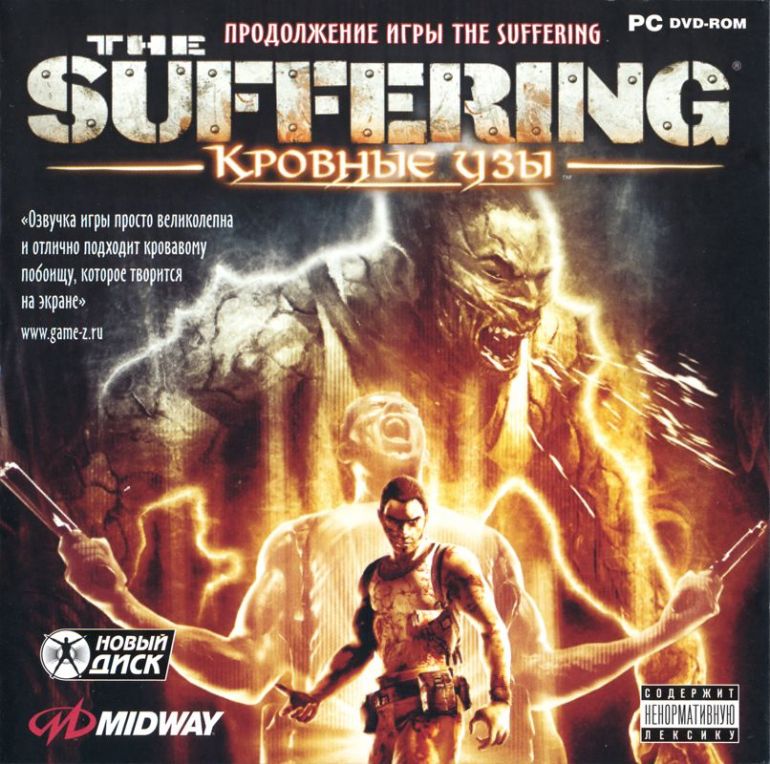
The Suffering: Ties That Bind first reached Russia in December 2005. Noviy Disk again handled publishing, but this time the game launched in its original language in a three-CD jewel case. The localized version took another two weeks, arriving only on January 1, 2006, in three editions, a three-CD jewel case, a single-disc DVD case, and a one-DVD jewel case. Like the original The Suffering, the sequel, Ties That Bind, was fully localized, but without Leonid Volodarsky this time. The dub now featured multiple actors.
The Suffering: Ties That Bind Review
Paradoxically, the story of Ties That Bind opens with Torque’s backstory. It turns out he was in prison five years earlier, too, but in a different institution in Baltimore. We see a conflict with a man named Blackmore, at the height of which a prison riot breaks out. Torque takes advantage of the chaos and begins an escape that will ultimately lead to his family’s deaths and another prison sentence. The strangest thing about this “prologue” is the appearance of monsters and the fact that Torque can already transform into one. Frankly, this approach already undermines some of what the first game told us.
The action then moves to the present, precisely where the first The Suffering ends, as Torque escapes Carnate. At this point, the game checks the saves on your PC or console to continue from the ending you received, provided you played the original, of course. If there are no saves, you’re simply asked to choose how the second game begins.
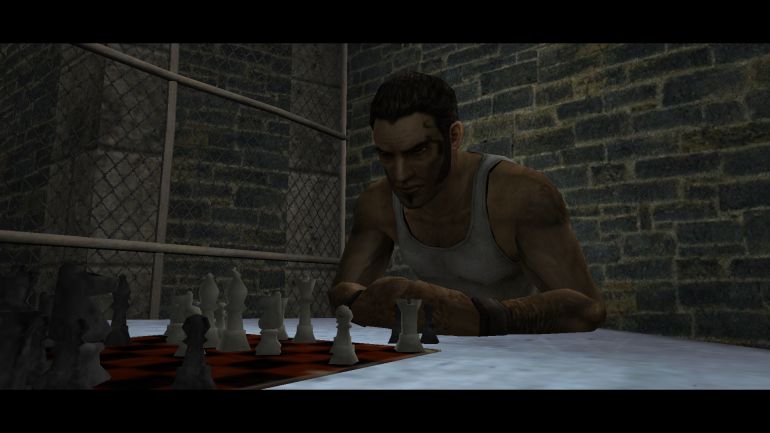
Whatever beginning you choose, Torque arrives in Baltimore and is captured by the armed operatives of a suspicious organization studying monsters it catches on the island. He then escapes and heads home to learn the full details of his story. From there, he deals with problems as they arise. In narrative terms, The Suffering: Ties That Bind falls well short of the first game. There are far too many questions, gaps, and contradictions, both during the game and after it ends. There are genuinely good moments, certainly, but overall the story feels extremely muddled.
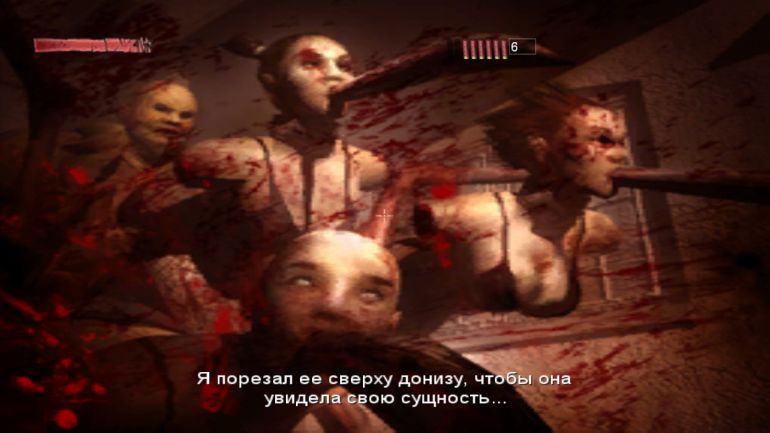
The lore and philosophy behind monsters returning from the first game have changed slightly. Take Slayers, formerly embodiments of execution by beheading, now representations of death by knives. Mainliners, previously representing lethal injection, are now associated with deaths from drugs. Beyond the recycling, though, there’s little to complain about with the monsters. New and old alike, even those reworked, remain sufficiently creepy and distinctive.
From a gameplay perspective, the second The Suffering can confidently be called an exemplary sequel. Ties That Bind introduces little that is particularly new, simply improving a few mechanics. One change limits how much weaponry you can carry. You can no longer stockpile pills, either. Torque can carry only two weapon types at once, explained as a greater emphasis on realism. It also gently encourages you to try every available gun.
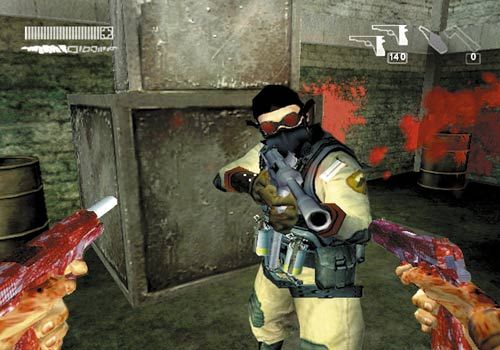
The arsenal has expanded considerably. Colt 1911 pistols, sawed-off shotguns, and Škorpion submachine guns have been added, all available to dual-wield. Heavier options include the M3 submachine gun, along with the ability to carry an M60 machine gun, a grenade launcher, and even an RPG. Melee weapons include baseball bats, knives, axes, and steel pipes. You can also hit enemies with firearms. Dynamite apparently isn’t easy to find in Baltimore, so your explosives are limited to fragmentation grenades, flashbangs, and Molotov cocktails.
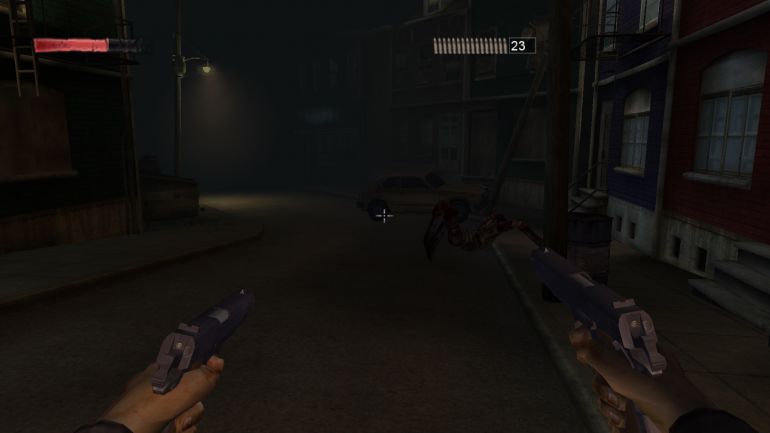
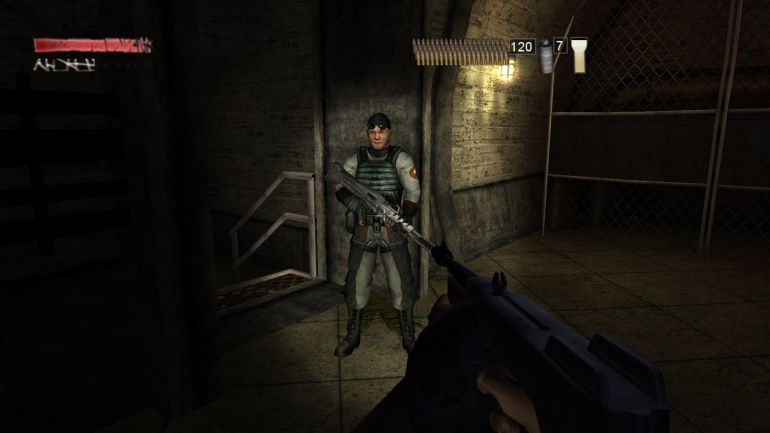
The expanded arsenal also reflects the fact that some enemies are now ordinary humans rather than monsters, albeit professionally trained killers. Yes, you could shoot people in the first game, but that was more of an exception. In Ties That Bind, you sometimes face an organization called the Foundation, whose operatives try to kill you. The second game takes this a little too far, adding a truck chase and a helicopter boss.
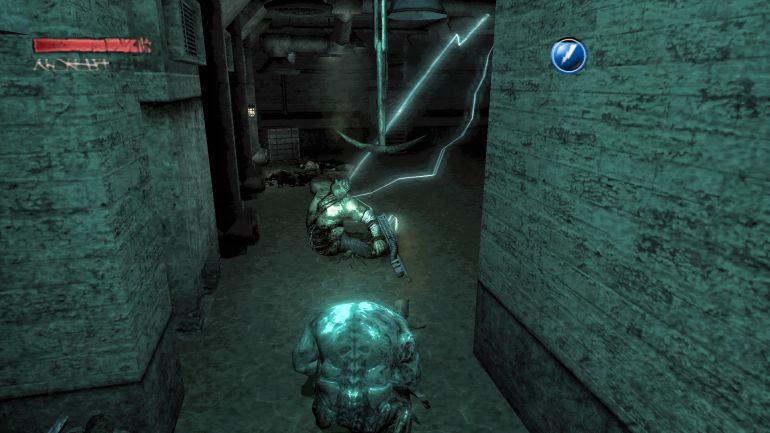
Rage mode has also been substantially reworked. Torque’s overall moral direction now affects the monster’s appearance and abilities. As before, his actions are reflected in his human appearance, too. Good deeds produce a more human-looking, blue-tinted creature, while behaving outrageously strips away its humanity and turns it red. Torque’s morality manifests through four levels in each direction, strengthening the monster’s ultimate attack as you reach them.
There’s another amusing story surrounding rage. In the original The Suffering, few players used the ability outside mandatory sections. The reason was that Torque could rapidly tear enemies apart in this form, but was also extremely vulnerable. In the shower section, Mainliners could simply pelt his rage form with syringes and kill him very quickly. Many players therefore avoided this ability entirely.
Surreal Software clearly didn’t like that situation, and now practically forces players to use the beast. It does so elegantly enough, introducing armored enemy variants that can only be killed in monster form. As if that weren’t enough, there are special walls that can also only be broken through in that form. To prevent situations where you lack enough rage, the game endlessly spawns monsters at these points until you do what it wants.
As you’d expect, the morality system returns in full, with a little extra. The game frequently presents moral dilemmas with evil, good, and occasionally neutral solutions. Tracking it is a little easier, thanks to a full journal for Torque, including a map and options to check your current objective or read collected notes. Those wonderful scrapbooks from the previous game return, too, now numbering three, one for monsters, one for locations, and one for Torque’s wife’s thoughts. His journal also shows your current morality level, although his appearance already communicates it clearly.
This time, morality affects the story slightly more than in the previous game, where your actions essentially determined one twist, whether the protagonist killed his family. In The Suffering: Ties That Bind, it affects at least several important events. First, there’s the beginning, when you arrive in Baltimore. Second, toward the end, morality determines which bosses you face before the final battle. Despite there being three endings, there are only two optional bosses, former slave hunter Copperfield and murderous pimp the Creeper.
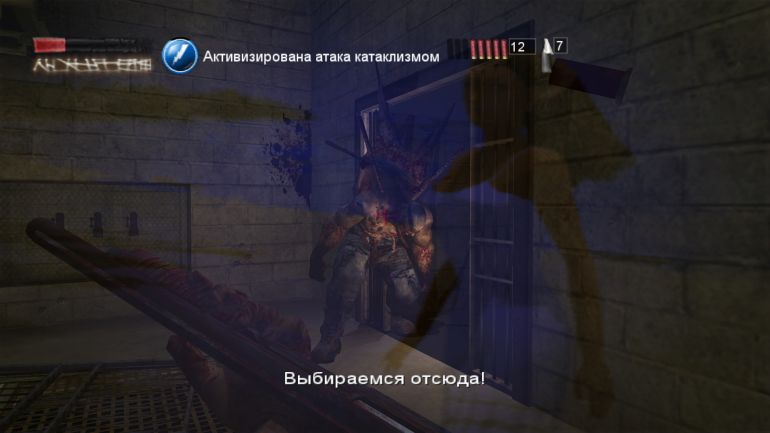
Visually, The Suffering: Ties That Bind somehow makes a substantial leap forward, especially surprising given its short development. Monster and character models have improved, environments are better, rendering has been updated, polygon counts have risen, and new animations have been added, breathing new life into the game. The first The Suffering was often criticized for looking poor in first person, but that problem has now been solved.
Unfortunately, the music isn’t any more expressive. It still does a decent job of filling out the atmosphere, though. Overall, the audio in The Suffering: Ties That Bind is good. Monsters inspire dread with scraping, squealing, and growling, answered by the deafening reports of your guns. Voice actors deliver truly Hollywood-style monologues, and Torque finally starts talking. Only a little, but still.
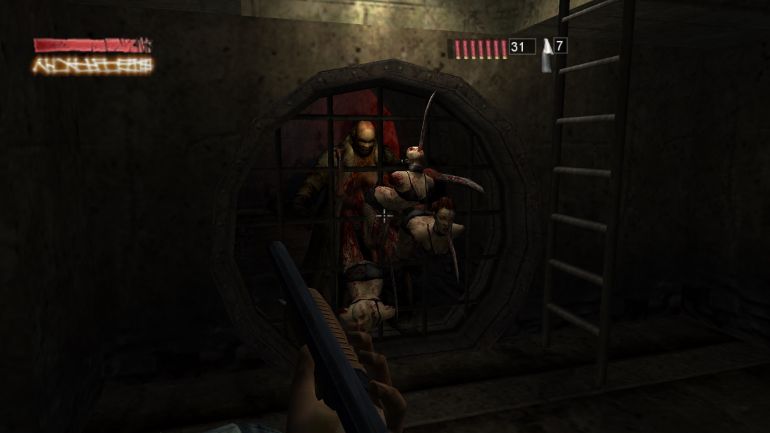
Taken as a whole, The Suffering: Ties That Bind turned out pretty well. It really only looks weaker beside its predecessor. Unfortunately, despite much better visuals, it lacks too much to surpass the first game. Ties That Bind suffers from a weak story and, perhaps, too little innovation. Otherwise, it’s a solid action-horror game.
Sales and review scores for The Suffering: Ties That Bind fell well below the expectations of Midway and Surreal Software, and the game brought in very little money. Against the backdrop of the publisher’s serious financial problems, it actually became a loss-maker. Those same problems apparently also prevented plans for film adaptations of both The Suffering games from progressing. Midway and MTV had announced them in the first half of September 2005, a couple of weeks before the sequel’s release.
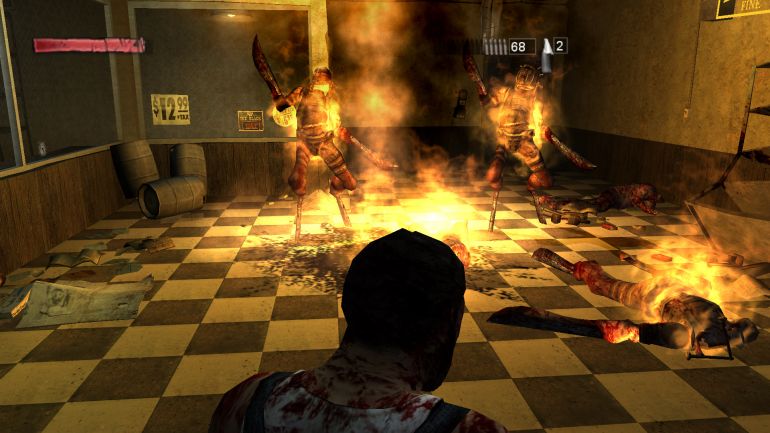
Soon afterward, Midway began bankruptcy proceedings and selling its assets. In 2009, Surreal Software passed to Warner Bros. Games, where it was merged with Monolith Productions. In the turmoil of all these troubles, the The Suffering series was simply forgotten, and has remained so for more than 20 years. Will anyone ever remember it? Excellent question!
Enjoyed this article? Found it helpful? Support GameSpirit.org and help us create more great content.
Author: Godlike_Goblin for GameSpirit.org


