
Slitterhead Review
Title: | Slitterhead |
Developer: | Bokeh Game Studio |
Publisher: | Bokeh Game Studio |
Release: | 29.08.2025 |
Take a second to think about what comes to mind when you hear these names from the games industry: Keiichiro Toyama, Akira Yamaoka, Kazunobu Sato, and Junya Okura. I bet you're thinking of something fascinating, conceptually interesting, unconventional, and mind-blowing. How could you not? What else would you expect from the people who gave us the first Silent Hill and Siren? Another masterpiece, surely. Well, something went wrong, because Toyama came back with a game that practically says, “F— you!” But let's take it one thing at a time.

In 2020, after 20 years under the wing of Sony and Japan Studio, Toyama realized he didn't want to make big-budget games for the Japanese giant anymore. He wanted room to experiment, so in August 2020 he founded Bokeh Game Studio with Sato and Okura, and they got to work on their first game almost immediately. The Game Awards in 2021 gave Slitterhead its first public showing, with plenty of fanfare. The trailer made a pretty good impression, even if it didn't give much away.
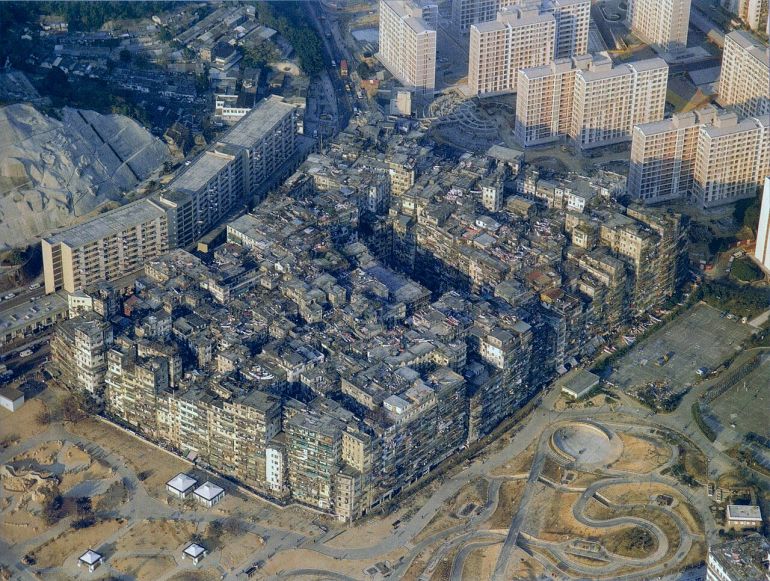
Toyama's new game takes place in the overcrowded Hong Kong district of Kowloon. It's the turbulent ’90s, and as you can imagine, the Kowloon slums aren't a particularly pleasant place to be. By the early ’90s, the city was practically one structure made up of more than 350 multistory buildings of various heights. Sunlight never reached the lower floors, particularly in the center. Narrow passageways ran between buildings in place of streets. The ground floors typically housed hospitals, shops, offices, and other services. The government had almost no control over this walled city. The Triads ran things instead, and prostitution, gambling, and drug dealing flourished in Kowloon.
Apparently, Toyama figured the locals hadn't suffered enough, so he sent another scourge their way: monsters called Slitterheads. They prowl the back alleys and attack unsuspecting people to eat their brains. Afterward, they either dump the bodies in the trash or disguise themselves as the people they killed. The game opens while they're running rampant across Kowloon. In Slitterhead, you play Hyoki, a disembodied spirit who can possess living creatures. Hyoki can also sense the monsters and clearly takes an interest in them. The trouble is, the spirit remembers absolutely nothing and can barely do anything at first.
apparently they're environmentally conscious too
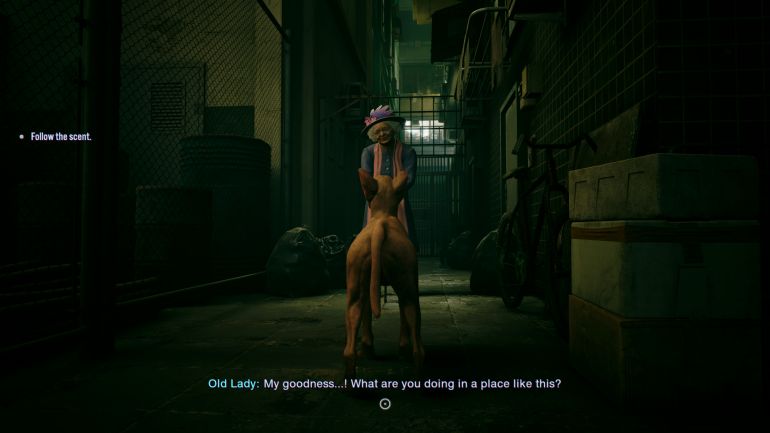
The first creature you manage to possess is a dog. It's the only time you can possess anything other than a person, presumably to show how weak Hyoki is at the beginning. As the dog, you learn the first details of the murders and the monsters people have taken to calling Slitterheads. Soon you get a chance to possess a human, which brings us to the core mechanic of Slitterhead*: jumping into different NPCs.
*If you remember, Siren had a similar idea called Sightjack . It let you slip into another character's perspective to look around and even hunt for clues. Here, when you possess an NPC, you get full control.
it shows up here too
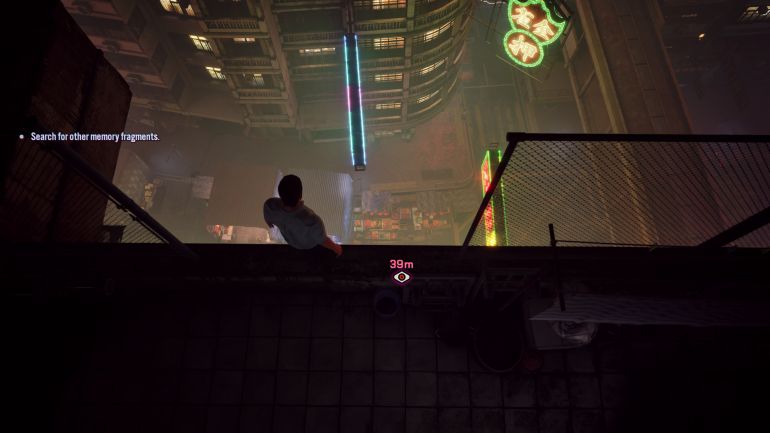
As Hyoki wanders aimlessly through the streets of Kowloon, the spirit starts hunting for its memories and the Slitterheads. Eventually it crosses paths with a young woman named Julee, who's what's known as a “Rarity,” one of the “rare ones.” Hyoki can't take complete control of her. Instead, the two form a symbiotic bond that gives Julee's body incredible blood-based abilities. And she isn't the only one.
Here's where Toyama starts messing with your head again, as he did in Siren. Slitterhead plays out over a three-day loop. You jump back and forth through the story and replay missions to unlock others or see small changes in ones you've already done. You'll have to do a lot of replaying if you want the true ending and all the other endings. Sounds intriguing, right? It is. Just don't get too excited. Everything interesting about the story runs smack into the mediocre gameplay.
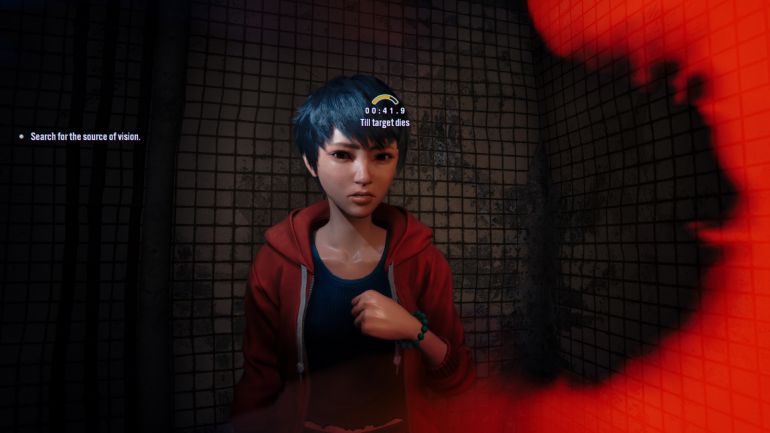
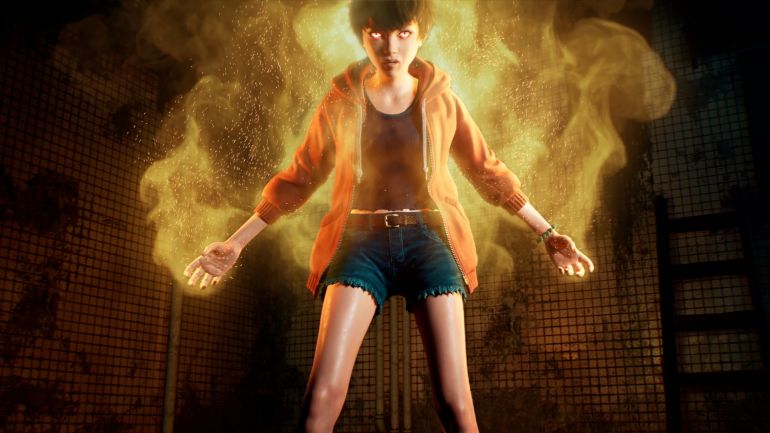
After seeing the early Slitterhead trailers and reading all that, you might think there's a pretty interesting horror game brewing here. What you actually get is an action-adventure with hack-and-slash combat held on by rusty bolts. Slitterhead has barely a whiff of the horror you'd expect from Toyama after Silent Hill and Siren.
You can roughly break the game into three parts. First you wander Kowloon's narrow streets, looking to get your disembodied ass into trouble. That usually ends in a run-in with a Slitterhead. Either a fight breaks out immediately or you have to chase the monster around the neighborhood. That's the second part. The third is infiltration, meaning stealth sections of varying degrees of awfulness where you're supposed to slip past unnoticed.
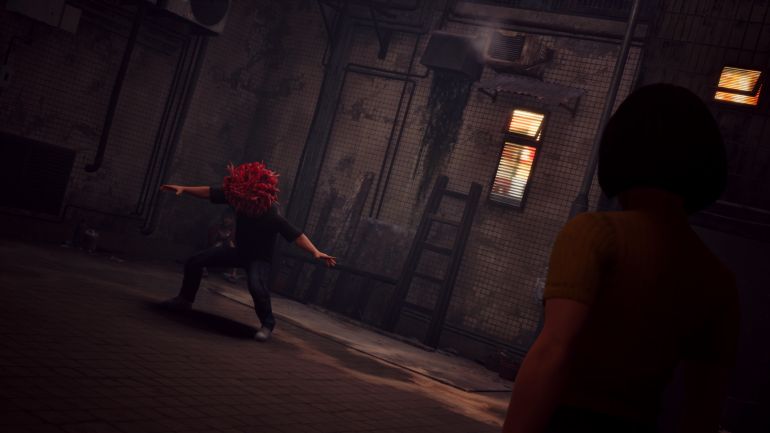
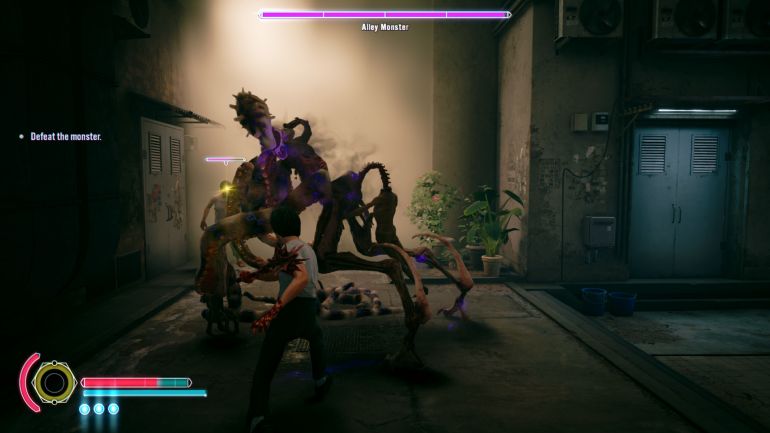
Let's take a closer look. Skip the tutorial and the intro. Say we've found our first Rarity and are ready to hunt our first monsters together. Pick a mission from day one on the map and head for the Hong Kong slums. What is there to see? Honestly, not much. The levels are compact, though they're made with care. To be fair, level design is one of the few things about Slitterhead I don't feel like picking on. But I have to.
For starters, the game won't let you take a single step off the designated path. Slitterhead fences you in with a ridiculous number of walls, invisible and otherwise. It'd be one thing if that only happened during fights, when a weird fog rolls in around the arena and traps you inside. Even when you're exploring, you hit invisible barriers, or the game lets you go a little farther only to send you right back. At least Silent Hill blocked off routes with rubble or giant chasms. What stopped Slitterhead from doing the same in 2025?
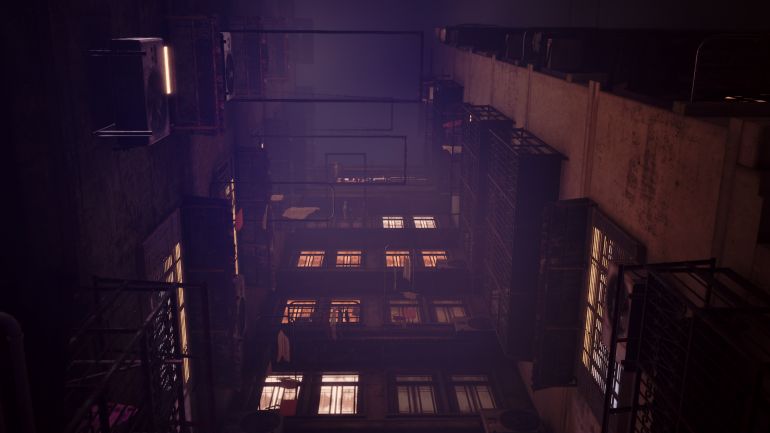
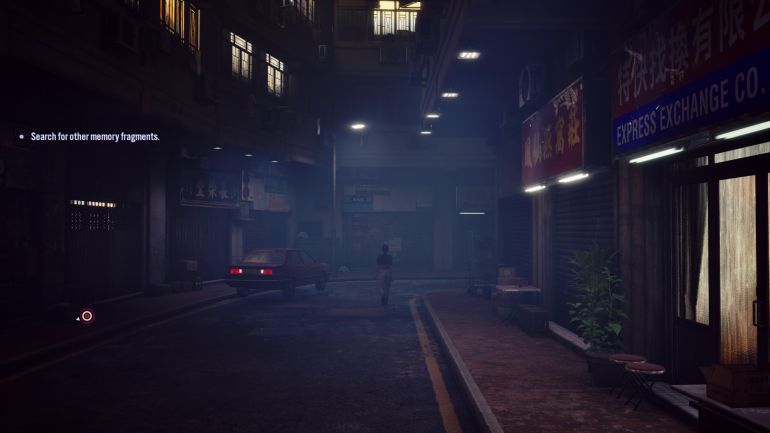
As you've probably gathered, there's little freedom here. There aren't many locations either, and you keep coming back to the same areas. You might enter from the other side or find a small section newly accessible, like a building that was locked before. Walking around these places is boring. Apart from story triggers, there's basically nothing to find. Maybe there's a memory lying around somewhere.
Exploration in Slitterhead boils down to a little investigation to find another monster. It's strictly scripted. Walk through the level, talk to NPCs, notice a spectral trail or a suspicious streak of blood in an alley. Occasionally you get to use the Sightjack mechanic from Siren to figure out where your target is or how far away you are.
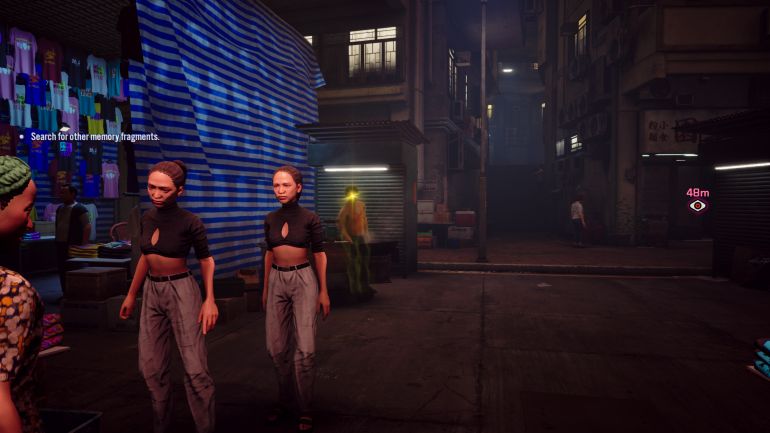
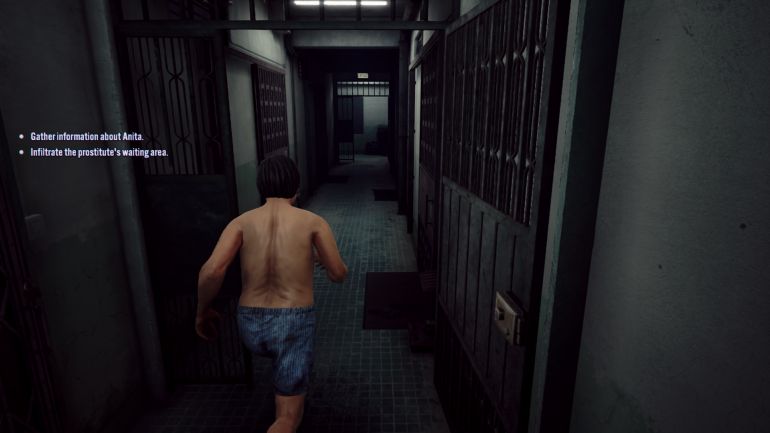
Sometimes you need to sneak to get somewhere, and that goes badly too. Calling Slitterhead's stealth bare-bones feels generous. At certain points, your character crouches and goes quiet as a mouse, which is to say, they sneak. There's no indicator telling you how visible you are, and you can't distract anyone by throwing a rock or a bottle. Wait until the enemy looks away and walk past. Sometimes they won't even notice you.
Good luck finding any logic in some of these situations. Take the brothel mission on day two. You need to get inside to find information on a particular worker. You don't have to sneak because you can get in by possessing a customer. Then you can jump into a guard. But every conversation with the other staff, including the manager, goes as if none of them has ever seen you before.
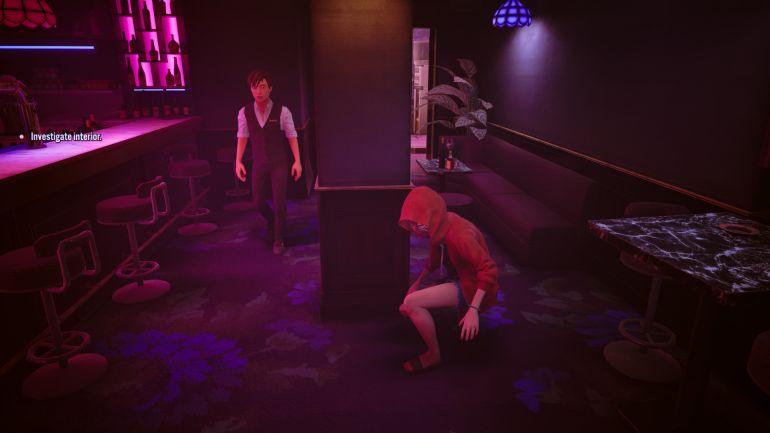
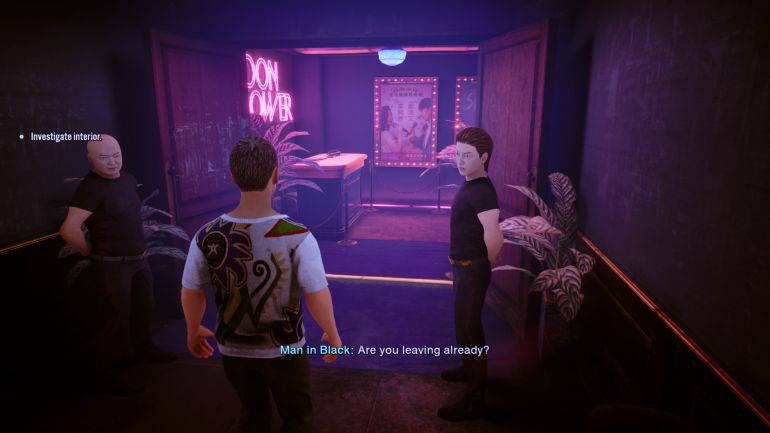
While we're picking at the details, the story is so shallow that some characters don't even get names, just labels. In that same brothel, you'll find Prostitute A and B. There are a lot more than two of them, too, so each floor has its own lettered representatives of the oldest profession.
Sadly, fights with the Slitterheads make no more sense. The game frequently spawns people out of thin air to make the possession system work as intended. Making it feel natural was apparently beyond the team. For example, the story has you track down a local gang boss who runs a protection racket at the brothel. You burst into his office, where he's got two monster bodyguards. The fight starts and suddenly the office is packed with ordinary people, purely so you have bodies to possess. Where'd they all come from? That's apparently somebody else's problem.
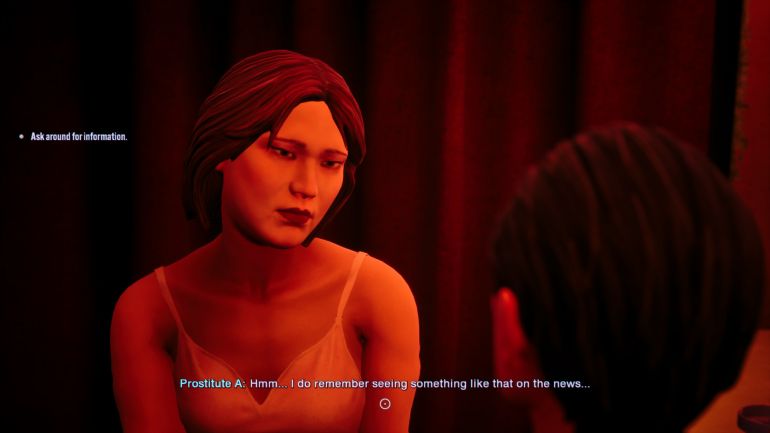
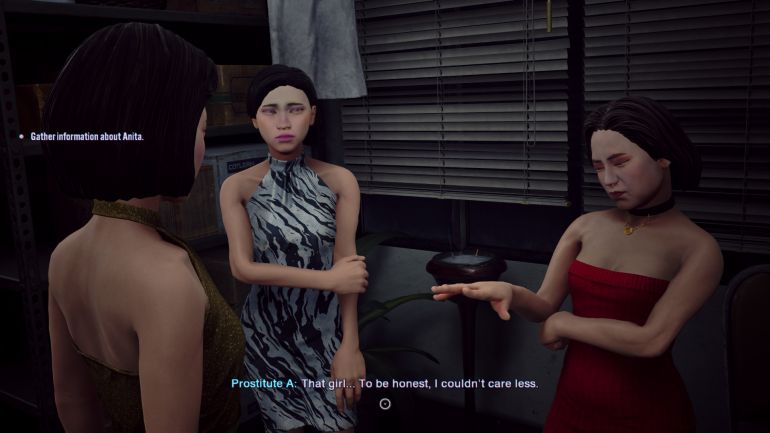
The fights themselves aren't much fun. It's basically a one-button hack-and-slash without combos. Instead, you use abilities to make the fights a little easier. You've got ranged attacks, stunning blows, shotgun blasts that spend your blood, and plenty more. The characters get defensive abilities as well as offensive ones. You can heal in some cases or summon more people in others. None of it makes you go wow.
Parrying is one of the main things that sets combat apart. It looks flashy, sure, but it's hard to pull off because you have to flick the mouse in the right direction to deflect attacks. If you don't have much room on your desk, it's extremely awkward. At some point you just stop bothering. Fortunately, you can get through every fight without it.
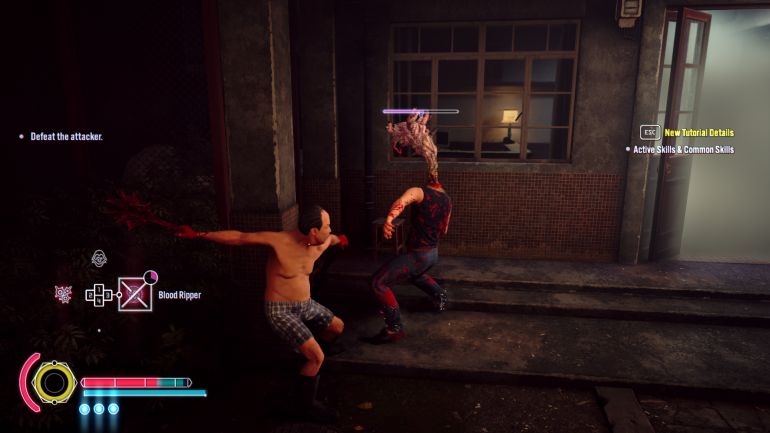
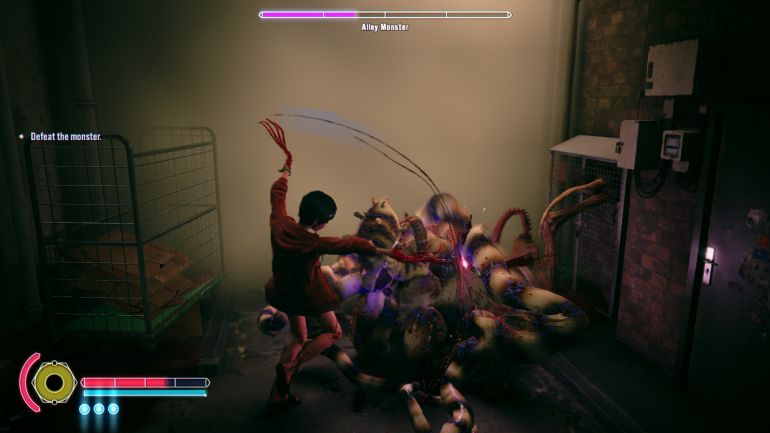
Jumping from one body to another does make the combat more interesting. Different people have slightly different stats, mainly depending on age or sex. Young men, for example, hit harder and have more health. You don't pay much attention to that, either, because after the first few missions you can take two Rarities into a mission. Possessing ordinary people becomes a last resort.
Fights don't always happen right away. Sometimes you have to run down a Slitterhead after identifying it, and that's another design failure. Chases mostly play out as loops. You literally run in circles trying to catch the monster, and it keeps doing the same things. If it jumps onto the billboards the first time, it'll do it the second and third times too. Enemies also like to stop and wait so you can't possibly lose them. That makes the whole thing pointless, including the idea of jumping between bodies to stop the monster from getting away. Why bother if it's waiting for you anyway?
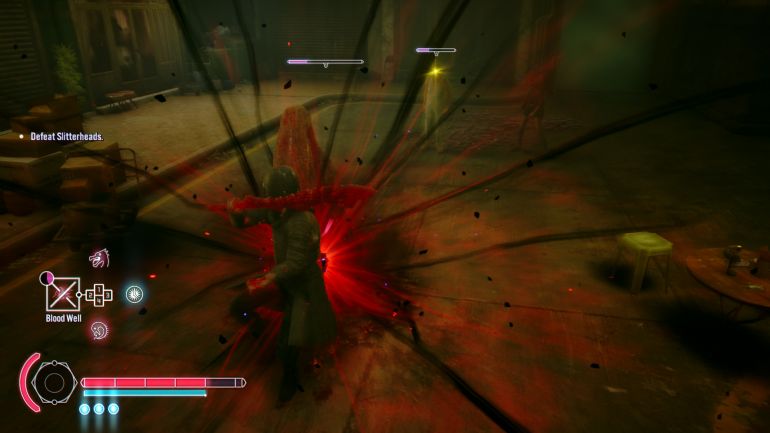
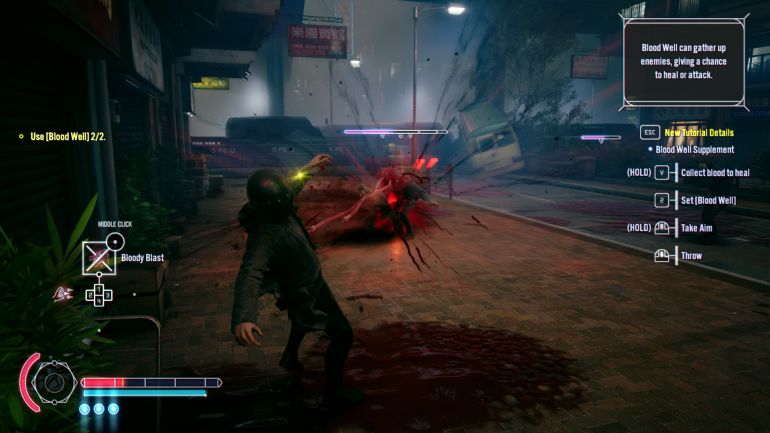
The cutscenes after every mission deserve a mention of their own. Plenty about them is irritating, starting with the fact that you have to select each one on the map and then again from a list. Only then does the scene start. As Hyoki, you hang around one of the Rarities and talk. It looks awful, especially paired with the way the game handles voices.
On the technical side, things are just as bleak for Slitterhead. Even after some time, it still has performance issues. Some cutscenes even freeze. Meanwhile, the character models look like they came straight off a PlayStation 3. There's barely any animation, and few NPCs can blink or move their lips. The blood looks more like thick ketchup.
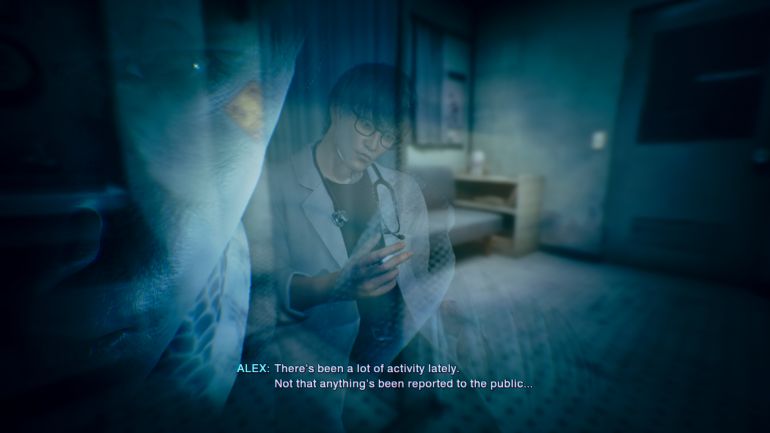
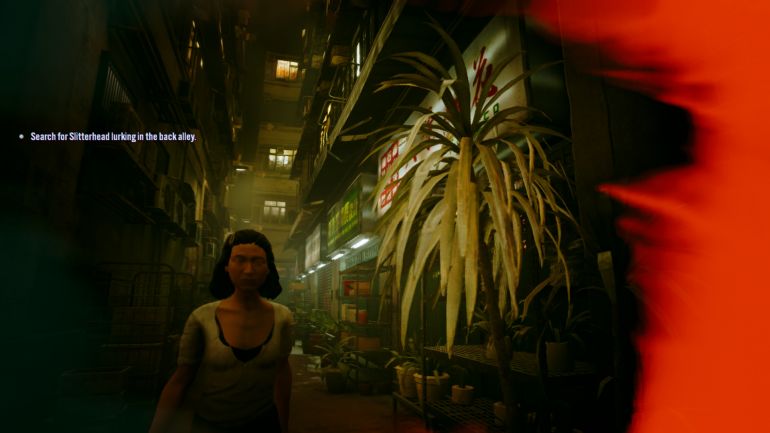
The voice work is worse than the visuals. There's barely any voice acting. Everybody just grunts, grumbles, mumbles something unintelligible, or sighs. You have to read the subtitles constantly because there's no other way to get the information. That's a real pain when characters start talking during a fight. Yamaoka, meanwhile, went all out with something in the vein of the first Silent Hill that's practically impossible to listen to outside the game. You probably won't want to anyway.
All in all, Slitterhead leaves a thoroughly unpleasant aftertaste. It's bad at just about everything except its story and how it tells it . The visuals and sound are a mess. Nothing makes sense. The fights are a slog, and all the game can think to do to make them harder near the end is throw more enemies at you. Then there's the ridiculous price and the lack of Russian language support. Do you really need it? We seriously doubt it.
with some exceptions
Enjoyed this article? Found it helpful? Support GameSpirit.org and help us create more great content.
Author: Godlike_Goblin for GameSpirit.org


