
Shadows of the Damned: Hella Remastered Review
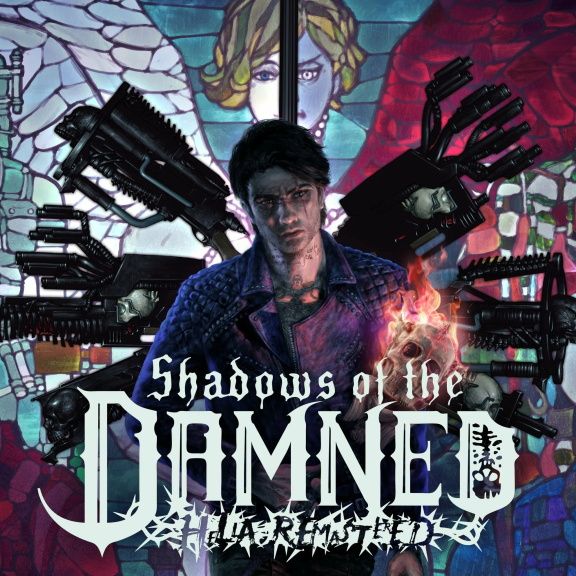
Title: | Shadows of the Damned: Hella Remastered |
Developer: | Grasshopper Manufacture |
Publisher: | Grasshopper Manufacture |
Release: | 31.10.2024 |
The seventh generation of gaming systems, like those before it, produced an impressive number of games that remained console exclusives for years. However much you wanted to try them, you had two options, buying the console itself or wrestling with emulators. Occasionally, though, old games return in updated form, ready to run on modern hardware. Recent examples include Red Dead Redemption, which reached PC 14 years after its PlayStation 3 and Xbox 360 release. Or Lollipop Chainsaw RePOP, which took a full 12 years to make the trip.
Something similar happened to the game we’re discussing today, Shadows of the Damned. It originally launched on PlayStation 3 and Xbox 360 in June 2011. Only 13 years later did it reach modern PCs and consoles. The new version, titled Shadows of the Damned: Hella Remastered, was handled by original developer Grasshopper Manufacture, which managed to reclaim the rights to its game from Electronic Arts.
Even the development of the original Shadows of the Damned was an eventful affair. We can start with its principal creative forces. There were essentially two, Goichi Suda, also known as Suda51, and Shinji Mikami. By then, they had already worked together on Killer7 and decided to collaborate a second time. More precisely, Goichi Suda began making a game at his studio, Grasshopper Manufacture, called Kurayami , and Mikami joined a little later. The designer’s original idea was to capture the phantasmagorical atmosphere of The Castle by Franz Kafka.
暗闇, literally ‘Darkness’
The first details appeared back in 2006. True to the name Kurayami, the game was meant to spend considerable time exploring darkness itself, and was envisioned as a revolutionary open-world survival horror game. A special type of pixel shader would reinforce these visual themes by emphasizing the dark tones of stylized textures.
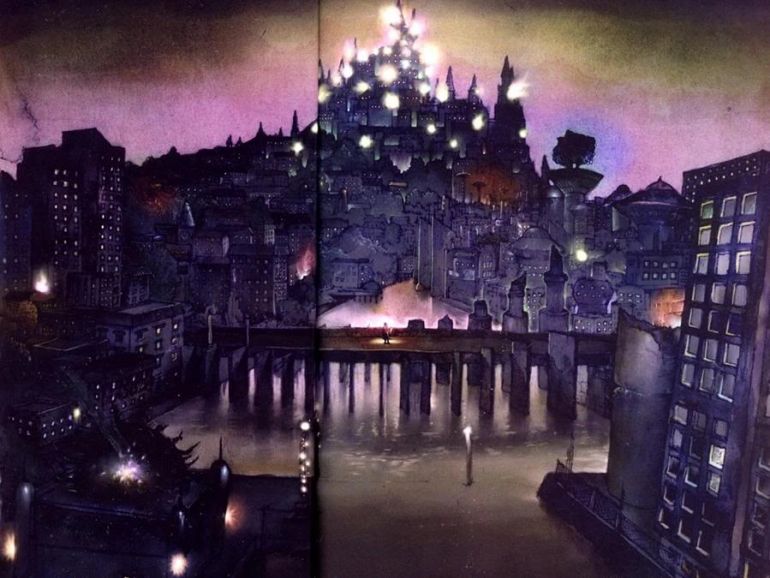
The protagonist’s destination was to be a castle towering atop a cliff. His route would take him through a strange town swallowed by darkness. It was supposed to be an extremely dangerous place, populated by ordinary residents and monsters waiting in the dark. A torch would be his only weapon, and staying in the light would be essential to survival. Again, Suda’s intention was to play on players’ fear of darkness and the unknown. Unfortunately, despite having a finished concept, the game never entered production atGrasshopper Manufacture because they couldn’t attract a publisher. Suda51 discussed this himself in a 2009 interview with American website Joystiq.
In 2008, the concept for Kurayami was presented to Electronic Arts, which took an interest in the unusual idea. It wasn’t willing to take a chance on Suda and Mikami’s experiments, though. More accurately, EA was interested in Mikami’s name rather than Suda’s concept. It really wanted a Resident Evil of its own. Through numerous meetings between Grasshopper Manufacture and EA staff, the game had to be reworked again and again. Eventually, almost nothing remained of the original idea except darkness and a castle. Even the title and genre changed. On the upside, Akira Yamaoka joined development, and they almost recruited Masahiro Ito, too. That last arrangement didn’t work out. He only drew a couple of concepts, which ended up being used solely in Suda’s art book.
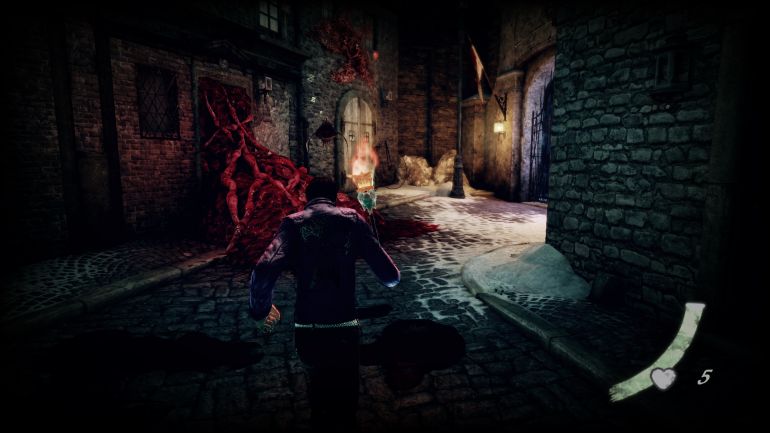
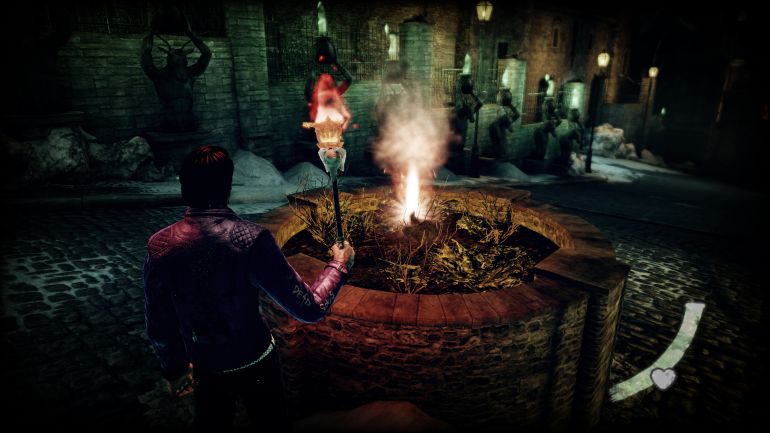
Shadows of the Damned launched in June 2011 on seventh-generation consoles, PS3 and Xbox 360. Suda’s eccentric style blends successfully with carefully considered, horror-oriented game design in the vein of Mikami’s fourth Resident Evil. Yamaoka’s sound design and music accompany it all. Instead of a deep, almost philosophical narrative, though, players got a distinctively stylish grindhouse romp with guns, demons, a trip to hell, and dirty jokes about genitalia.
The game stars demon hunter Garcia Hotspur. After another successful hunt, he finds himself in a nasty predicament. His girlfriend Paula, a real beauty he previously found in the trash , has fallen into the clutches of demon lord Fleming, who wants revenge on Hotspur for the hundreds and thousands of demons he has exterminated. The head devil escapes with the girl through a portal to hell, leaving Garcia no choice but to follow and rescue his beloved.
literally, as the game emphasizes several times
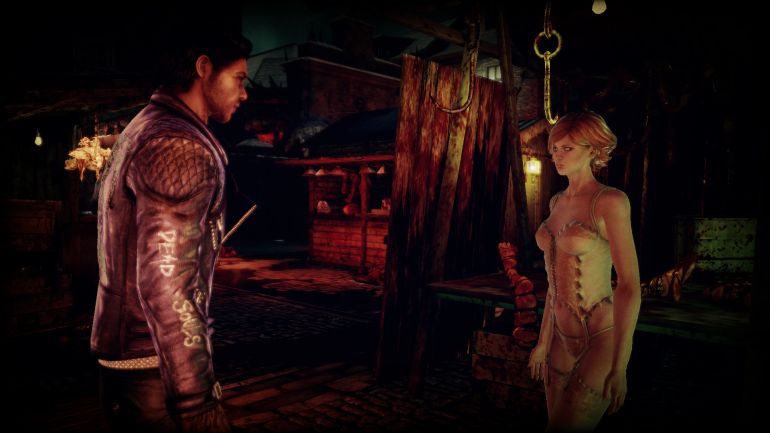
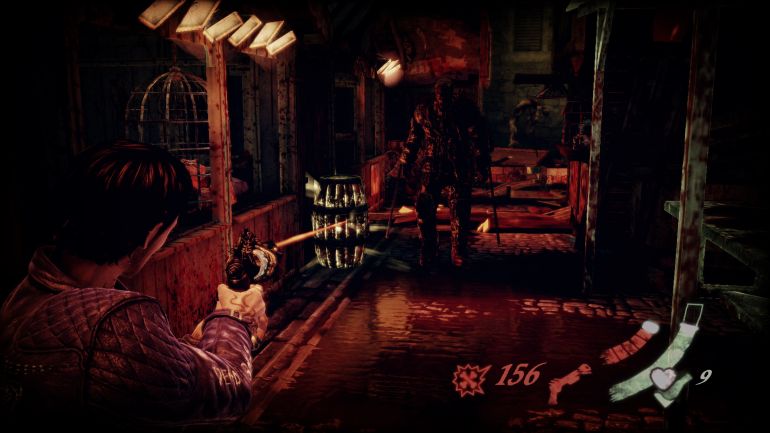
Garcia Hotspur doesn’t make the journey alone, though. He brings his longtime friend, the demon Johnson*. Normally, Johnson looks like a flaming, flying skull, but he can turn into a torch, a weapon, or even a motorcycle at will. Garcia only gets to enjoy that last transformation in cutscenes, however. Wandering the dark back alleys of hell with a talking torch is another matter. So is shooting a limb off an especially eager demon.
Within minutes, their journey becomes a bloody chase across surreal landscapes, filled with grotesque monsters and an endless succession of crazy scenarios in which absolutely anything can happen. This version of hell is surprisingly well realized and positively teems with details of everyday demon life. You might find a poster here, a fairy tale there, or hear some interesting tidbit from Johnson himself.
*“Johnson” is a euphemism for the male sex organ. Shadows of the Damned gets plenty of mileage out of that meaning.
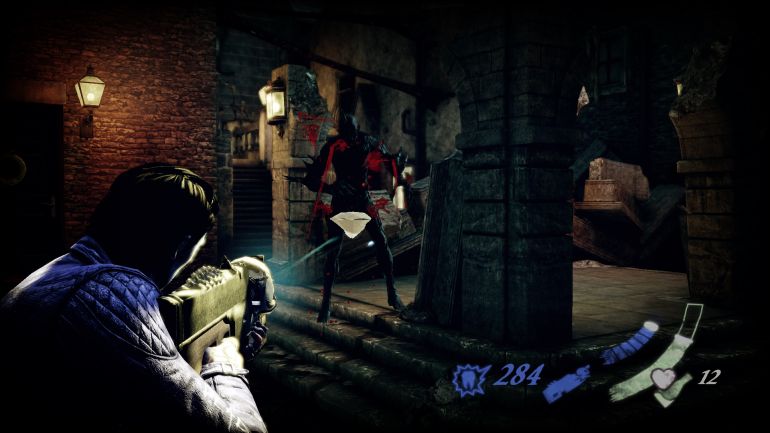
The story, dialogue, and aesthetic are the main strengths of Shadows of the Damned, despite its thoroughly basic, worn-out premise. Ultimately, it all comes down to rescuing a damsel in distress again. But it’s wrapped in fantastically absurd surroundings and distinctive, eccentric humor you rarely encounter in today’s game industry.
In terms of gameplay, Shadows of the Damned is very close to Resident Evil 4. It’s a third-person action shooter played from behind the protagonist. You wander hell’s back alleys, pushing toward your destination and shooting its resident devils. You can shoot while moving, and a laser sight appears when you aim. This is exactly what EA wanted from Shinji Mikami. There’s no resource management, though, and no need to constantly conserve ammunition.
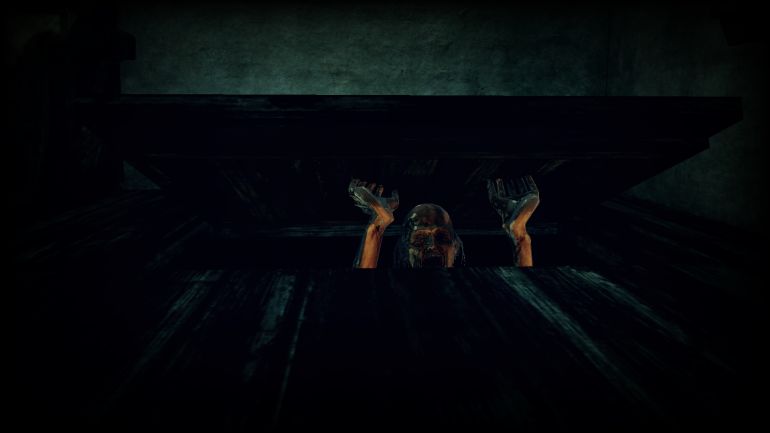
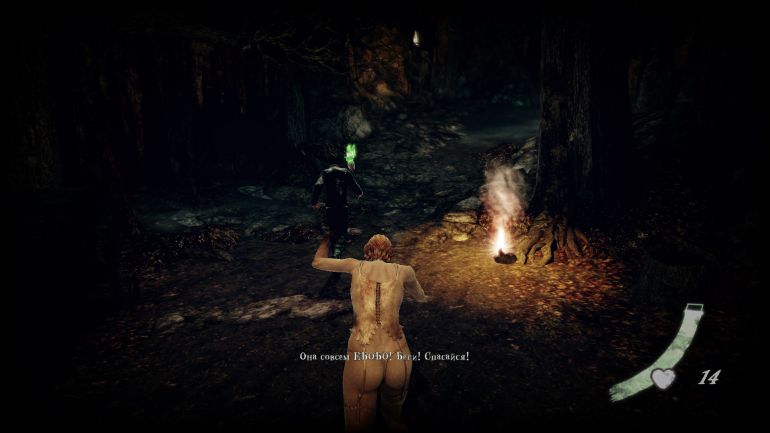
RE4 effectively provided the foundation for Shadows of the Damned, but beyond that, the variety goes wild. Darkness is the obstacle you face most often. You see, light isn’t especially popular in hell, and its inhabitants try to get rid of it however they can. They even seal darkness in barrels, which you can shoot to detonate. As we know, darkness is good for demons, but certain death for Garcia Hotspur. You therefore have to stay in the light, because in some places even your demonic torch won’t be enough.
Amusingly, the methods for dealing with poor illumination are anything but ordinary. Sometimes you can dispel it by firing a special pistol shot at a goat’s head . Elsewhere, you have to keep launching flares to light the surrounding area, however briefly. At other times, you follow a strange creature resembling both an anglerfish and a slug, which illuminates a small area around itself. Naturally, there are also stretches where you can do nothing about the darkness and simply have to run.
according to the Bible, goats are ‘clean’ animals
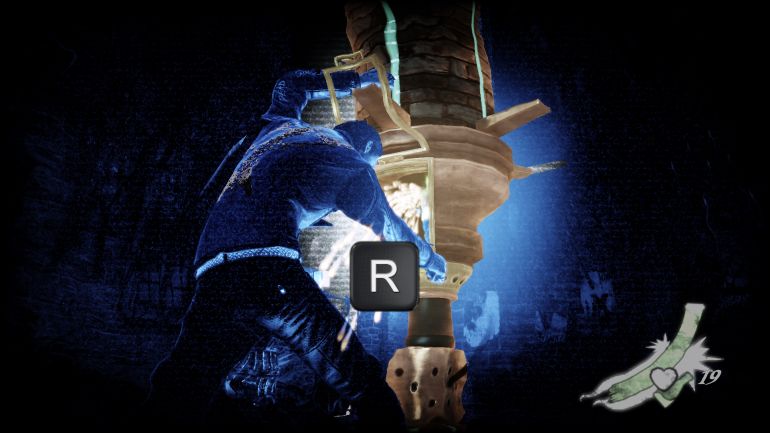
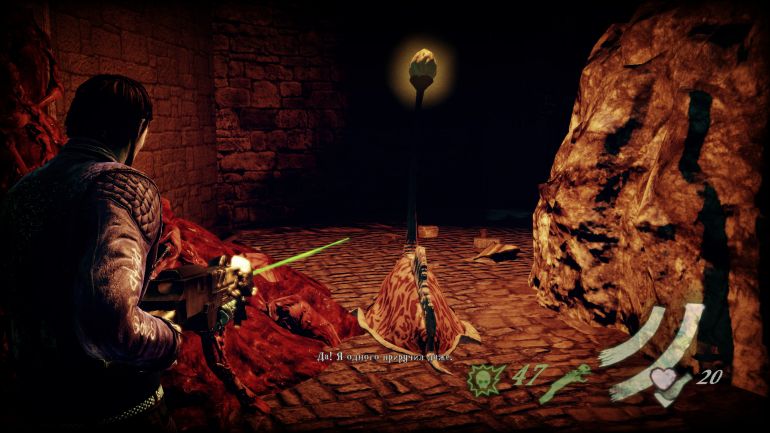
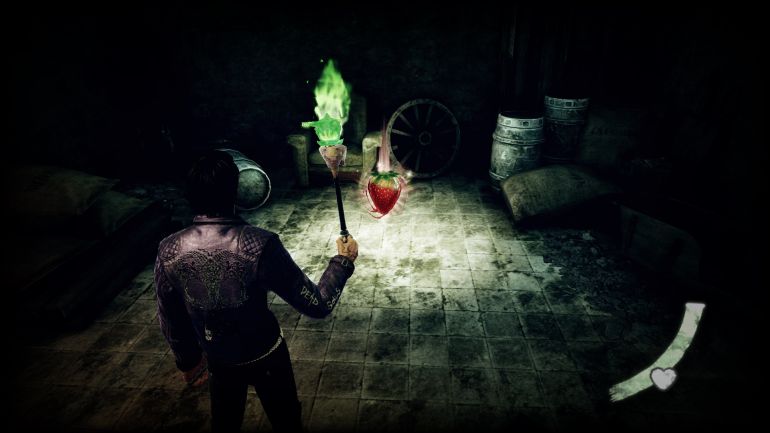
The locations in Shadows of the Damned aren’t especially expansive or elaborate. They generally consist of compact arenas linked by corridors with very few branches. Most of the puzzles you encounter are locked doors with the faces of fat babies, opened with stand-ins for keys, namely strawberries and human organs such as hearts or brains.
which demons absolutely love
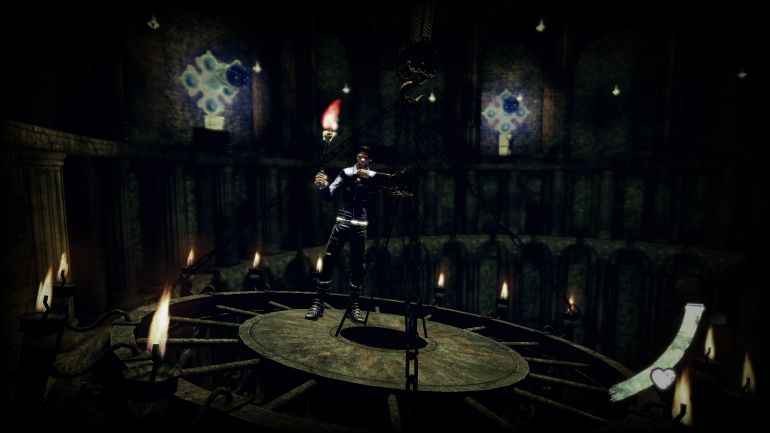
Every level keeps throwing something new at you, never letting you relax. Over the course of Shadows of the Damned, you’ll solve spatial puzzles, wander mazes, and ride a giant chandelier to the top of a tower. You can also bowl with grenades and shoot gigantic enemies with an equally enormous “Johnson.” Several levels are even side-scrolling shooters in the vein of Gradius.
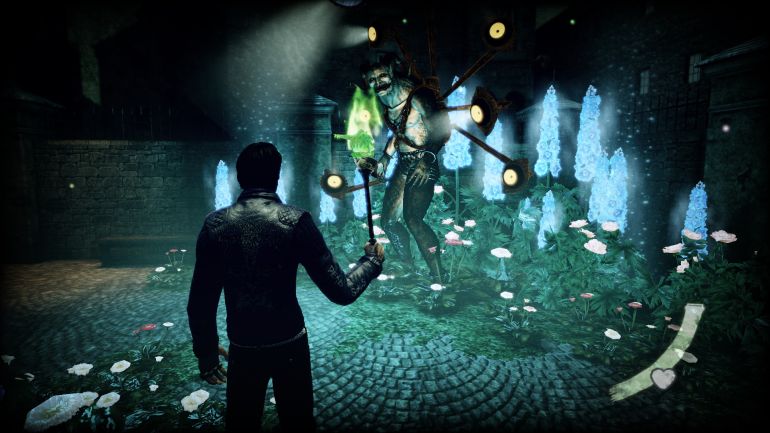
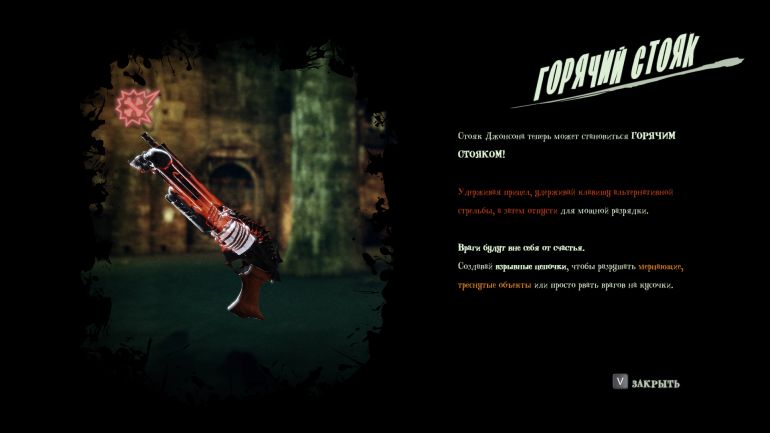
Combat is simple but extremely engaging. Johnson is your only weapon, transforming into a revolver, a shotgun, or an automatic rifle. If that sounds limited, don’t worry. Your weapons gain new properties throughout the game that change their behavior quite dramatically. The revolver, for example, gains sticky explosive charges, while the rifle becomes homing. Another amusing touch is the ammunition, demon bones, skulls, and teeth . You can also upgrade all your weapons with red gems.
Doom only came up with this in 2025
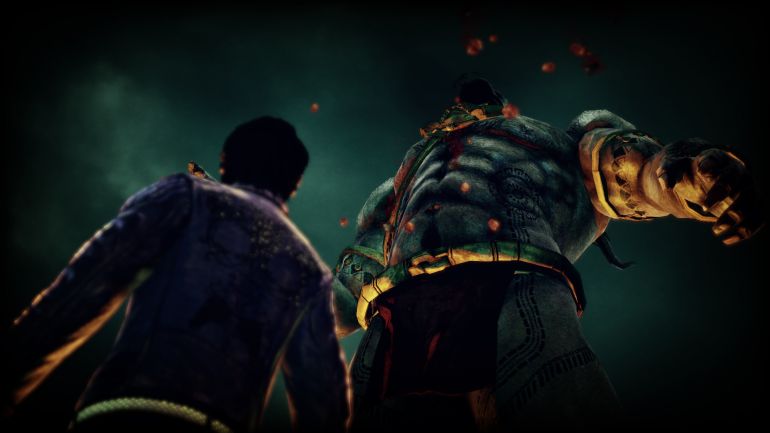
You’ll fight a wide variety of enemies, keeping boredom at bay. Like your weapons, the enemies frequently acquire new features. Some gain protection from darkness that completely blocks your damage. Before hurting one of these foes, you have to illuminate it with a “Light Shot,” much like in Alan Wake, released a year earlier. Later, enemies appear in physical armor you have to break first, along with devils that can only be killed by shooting their weak points. There are some highly unusual bosses, too. Take the enormous bird that constantly swears at the top of its lungs.
Shadows of the Damnedalso takes a different approach to character progression. Garcia Hotspur himself remains largely the same throughout the game, with only his health bar available for upgrading. Johnson, on the other hand, can have the stats of absolutely all his forms improved. As mentioned above, this costs red gems, which you can find in levels or buy from the local demon dealer with white gems, the game’s main currency. Defeated bosses also leave behind blue gems that unlock your demon friend’s most powerful abilities.
even the torch
Visually, Suda and Mikami’s creation is hardly exceptional. Even at launch, it was difficult to call the graphics in Shadows of the Damned cutting-edge. That does nothing to diminish its charm, though. You’ll find tremendously charismatic characters, an extremely unconventional vision of hell, and original monster designs, for which manga artist Q Hayashida deserves a generous helping of thanks. Yamaoka’s sound and music complement it all wonderfully. And the lead duo, voiced by Steve Blum and Greg Ellis, make the original dialogue extremely funny and charming.
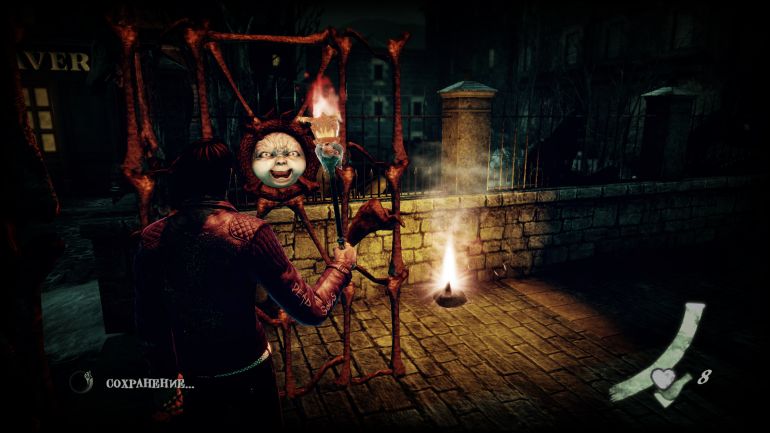
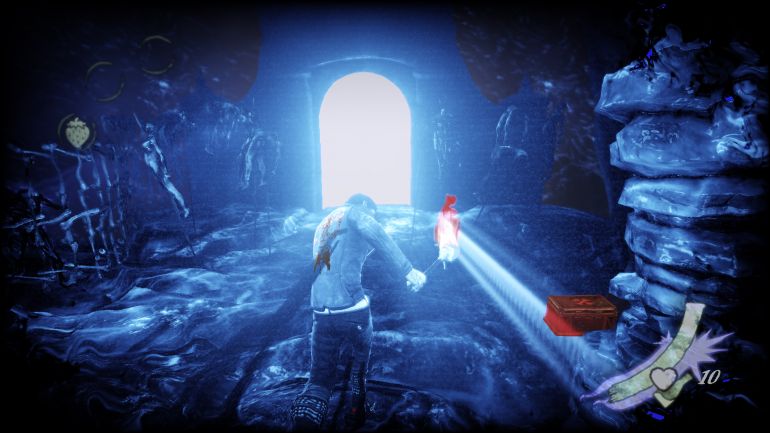
Now let’s talk about the modern edition of Shadows of the Damned, subtitled Hella Remastered. It adds 4K support, pushes the frame rate beyond 60 FPS, and improves some textures, though only on selected models rather than across the board. The settings menu, however, is almost identical to the console version’s, leaving you unable to adjust much to your liking. You can’t even choose a resolution, which is taken automatically from your system.
Don’t expect any substantial new content in Hella Remastered. Beyond the minor visual improvements, the game adds a few unique costumes for Garcia and the ability to play New Game+ with all the upgrades and improvements earned on your first run. That raises just one question. Why?
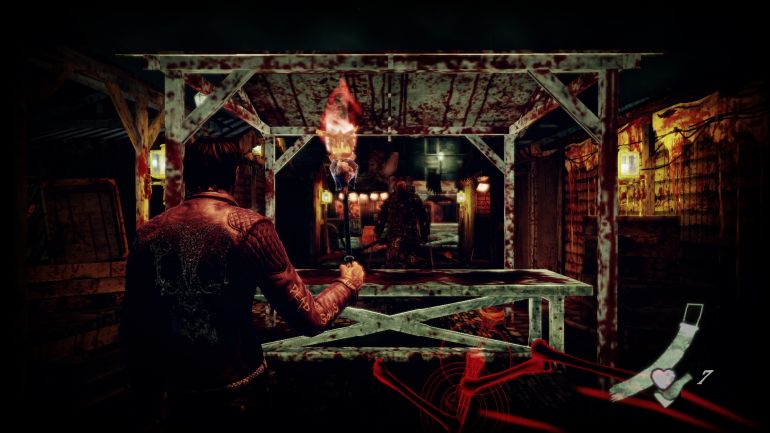
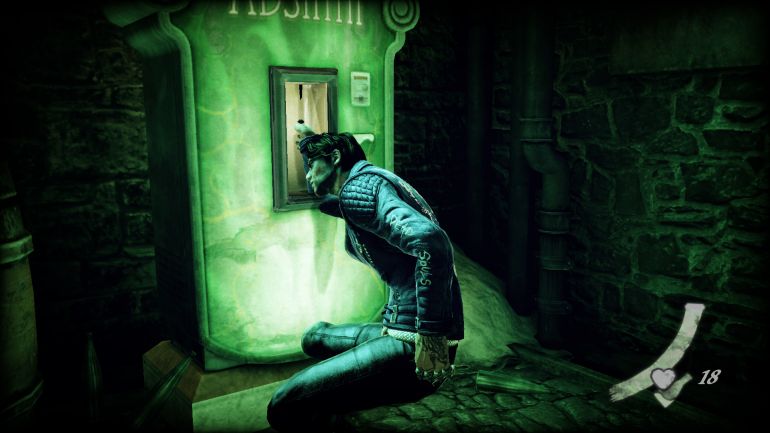
Shadows of the Damned is unmistakably a product of its time, and may sit awkwardly with modern trends. If even mentioning male genitalia makes you recoil, we strongly recommend keeping your distance. The game is packed to the brim with crude, uncompromising humor. But if that’s fine by you, and you want to experience a period of gaming history when developers were welcomed for this sort of thing, as well as allowed to get away with it, come on in.
Enjoyed this article? Found it helpful? Support GameSpirit.org and help us create more great content.
Author: Godlike_Goblin for GameSpirit.org


