
Priest Simulator: Vampire Show Review
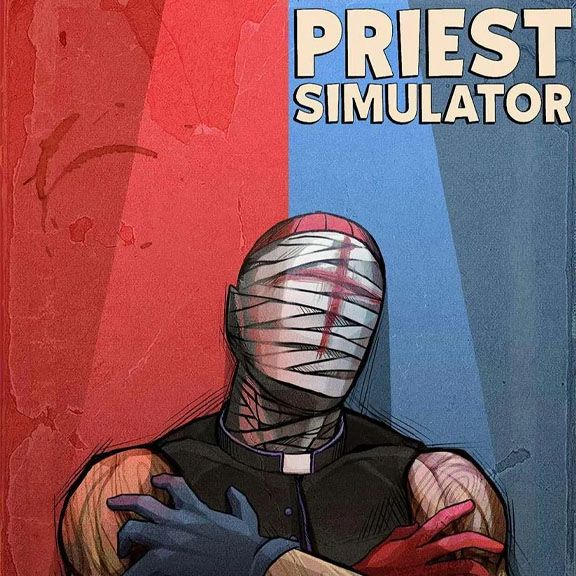
Title: | Priest Simulator: Vampire Show |
Developer: | Asmodev |
Publisher: | Ultimate Games S.A. |
Release: | 09.09.2025 |
Outright unhinged games have become a rarity lately. It's easy to see why. The days of games like Postal and Zeno Clash are over. Players want different things now, and their values have changed. But what if you're itching to revisit that anything-goes spirit? We've got an especially unusual specimen from the Polish game development scene for you.Priest Simulator: Vampire Show was developed by Asmodev with the involvement of publisher Ultimate Games SA. Released in fall 2022, it's a wildly strange simulation of life as a Polish priest with a rather complicated existence. It's packed to the brim with dark humor, has an incredible soundtrack, and is unlike anything you may have played before.
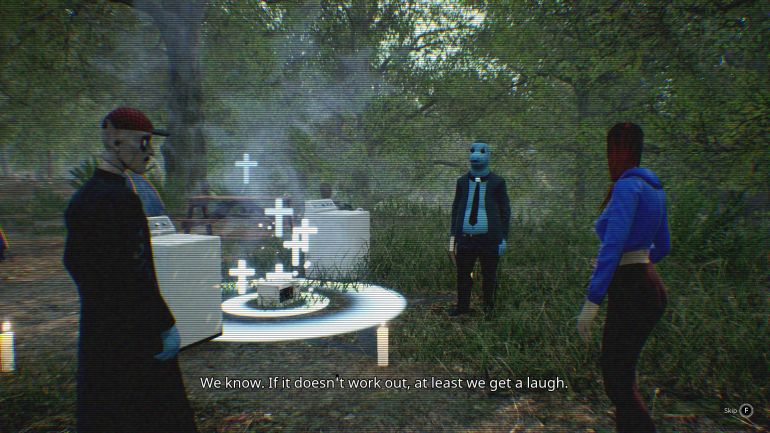
Let's get one thing out of the way: the story is the most important part ofPriest Simulator: Vampire Show. It's about as deranged and out of line as it can possibly get. The game has a lot in common with the Postal series and the TV shows “What We Do in the Shadows” and “Wellington Paranormal.” That TV influence comes through in the mockumentary* presentation, with its endless parade of strange characters and ridiculous situations. Gameplay periodically cuts away to on-camera interviews or to camera operators discreetly filming the characters from the sidelines. As you'd expect, their names and some snarky commentary pop up at the top of the screen during these scenes.
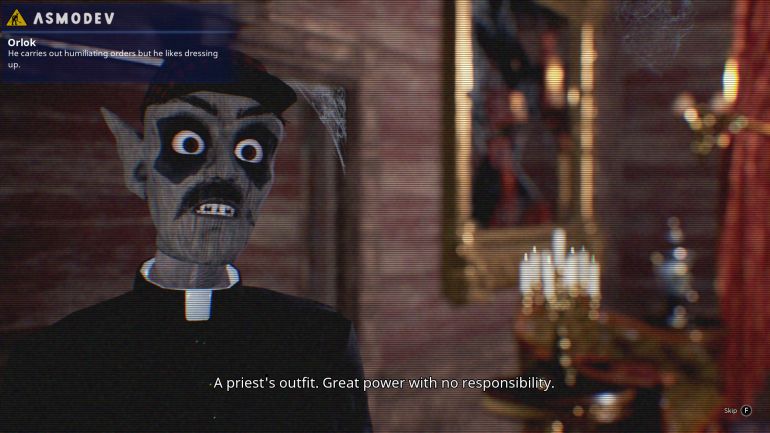
The star of Priest Simulator is a vampire named Orlok. Among other things, he's a rising star on the “Infernet,” Hell's answer to our internet. At the start of the game, Orlok lives in Hell and is busy trying to become its most famous resident. They even have their own rankings down there, in case you were wondering. In the prologue, you have to take on and defeat one of the top-ranked demons. After that, Orlok and his friend Vamela get into an elevator that rockets upward at breakneck speed.
The action then moves to a VERY strange version of modern-day Poland. A little village called San de Ville, to be exact. This is where the devout “christianists ” and the local “shatanists ” are locked in a bitter feud. One side built a church. The other tore it down and covered the whole village in shatanist graffiti for good measure. The Vatican sent Father Torpedo, who looks like a humanoid stuffed dinosaur, to oversee the restoration. One small problem: he gambled away the entire budget at a casino on the way there.
Christians of the Catholic branch
like satanists, only shatanists
*Mockumentary (from “mock,” meaning to make fun of something, and “documentary”) is a genre of fictional film that mimics documentaries, with a hefty dose of hoaxes and fabricated material. Most mockumentaries are satirical.
Right in the middle of his impassioned speech to the congregation and a couple of shatanists, the elevator carrying Orlok and Vamela drops out of the sky. The enterprising padre immediately hatches a brilliant scheme: dump the entire church restoration on Orlok. He casts a couple of spells, strips the vampire of his supernatural powers, and herds him into the church. He promises to give everything back once Orlok puts on a priest's robes, clears out all the trash, and washes off the godforsaken graffiti.
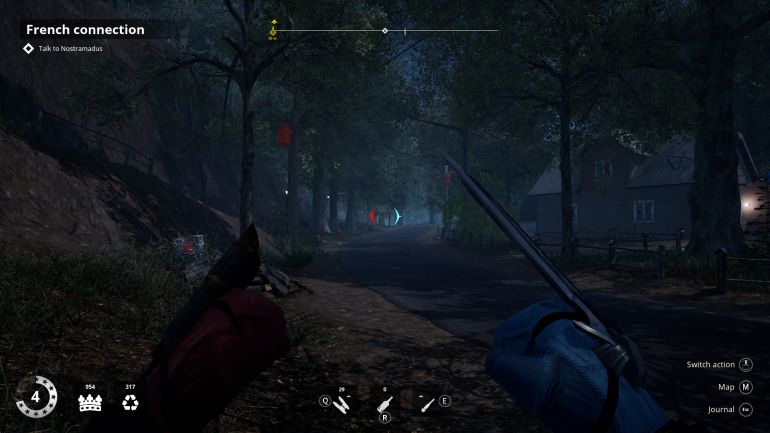
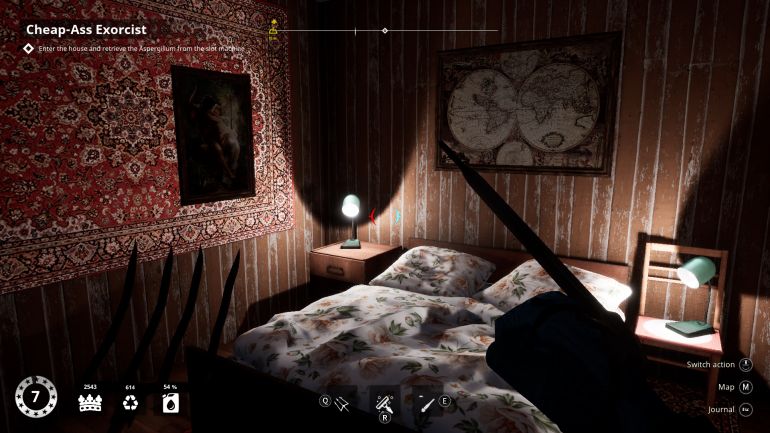
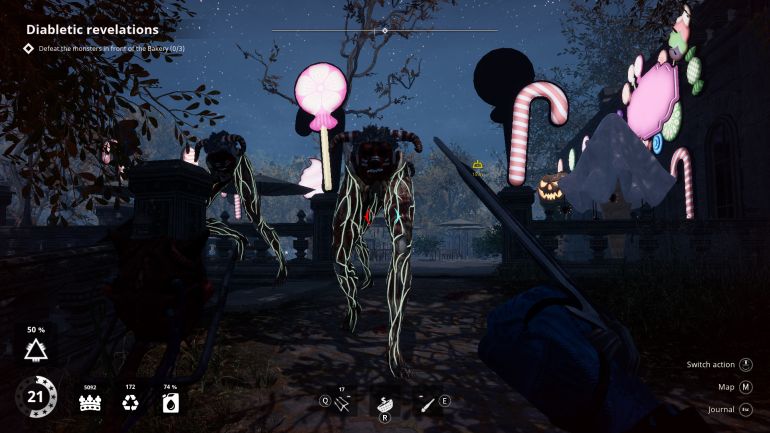
Then you're turned loose in a little open world that's deeply weird, deranged, gloomy, and an absolute riot all at once. Priest Simulator is a sandbox that throws exploration, first-person combat, exorcisms, and satirical storytelling into one chaotic mix. There's plenty to do: beat up shatanists with a bat and a pitchfork, scrub graffiti off the village walls, gamble away donations at an underground casino, exorcise demons with a washing machine manual, track down Polish black metal tapes, and a whole lot more.
As a sandbox, though, the game is hardly great. Beyond the main story, there are a few quests that have you washing blasphemous drawings off buildings, hunting down sacred codices and images, and collecting holy relics. The world is fairly small and gets monotonous, especially when the game keeps sending you back and forth between the same spots. It can really wear you down.
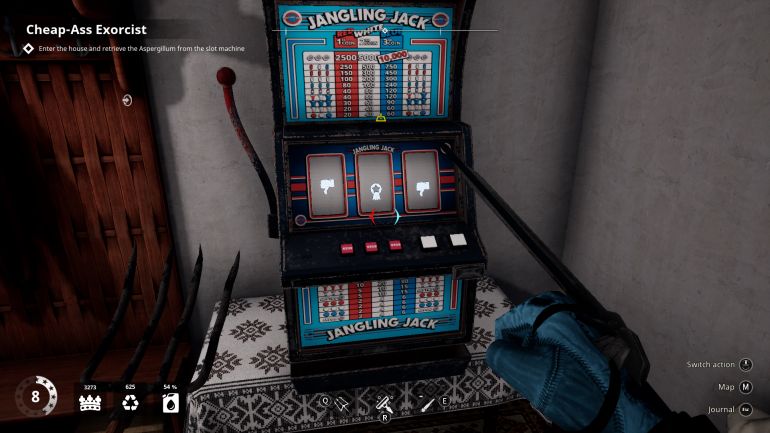
A couple of times during Priest Simulator, you'll have to gamble to progress. There are slot machines, roulette, and a plain old pick-a-number lottery. The game makes you play each one until you win, which can get genuinely irritating. Luckily, the RNG doesn't f*ck with you too much, and you'll usually win within three to five tries.
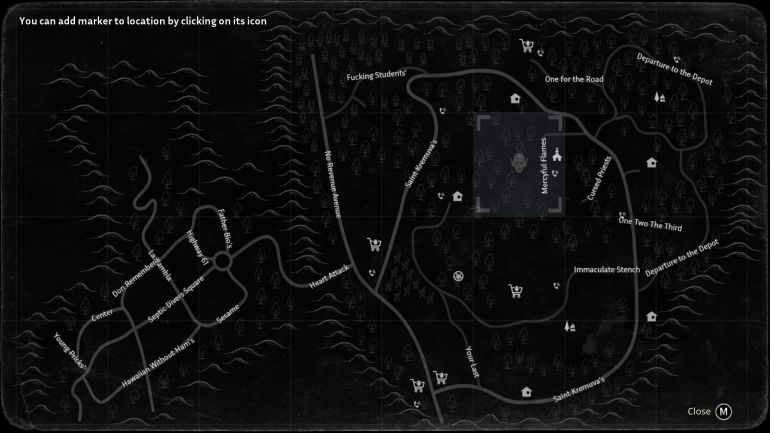
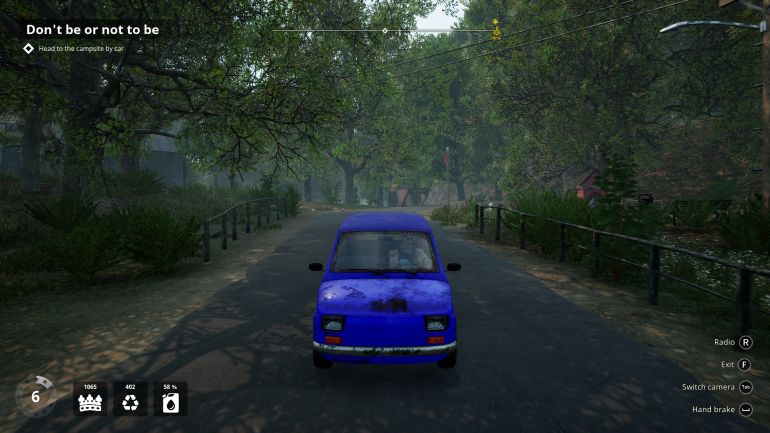
Another source of frustration is the car you get in the first half of the game. It handles awkwardly, and odds are you'll end up flipping it. On top of that, you can only summon it in certain spots, and you'll have to spend your hard-earned cash on gas. It's hard to see why Priest Simulator needed a car in the first place. The world is fairly compact, and halfway through the game you unlock fast travel via a couple of toilet stalls.
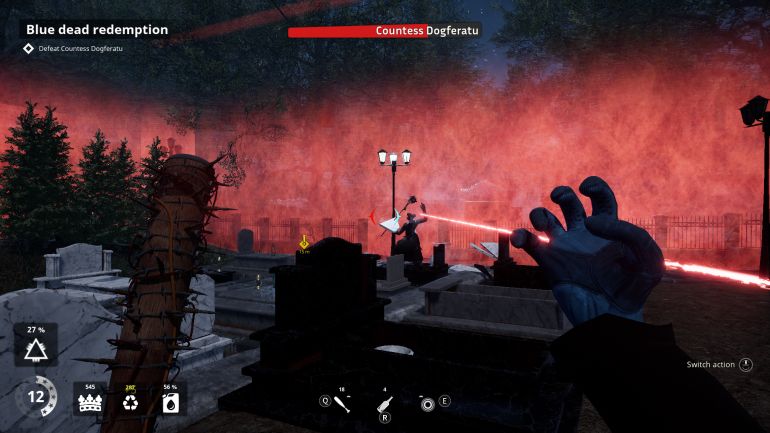
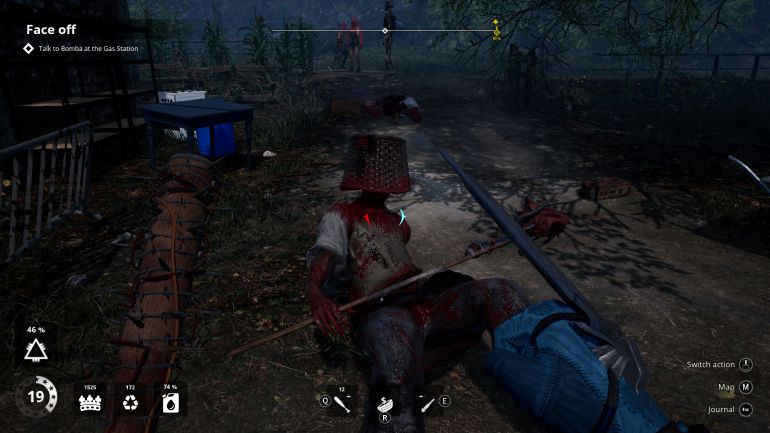
The combat is pretty basic. Orlok's hands operate independently and can carry different weapons. His left hand can hold a baseball bat or a shotgun glove, for example, while his right can wield a blade or a telekinesis glove. You can't stand still in a fight. You have to keep moving to avoid taking damage. Even so, fights eventually become a chore. They all play out more or less the same way, to practically the same track every time, and it gets old.
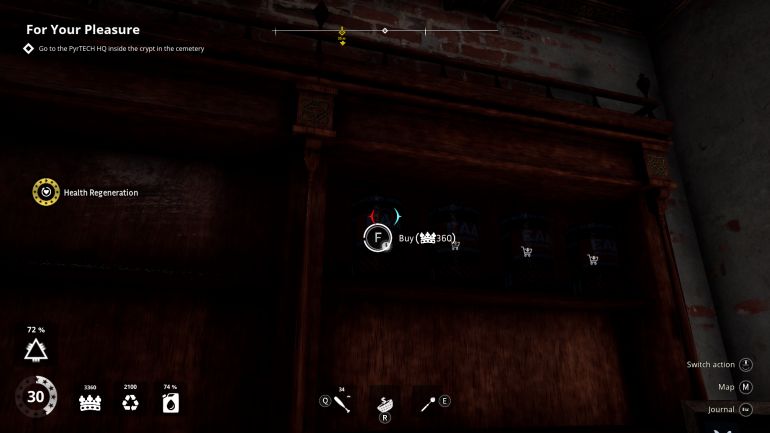
There are also character progression and weapon upgrade systems. There's only one way to boost Orlok's stats: spend in-game currency on performance-enhancing supplements at the local shops. Simple enough: the more money you have, the stronger you can make him. Just don't expect a radical transformation. He'll be a little faster, stronger, healthier, and better able to keep going.
Weapon upgrades don't cost money. What you need instead are two things: Polish black metal tapes and blueprints. All the actual work happens in the church basement. For the most part, you'll get blueprints as you progress through the story. There's a very funny scene built around a play on words, by the way. In American English, a technical drawing is called a blueprint . At one point Orlok has to look for one, only to find that it's red, which drives him up the wall.
after the specially treated paper used to make copies quickly
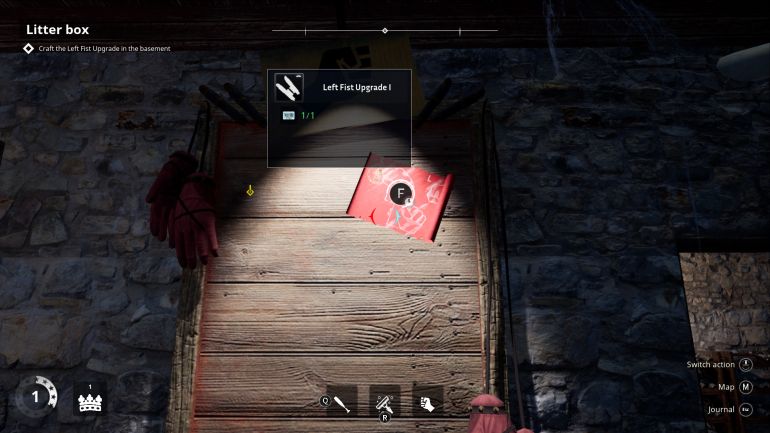
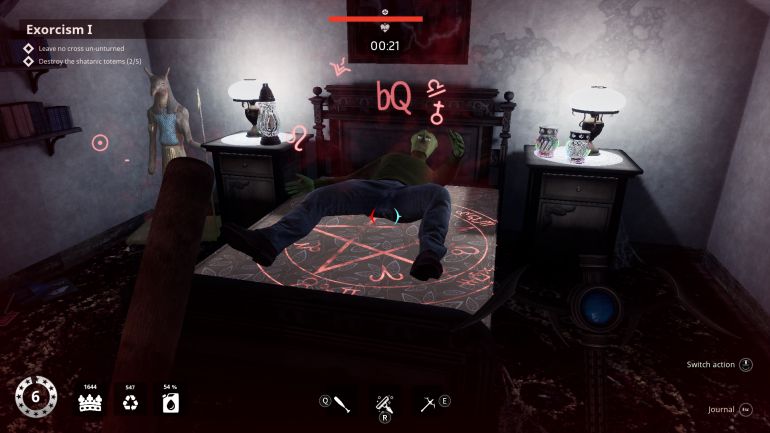
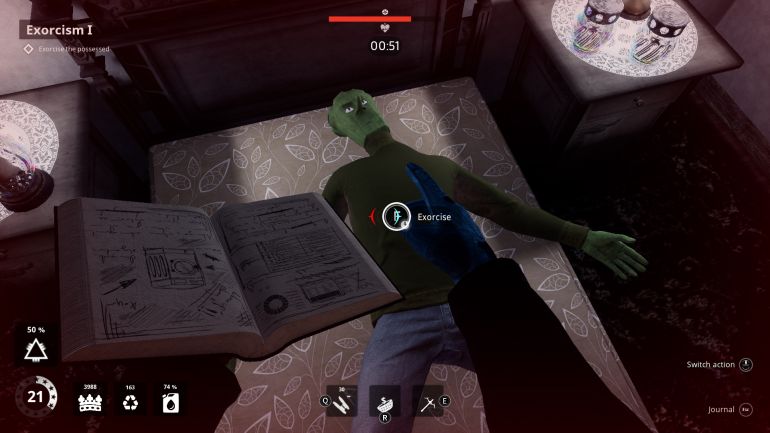
There are two ways to get the tapes. The first few are rewards for story missions almost as soon as you start. After that, the only way to get more black metal is by performing exorcisms. The whole demon-expelling business is set up in a pretty funny way. You're let into a room with a possessed person, but before you can begin the exorcism, you have to run through the building smashing shatanist idols, putting christianist statues in designated spots, and turning crosses the right way up. Only then can you approach the possessed person and drive out the demons with your book of rites. You have to do all of that in a very short window, so there's no way you'll get it on the first try. It's yet another maddening part of the gameplay.
There's a reason the title says “Priest Simulator.” On top of everything else, you have to restore and upgrade the church. You pay for it with resources salvaged from the copious piles of trash. The renovated church is easier on the eyes and draws new members to your congregation. The upgrades aren't all practical, either. Among other things, you can put in a projector, a DJ deck, lava lamps, an aquarium, and even a hot tub. It's bizarre, and it fits right into this peculiar world.
As you upgrade the church, you'll also unlock the ability to give sermons and hear confessions. Confessions play out as a minigame where you choose the right responses based on what the person tells you. All of that affects the number of parishioners in the area, and they're more than just background extras. If you feel like it, you can shake them down for donations and even recruit them into your squad to go after a mob of shatanists.
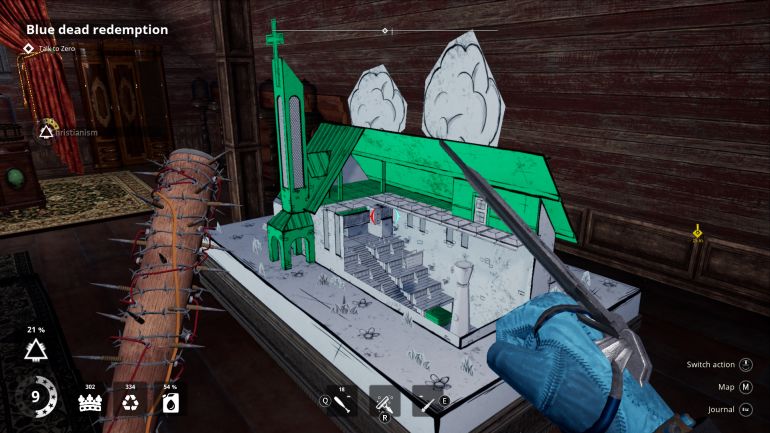
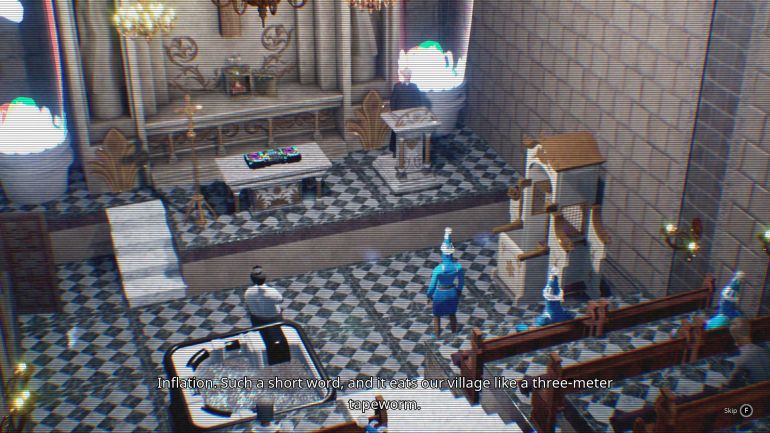
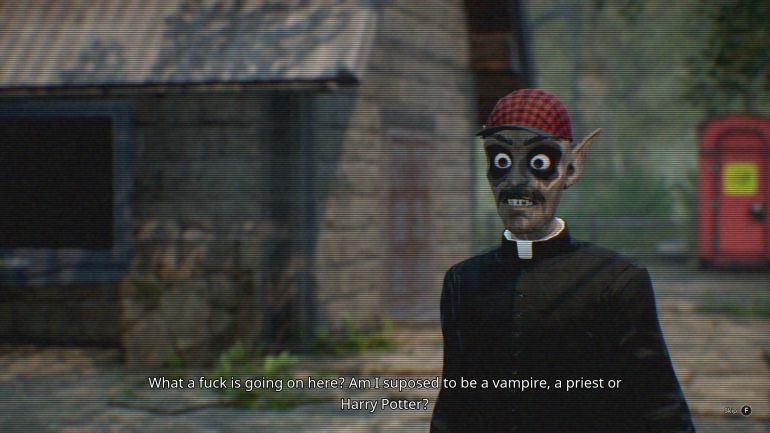
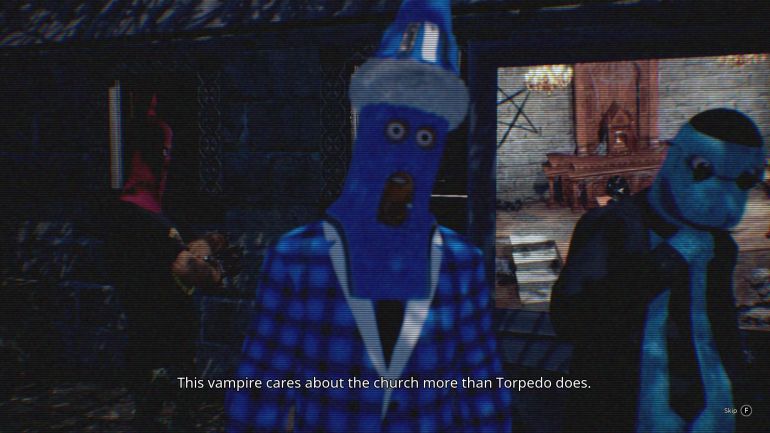
It's hard to imagine what inspired the developers to go with such a strange art style, but it fits the game's general air of madness perfectly. You see, every character is designed to look like a wooden puppet. Some look fully humanoid, others have anthropomorphic animal features, and some look like nothing you can put a name to. It adds a streak of surrealism that pushes the game away from reality and into outright madness.
Musically, Priest Simulator: Vampire Show has a few different styles up its sleeve. Hypnotic choral arrangements and overdriven synths set the scene for a full-blown church rave. Dark industrial sounds are a perfect fit for exploring the area or casting out demons. And the energetic black metal riffs from Polish band Gruzja are just the thing for kicking a little shatanist ass. The only letdown is that sometimes different tracks play at the same time, turning into a muddy jumble of sound.
The voice acting deserves some credit too. Priest Simulator has an excellent English dub. The voices are exceptionally well cast, which makes the comedy land even better. If you want the full experience, though, switch to the Polish voices and enjoy a practically endless torrent of choice, colorful Polish profanity.
In spite of all that chaos, the story in Priest Simulator: Vampire Show somehow stays engaging. The writing is witty and has a healthy dose of satire, poking fun at modern Catholic Christianity, pop culture, and everything in between. At its best, it's a great game that does a fine job of mixing elements from different genres with a lion's share of absurdity. The flip side is that sooner or later, it'll wear thin. And there's simply no reason to play it more than once.
Enjoyed this article? Found it helpful? Support GameSpirit.org and help us create more great content.
Author: Godlike_Goblin for GameSpirit.org


