
Ninja Gaiden: Ragebound Review
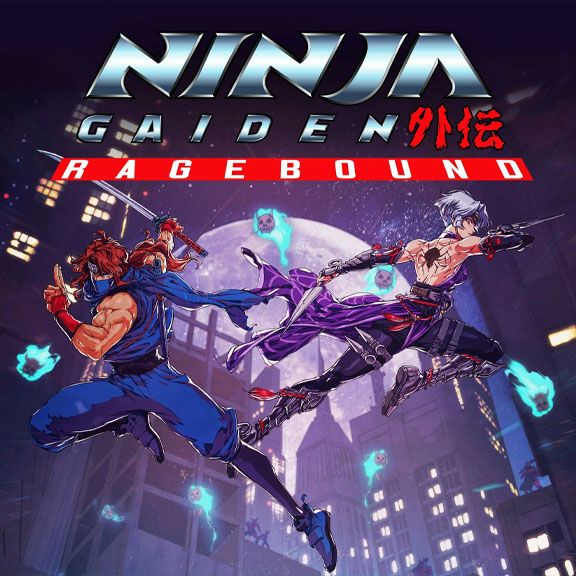
Title: | Ninja Gaiden: Ragebound |
Developer: | The Game Kitchen |
Publisher: | DotEmu |
Release: | 06.12.2025 |
You can roughly split the Ninja Gaiden series into two generations. At least you used to be able to. The first was the 2D run that started it all, back in the '90s. The second was the relatively modern 3D reboot of the 2000s. The arrival of Ninja Gaiden: Ragebound complicates that split a bit and, funny enough, evens things out. Now the 3D and 2D branches each have a spin-off .
the 3D branch has Yaiba: Ninja Gaiden Z
Funny enough, Ragebound is also the third game in the series for 2025. Before it we got the remaster Ninja Gaiden II Black, and after it came the full-fledged sequel Ninja Gaiden 4. What makes Ragebound stand out is that it's both a spin-off and the first 2D game in the series in more than 20 years. So yes, this year it's “Ninja Gaiden, baby!”
Ninja Gaiden: Ragebound came from a pretty great pairing: Spain's The Game Kitchen, the developer behind the terrific pair of Blasphemous Metroidvanias, and French publisher Dotemu, which gave us the excellent reboot-slash-sequel Streets of Rage 4 and helped publish the equally good Teenage Mutant Ninja Turtles: Shredder's Revenge. With that kind of talent involved, Ragebound was hardly going to be forgettable, and it isn't.
Ninja Gaiden: Ragebound is a 2D side-scrolling action game that pays full tribute to the original Ninja Gaiden trilogy for the NES. It's also a spin-off that begins before the first Ninja Gaiden and runs alongside its events. The face of the franchise, Ryu Hayabusa, makes an appearance in a supporting role. It's up to two new heroes to clean up the demons' latest mess: Ryu's student Kenji, a ninja from the Hayabusa Clan, and a kunoichi* from the criminal Black Spider Clan, Kumori.
we're leaving the arcade game out of this
*Kunoichi is a Japanese term meaning “woman .” In popular culture it often refers to a female ninja or practitioner of ninjutsu .
女, onna
ninpo
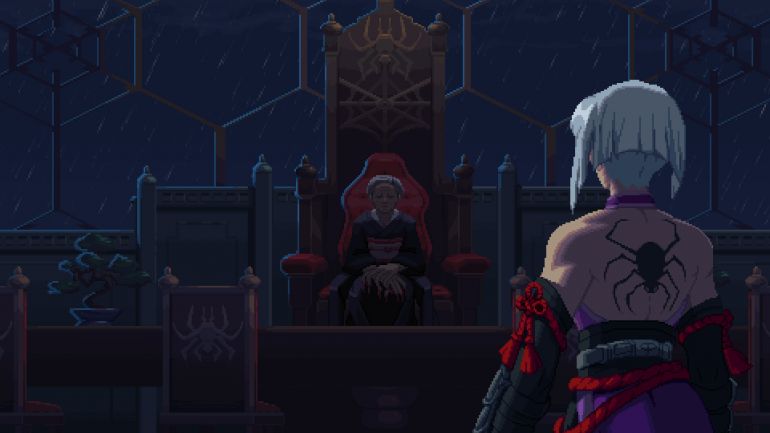

The prologue will have longtime fans wiping away a single nostalgic ninjutsu tear. There's a completely redrawn version of the original Ninja Gaiden intro and a whole level dedicated to Ryu's father, Ken Hayabusa . It ends with that famous duel and Ken's death, of course. Then we cut to Japan, where demons attack Hayabusa Village. Ryu gets a letter telling him his father is dead and has to leave for America. That leaves his protégé Kenji to deal with the demons. Later, we see another side of the conflict. The Black Spider Clan is attacked too, and Kumori, the second playable character, fights the demons off. The Demon Lord eventually traps both heroes, and a dark ritual binds their fates together.
or Joe Hayabusa if you're more familiar with the 3D reboot
Both of The Game Kitchen's previous games were top-tier Metroidvanias, but the studio didn't go down that road again. Ragebound follows the 2D Ninja Gaiden games as an action platformer built around speed, precision, and quick reactions. A word about difficulty: Ragebound is an excellent starting point for newcomers, since you can fine-tune it to match your skills. You can reduce incoming damage, remove knockback when you get hit, and even slow the game down. We wouldn't recommend it, but if all you want is to zip through the story, nobody's stopping you.
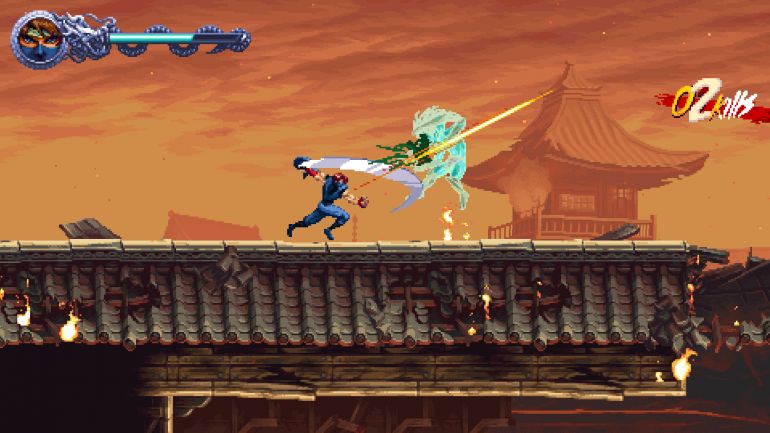
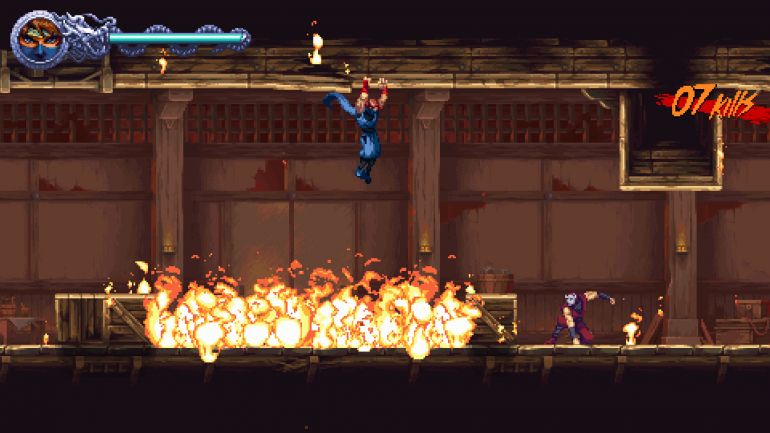
At the same time, this Ninja Gaiden spin-off is perfect for obsessively grinding levels and speedrunning. You can replay every stage, and each has a set of challenges that can improve your rank. You might have to kill a certain number of enemies a particular way or finish without taking damage. Beat the game once and you can try Hard Mode, which changes things quite drastically.
The big hook in Ragebound is playing as two characters. You'll spend most of your time controlling Kenji, who fights with a sword. It's your main melee weapon and you can use it as often as you like. Kumori uses kunai and, at first, she has an unlimited supply too. About a third of the way in, the two merge in Kenji's body, and using Kumori's weapon starts draining a special meter. They also have a special move called the Guillotine Boost, usable only in midair. It lets you dodge a huge range of enemy attacks and reach some otherwise hard-to-get-to spots. Later in the story, you unlock a combined magic attack that can clear the whole screen at once.
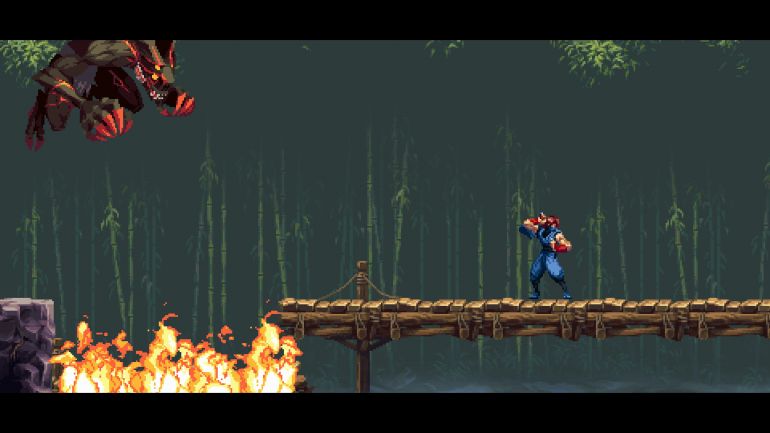

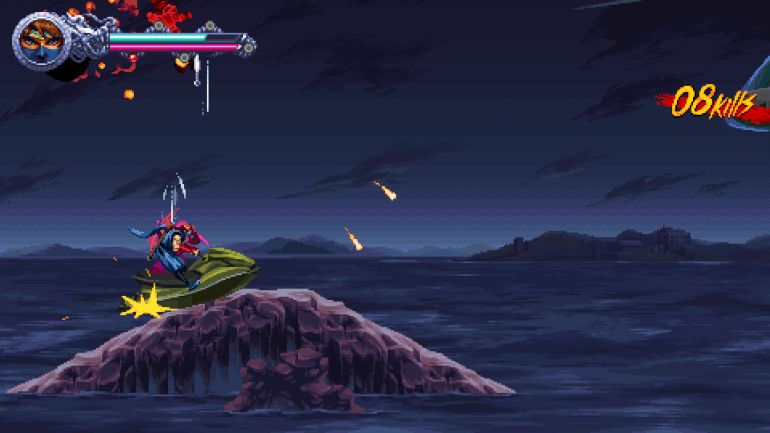
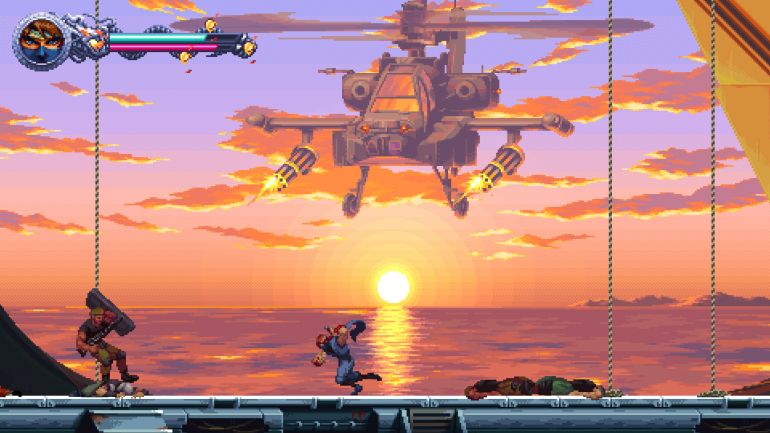
The game does a good job of mixing things up. You'll fight demons on foot and race through a level on a motorcycle. You'll also get to ride a jet ski and a helicopter. There's a stage on top of a train and a sequence where you flee a demon driving a bulldozer, with plenty more besides. The levels are well designed overall and often work like puzzles you have to solve very quickly. Some sections take advantage of Kumori's presence in the demon world. You switch over to her to open a path for Kenji in the real world.
Combat works on a similar principle. To get the most out of it, you have to think about how and when to kill certain enemies instead of just swinging your sword at everything. Blue enemies let you power up a sword strike, while purple ones can charge your kunai for a more devastating attack. Get a boost from a weaker enemy and you can take out a tougher one in a single hit.

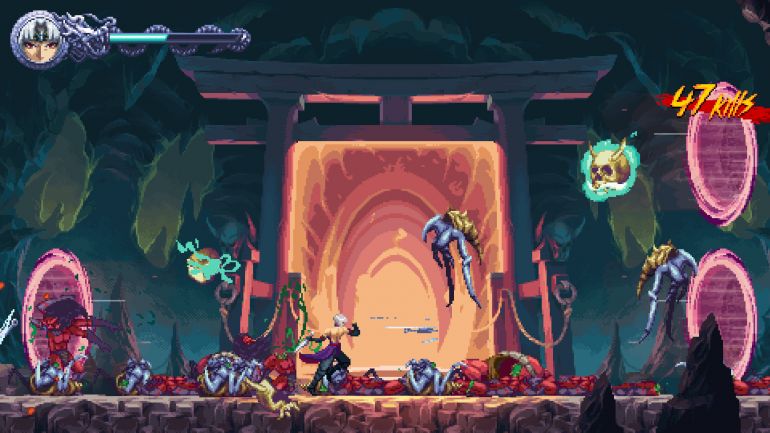
As in classic action platformers, the regular enemies in Ragebound are dumb. They see a target and forget there are obstacles. They just rush you, hoping to land a hit or knock you into a pit. Stronger enemies tend to stand their ground and block the way. With the Guillotine Boost, though, you can tear through a stage without fighting much at all. And if you take some damage, who cares? The next checkpoint will heal you. They're close enough together to keep the game from becoming a slog.
Bosses are a different story. Obviously, you can't beat them in one hit. Charged attacks do extra damage and briefly stagger them, letting you get a couple more hits in for free. Each boss has its own fighting style and several phases. They're fun to fight, and you'll need to learn their patterns to come out on top. The only slight letdown is that a couple of bosses show up again.
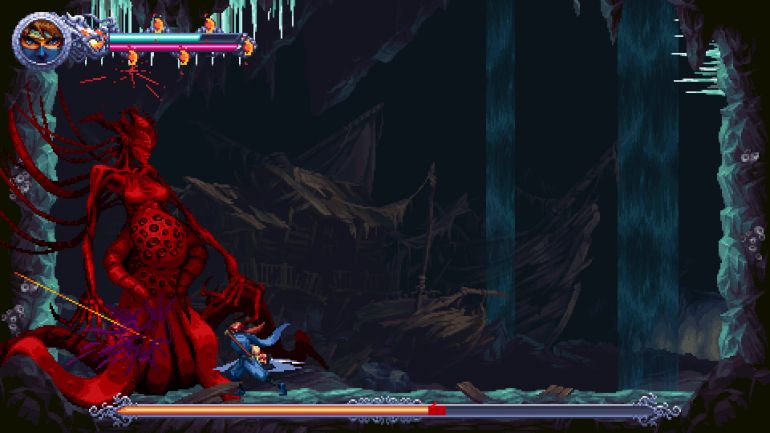
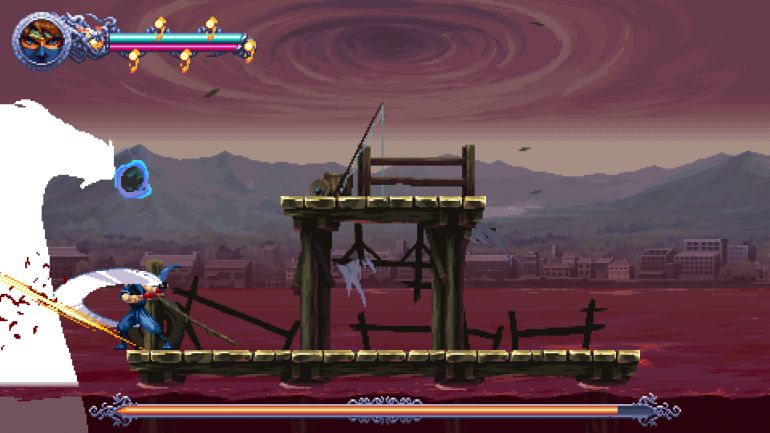
There's a progression system, too. At Muramasa's shop you can buy talismans and secret arts for both heroes. Talismans can let you heal by killing enemies or reduce incoming damage. Secret arts are more advanced techniques that let you create healing orbs or use more powerful kunai. The shop also sells items that make life harder, like one that sends you back to the start of the level instead of a checkpoint when you die. In case the game wasn't hard enough already.
You buy those talismans and arts with Golden Scarabs you collect in the levels. Some are easy to find right on the way to the exit, while others take some work to reach. You can also collect Crystal Skulls, though you can't buy anything with them. They're just for higher ranks, achievements, and unlocking secret costumes for the heroes.
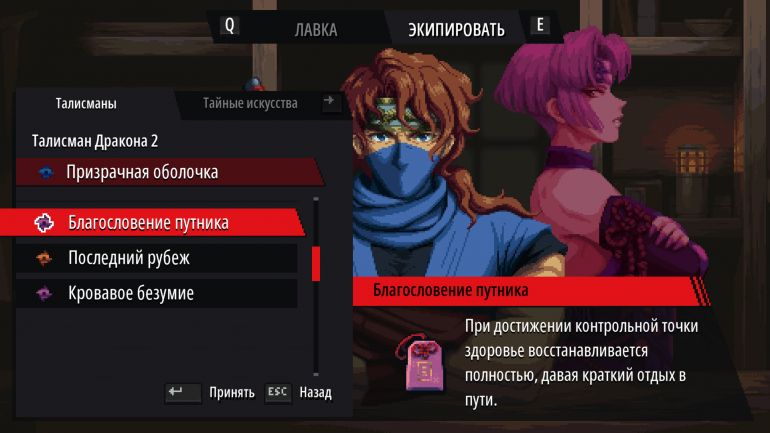

The 2D pixel art in Ninja Gaiden: Ragebound has a distinctly SNES-era look, with plenty of dithering and parallax scrolling. The game is full of scenery that calls back to the nearly forgotten heyday of arcades. The Game Kitchen did a spectacular job here. The sound is great too, as is the score from Sergio de Prado. The composers from the original trilogy, Keiji Yamagishi, Ryuichi Niita, and Kaori Nakabai, also contributed to the soundtrack.
Ninja Gaiden: Ragebound leaves you with a warm sense of nostalgia. It captures the spirit of the old games without making you suffer . It's a fast action platformer with the precision of a Swiss watch. It doesn't reinvent the genre, but it gets pretty close to the ideal.
though you still can if you want to
Enjoyed this article? Found it helpful? Support GameSpirit.org and help us create more great content.
Author: Godlike_Goblin for GameSpirit.org


