
Metal: Hellsinger Review
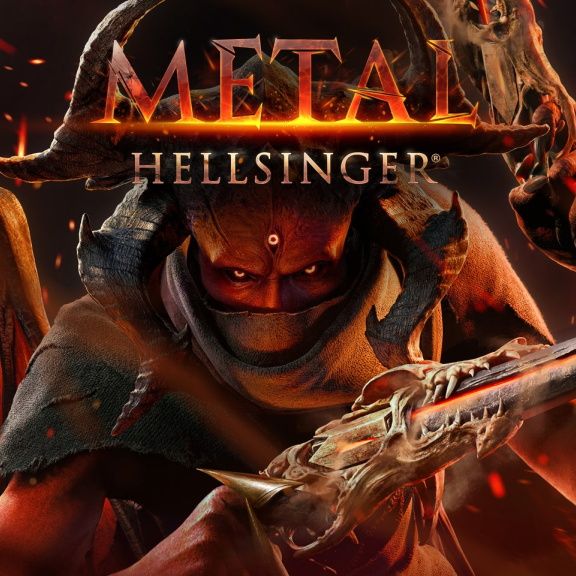
Title: | Metal: Hellsinger |
Developer: | The Outsiders |
Publisher: | Funcom |
Release: | 03.08.2026 |
The rhythm shooter genre is fairly limited in variety, given its specific nature. That’s especially true of first-person games. Only a couple of titles even come to mind. The first is BPM , which you could call a rhythm FPS pioneer and perhaps even a benchmark, albeit one with flaws. The other is Metal: Hellsinger. Today, we’ll talk about how that one turned out.
Bullets Per Minute
Development was handled by Swedish studio The Outsiders, and this was its first project to make it to release. Before that, the team had worked on Project Wight from 2016. It later became Darkborn and was canceled in April 2019. That’s when The Outsiders switched to Metal: Hellsinger, published by Norwegian company Funcom. Release was scheduled for 2021, but the team couldn’t finish it in time. Funcom did acquire The Outsiders in June that year, though. Metal: Hellsinger ultimately launched in September 2022.
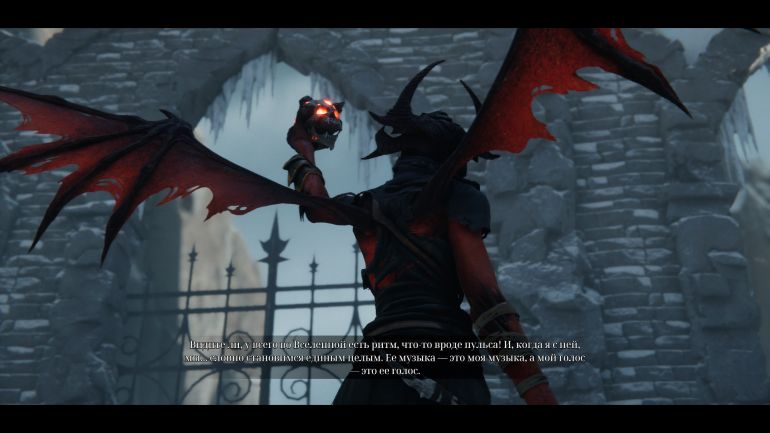
The story follows a lost soul called the Unknown. For reasons unknown, she ends up in Hell, where her voice is immediately stolen and she’s trapped behind the Gates of Torment, from which escape is impossible. At least, that’s what they thought in Hell, but they turned out to be wrong. The Unknown escapes and sets out for revenge. Along the way, she finds a companion, a talkative flying skull named Paz. He serves as Metal: Hellsinger’s main narrator.
The story is presented in a fairly unoriginal way, through cutscenes made of static images with minimal animation. There’s also text to read before starting a level, offering a little extra lore. Events unfold linearly, with no branching paths. You move from one region of Hell to the next, clearing out hordes of demons. A boss waits at the end of each location, and the finale pits you against the Red Judge herself. There are a couple of unexpected twists along the way and an open ending, which you can reach in five to six hours.

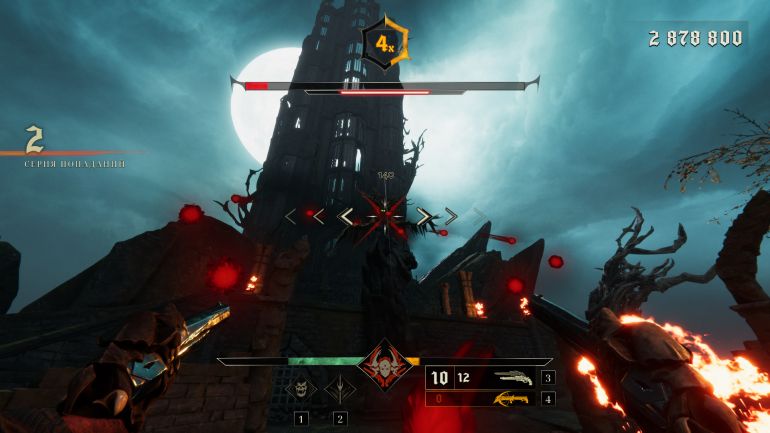
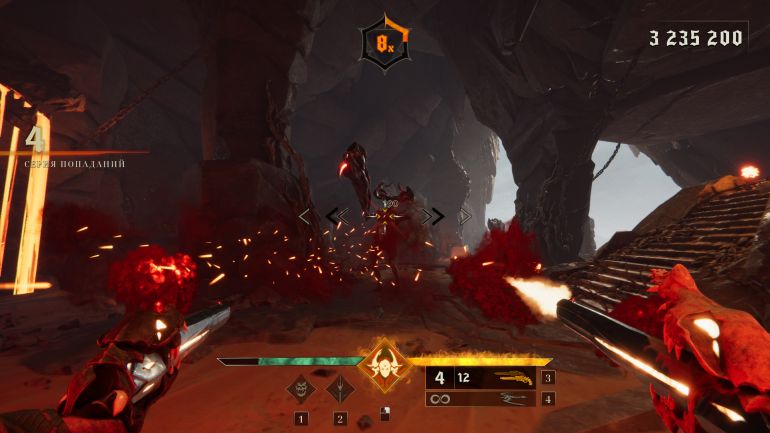
Although Metal: Hellsinger looks a lot like BPM, the concepts are a little different. There are no roguelite elements here, or at least there weren’t at launch. Metal: Hellsinger is an arena shooter in the vein of the modern Doom trilogy, where you literally tear demons apart to music while trying to stay on beat. Play by the rules and click your mouse with the right timing, and the heroine’s Fury meter builds up, multiplying damage by 2, 4, 8, or 16. Ignore the rhythm and even the most useless demon takes forever to whittle down.
2016, Eternal, and The Dark Ages
or use a controller
With so many enemies thrown at you, standing still isn’t an option. You need to keep moving to avoid getting boxed in. The Unknown can dash, including to either side, and double-jump. She can dash while jumping too. Time your dashes to the beat and you can keep doing them indefinitely.
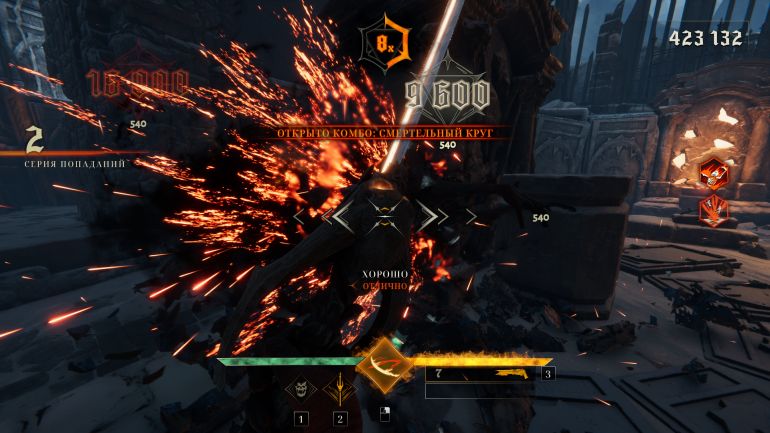
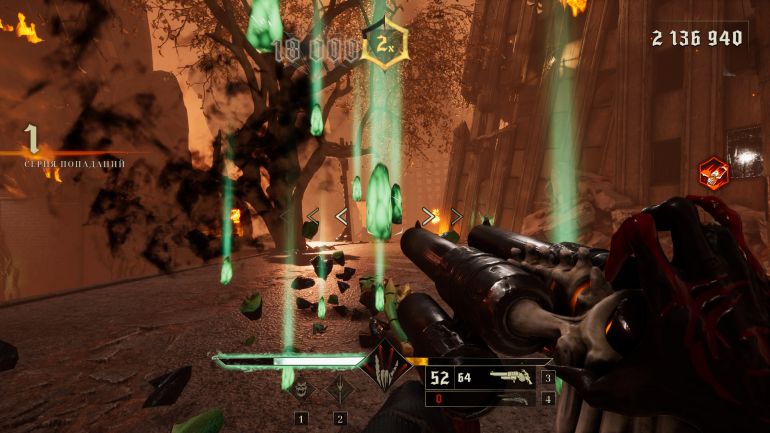
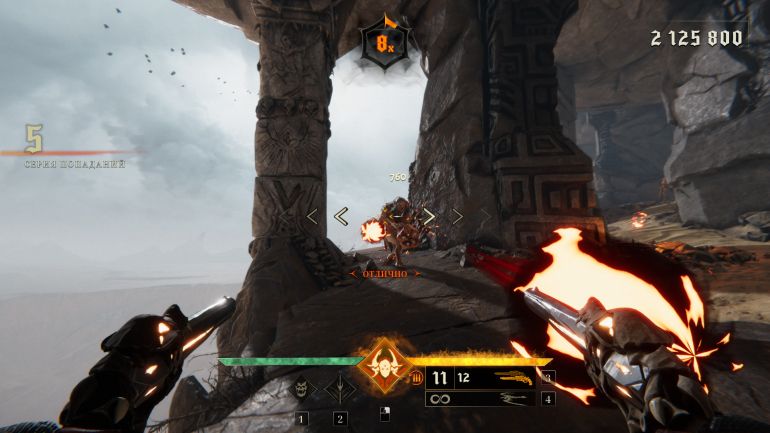
There aren’t many enemy types, and probably too few to give fights much variety. Things start in the usual way with the simplest tormented souls, later joined by enemies carrying shields and guns. Larger demons appear too, dealing substantial damage when they hit. Enemies can also become an alternative source of health if you time a finisher correctly, as in Doom Eternal.
Bosses have their own problem. Apart from the final one, they all look the same. The game explains this by making each boss an aspect of the Red Judge. That doesn’t stop them from fighting differently, though only slightly. Most differences come down to the arenas and bullet hell elements, with each boss showering players in projectiles in its own way. Overall, though, boss fights are repetitive. The aspects teleport around, occasionally summon regular enemies, and make you dodge their attacks.
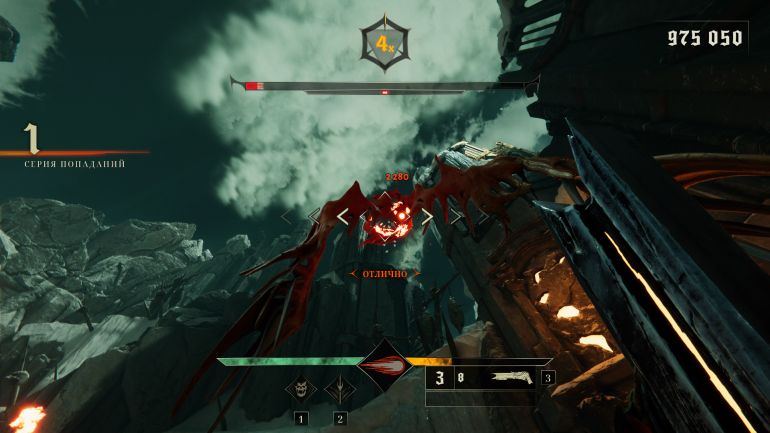
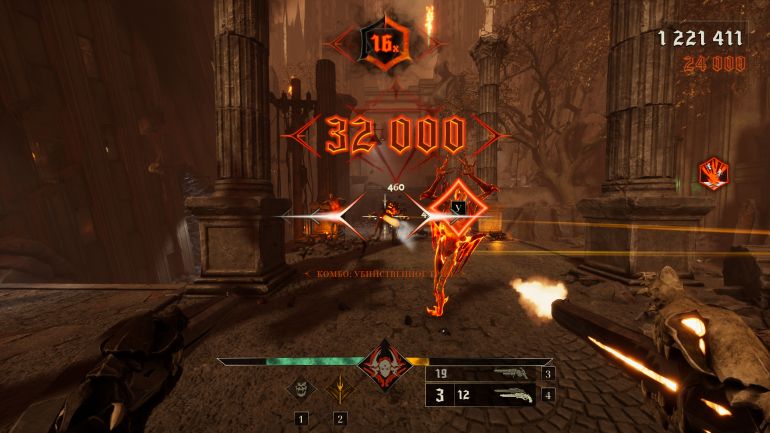
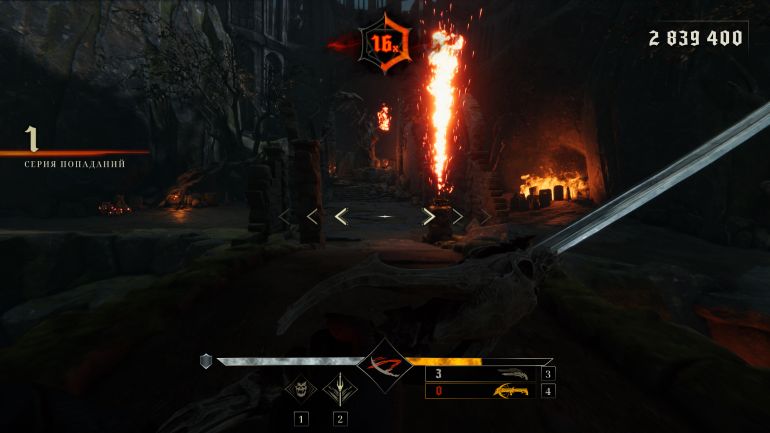
Weapons are limited too. The Unknown starts with just a sword, but you meet Paz almost immediately and can use him as your initial ranged weapon. Both stay in your arsenal permanently. As you progress through the story, you find other weapons, including a shotgun, a crossbow, dual revolvers, and throwing sickles. DLC adds two more, a machine gun and a bow. You don’t need to worry about ammunition, which is unlimited, but you still need to reload. If you want to do that faster, you have to do it on beat. Every weapon has only one firing mode, but each also has an ultimate ability charged by successfully attacking enemies.
Level layouts are relatively simple too, consisting of a series of corridors and open areas. The farther you go, the more platforming elements appear. You have to hop between them while trying not to fall into a chasm. Even if you do fall, though, nothing too terrible happens. You lose some health and get moved to a safe spot.
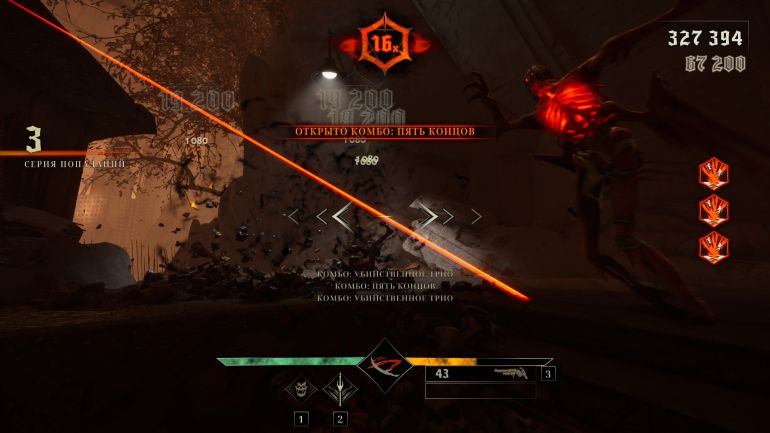
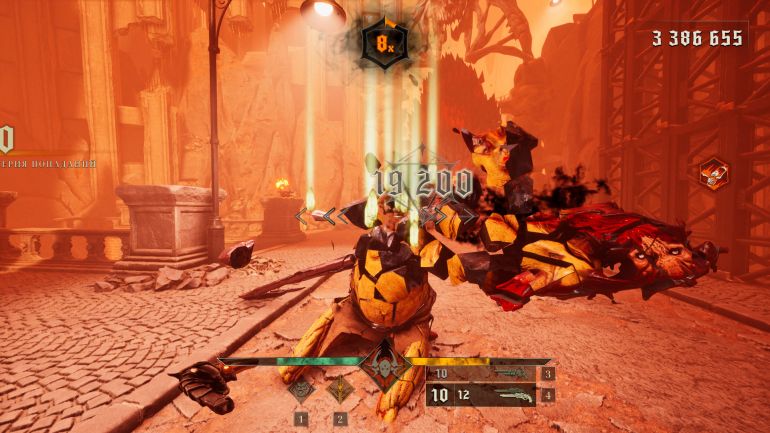
Various bonuses are scattered around the levels. First and foremost are healing crystals, identifiable by their green color. Red crystals act like explosive barrels, helping you thin out the demonic ranks quite effectively. You can also find seals that increase the Unknown’s Fury level , which is useful against stronger enemies.
some can raise it straight to maximum
Beyond the story mode, you can tackle various challenges called Torments. These generally give you little tasks with very short time limits. One Torment requires killing a certain number of enemies exclusively on beat. Another, for example, requires killing every enemy with finishers.
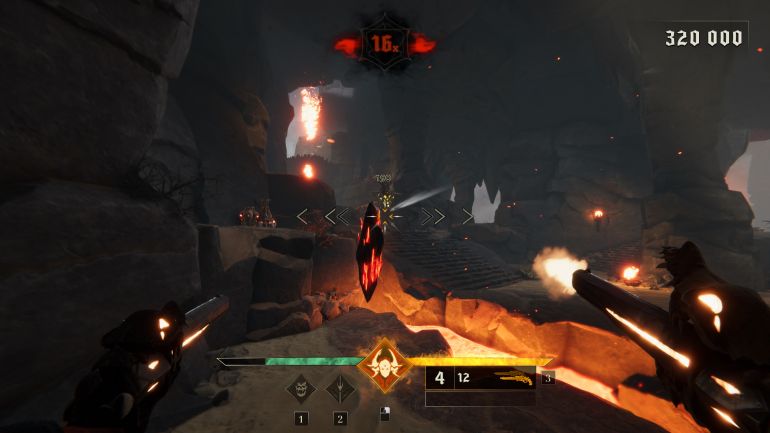
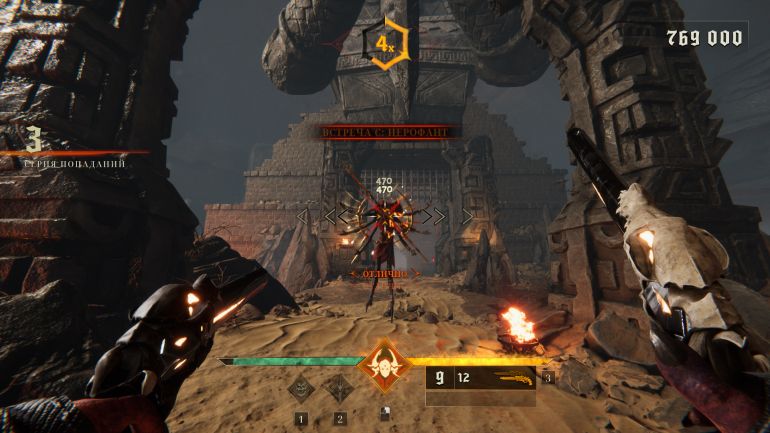
Completing Torments earns Sigils, buffs that grant various helpful bonuses. One lets you keep a successful attack streak even if you miss or shoot off beat a few times. Another instantly reloads your weapons when you switch them. Amusingly, these Sigils can make the campaign noticeably easier, but the challenges themselves often make you work up a real sweat.
Now for the best part ofMetal: Hellsinger, the music. It’s woven into the gameplay as tightly as possible. Notably, the music is divided into layers that only kick in when you hit the beat yourself. At first, you hear only the drums setting the rhythm. As your Fury level rises, guitars and bass join in. Reach the maximum and you’re rewarded with vocals.
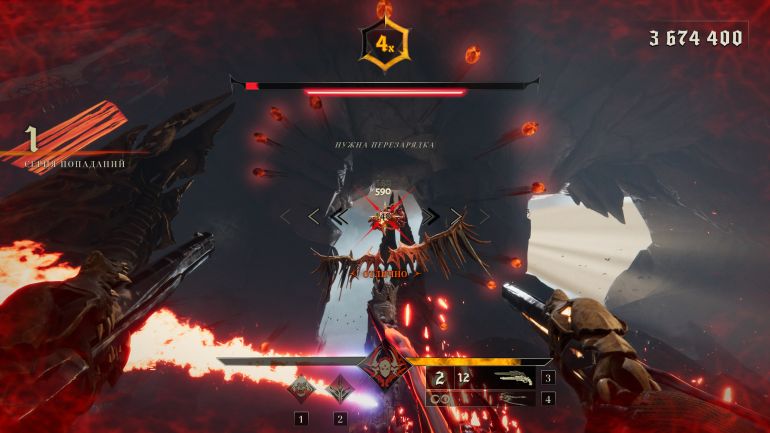
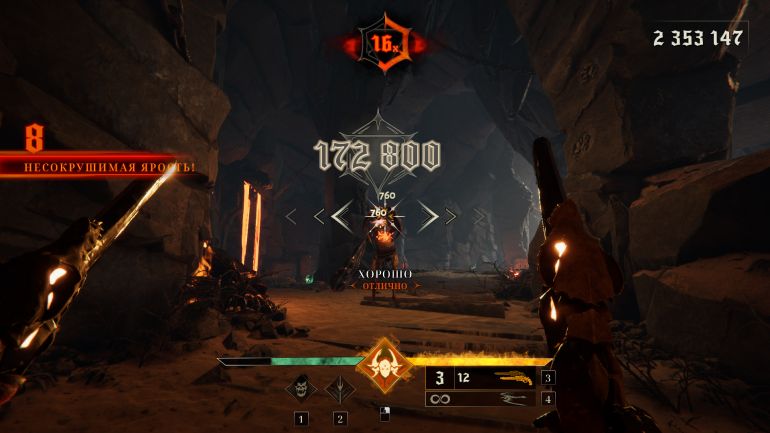
All the game’s music is by Swedish duo Two Feathers, whose work you may have heard in Aragami and Warhammer: Vermintide 2. They’ve done an excellent job, but the real musical highlight is the roster of guest stars from major heavy music acts. Musicians from Arch Enemy, Trivium, Lamb of God, System of a Down, Dark Tranquillity, and other bands contributed to the songs. And Troy Baker, who voices Paz, is excellent as always.
Metal: Hellsinger’s visuals are harder to call outstanding, and its art direction is impossible to call original. It’s all suitably hellish and infernal, but without much flair. The flames and certain pieces of scenery that pulse to the music are about the only visual highlights. Credit where it’s due for that.
The game received several DLC packs after launch. The first, Dream of the Beast, added several songs, new outfits for the heroine, and one weapon. The second, Essential Hits Pack, focused entirely on new music, featuring tracks from acts such as Gorillaz, Muse, Depeche Mode, Disturbed, and others. Notably, none of these songs was divided into layers like the base game’s soundtrack, which rather undermined the whole point of Metal: Hellsinger.
The third DLC, Purgatory, was the final and largest one. Players got more songs, outfits, and weapons, plus a new mode called Leviathan. This brought roguelite elements to Metal: Hellsinger. The mode puts you in enclosed arenas to fight growing waves of enemies, then upgrade the heroine by choosing skills at an obelisk. After each run, you can also improve the Unknown through a separate skill tree to make future attempts a little easier. Bear in mind that these upgrades don’t carry over into the main story campaign.
Overall, Metal: Hellsinger leaves mixed impressions, with perhaps only its music making a positive mark. Even that is entirely a matter of taste. If you don’t like heavy riffs, there’s nothing here for you. Otherwise, it’s a short, linear adventure where accurate shooting matters less than precisely timed button presses. It’s fun at first, but starts to wear thin.
Enjoyed this article? Found it helpful? Support GameSpirit.org and help us create more great content.
Author: Godlike_Goblin for GameSpirit.org


