
Forgive Me Father 2 Review
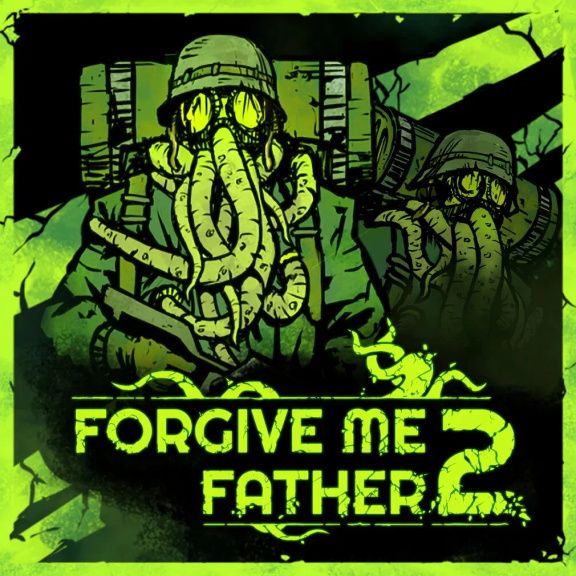
Title: | Forgive Me Father 2 |
Developer: | Byte Barrel |
Publisher: | Fulqrum Publishing |
Release: | 19.10.2023 |
Craving another dose of frantic sprite-based shooters, just like the good old days? But you’ve already played Doom, Blood, and Wolfenstein to death. And you’ve finished modern releases like Warhammer 40,000: Boltgun, Ion Fury, and Forgive Me Father, too? Luckily for you, we have another option, from the developers of that last game, as it happens. Poland’s Byte Barrel decided to repeat the modest success of its debut and released Forgive Me Father 2 in October 2023. It stays very close to the original in spirit, while sporting better graphics and a few new gameplay tricks.
The story of Forgive Me Father 2 picks up where the first game left off, but treats the unnamed priest’s campaign as canon. After everything he went through in the original, he ends up in an asylum. A thoroughly appropriate destination for a Lovecraftian protagonist. Peace eludes him even here, though. One night, an inner voice wakes him, whispering that something is wrong with the institution. Knife in hand, he tries to escape, but the game soon pulls the classic twist and reveals it all to be a bad dream. From there, you’ll have to decide for yourself where reality ends and the mad priest’s fevered imagination begins.
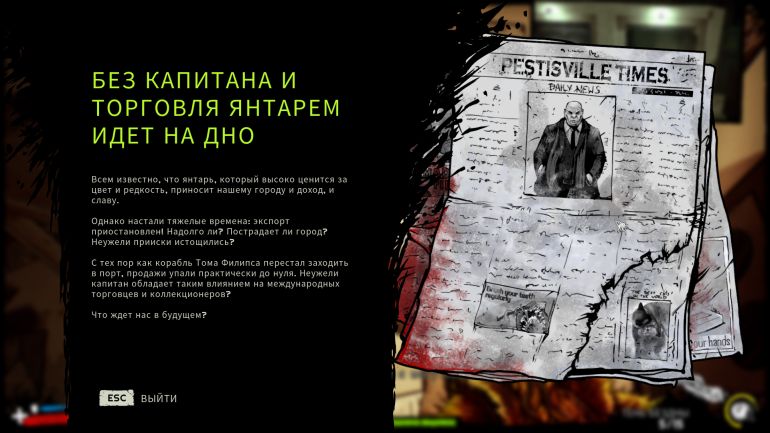
the journalist has been cut from the story entirely
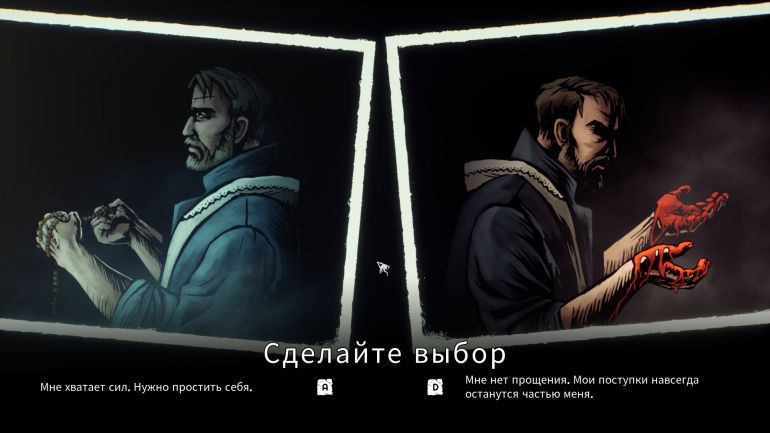
Forgive Me Father 2 also makes some adjustments to its storytelling. As before, cutscenes appear only at the beginning, after each boss, and at the end. Their format remains unchanged, too, with a series of pictures accompanied by narration. Now, though, you get a choice between two options after each boss. There are far fewer notes, which previously served as a window onto the game’s world beyond the screen. The narrative now leans on the environments and occasional remarks the protagonist makes in particular situations.
The gameplay in Forgive Me Father 2 is a more complicated matter. Yes, the foundations seem unchanged. This is still a very fast-paced first-person shooter in which you tear through hordes of enemies to heavy guitar riffs. But the devil, as they say, is in the details. And those details are precisely where the sequel manages to fall short of the first game. Let’s look at why.
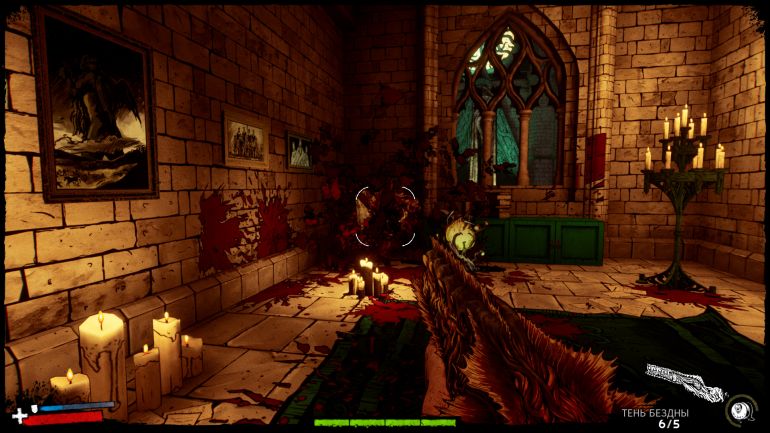
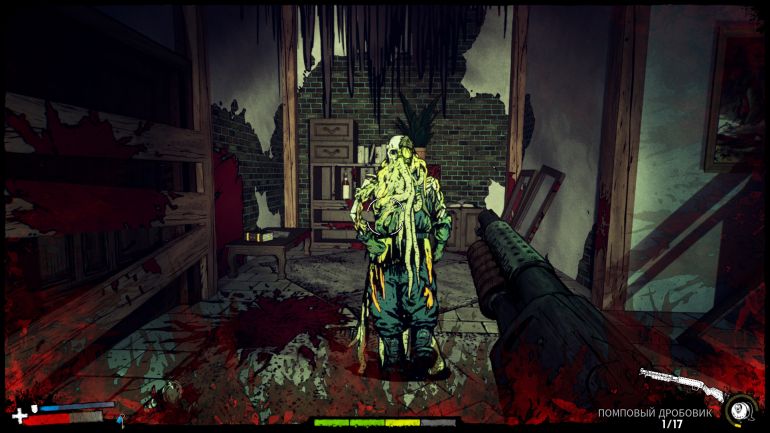
Let’s start with what improved. The visuals might be the only thing we can put in that column. The game looks even more stylish and attractive, despite remaining a sprite-based shooter styled after dark comic books, with deep shadows that bring Mike Mignola’s work to mind. You can’t fault Byte Barrel for its sense of style. Its feverish imagination, combining bloody illustrated visuals with repulsive creatures seemingly torn from Lovecraft’s pages, is simply magnificent.
The game has also received a visual polish. There are new touches such as particles, more realistic water, volumetric lighting, and reflections. Levels are more striking and varied . Enemies from the first game return looking better thanks to redrawn sprites. The new enemies, especially the bosses, look even more deranged than before. And the guns are even more eldritch and grotesque.
though there are exceptions here, too
Another questionable decision is the addition of a hub*, the asylum where our hero has wound up. You can stay here without fear, provided you avoid the cafeteria food. The “nuthouse” is actually where the story’s forward momentum is most palpable. You unlock new doors and receive new pieces of the story. You can replay completed levels to mop up any remaining secrets. This is also where you select new passive and active abilities for your character and upgrade your weapons. You can even mess around with a minigame in which you bat baseballs through the asylum’s windows.
*The funny thing is that the hub also disrupts the game’s pace, the very criticism leveled at the first game’s notes, yet the sequel presents it as a virtue.
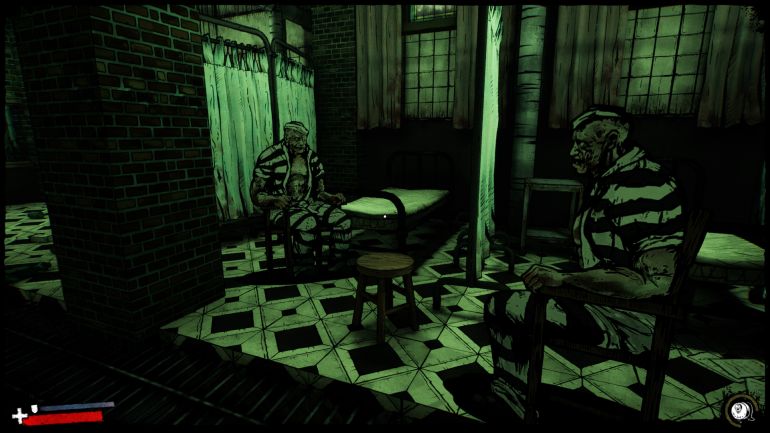
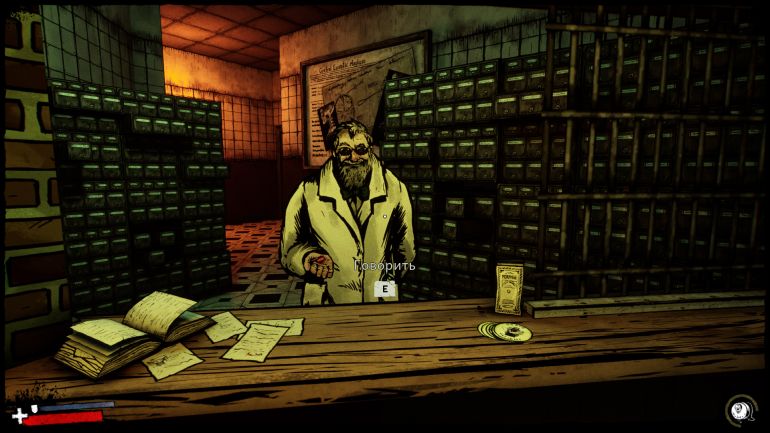
Along with the hub, though, the game loses its sense of cohesion. In the original, you steadily moved from one location to the next, whereas in Forgive Me Father 2 you sometimes have to return to the “nuthouse,” if only for upgrades. The locations themselves are larger, expanding horizontally and vertically into multiple levels. There are faint, almost embryonic immersive elements, parkour, and spatial puzzles. That last addition is another problem, since it mostly comes down to finding keys and pressing particular buttons. One level actually requires you to find and pull more than 20 levers. It’s frankly infuriating.
Naturally, all this also slows the game down a little. Between arenas, you now spend more time running and jumping, listlessly shooting the isolated enemies scattered here and there to keep boredom at bay. Otherwise, each level’s objective remains the same. Get from point A to point B while killing hundreds of monsters. You can also hunt for secrets to gather more resources for upgrades and new guns. Boss levels are the only exceptions.
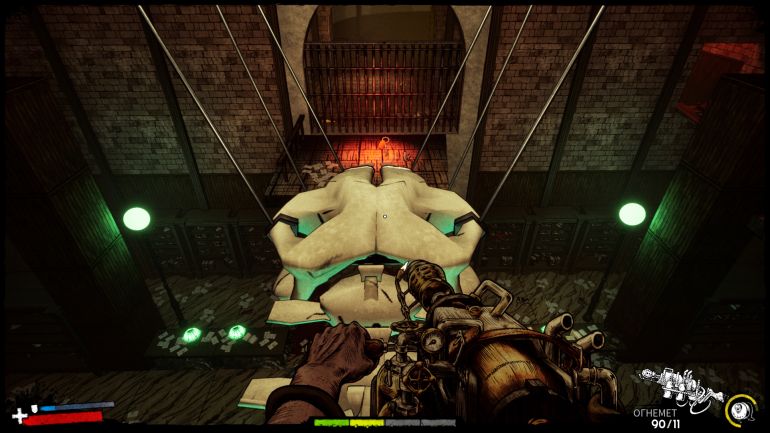
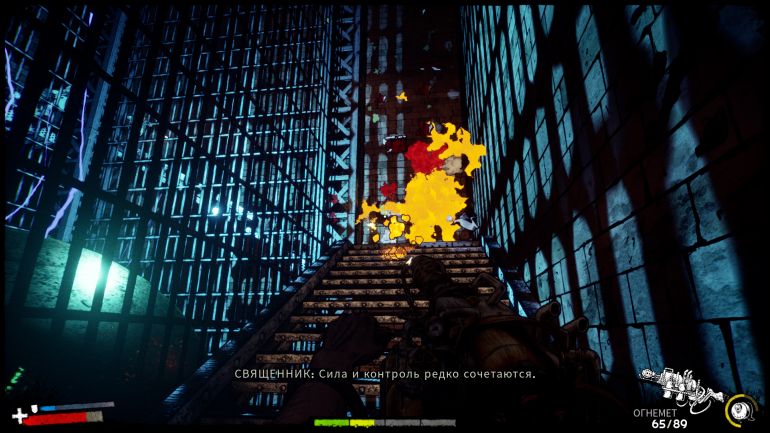
The pace of combat is more or less unchanged. It’s all lively, fun, and bloody. Standing still in Forgive Me Father 2 is a death sentence, so battles require you to keep moving and fire in every direction. Fights are often complicated by awkward terrain, such as huge numbers of pillars, darkness, and other inconvenient factors. Or all of the above at once.
Bosses are a slightly different story. The developers may have overthought things here. The first boss feels like a training exercise and is thoroughly uninteresting, as is the final boss. Neither has any interesting features, and both can simply be spammed with gunfire. The other two bosses are more engaging, with mechanics strongly reminiscent of Returnal , though naturally less elaborate. Once again, the first game was more interesting.
A sci-fi third-person shooter combining roguelite and bullet hell elements
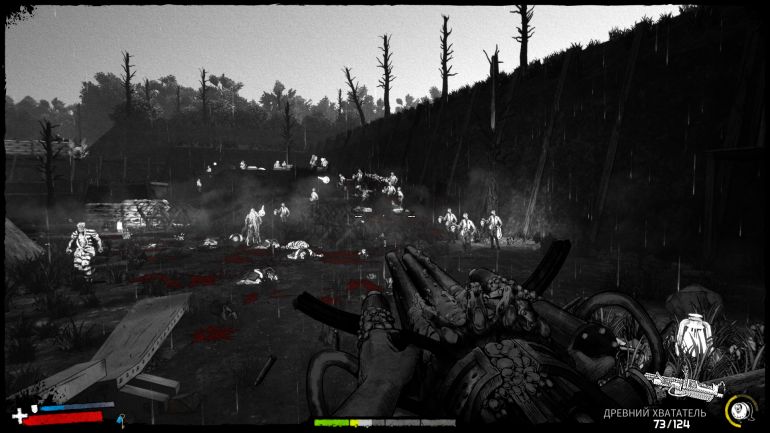
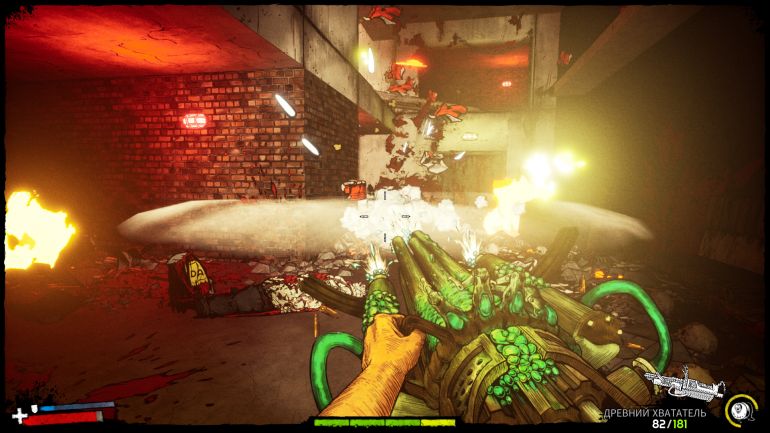
They also got carried away with the weapons. First, you can no longer upgrade them gradually as you could in the original, which removes that sense of progression. Second, weapons no longer have alternate fire modes. Third, some guns feel very unconvincing to shoot. One weapon has a spinning mechanism that simply causes enemies within a short distance to die. It all looks great, admittedly.
The arsenal is fairly extensive, but you can bring only one weapon of each type on a “mission.” There are melee weapons, pistols, shotguns, automatic weapons, grenade launchers, and the game’s own exotic options. To obtain them all, you first have to find the basic version of each type. Then, back at the hub, you can spend a particular currency to unlock three new variants in each category. After that, you can freely choose your weapons whenever you visit the “nuthouse.” It’s also worth mentioning that weapons can behave very differently even within the same category.
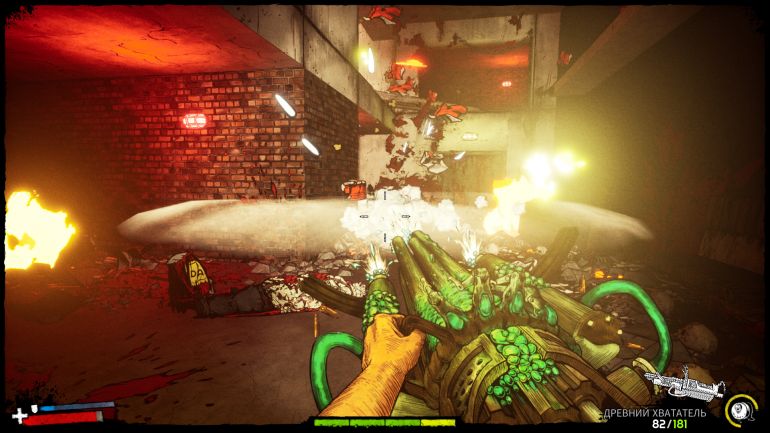
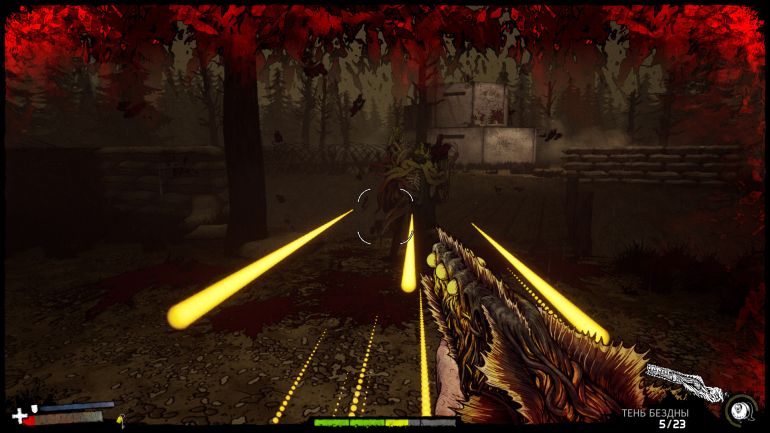
Your character no longer has a progression system, either. Instead, there are ability cards, something Painkiller already did with its Tarot cards. The ones in Forgive Me Father 2 naturally aren’t as atmospheric. Unlocking cards requires you to clear levels thoroughly and stylishly, since everything counts, including enemies killed, secrets found, and completion time. You can’t take all your cards with you, either. There’s one slot for an active ability and two for passive ones. And it’s hard to say the active abilities look different from one another at all. In the first game, you could at least sprinkle enemies with holy water .
or blind them with camera flashes
Alongside the visual improvements, the audio has also evolved somewhat. Core sounds, such as gunshots and monster screams, have more punch and feel more convincing, while the rest still does a good job of building atmosphere. The protagonist’s voice acting is good, as is the music. The latter is considerably more varied, with keyboard parts, some synthwave, and plenty more. Naturally, the heavy guitar riffs still kick in during the most intense fights.
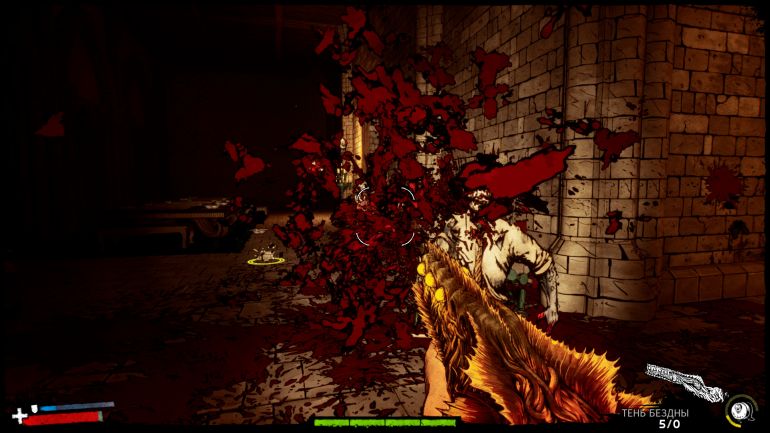
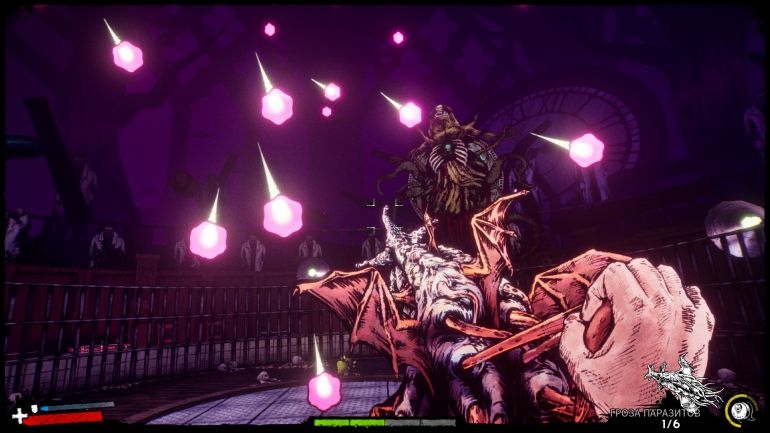
That brings us to the verdict. If you want an old-school FPS with the influence of classic arena shooters running through it, Forgive Me Father 2 fits the bill. Especially if you’re looking to pass a couple of evenings without straining your brain. There is a problem, though. Aside from graphics and sound, the game falls short of its own predecessor in every respect. And that’s despite the developers taking a familiar route and barely touching what worked well in the original.
Enjoyed this article? Found it helpful? Support GameSpirit.org and help us create more great content.
Author: Godlike_Goblin for GameSpirit.org


