
Flintlock: The Siege of Dawn Review
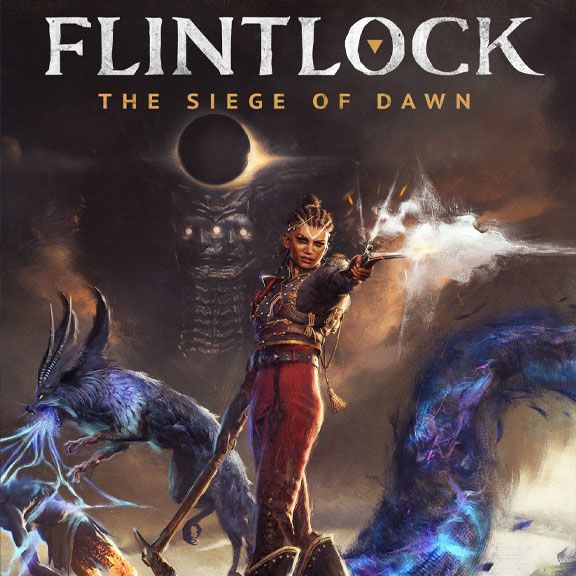
Title: | Flintlock: The Siege of Dawn |
Developer: | A44 |
Publisher: | Kepler Interactive |
Release: | 18.07.2024 |
For well over a decade, some developers have lived by the rule that you can never have too many Soulslikes. At least the studios eyeing FromSoftware's Souls series with envy have gradually moved away from copying the formula outright and started to experiment. That's how we got 2D Soulslikes, hack-and-slash Soulslikes, shooter Soulslikes, roguelike Soulslikes, and all sorts of other hybrids. Eventually we got Soulslites, too.
That's where A44 Games of New Zealand comes in with its new game, Flintlock: The Siege of Dawn. The studio is no stranger to Souls mechanics. In 2018, it put out the rather interesting co-op-focused Ashen. For its second game, it didn't overthink things and went back to the Souls well. Somehow, it came out worse the second time around, in practically every respect.
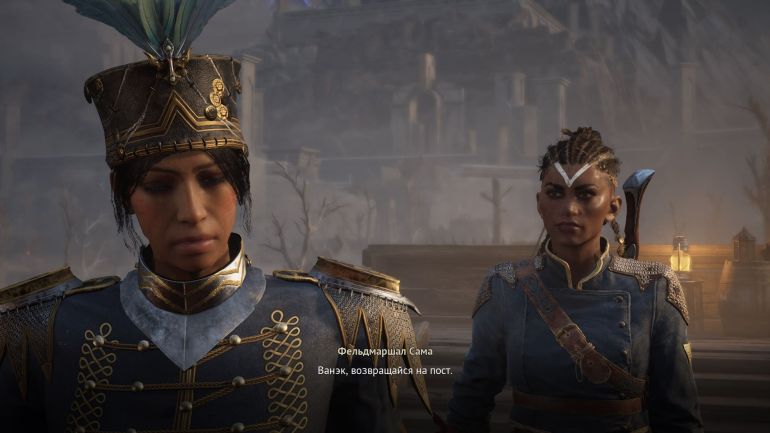
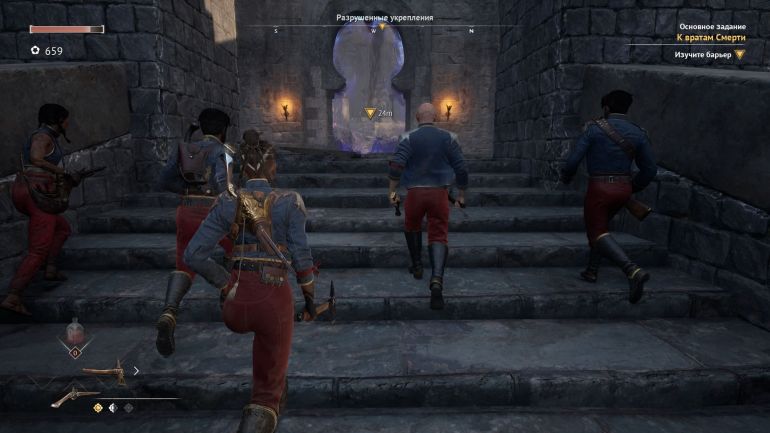
The story is where Flintlock's problems start. The world and plot are a jumble of ideas thrown together with little regard for whether they make sense. Take the setup. The world has an undead problem, and the Coalition army, where our heroine Nor Vanek serves, is supposedly fighting them. At the very start, Nor, a strong and independent sapper, demands that an equally strong and independent general send her on a suicide mission. The objective is simple: blow up the Door to the Great Below, where the dead come from. Mission accomplished. The gate blows up, and it turns out the heroes just made everything worse. The blast destroys the barrier, and the dead pour out.
You see the problem, right? Before the blast, according to the lore, the dead were behind a barrier in one city. They weren't a threat to the world. So why did the Coalition and its strong, independent leader keep sending people past that barrier? To die and swell the ranks of the dead?
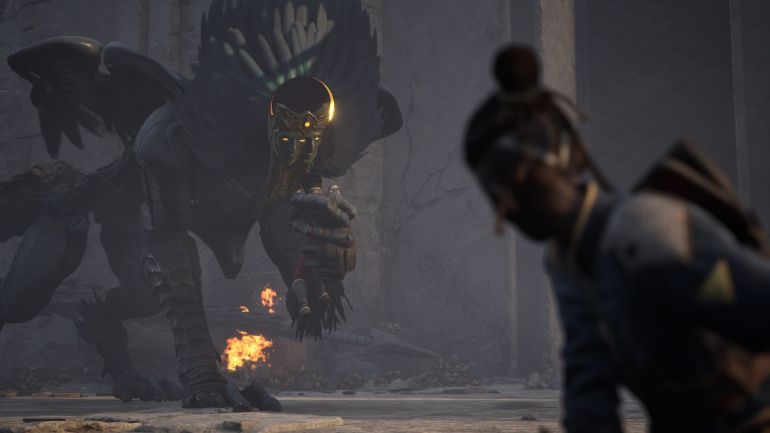
After the blast, Nor meets the god Enki, who looks like a cute magical fox. What's her first move? That's right, she attacks without a second thought, loudly announcing how much she hates gods. Strong and independent, of course… A couple of seconds and one good lightning strike later, Nor decides to spare the god and accept his help against another god, Uru, who also escaped the barrier. The dead are his doing, by the way, and nothing's stopping them now. Nor goes with the lesser of two evils, so to speak.
The story descends into such mindless idiocy from there that I don't even want to get into it. Time works strangely, too. Things happening in the world seem like they should take weeks, but the game shows them changing in an instant. Take liberating villages. You arrive in a settlement occupied by enemies, with fire and destruction everywhere. Kill the miniboss, watch a short cutscene, and a second later you'd never know anything had happened.
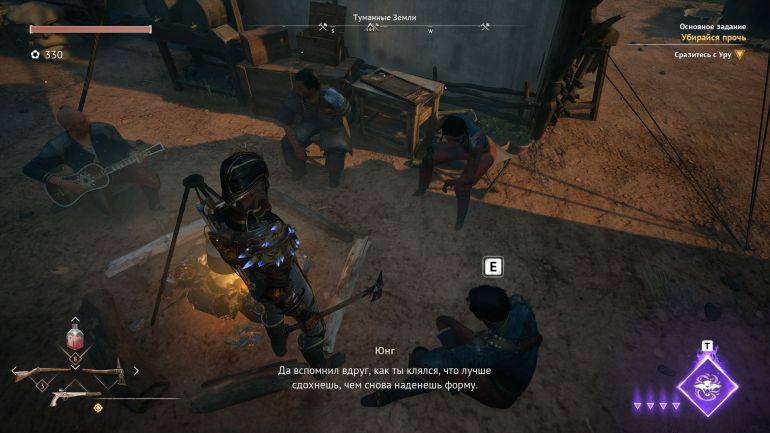
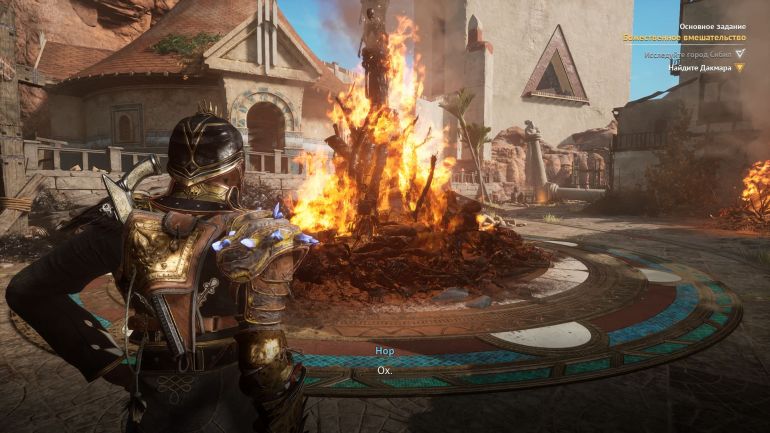
The world feels poorly thought out. Everywhere you look, the story runs into problems. In one city you can find ordinary people living peacefully next to the undead, with nobody attacking anybody. You could understand if the humans were enemies, some kind of fanatics or what have you. But these are regular townspeople getting along with the dead. And the game opens with the living locked in a bitter war against the undead.
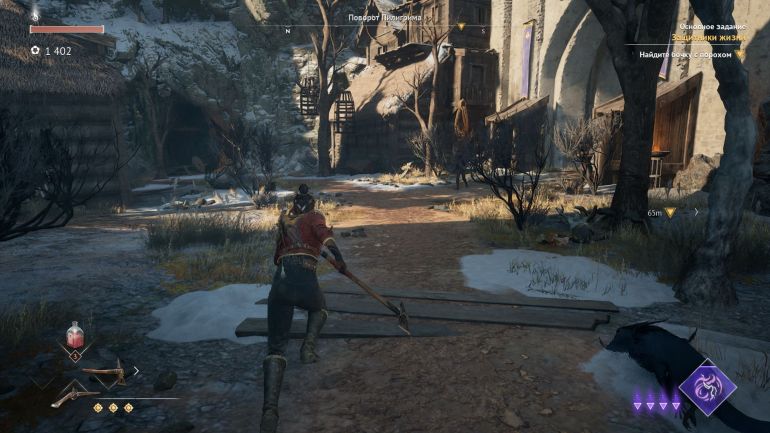
The gameplay is as muddled as the storytelling. Most of its mechanics come from the recent God of War games and the Souls series, with a bit of Bloodborne, Star Wars Jedi: Fallen Order, and other games thrown in. The semi-open world is divided into regions you can travel between using fast travel. For some reason Flintlock has two systems for that. One is more traditional and lets you hop between checkpoints from the map.
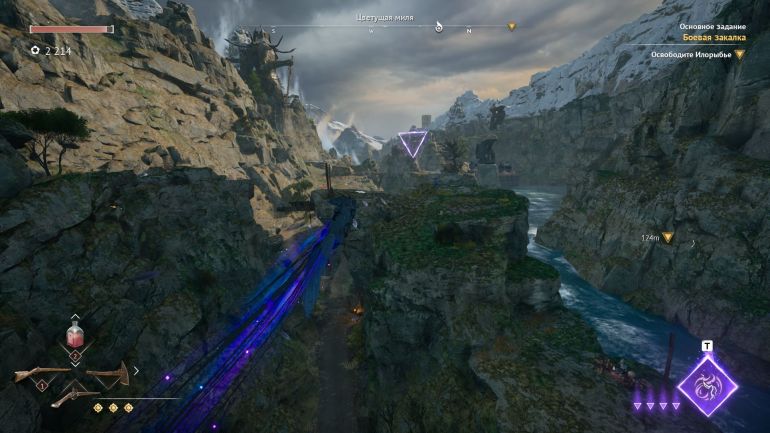
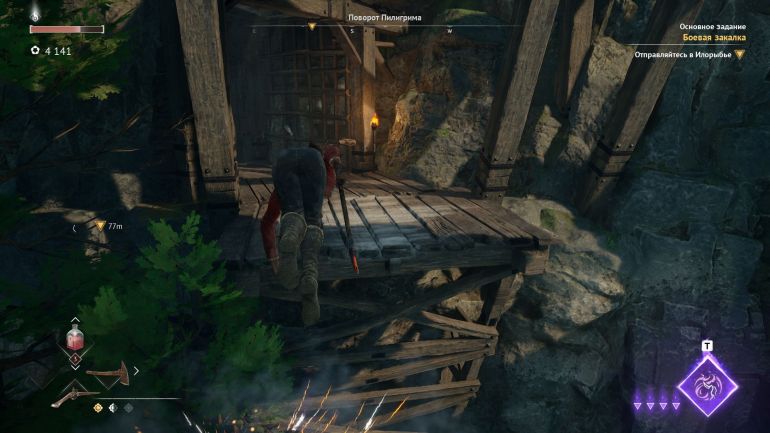
The other uses portals scattered around the world. You'll keep coming across them as you progress. Some let you reach new places, while others work as shortcuts back to certain spots, which you could generally do from the map anyway. You can hide from enemies in portals, too. There are several ways out: jump, dash, or just drop out nearby. Sometimes you actually have to think about which option suits the situation.
While exploring, you'll also find paths blocked by rocks or other junk. You'll need explosives to get through, and you can usually find some nearby. Nor can only carry one powder keg at a time, so sometimes you'll have to decide what to blow up now and what can wait.
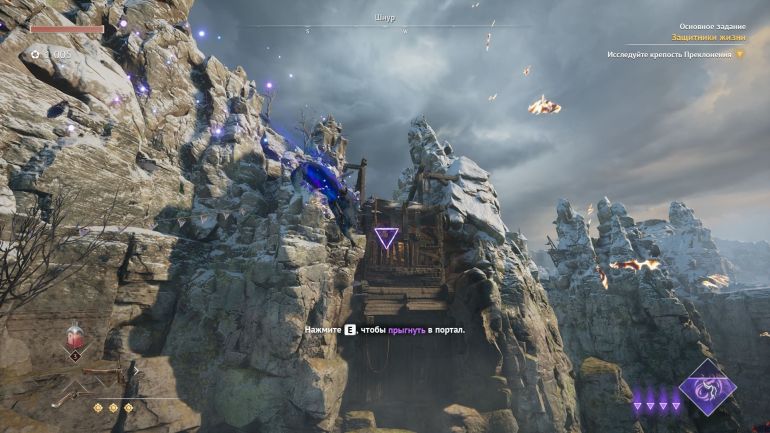
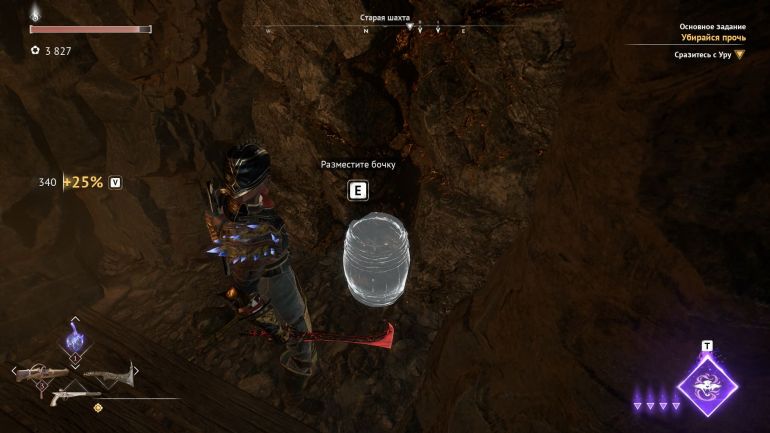
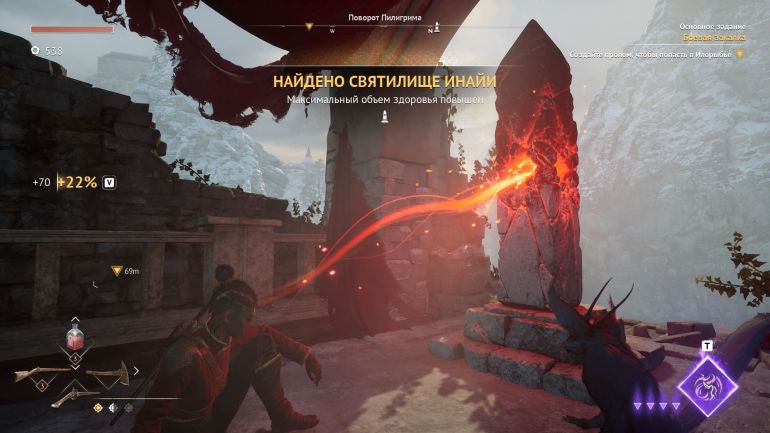
Exploring is pretty enjoyable. The levels in Flintlock are pleasantly laid out and nice to look at. The same old narrative problems are the letdown. There are plenty of notes scattered around the world, but they're all rather pointless. You can also find resources for upgrading weapons, armor, and gear, plus shrines that grant Reputation and health bonuses and upgrades for Enki.
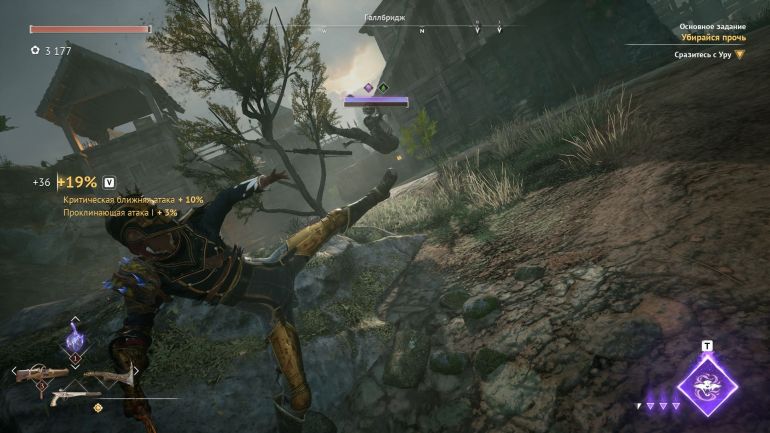
Now for the interesting part, the game's signature feature: powder acrobatics. That's the inventive name Flintlock gives double jumps and dashes. You see, Nor is a sapper as well as a soldier, so she knows her explosives. She can toss a pinch of powder beneath her and let the blast propel her a little farther through a jump or dodge. Sounds ridiculous, you say? We won't argue. The whole thing looks absurd, like an old Benny Hill sketch.
The developers tried to make combat in Flintlock: The Siege of Dawn faster and more like a hack-and-slash by ditching the stamina bar altogether. It didn't quite work. There are several ways to kick enemies' asses, and melee is the dullest. You get one attack button and one combo, which you can vary slightly with three unlockable moves. The melee weapons are all samey. There are hatchets, broadswords that feel practically the same, and one hammer. No smallswords, rapiers, or sabers, even though they'd fit the game perfectly. You can beat some enemies, including bosses, by spamming basic attacks. It isn't particularly satisfying.
Guns fare a little better. There are two types, primary and secondary. Pistols are your primary weapons and come with a limited number of shots that you replenish by hitting enemies in melee. Secondary weapons include mortars, long-barreled rifles, and even hand cannons. You get three shots before you have to rest to use them again. Secondary guns work a bit like the ballistazooka in Mortal Shell. You have to get down on one knee and load the thing before you fire.
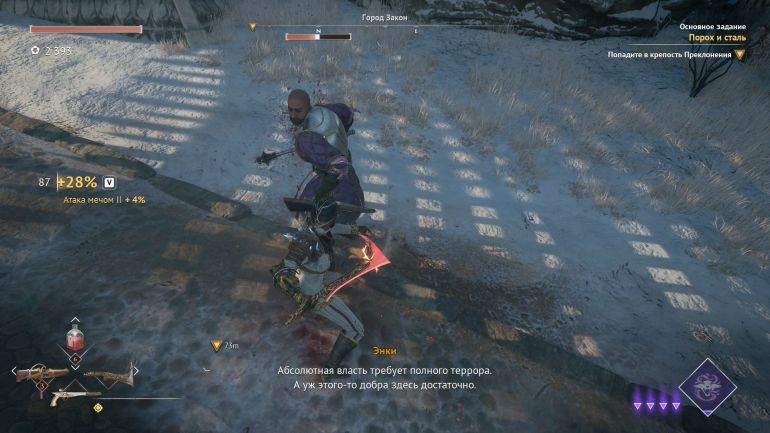
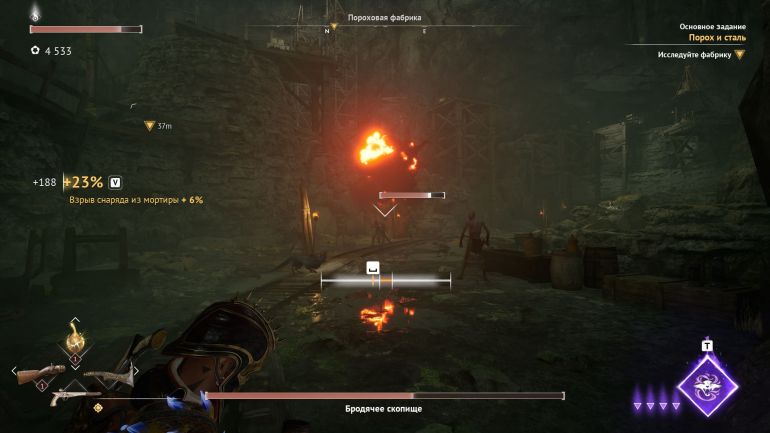
Alongside her blades and guns, Nor also gets explosives. Our strong, independent lady is a sapper, after all. There are four grenade types. One simply explodes, another stuns and fills the Priming gauge, a third inflicts bleed, and a fourth sets enemies on fire. All four can be upgraded.
Your trusty companion Enki helps in combat, too. He has two jobs. One is to fill the enemy's Priming gauge so Nor can land a critical attack, while also applying weakening curses and adding effects like stun or poison. The little fox even has his own inventory slot for Cursed Stones, which give him different effects and slightly change his appearance. His other job is to fire off his ult. He gets several powerful active abilities that can turn any fight in your favor.
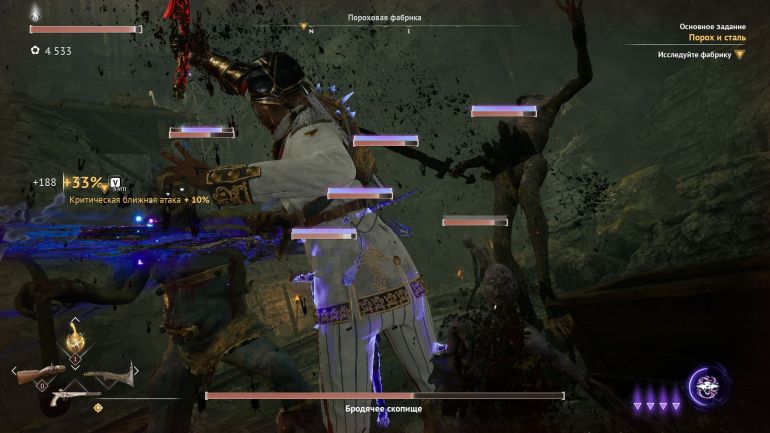
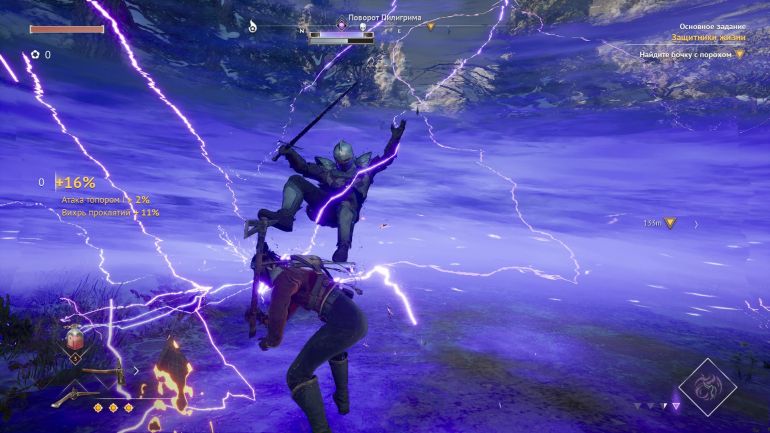
For a Soulslite, it has a painfully thin roster of enemies. Mostly it's a mix of uninteresting undead and a few fairly generic animals. And people, of course. Where would we be without them? There are bandits and troops from other, unfriendly countries. The bosses are decent enough, but there are only four proper ones. That's unforgivably few for this genre.
Character progression has a few parts. First, there's XP, called Reputation here. It works like Souls in FromSoftware's games. You can earn it by killing enemies, finishing quests or performing certain deeds , and finding special items on dead bodies. Unlike other Soulslikes, Reputation here comes with a multiplier. Mix up your attacks as much as possible and avoid taking damage, and you'll earn more Reputation. Some acrobatic moves can bump up the multiplier, too.
for example, blowing up a blockage
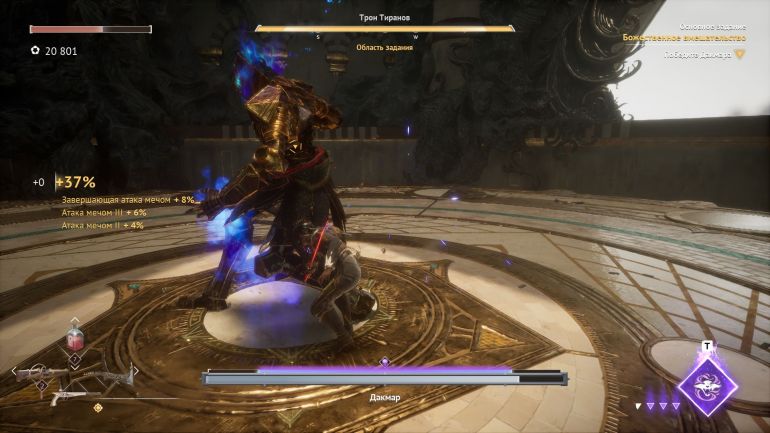
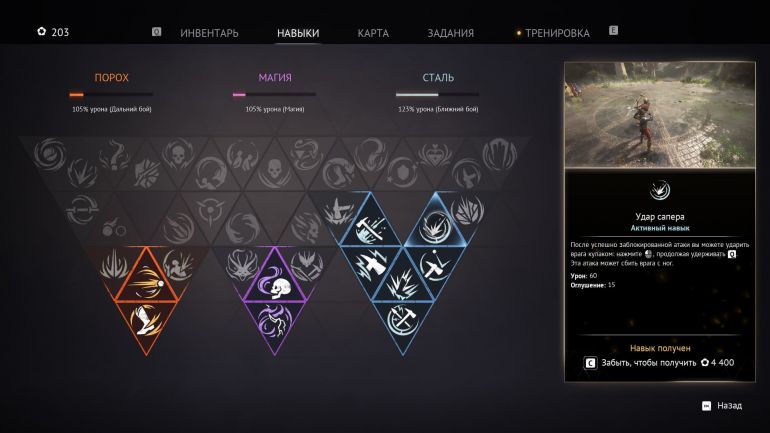
You can spend Reputation on three skill trees for Nor: Powder, Magic, and Steel. The names speak for themselves. You can unlock skills whenever you have enough rep, without schlepping back to a camp or resting point. You can also unlearn skills and get most of the points you spent back. Unfortunately, most skills are passive, so they won't change your fighting style much.
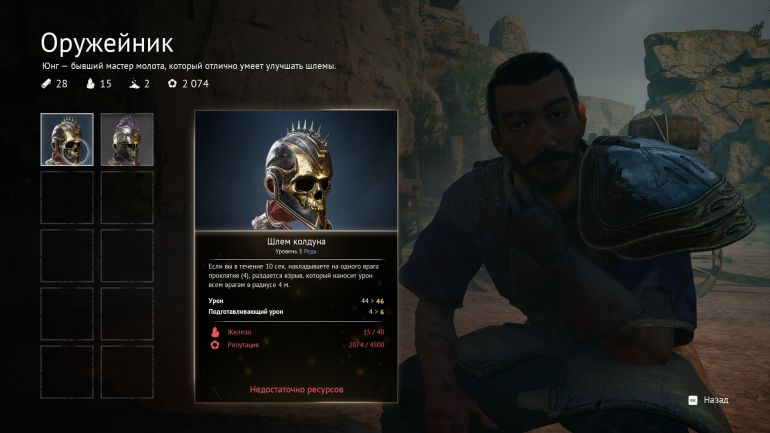
Nor's gear and weapons are the other half of progression. We've already covered weapons. For armor, she can use helmets, gauntlets, and a pauldron for her right shoulder. Everything else is just clothing. Item quality follows the usual ladder: common, uncommon, rare, epic, legendary, and MASTERWORK! Almost all equipment and weapons can be upgraded, except gauntlets and pauldrons. No idea what they did to offend the developers. The upgrade system is dead simple and resembles the one in Banishers: Ghosts of New Eden, and before that, God of War . Find some gear, find the materials, bring them to a craftsperson, and upgrade it all the way from common to masterwork.
the 2018 game
Flintlock: The Siege of Dawn has technical problems, too. Along with the muddled plot, some scenes are poorly directed. In the opening battle, for instance, allied soldiers stand there firing straight into the trench wall in front of them. The animations are a mess, with what feels like every other one cutting out or glitching. Jumps are especially bad. It crashed a lot at launch. Patches helped, but you can still crash on the final boss. At least the game is short and easy. There's even an invincibility setting if you really can't be bothered.
Naturally, the game stumbled into a couple of DEI controversies after release, thanks to its connection to every gamer's “favorite,” Sweet Baby Inc. It's hard to say how detrimental their influence actually was. Some people even accused the developers of originally planning for a white protagonist. A classic, that one. There's no evidence for it. Honestly, it's hard to accuse Flintlock of waving a rainbow flag in your face the way Dustborn does. The developer interviews are another matter.
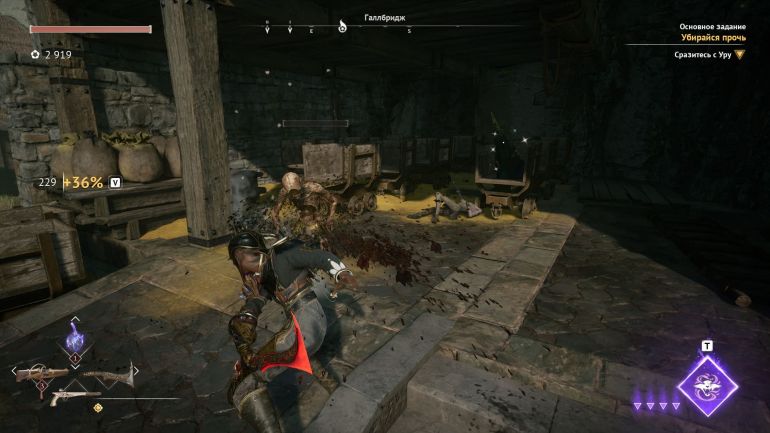
There are plenty of reasons why it's hard to call Flintlock: The Siege of Dawn a good game. The story is unoriginal, full of holes, and often makes no sense. You could forgive that if the gameplay were more engaging, but it isn't. What might draw you in is how easy it is to get into as a Soulslike, how short it is, and how pretty it can look in places.
Enjoyed this article? Found it helpful? Support GameSpirit.org and help us create more great content.
Author: Godlike_Goblin for GameSpirit.org


