
Exanima Review
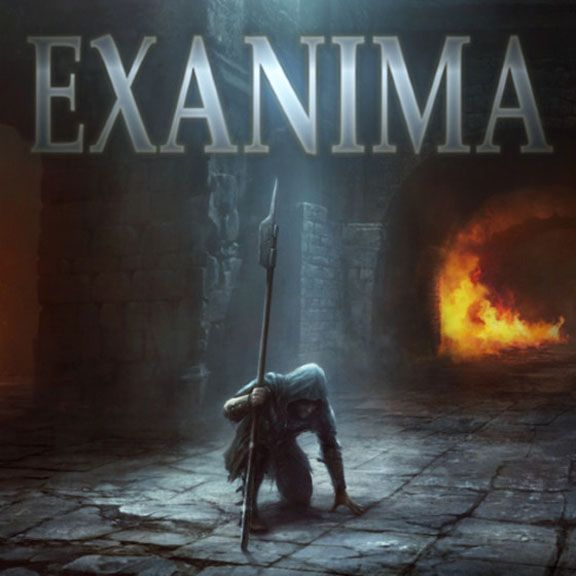
Title: | Exanima |
Developer: | Bare Mettle Entertainment |
Publisher: | Bare Mettle Entertainment |
Release: | 29.04.2015 |
Let’s be honest right off the bat. Do you like hardcore gaming? The way it used to be? With no friendly gameplay, interface, or tutorial carefully spelling out how to walk or hit enemies. Where literally every step brings a new discovery. You have to admit, that doesn’t happen often in today’s gaming industry. And it’s even rarer to expect anything like it from big studios and their games. Fortunately, the indie scene is full of real gems, and we’re going to talk about one of them.
Exanima is a classic dark fantasy RPG from the small London studio Bare Mettle Entertainment. Although, if you believe the developers themselves, it’s less a game than a tech demo, a showcase of some of the features their first full-fledged game, Sui Generis, is supposed to offer. That promises an open world, co-op, a complex story, and who knows what else? And that’s probably the game’s biggest problem. The developers themselves don’t consider it a complete game. Even so, Exanima can surprise you and keep you hooked for a considerable amount of time.
If you’ll indulge us, let’s go back to the beginning of development. It’s a pretty interesting story that deserves to be told. It all started around 2011, when Bare Mettle Entertainment began thinking about making an RPG with the most realistic living world possible, and equally lifelike physics. That’s how Sui Generis was born. While the studio was working on it, a fairly modest Kickstarter campaign was launched and successfully concluded in late 2012. After that, the development team began actively sharing material from the game with the community. Most of it was video demonstrations, of course.
The game itself was supposed to be finished by 2014, but it soon became clear that the small five-person team couldn’t keep up. By March 2014, all they had was a playable alpha of the combat system. Then came an alpha of the overall gameplay and a combat beta. As you can imagine, at that pace, release was still a long way off. To keep their backers from getting too discouraged, the developers came up with a pretty interesting plan. They would release a prelude ahead of the main game. This separate project would demonstrate everything Sui Generis was supposed to have, on a smaller scale.
That’s how Exanima came about. The alpha of Bare Mettle’s new project arrived in October 2014, followed by a beta in March 2015. A month later, on April 29, the game entered Early Access, where it remains to this day. Over eleven years, the game made it to version 0.9, which arrived in October 2023. There have been no major updates since, but the developers are constantly improving things. They moved the engine to 64-bit, then updated the in-game AI, improved the RPG systems, upgraded the graphics, and so on. Work on Exanima continues, and perhaps we’ll finally see its story reach a conclusion in 2026.
But what exactly is Exanima? The best way to describe it is in one sentence. A drunken fucking slave tries to escape the deepest, darkest dungeon. Don’t expect much of a plot from Exanima. The game begins with the hero* waking up somewhere underground. You have no weapons or equipment, but there’s a torch lying nearby. On top of that, the hero remembers absolutely nothing about who they are or how they got here. The only option is to move forward and down, through almost ten floors. You’d think finding a way up would be the obvious route out, but don’t go looking for logic here. Or a meaningful ending, which the game has yet to receive. Yes, you read that right. You can’t properly finish Exanima. And that could put off a lot of players.
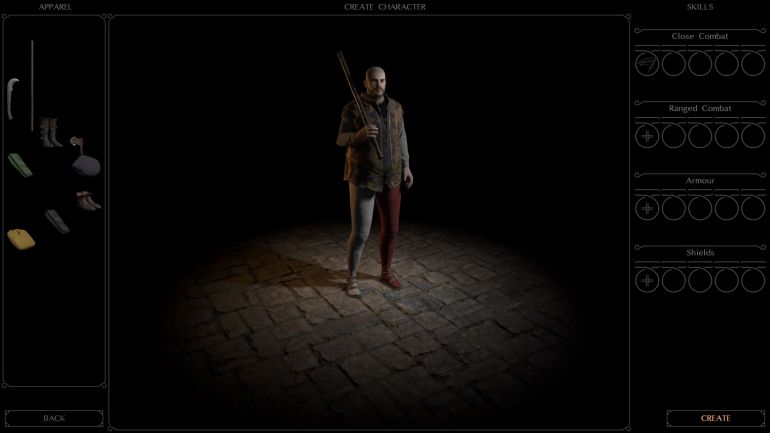
*Incidentally, the game offers several character classes with different starting equipment and affinities for particular skills. For example, only the starting class, the Unknown, can use magic. To unlock another class, however, you need to meet certain conditions, such as finding a character in the dungeons or killing someone specific.
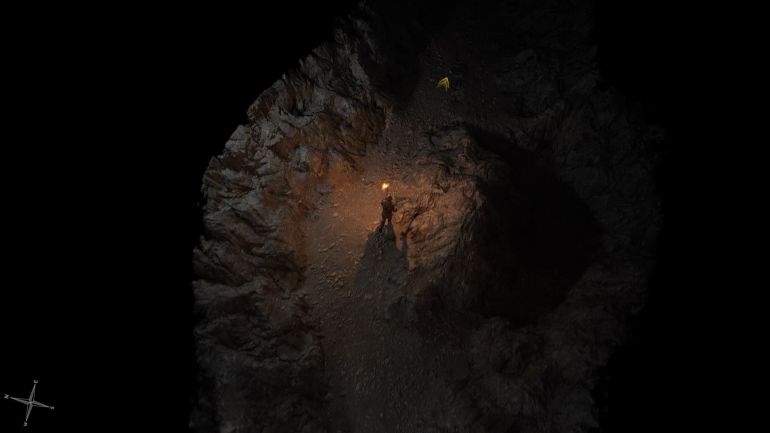

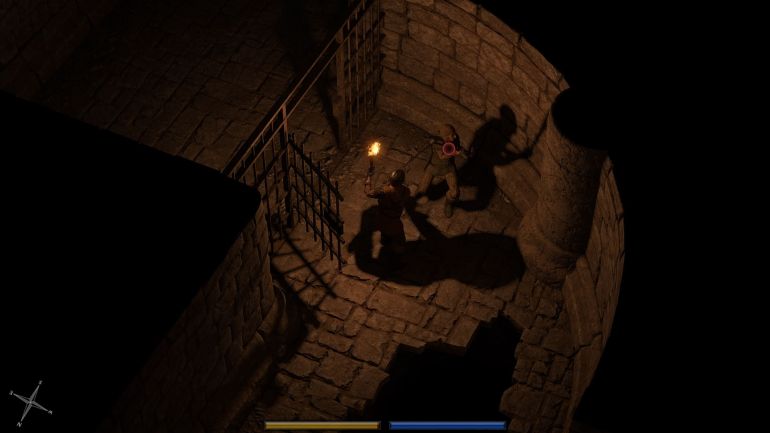
And if that doesn’t scare you off? You’ll get to experience one of the most unconventional and unfriendly RPGs in years. Exanima is a truly unique CRPG, with features unusual for the genre, such as a proprietary engine with advanced physics reminiscent of Frictional Games’ HPL Engine. You can interact with practically every object around you. To open a door, for instance, you have to click and pull it toward you or push it away. You can do this gently instead of yanking it open, peeking at what’s waiting beyond without drawing unwanted attention from the creatures on the other side.
Picking up an item or putting it in your inventory works much the same way. Click the object and drag it into your character’s hands or bag. These controls can be confusing when you first start, but you get used to them pretty quickly. You can also drag around more than just small objects that fit in your inventory. Heavy stones, planks, beams, chairs, tables, and plenty of other things that won’t fit can be hauled along too.
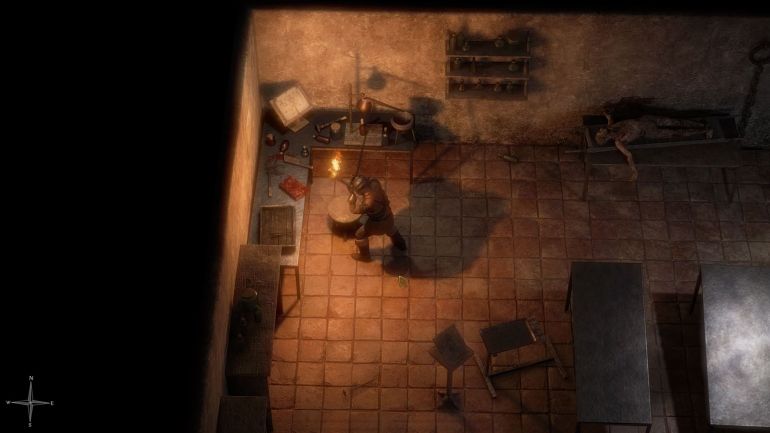
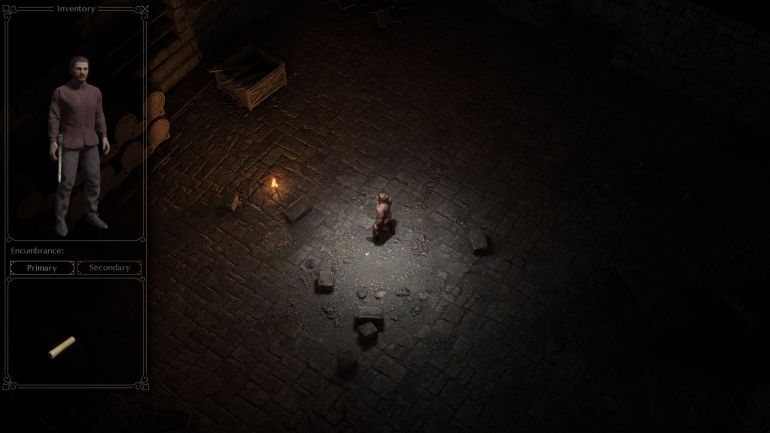
This lets you do some pretty interesting and creative things. Here are a few examples to back that up. Say you come across a small passage blocked by rocks. You can see you’d easily fit through, and nothing stops you from moving the rocks to clear a path. Or you can pull a couple of loose boards off a wooden partition and slip through. You could also toss some pieces of wood onto an otherwise inaccessible ledge and climb up, or build a little bridge across a chasm. A chair can prop up a lever so it won’t block your way. A long stick can press a suspicious button on the wall. Exanima has plenty of moments like these.
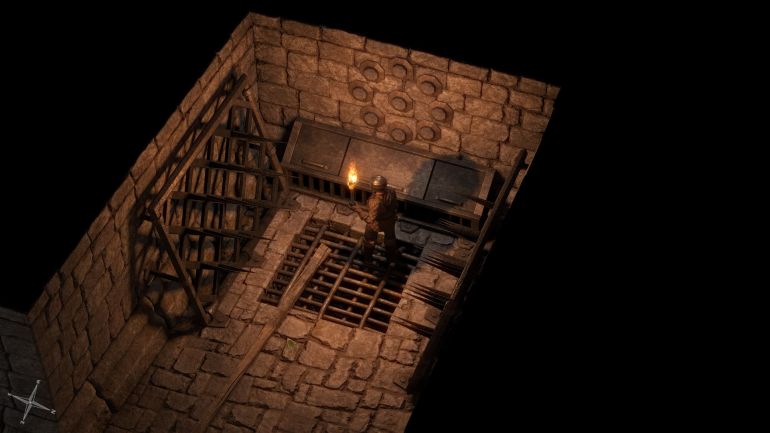
The main appeal of Exanima’s world is the unknown, and wandering through it is quite engaging. You never know what’s behind the next door or set of bars, or at the end of another staircase. At first, you’ll have to navigate entirely from memory. There’s no clear destination, no markers, no signs. Even the journal is empty. You have to fill it out yourself. Things get a little easier once you find a compass and a map, which give you at least some idea of where to go.
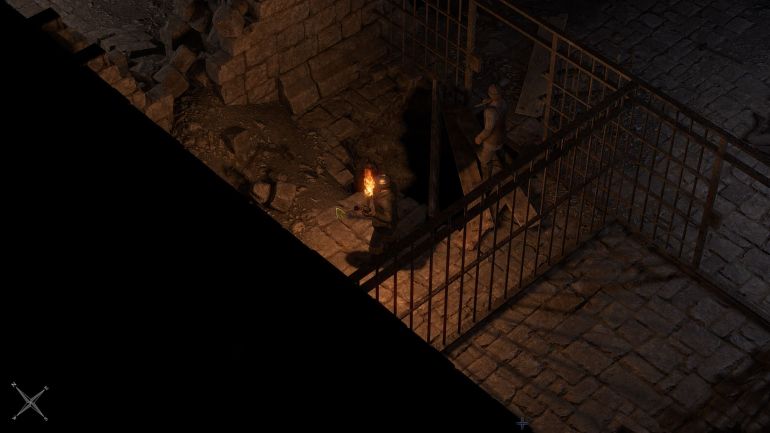
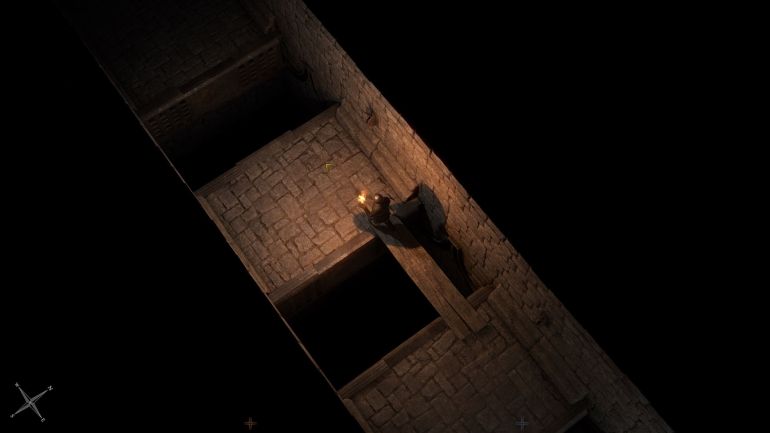
The combat system is also a long way from the genre’s usual conventions. You generally attack by clicking the left mouse button, but your character swings differently every time, so the results vary too, depending on a whole range of factors. How close are you to the enemy? Did your weapon hit a wall or some other obstacle? Naturally, your character’s stats and progression count, as do the weapon’s stats and damage type, and the enemy’s armor. Where a blow lands matters too. An enemy clad in plate armor with an exposed head can go down in one or two hits to that very head. Or you can simply use your body weight to shove an enemy into a corner or push them into a chasm.
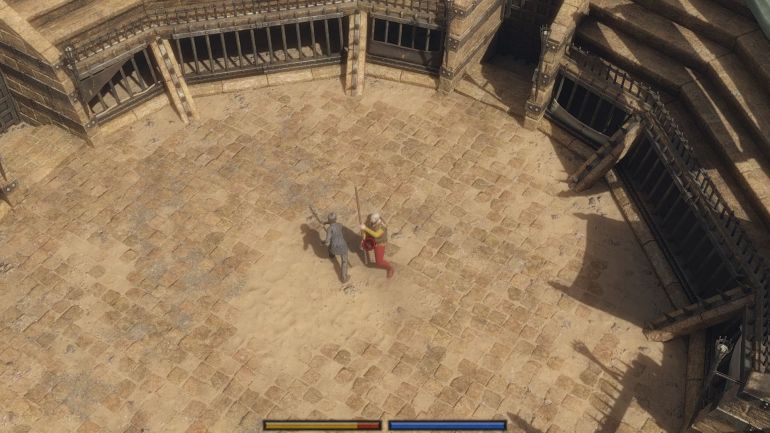
Combat generally looks hilariously janky, as though everyone involved is absolutely wasted. You circle your enemies, waiting for an opening, then close in and shove each other around. Swings are tentative. Sometimes you land a hit, sometimes you take one. Your character’s arms and the NPCs’ arms constantly get tangled and can end up behind their backs, making it harder to strike. There’s always a chance of tripping and falling, too. Yet the fights are incredibly tense and engaging. You do everything you can to take as little damage as possible, because healing afterward can be pretty difficult.
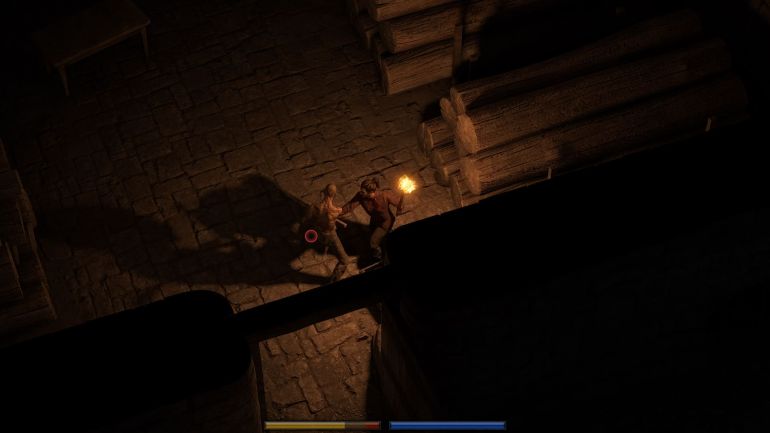
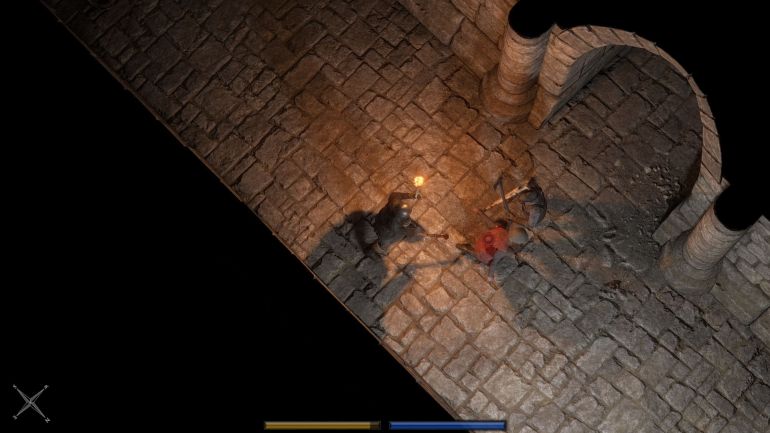
The health bar also breaks with convention. You see, one bar combines stamina and what the game calls injury . When your character gets hit, stamina takes the damage first, and only stamina recovers over time. If it drops critically low, your character can simply pass out and only get back up a while later. Particularly well-placed, powerful enemy blows start filling your injury bar, which reduces your available stamina. You can see something vaguely similar in another hardcore game, Dark and Darker. Only healing potions can help with injuries, and each dungeon floor has just one or two lying around. If you die, you’ll have to restart from a checkpoint.
Stamina
Injury
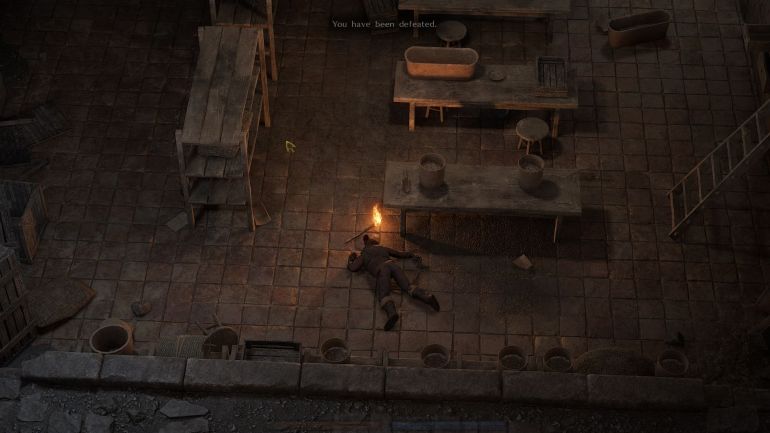
There are all sorts of ways to lose your life in Exanima. A zombie you run into might bash you over the head with a stick. Another enemy might stab you to death in a bathroom somewhere. You can fall and smash your face into the floor, tumble down a staircase, or trip over a bucket, corpse, or stick and plunge into a chasm. You can kill yourself by carelessly using the game’s physics or magic. And, of course, it’s very easy to die in the many traps.
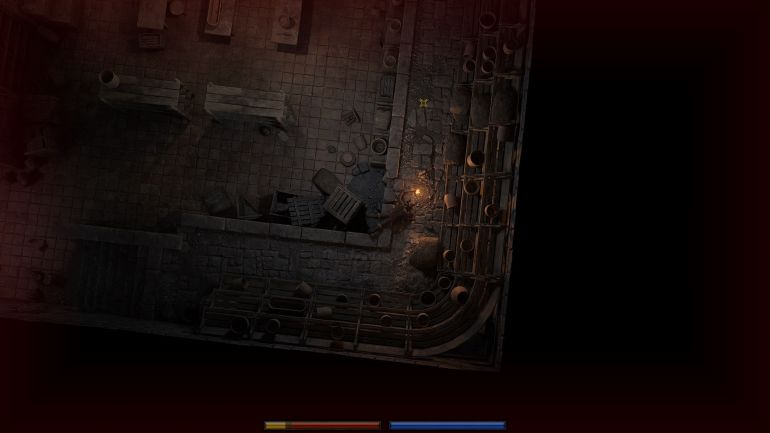
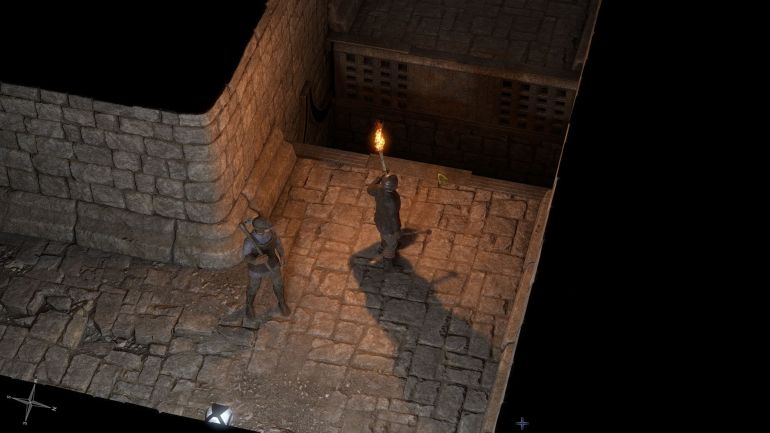
The game gradually gets harder. Enemies become far stronger, more dangerous, and better equipped. New types appear, too. Living people, skeletons in plate armor, ghouls, golems, and even demons. The last of those look as though they couldn’t care less about the powerful halberd in your hands. You have to do more than swing your weapon. You have to think.
The AI is excellent, and that really becomes apparent in the deeper dungeon levels. Near the top, most enemies may ignore you entirely if you leave them alone. Farther down, though, you start seeing real signs of intelligence. Enemies begin using techniques and new tricks. You’ll notice that they can assess the threat you pose and even run away, including in the middle of a fight. Then, once you’ve forgotten all about the one that fled, it comes back with reinforcements. Even so, the fights never stop looking like drunken brawls.
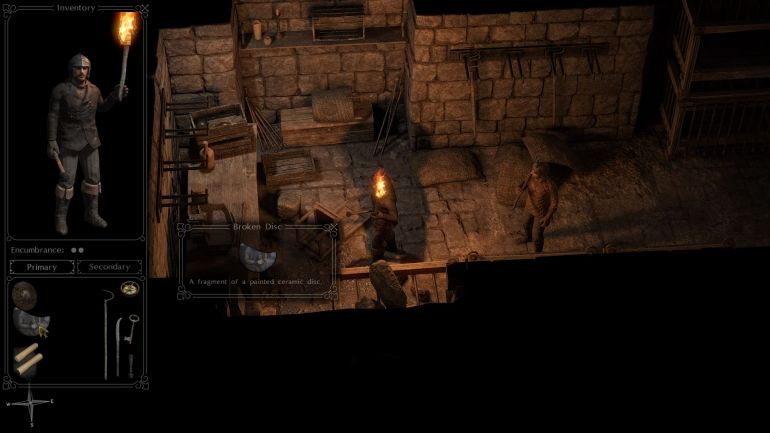
Exanima handles inventory differently, too. Your inventory itself isn’t very spacious, so you can’t carry much. But to make organizing small items such as keys easier, you can carry little boxes to put them in. The whole system is tied to the game’s physics to some extent. You pick up items by dragging them with the mouse into the inventory window or directly onto your character’s figure. You can give your character a weapon, torch, or shield simply by placing it in their hands. Equipping armor works the same way, and Exanima also stands out for its realistic approach to equipment. As in Kingdom Come, armor is worn in layers. You can put a gambeson over a plain shirt, then add chain mail, pull on a tunic, and finally wear a cuirass or brigandine over the whole lot.
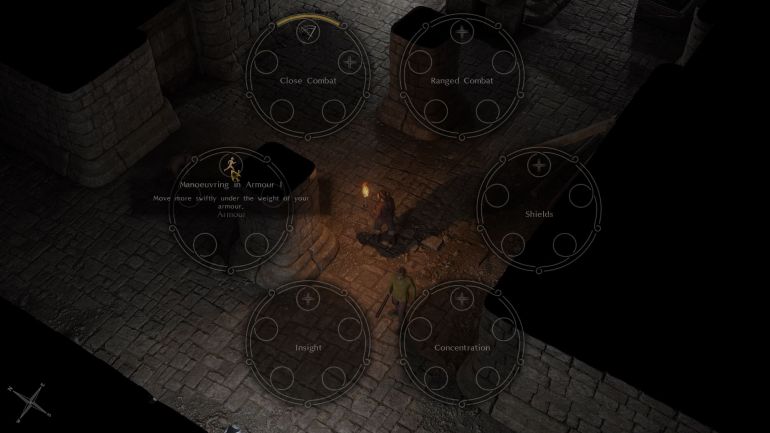
Naturally, there’s character progression too. This is an RPG, after all. You earn experience for practically everything, including discovering new rooms, examining crates, collecting items, solving puzzles, and, of course, defeating enemies. Once you reach a certain threshold, you get a skill point to spend on melee combat, ranged combat , shields, armor, and two attributes needed to use magic, Concentration and Insight. Simply investing a skill point doesn’t let you use the skill immediately, though. Some time has to pass before the new knowledge sinks in.
although there are no bows or crossbows in the game yet
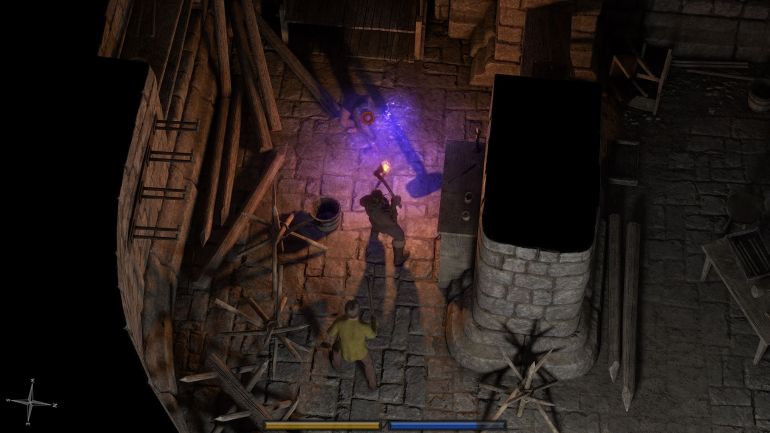
Now let’s talk a little about magic. In Exanima, it’s called thaumaturgy, and it’s a little different from what you’re used to. The system is still incomplete, and the small portion currently available works a lot like some of the Force abilities from Star Wars. Magic is divided into two branches. The first, Mind, lets you influence the minds of NPCs you encounter in various ways. You can calm them so they won’t attack you, or do the opposite and enrage them until they lash out at everything they see. You can also frighten or hypnotize an enemy. The second branch, Force, is entirely combat-focused. Its abilities let you push enemies with blasts of force, create impassable obstacles in their way, and empower your weapons and armor.
Beyond the campaign, if crawling through gloomy dungeons isn’t your thing, you can jump into Arena mode and build a full-fledged gladiatorial career with its own management system. It’s also a good place to get to grips with combat without being distracted by exploration. The arena offers various battle formats, from one-on-one duels to team fights. You can even put together your own team from recruits. You can take part in individual bouts, entire series, and even tournaments. Getting into the latter does take quite a while in this mode, though.
The game looks pretty good, especially for something over ten years old. Its graphics may be technically dated compared with modern AAA releases, but they’re extremely effective at creating a heavy, immersive atmosphere where every object and shadow feels real and tangible thanks to the powerful physics engine. Instead of emphasizing photorealism, the developers focused on detailed environments and physically convincing objects. The lighting is excellent too, casting deep shadows and emphasizing the dungeons’ dampness and decay. The visuals are dark and harsh, as they should be in a dark fantasy game. The sound and orchestral ambience complement them beautifully, adding even more to the atmosphere.
Even though Exanima is unfinished, it has plenty to surprise, engage, and delight you. This is a decidedly niche, uncompromising dark fantasy RPG that can truly challenge players with its incredibly demanding physics-based combat and deep RPG mechanics. It punishes mistakes and takes enormous patience to master, rewarding the most persistent players with an unprecedented level of immersion in a harsh, detailed, atmospheric world.
Enjoyed this article? Found it helpful? Support GameSpirit.org and help us create more great content.
Author: Godlike_Goblin for GameSpirit.org


