
Dustborn Review
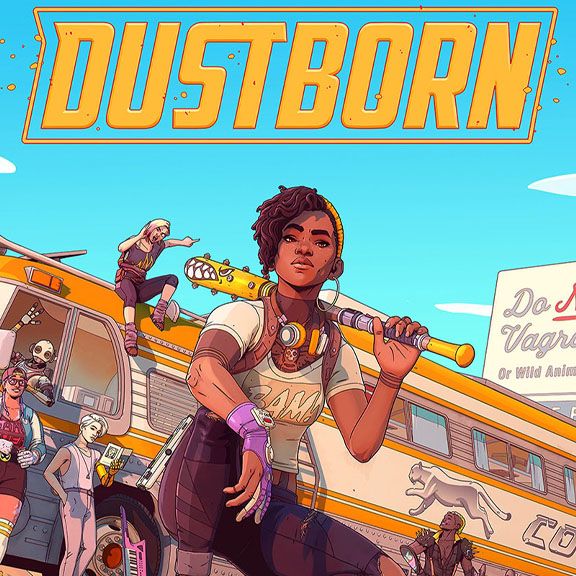
Title: | Dustborn |
Developer: | Red Thread Games |
Publisher: | Quantic Dream |
Release: | 20.08.2024 |
After putting out some rather successful interactive movies, Quantic Dream decided to branch out into publishing. Its first releases were QD's own games, previously released on Sony PlayStation 3 and 4: Heavy Rain, Beyond: Two Souls, and Detroit: Become Human. A little later, after China's NetEase acquired the company, it took on projects from outside studios. It created the Spotlight by Quantic Dream label for that purpose. It published Under the Waves in 2023 and Lysfanga: The Time Shift Warrior in early 2024.
The third and latest game Quantic Dream published was Dustborn, from the Norwegian indie studio Red Thread Games. The studio had previously made the pretty good Dreamfall Chapters and Draugen. This time, RTG, led by Ragnar Tørnquist , embarked on a fairly risky experiment and decided to go all in on the DEI agenda.
so far
formerly of Funcom
While other studios changed their characters' skin colors, made them nonbinary, or offered players less conventional love interests, Red Thread Games decided to go further than anyone and cram every inclusive, progressive, and diverse thing it could find into Dustborn. As if that weren't enough, the team packed in politics drawn from the state of the world, especially the US. You could take it all for satire along the lines of “South Park,” except Dustborn plays it awfully straight. Maybe RTG was going for post-irony, missed, and ended up misunderstood.
The story takes place in an alternate United States. The backstory is actually pretty good, especially if you cut the excess. It starts in 1963, when President John F. Kennedy survives the assassination attempt and his wife Jacqueline is killed instead. The president almost immediately marries Marilyn Monroe, and together they launch an initiative to create Justice, a quasi-police organization charged with keeping order at home.
After Kennedy dies in 1983, his successors' policies undo his efforts, and Justice gradually becomes a powerful tool for suppressing dissent. In 1990, California secedes, renames itself Pacifica, and becomes a fundamentalist, technocratic cooperative conglomerate. The United States is effectively disunited from that point on, and the country gradually falls apart.
The trouble is that the game keeps stirring the pot. The developers keep coming back to how it all got this way: misinformation hangs in the air like a virus on a packed train. Exposed to it, people get sick and turn hostile and mean. They start having racist, sexist, and otherwise dubious thoughts.
A huge scandal adds fuel to the fire when secret government experiments lead to people with superpowers cropping up around the country. By the turn of the millennium, tensions in the States have grown so intense that a new civil war breaks out and splits the country into even more pieces. Amid all the chaos across North America, most of the new states outlaw Anomals. Things are worst for them in the American Republic and its ally Pacifica.
The game begins in 2030, in the middle of these turbulent times. The protagonists are hired to steal information in Pacifica, then disguise themselves as a punk rock band and take it to Nova Scotia, on the other side of North America.
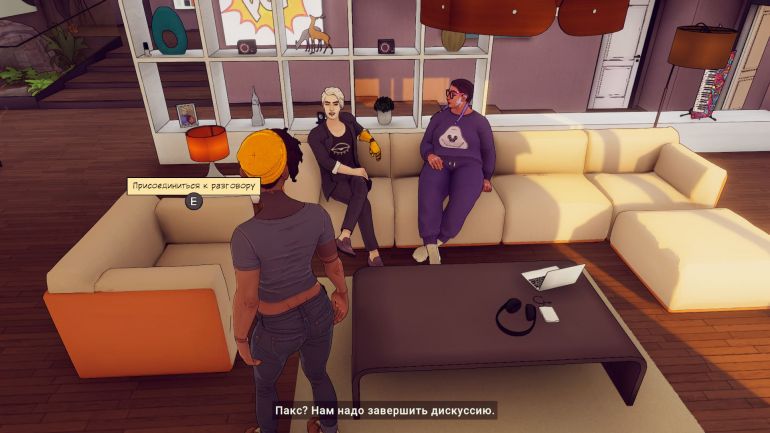
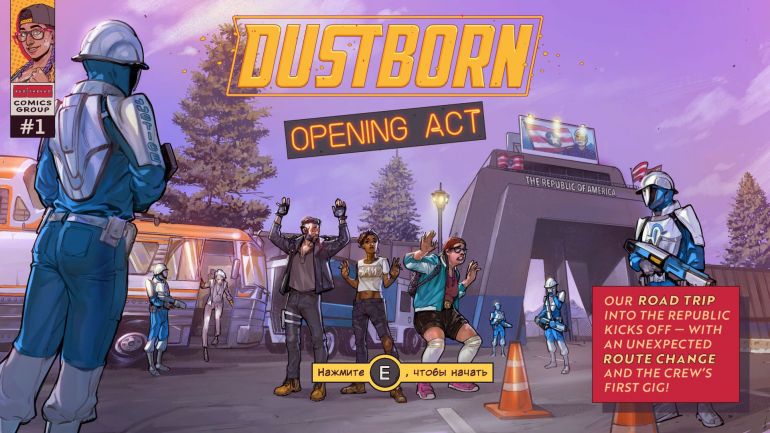
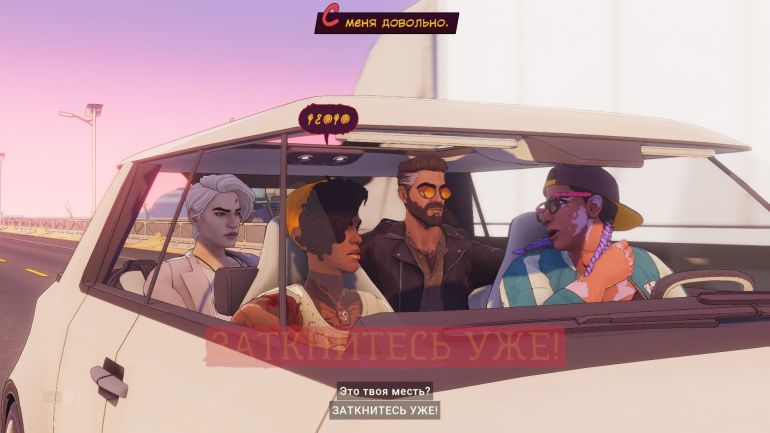
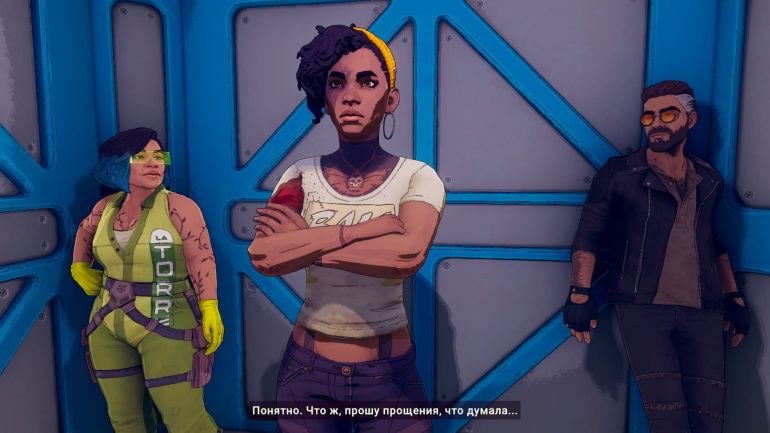
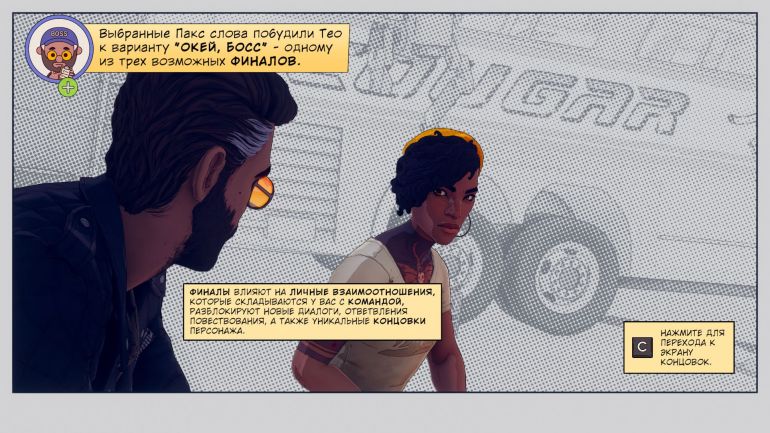
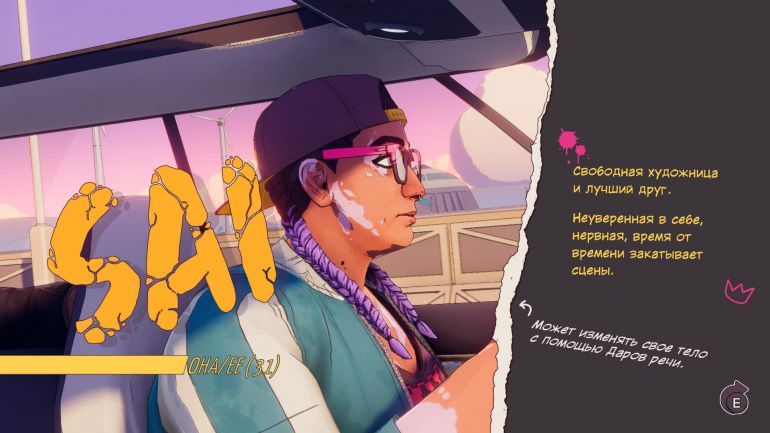
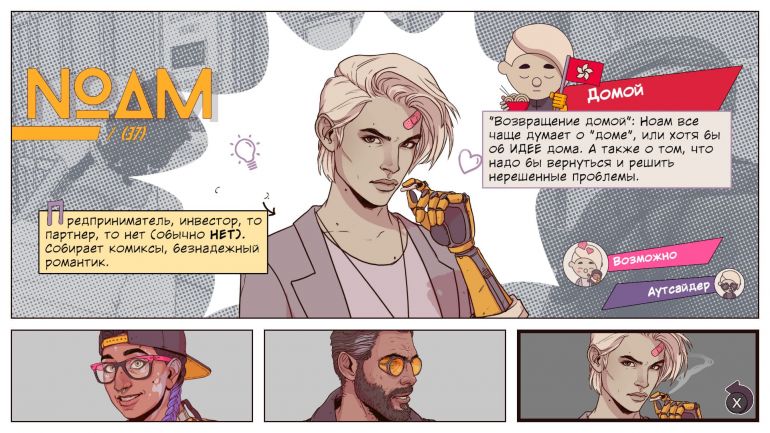
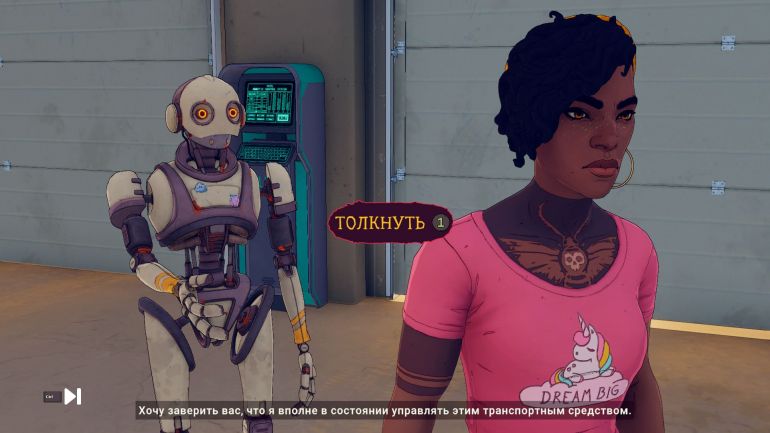
What a crew they've put together. Strong and independent, every last one of them. Leading the group is Pax, a Black woman who can make people do what she says and has a pile of other talents, as befits the main character. She occasionally vies for leadership with Theo, a Mexican man and the group's only member who isn't an Anomal. There's also Noam, who's nonbinary, has a robotic arm, and can suppress other people's emotions. Rounding out the four is Sai, Pax's best friend. Sai is body-positive, extremely emotional, and has vitiligo. She can turn her body to concrete when her emotions run high, and she sometimes wears a hijab and performs the Muslim prayers. What the characters say and do often clashes with their religious or gender identities.
It's easy to see that almost all the local good guys are Anomal misfits, each with their own quirks and abilities. Set aside the whole outcast angle and Dustborn is a full-fledged road movie. Its heroes are constantly on the move, getting into scrapes and meeting oddballs just like themselves. A few of the Anomals they meet can even join the tight-knit foursome.
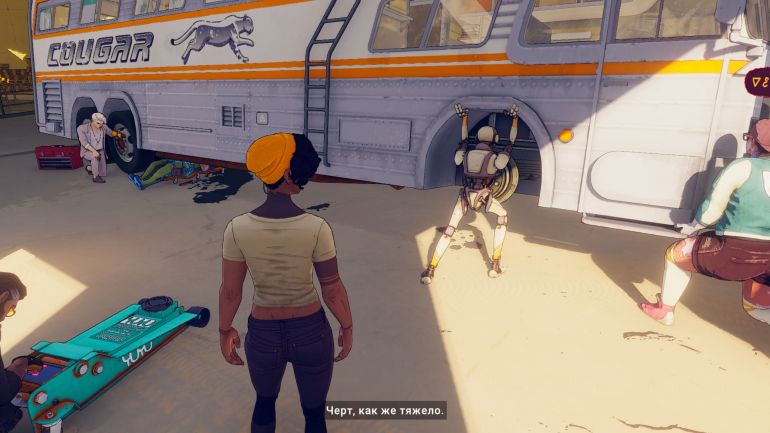
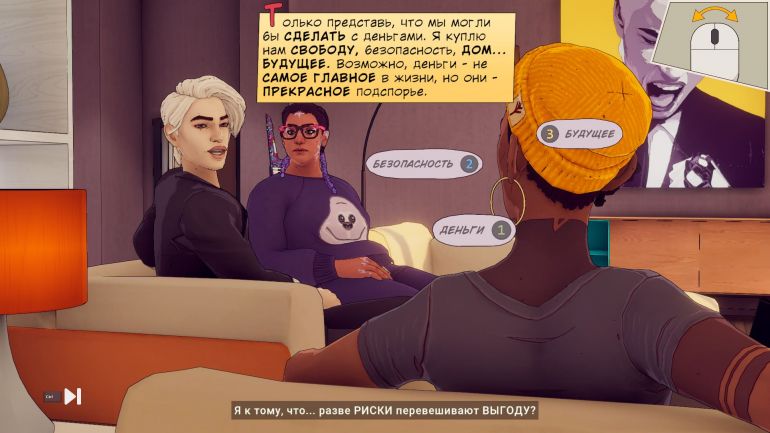
All that makes for a great setup. Unfortunately, the story never gets much further. It's full of plot threads that go nowhere and unnecessary elements that don't mean anything. That includes how the characters interact. At first, it's fun. Your companions are always chatting, hashing things out, ribbing each other, arguing, and cracking jokes. They act like actual friends. That's nice at first, but it gets worse as you go. Characters often start talking about their feelings at the wrong moment, without shedding any light on who they are or moving the story forward.
The endless stream of filler dialogue is more tiring than entertaining, unlike in Marvel’s Guardians of the Galaxy. Here's how it goes: the game greets you with a long conversation, then moves to a new area where you talk some more and walk a little, then to a third area where you talk and walk even more. Then it's back to the tour bus for more talking, and the game won't let you move on until you've paid every member of the group some attention. Finally, Pax sits at the far end of the bus and reflects on how hard her life is. What's next? Another round of chatter, this time around a campfire.
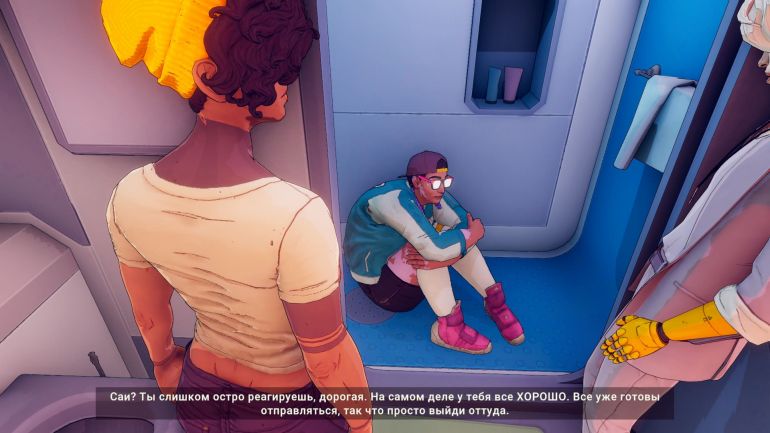
A substantial chunk of Dustborn goes to chatter and character interactions. Your teammates constantly react to what you say and do, and that can prompt them to behave in different ways. It leads to new dialogue or even different situations, giving the game a little variety. One character can help you pick a lock, for instance, while another can break the door down. Most of the time, though, it's like a Telltalegame: you get the illusion of choice.
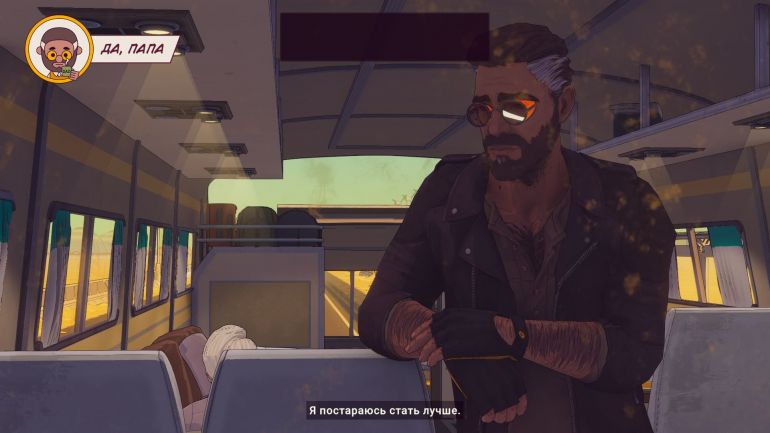
There are two problems here. The main one is that the dialogue options are pretty vague. You often pick a response only to find the character says something completely different , which throws you off. The second problem is the characters themselves. They're flat and uninteresting, and a big part of their so-called development is just dumping new information on you, whether it's interesting or not.
different from what you'd expect them to say
The next thing Dustborn has you do is play Guitar Hero-style rhythm games. The crew is posing as a punk rock band called “Dustborn,” or Dustborn in the original. On the road, Pax writes songs while sitting on the bus. That's when the aforementioned Guitar Hero gameplay kicks in, and you press buttons in time with the music to hit the notes. Then you do the same thing at the band's gigs, in front of an audience.
The trouble is that the music sounds generic and clearly isn't punk rock unless you count the ideology in the lyrics. The cringey lyrics rarely go beyond basic rhymes along the lines of “rejects” and “defects.” Instead of the punk band we were promised, we get a pop group, or at best a “toothless ” pop-punk band. There's hardly any aggression in the songs, and the sound is a letdown. Once again, it clashes with the game's own ideology.
the music's crap, the beer's nonalcoholic, the lyrics are clean, nobody pukes at the shows, and Korol i Shut just isn't what it used to be
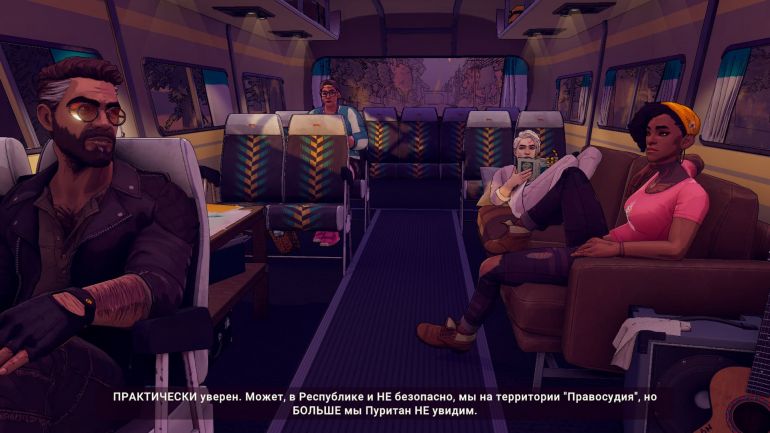
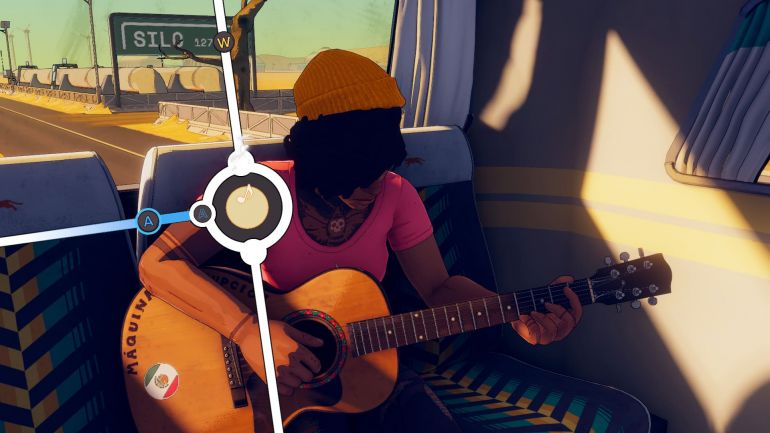
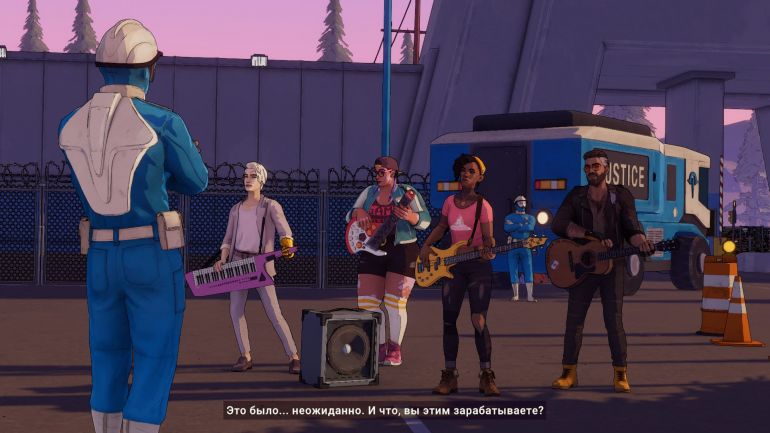
Funnily enough, you can skip the rhythm games entirely, miss every single note, and get away with it. It looks particularly pathetic near the start, when Pacifica's border agents ask you to play a song to prove you're really a band. The worst that happens is they tell you to rehearse more often. They don't even detain you, despite your rock-band cover story falling apart over a badly played song.
Beyond all the half-empty chatter and rhythm minigames, Dustborn periodically stops for combat, and that fares even worse than the other mechanics. The fights are beat 'em up with a little hack and slash thrown in, courtesy of the heroine's baseball bat. Naturally, there are the usual ingredients: weapon upgrades, unique abilities, and enemies that outnumber you.
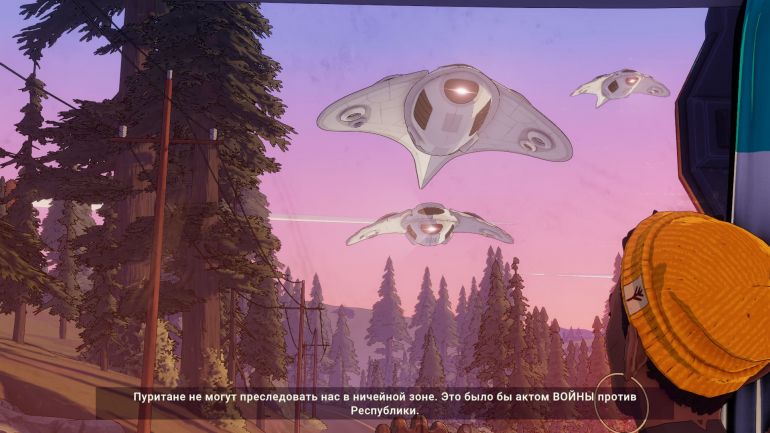
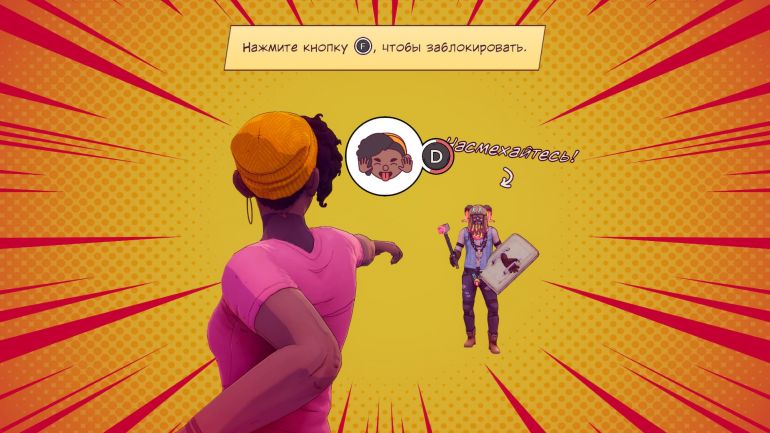
The combat itself is basic, dull, and repetitive. Fights play out in real time from a third-person view, but the game pauses every time you open the ability wheel, which unlocks after you land enough melee hits. The characters' superhero powers don't help. Pax can shout at enemies to knock them back, freeze them, or turn them against each other. There are quick-time attacks and ways to combine your attacks with allies' abilities. You can even demoralize robots with your voice, despite Pax saying over and over at the start that she dislikes robots precisely because her voice doesn't work on them. The game also likes to point out that words can hurt, too. They certainly do here, though the players are the ones feeling it…
There's plenty of nonsense, both in the logic and on the technical side. At one point, for example, you're asked to take down a helicopter with a baseball. The animations have serious problems. Your characters often slide right through enemy models. Attacks also animate straight through them before the hit registers and does damage. There's no weight to the blows. It feels like punching air. The enemies themselves are dumb as bricks and often get stuck in place.
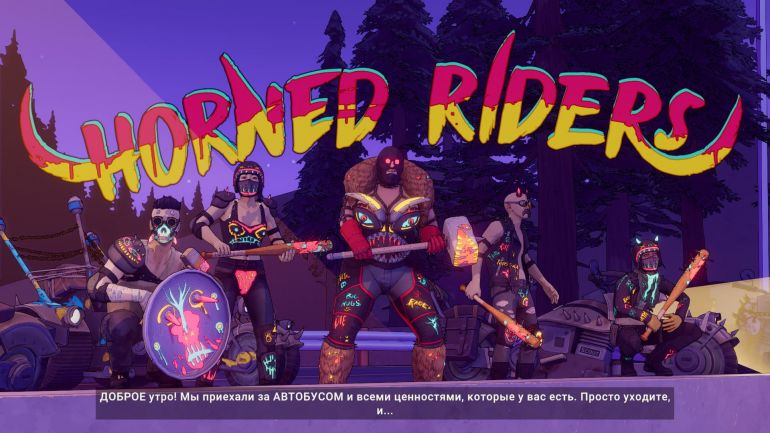
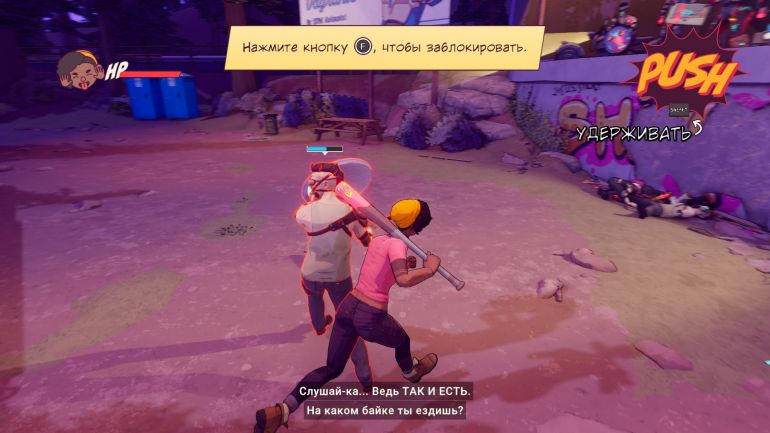
There's an upgrade system, too, though it feels like it's there to check a box. In Dustborn, you can upgrade Pax's weapon, her bat, and her powers, meaning her voice. For the first, you collect batteries scattered around the levels. For the supernatural powers, you do something like ghost hunting. You're after Echoes, rather than ghosts: traces of a proto-language that can influence people. Anomals came about through exposure to different manifestations of those Echoes. With a handheld console called ME-EM , Pax can find and record Echoes and separate them from people. Sometimes you have to fight strange, invisible squid-like creatures to get at them. The same device can convert those Echoes into new proto-words that make Pax's abilities stronger.
the idea was clearly borrowed from Sally Face
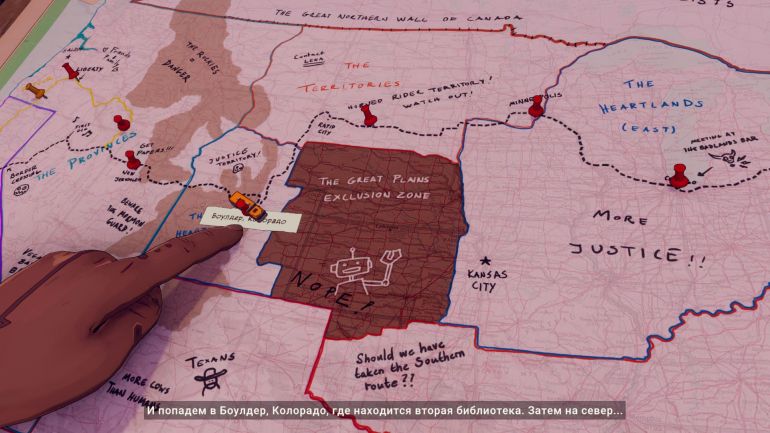
Technically, Dustborn is far from polished, and that was especially obvious at launch. Bugs could cost players all their progress. The animations also leave a lot to be desired, and the character models are full of issues. Sometimes skin shows through clothing, and sometimes pieces of the models poke right through textures.
Credit where it's due: the cel-shaded comic-book art grabs your attention right away, and it's the best thing about Dustborn. Everything from incidental details scattered around the world to the comics at the end of each chapter looks wonderful. The game draws you in with an interesting world, an original idea about a proto-language that shapes reality, and an unusual opening. Then things go so far off the rails you start to wonder whether the same people who started making Dustborn were the ones who finished it.
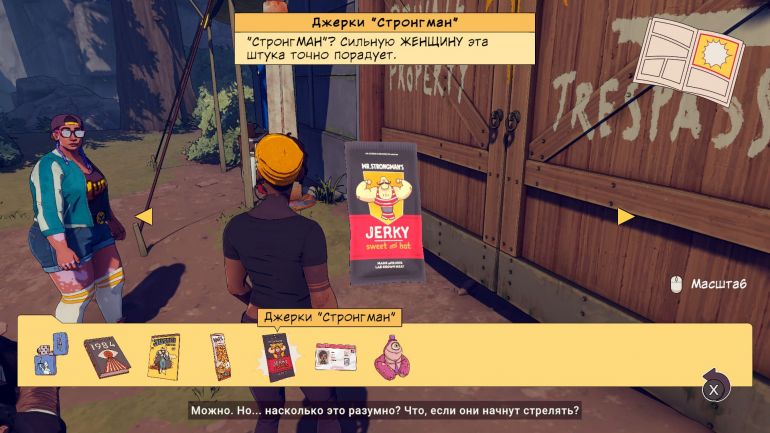
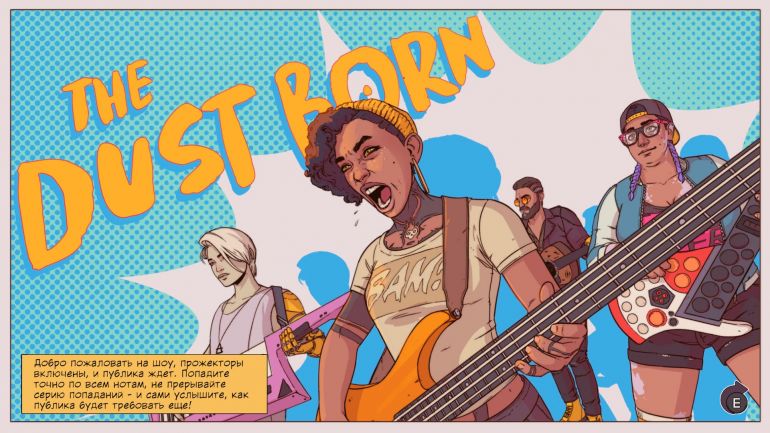
Dustborn is a deeply divisive game. Its plot rests on a simplistic take on authoritarianism, and its irritating main cast serves up one stupid moment after another. On top of that, Dustborn seems to have absorbed every agenda-driven trend of the last few years. It's DEI for the sake of DEI, with no real point to it. Frankly, the game arrived after the wave of actively progressive games had started to recede, just barely catching the last train. And if you take all that out, what's left? Shallow, foolish characters, pointless situations and conversations, dull, clumsy combat, and a pathetic imitation of Guitar Hero. None of the systems fit together, because all of them are underdeveloped in one way or another, and some are downright buggy.
Enjoyed this article? Found it helpful? Support GameSpirit.org and help us create more great content.
Author: Godlike_Goblin for GameSpirit.org


