
Deck of Haunts Review
Title: | Deck of Haunts |
Developer: | Mantis |
Publisher: | DANGEN Entertainment |
Release: | 15.12.2025 |
Reverse horror is easily one of the rarest genres in gaming, even though it's been around for quite a while. Since 1983, to be precise, when two such games came out on Atari 2600: The Texas Chainsaw Massacre and Halloween. We still rarely get to play as evil incarnate. The vast majority of modern examples are asymmetrical horror games like Dead by Daylight or Evil Dead: The Game.
If you're itching to make somebody else's life a nightmare, you might want to look at Deck of Haunts from Belgian indie studio Mantis Games. Alongside the reverse horror, Deck of Haunts mixes roguelike, strategy, collectible card game, and deckbuilding mechanics. It's a pretty cool concept. It also calls back to old gems like Haunting Starring Polterguy on the Sega Mega Drive and Ghost Master on PC and sixth-generation consoles . In those games, too, you control supernatural forces and make life hell for the people in a house.
Xbox and PS2
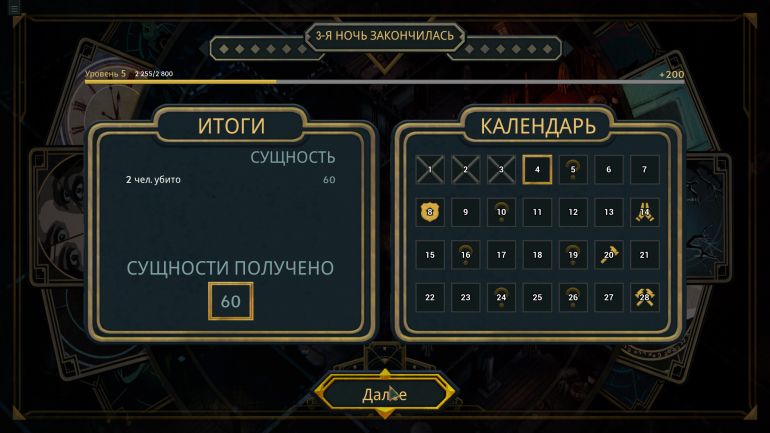
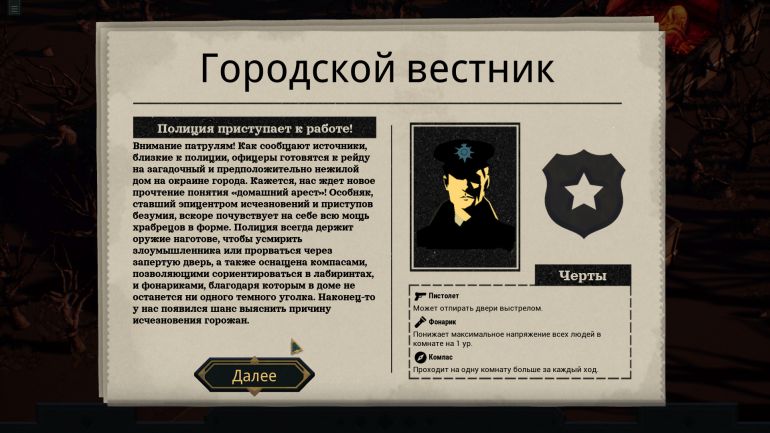
Deck of Haunts has no real plot. There's a premise and a couple of newspaper articles you can read as you play. The short version is that you control an entity represented by an enormous, monstrous heart deep inside an old mansion. At the start, it uses its paranormal powers to lure in a few people and consume their souls. Then visitors start showing up in droves. Some are just curious, others are part of a police raid or some more outlandish group. The goal is to last 28 days . Why? Hell if I know. The game never explains it.
though don't expect them to go into detail
in the main mode
Everything revolves around that goal. You have a 28-day calendar. Most days are unremarkable, but some have icons marking major events, like a local police raid, a mass exorcism, or a visit from a cult of Freemasons. What Freemasons have to do with hunting supernatural creatures is another question the game doesn't bother answering.
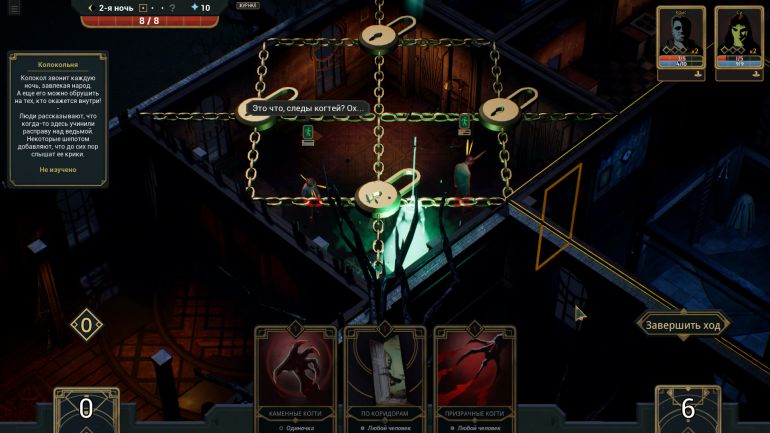
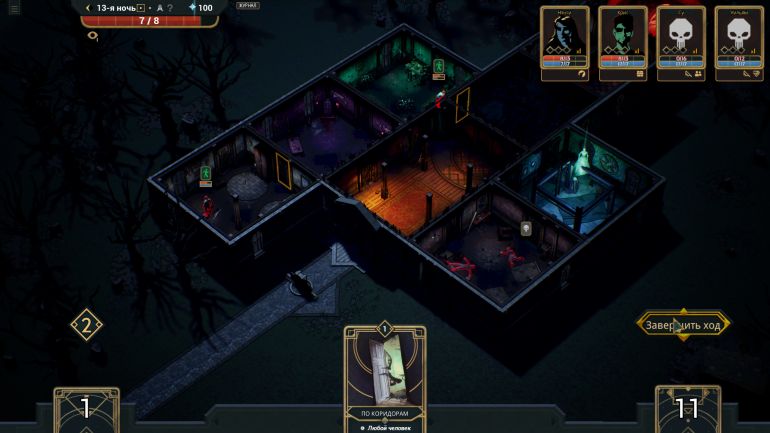
Your main job over those 28 days is to keep the heart safe. That means stopping people from reaching the room it's in. The heart has just eight hit points for the entire run and loses one every time someone sees it. To prevent that, you have to kill visitors or drive them mad, and build new rooms so it takes them longer to search the house. The whole gameplay loop in Deck of Haunts is split between day and night.
Let's start with the night. That's when you do most of your work. Only after dark do people come into the house, drawn in by the call of the abyss. To keep them away from the heart, you'll use cards from one of the available decks. There are five decks with different sets of cards geared toward different tactics. That's the first problem: you can't build a deck of your own. So it isn't really a deckbuilder in the full sense. You can only build up the existing decks by unlocking cards for completing levels.
not the brightest bunch, are they?
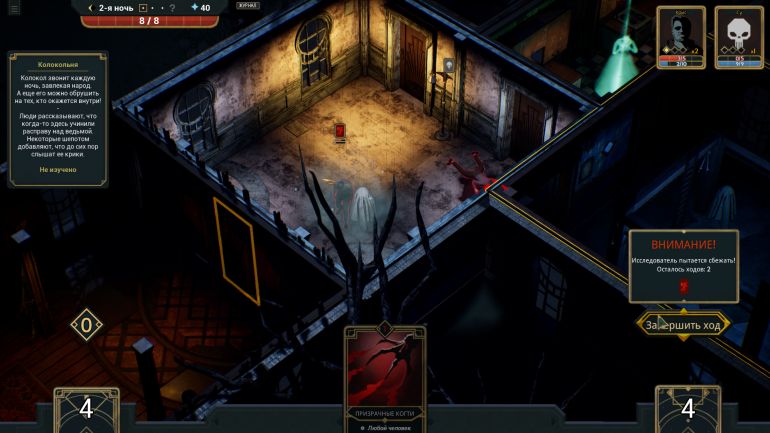
Deck of Haunts has all kinds of cards. Some damage visitors' health, and others chip away at their sanity. You can curse or weaken people, or buff other cards. You can also confuse intruders by moving them to random rooms. Some cards target rooms instead of people, locking doors, for example. Others set traps, and there are unique cards that only interact with specific rooms.
The people visiting your cursed old house come in different varieties, too. They have different health, sanity, and tension stats, as well as unique traits. Cops can break down locked doors, for example. Priests can't be hurt or driven mad as long as they're with someone. Some visitors can search multiple rooms in one go or climb in through a window to get as close to the heart as possible. It adds a bit of chaos, and sometimes winning or losing comes down entirely to luck. It's hard not to find that irritating.
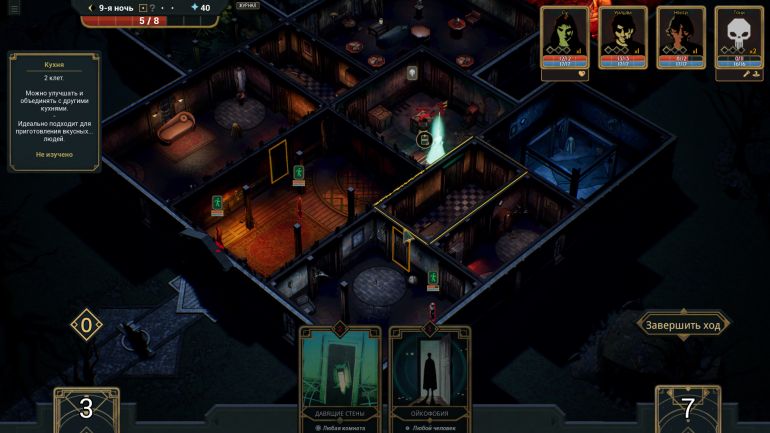
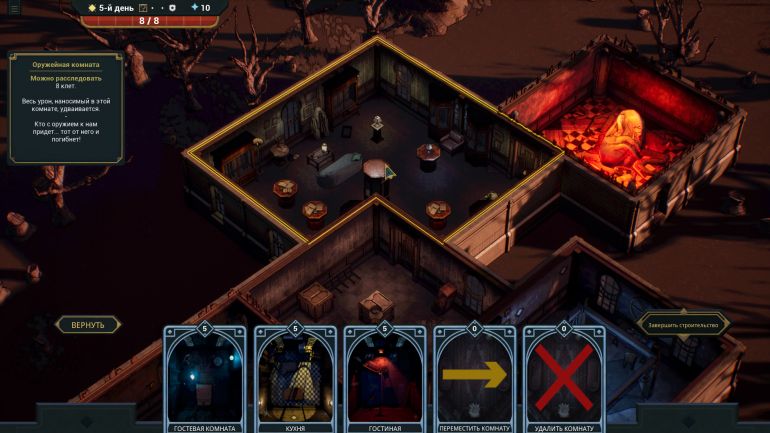
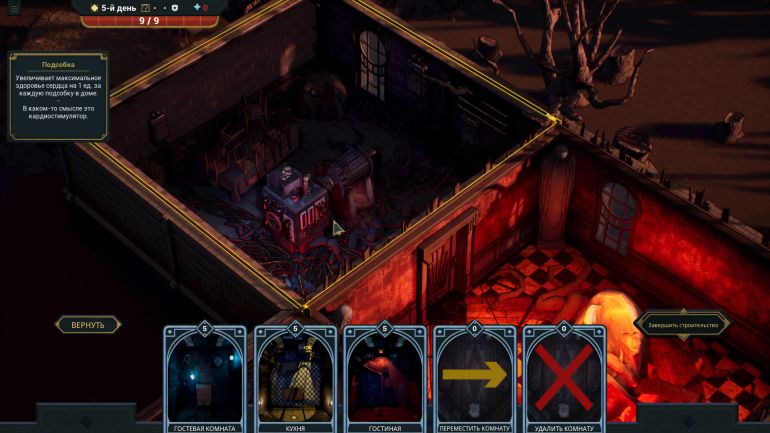
You're perfectly safe during the day, which is the opposite of how things usually work in horror. Daylight gives you a chance to expand and rebuild the house in peace. You can arrange it to your taste, within limits. For instance, the farther a room is from the heart, the more it costs to build. At first there are just three basic room types: a living room, a kitchen, and a guest room. The differences are only cosmetic. Last long enough and you'll unlock rooms with unique properties. Some are built separately, while others upgrade rooms you've already placed.
At the end of each day you survive, you get some of the local currency, Essence. It's only for building out the house. You can't buy cards with it, unfortunately. Your deck grows another way. After each night, you pick one of several random cards to shuffle into it. Naturally, whether it ends up in your hand is also up to chance.
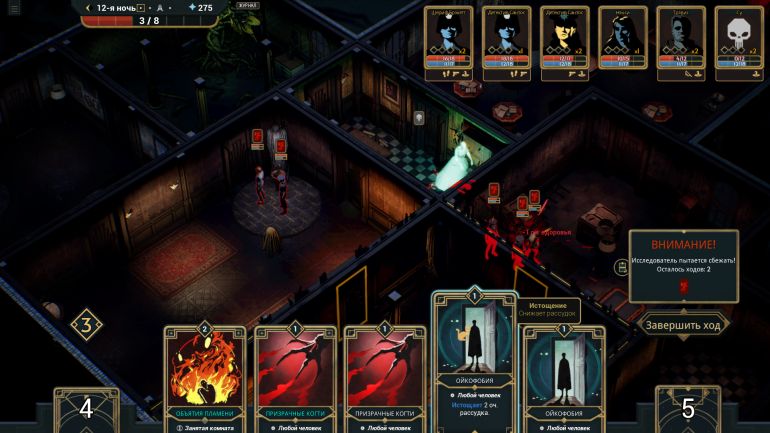
That aspect of Deck of Haunts cuts both ways. The unpredictability is good for a card roguelike because every run plays a little differently. It also makes for some bizarre losses where one bad card, or one good card that never turns up, can undo all your work.
The midgame and endgame don't develop enough, either. The start is always the same and opens with an unskippable tutorial, which gets irritating too. You can unlock or upgrade cards and rooms along the way, but there are too few of them to make a meaningful difference or offset the abrupt difficulty spikes. Special rooms add some fun and open up card combos, but there's very little room to experiment. The balance could use work, too.
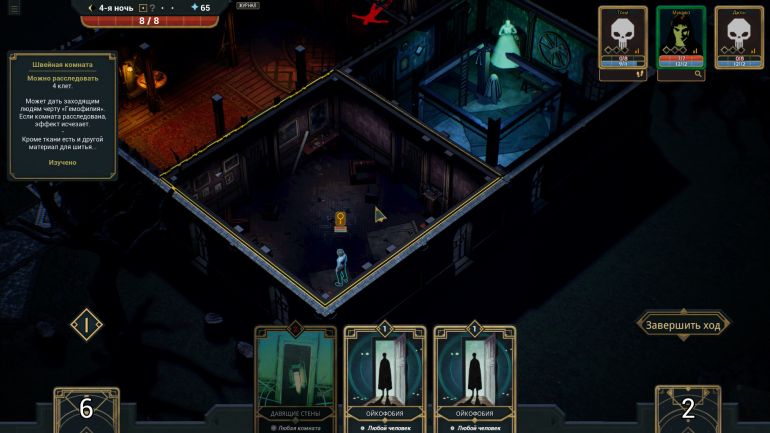
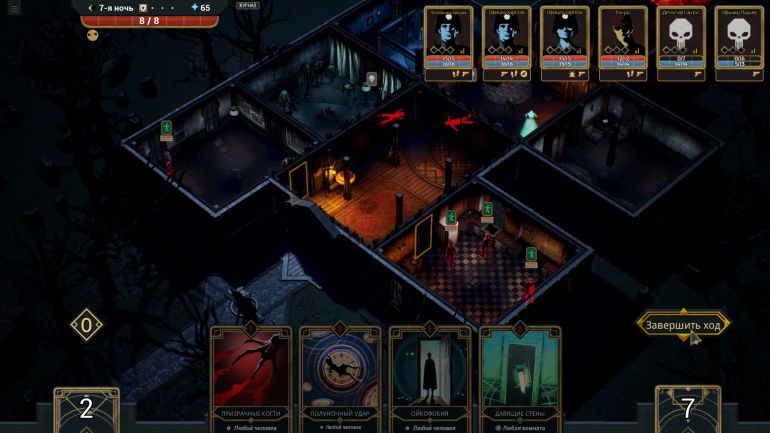
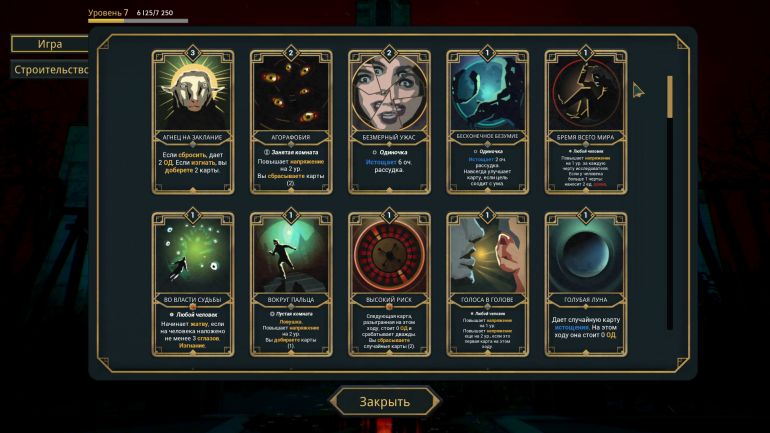
The graphics are pretty good for an indie game. Dark, muted tones and the play of light and shadow underline the gloom of Deck of Haunts. The visuals do more than dress up the gameplay. They create an oppressive atmosphere that suits the occult horror. The cards look great, too, like something out of a real tabletop game, with detailed illustrations of ominous ravens, shattered mirrors, and crooked claws.
There are some problems, though. The visitors don't have many animations or ways to interact with the house. They spend most of their time wandering around and looking at things, sometimes checking the same room several times. Oh, and they open doors.
The sound is fairly good, with a few issues of its own. When the heart hits zero health and you lose, for example, there's no cutscene or even a distinct sound to tell you something important just happened. A “Game Over” message simply appears on-screen.
Deck of Haunts is a creative, promising deckbuilding roguelike with a premise all its own, but it clearly needed more work. The intuitive mansion construction and strategic card combos make for an engaging loop, only for the repetitive gameplay and basic balance issues to undermine it all.
Enjoyed this article? Found it helpful? Support GameSpirit.org and help us create more great content.
Author: Godlike_Goblin for GameSpirit.org


