
Clive Barker's Hellraiser: Revival Review

Title: | Clive Barker's Hellraiser: Revival |
Developer: | Saber Interactive |
Publisher: | Saber Interactive |
Release: | 08.10.2026 |
Clive Barker’s name has become firmly established in gaming, despite appearing on only a handful of titles, two Nightbreed games, Undying, and Jericho. Now Clive Barker’s Hellraiser: Revival joins that lineup. This Hellraiser is also remarkable for being the first game in the Hellraiser franchise. Yes, hard as it may be to believe, after 40 years this is the first game set in its universe.
Clive Barker’s Hellraiser: Revival was developed by Saber Interactive, specifically its Serbian and Bosnian studios. They’ve produced a surprisingly accurate interpretation of Hellraiser. The films, rather than the books, serve as its canon. More precisely, the first few films that Barker himself was directly involved with, though it draws most heavily from the 1987 original and its 1988 sequel.
Hellraiser: Revival is a standalone work, with no story connections to the films or books. Within minutes, Revival makes it clear that this is exactly the Hellraiser you came for. The story revolves around an “in-love” alternative couple, Aidan and Sunny, who prefer their intimacy rough. We first meet them right in the middle of it. Seeking new sensations, the couple makes extensive use of various “toys,” one of which turns out to be a Lemarchand puzzle box*. Somehow, they manage to open it without even trying. The box opens a portal to another world, which Sunny immediately enters, followed by Aidan.
After a short run through otherworldly labyrinths and an introduction to their master, Leviathan , Aidan and Sunny return home as if nothing happened. Aidan thinks it was all a bad drug-induced dream, but then the main stars of Hellraiser, the Cenobites*, enter the scene. It turns out Sunny knew what she was doing, as the unofficial leader of the infernal quartet immediately offers her eternal pleasure. She accepts without hesitation.
The supreme ruler of a labyrinthine dimension where endless torment and forbidden pleasure merge into a nightmarish philosophy of pain, flowing into a higher form of order
*Lemarchand boxes are puzzle artifacts from the Hellraiser universe. According to legend, French toymaker Philip Lemarchand created them in 1784 for occultist Duc de L’Isle. One of the most famous is the cube-shaped Lament Configuration. Clive Barker’s Hellraiser: Revival uses a similar cubic artifact called the Genesis Configuration.
*The Cenobites were once humans obsessed with perverse ways of seeking pleasure. Their insatiable thirst brought them under Leviathan’s influence, and horrific rituals transformed them into supernatural beings. Essentially, the Cenobites are priests preaching endless masochism. In The Hellbound Heart, they appear as members of the “Order of the Gash,” or “Order of the Cuts,” and they are also referred to as “Surgeons from Beyond” in Weaveworld.
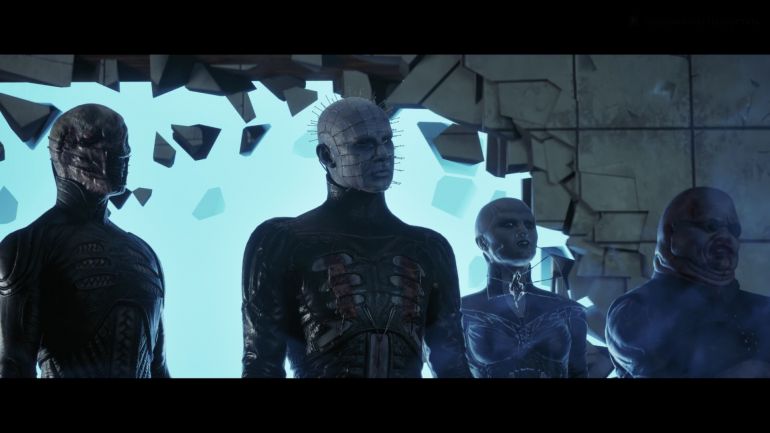
For Sunny, the encounter with the supernatural ends where the first film begins, with dozens of chains tearing her flesh apart. Aidan sits there completely f**king stunned, then passes out altogether. Afterward, the protagonist of Hellraiser: Revival wakes in the cellars of a mysterious Scarlet Church, where he is tortured and interrogated. This is where the main game begins. First you must escape, then rescue Sunny from this so-called hell.
The story in this Hellraiser game is very good. Yes, it’s fairly predictable, but that doesn’t prevent it from being extremely faithful to the original, occasionally provoking genuine flashbacks to the old films. The Cenobites here are far from the mindless maniacs of the later movies. They also get a pleasing amount of screen time, doing more than posing. They talk and explain their viewpoints, which is fascinating to watch. They torment only the willing, and are happy to make interesting deals that benefit them, one of which ensnares Aidan.
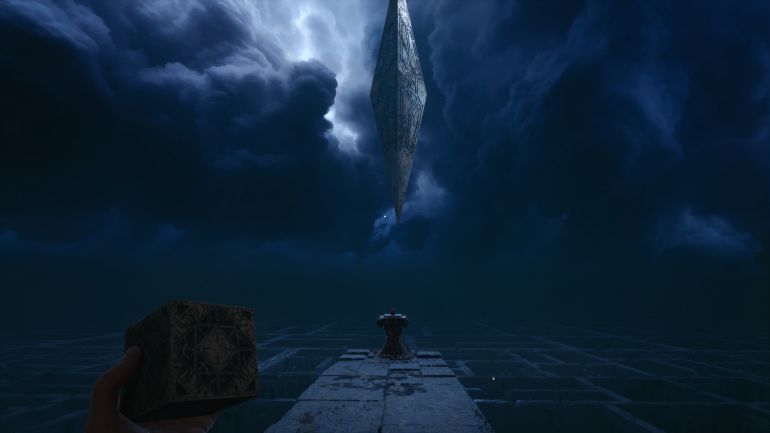
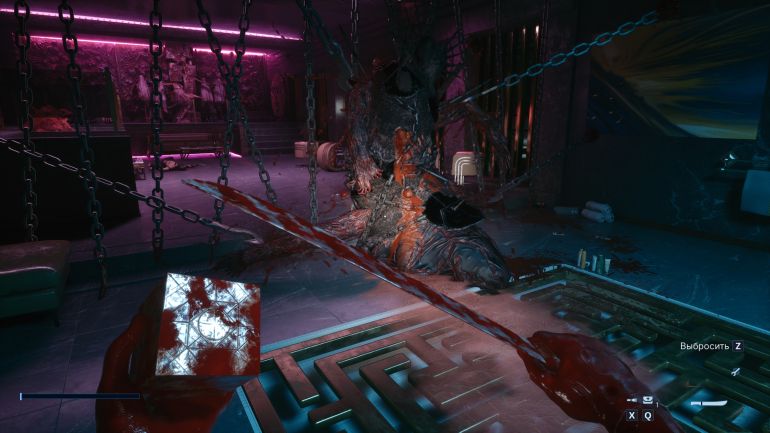
The atmosphere is impossible to overlook, mixing a genuinely potent cocktail. BDSM imagery appears frequently, alongside other sexual perversities. It goes hand in hand with extreme dismemberment, torture, and torment. This is pure, full-blooded splatterpunk*, a genre Barker is considered one of the founders of. Barker’s horror always exists on the edge, a sensual, aesthetic, hypersexualized world where pain and ecstasy go hand in hand. That is Hellraiser’s defining trait.
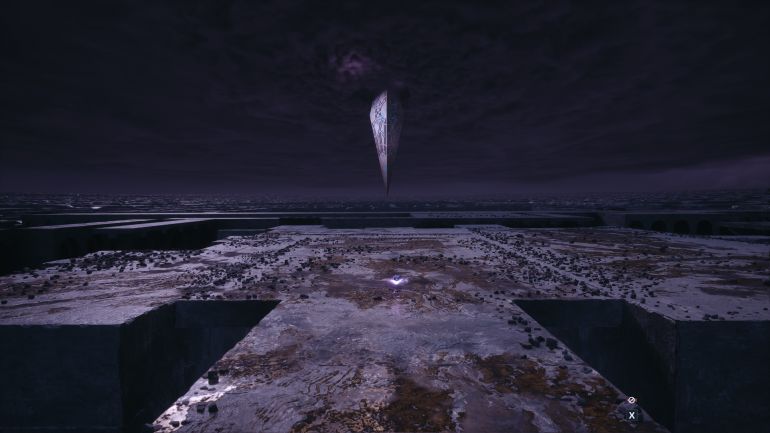
There are more grounded elements, too. Everything described above gives way to otherworldly, intricate landscapes in an impossible fantasy labyrinth without beginning or end. Then you wander outdoors, through an atmospheric nighttime cemetery and forest, a magnificent mansion, and an abandoned cabin in the woods. These settings alternate skillfully, changing precisely when particular situations and surroundings start to become tiring or dull. In that respect, Clive Barker’s Hellraiser: Revival also boasts an excellent balance of activities.
*Splatterpunk is a literary and cinematic genre that emerged in the 1980s. It began as a branch of horror fiction combining emphatically grotesque fantasy with graphic scenes of bloody violence. The term later spread to related art forms.
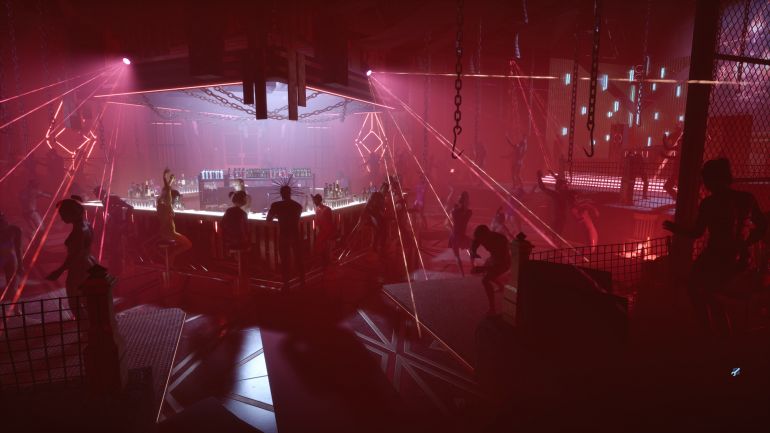
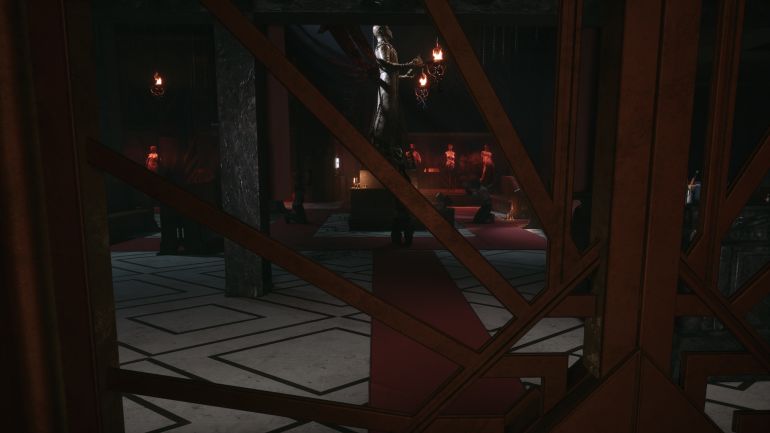
Now we can move on to gameplay. Here, Hellraiser: Revival looks suspiciously like the latest Resident Evil entries. It’s the same kind of first-person action-horror. To avoid copying them exactly, though, it crams in mechanics from other games. You can spot traces of Outlast in the adrenaline-fueled chases, and elements of P.T. while wandering the labyrinth and solving certain spatial puzzles. Skyrim and Fallout 4 supply the lockpicking system. BioShock is easily recognizable in the telekinesis. Dead Space had telekinesis, too, along with the ability to shoot off enemies’ limbs.
Revival is a linear adventure. As you move toward your goal, you explore your surroundings, solve puzzles, and fight enemies. Almost none of these aspects is quite excellent. Exploring is interesting, both visually and practically. Almost every location has a corner containing something worthwhile, a note, perhaps, or a locked cabinet with resources and money. Sometimes it’s an entire room opened by solving an optional puzzle. The labyrinths even contain altars that increase your maximum health and magical power.
Exploring also earns you the local cash. It’s generally hidden in various corners, but occasionally you can collect something from dead enemies, too. Currency buys useful goods from a female merchant, much like in RE. She offers plenty, from ammunition and weapons to crafting recipes and firearm upgrades. You can also sell assorted useless junk picked up solely for resale.
The puzzles are relatively simple, falling short even of recent Resident Evil games. Most often, you find a key, or something serving as a key , then bring it to a particular door. Less frequently, you twist and turn something to open the way forward. Pure formality. Amusingly, even Hellraiser finds room for bolt cutters. Special mention goes to an objective involving finding certain objects in a sex club, then using them for their intended purpose.
a rubber duck, for example

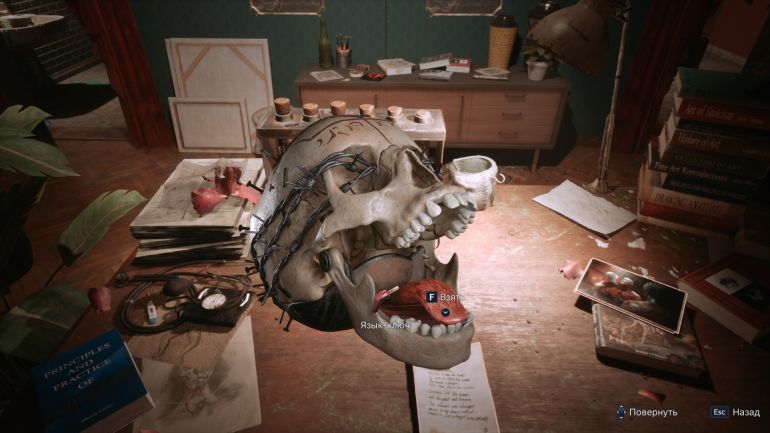
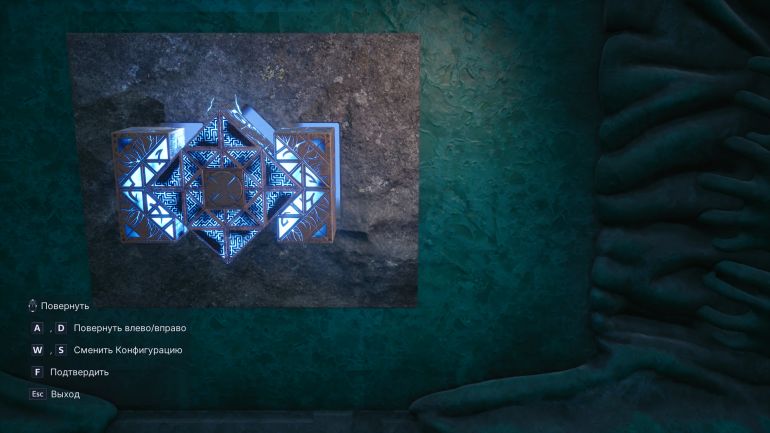
Solving puzzles frequently requires the Genesis Configuration, which is genuinely cool and adds to the atmosphere. There are two types of these situations in Clive Barker’s Hellraiser: Revival. The first involves spatial puzzles in the Labyrinth, where telekinesis lets you move blocks. You shift them around until a path opens, sometimes activating them first. The second involves inserting the Configuration into various places, after changing its shape to match particular openings.
Saber falls short on enemy variety, though. Most often, you face two types. There are Scarlet Church cultists dressed in assorted BDSM outfits, including metal ones, often armed with guns. Then there are various undead called the “Unworthy” in Hellraiser. These also have armored variants carrying melee weapons rather than firearms. After the first half, another enemy type appears, a mound of flesh with numerous arms. All enemies are fairly dim and mostly prefer charging straight at you.
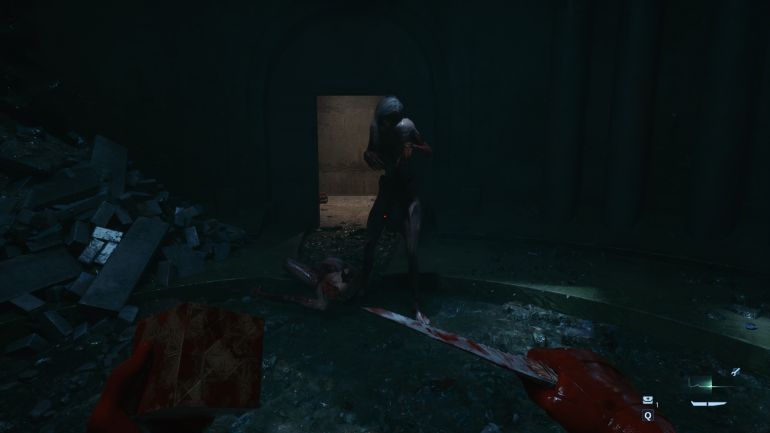
There are several bosses, naturally with tricks of their own. One aggressive creature has blades for hands, looks as though it wandered over from Bloodborne, and is particularly vulnerable to fire. Its name, incidentally, is Charlotte. Another individual goes without skin, can dissolve into a pool of blood, and drag you into it. There’s a splendid flying creature that periodically hides the whole arena in a bloody haze. It’s all extremely dynamic and interesting. The only disappointment is the final boss, a thoroughly standard enormous asshole from RE, whose weak points you have to hammer away at.
Bosses also feature in other activities beyond their battles in Hellraiser: Revival. The Bloodborne-style abomination, for example, initially entertains you with several chase sequences. It’s the usual routine, run fast, don’t look back, dodge obstacles. Then the same nasty creature offers a game of hide-and-seek. At night. In a cemetery. Expect classic hiding in bushes and behind obstacles, with the option to distract the horror by throwing a rock or bottle away from your position.
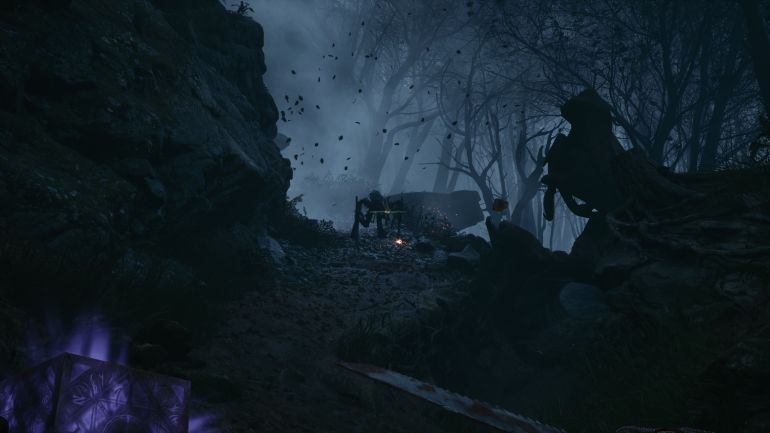
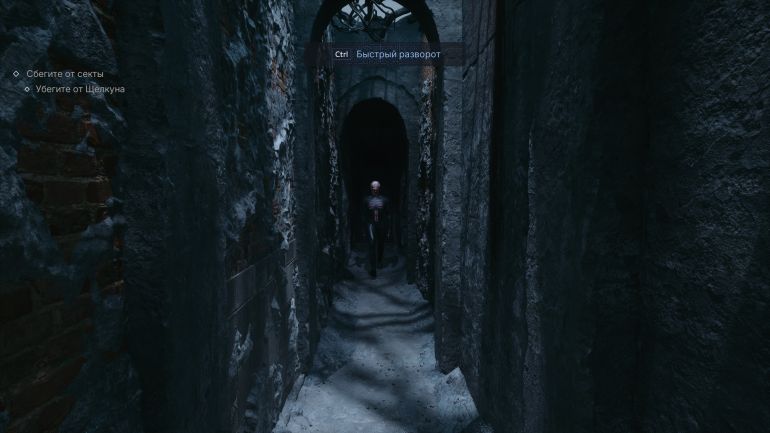
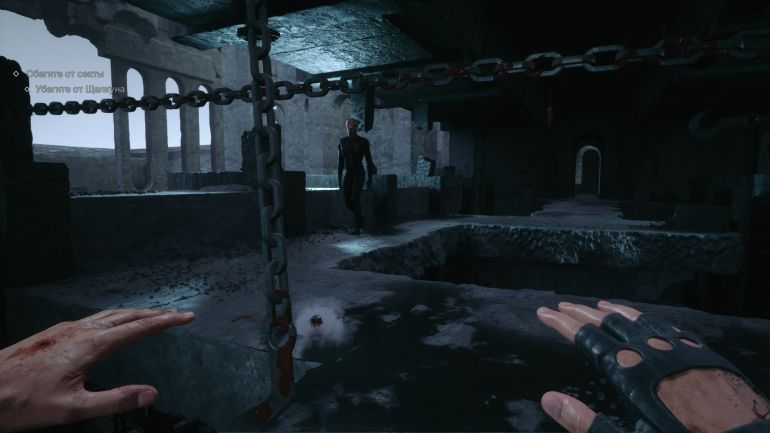
You also get a chance to confront the Cenobites directly. More precisely, one Cenobite, Chatterer. The little bastard enjoys chasing people through the Labyrinth. The principle is the same as escaping Charlotte, rush forward and avoid obstacles, though these chases also add simple spatial puzzles. Mostly, you use telekinesis to move levitating cubes around so you can continue running. If Chatterer catches you, he kills you immediately, even though none of the Cenobites displays open aggression. Naturally, you can’t kill him.
Since we’re discussing stealth, Hellraiser: Revival has that, too, beyond the boss sequences. The stealth mechanics are basic and feel vestigial, especially alongside enemies that aren’t particularly bright and frequently fail to see you right in front of them. You hardly need to distract them. You can perform stealth kills, though, and they’re especially brutal, falling short of the memorably vicious Manhunt only in variety.

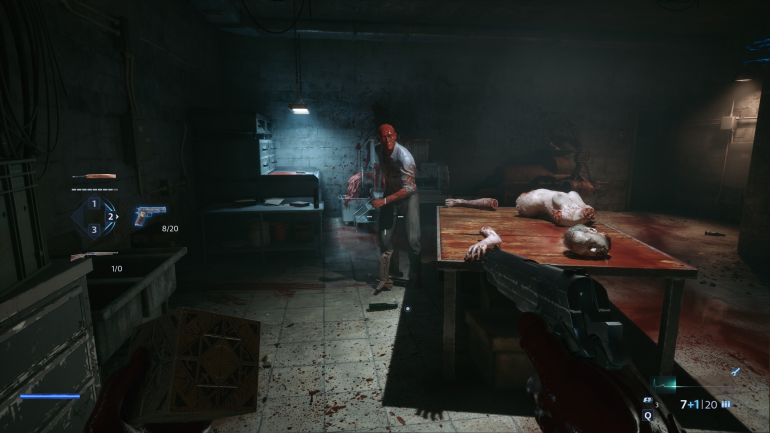
Combat is hardly original, either. It recalls those same recent Resident Evil games, with a few nuances. Your melee options extend beyond a knife, although you have one of those, too. You can pick up sticks, bats, and cleavers, but unlike the starting knife, every other melee weapon constantly breaks. Each one lasts long enough to put down one cultist, two at most. Then you need to find another or repair it with a kit. In melee, dashes let you dodge enemy attacks, but the timing is demanding.
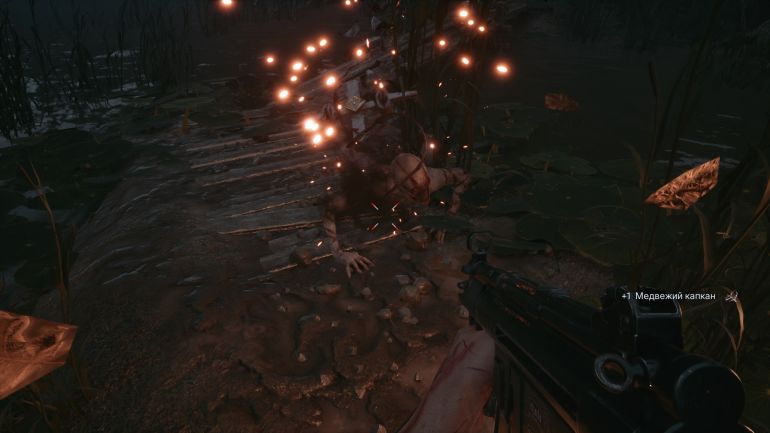
Firearms, unlike melee weapons, stay with you forever. The selection is conventional, a pistol, revolver, submachine gun, shotgun, and assault rifle. All can be upgraded to improve stats such as fire rate, damage, and magazine capacity. Shooting feels quite good, incidentally. Both the sounds and hit animations give it a satisfying impact.
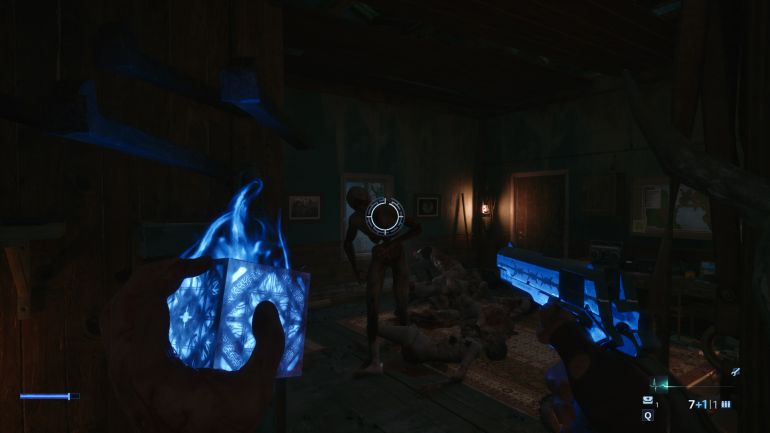
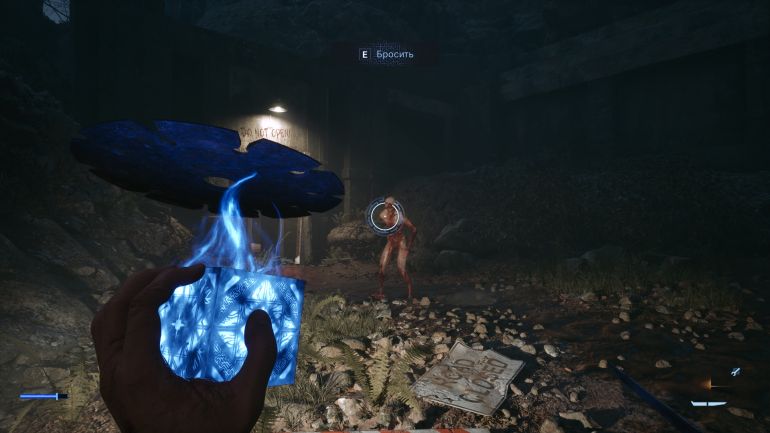
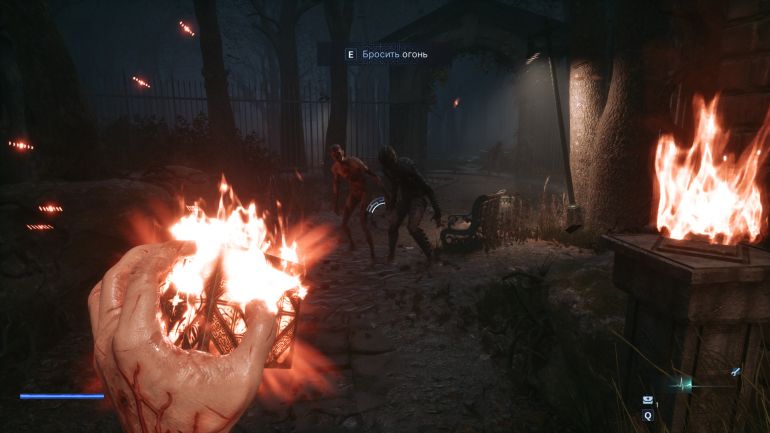
Another weapon available to Aidan is the Genesis Configuration, which lets you work a little magic. Initially, that means telekinesis, hurling sharp objects such as nails or circular saw blades at enemies. Unfortunately, only specific objects can be thrown. Later, the Configuration unlocks pyrokinesis, allowing you to set enemies alight. Finally, you gain a proper ultimate ability that can tear an entire crowd apart with chains.
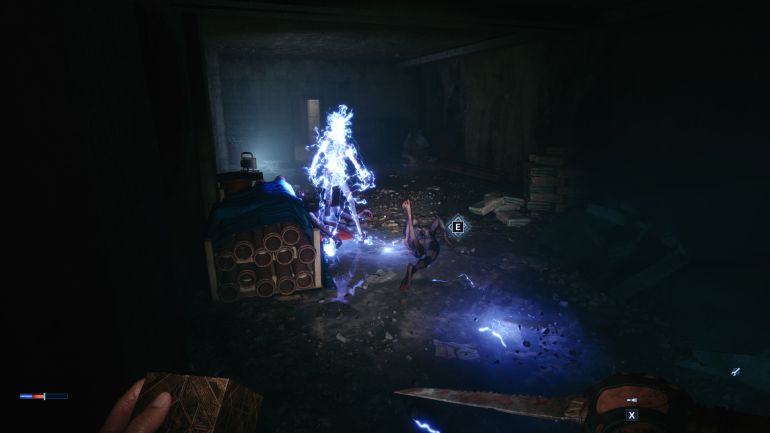
You can also lure enemies into traps, though variety is hardly abundant. Bear traps can be collected and placed, and later bought from the store or crafted yourself. In a couple of places, you can switch generators on and off to electrify puddles. Across the entire game, there are literally two situations where you can move devices with spinning blades.
We should also mention the modest amount of combat dismemberment, modest compared with what goes on in the background, anyway. During fights, you can readily sever an enemy’s arm or leg with a cleaver or blow it off with a shotgun. There’s an entire enemy type you dispatch by cutting off its numerous arms. And the Genesis Configuration’s ultimate ability can turn things into a genuine meat grinder.
Visually, the game is more than respectable. Hellraiser: Revival looks good without pursuing elaborate ultrarealism. Built on Unreal Engine 5, it delivers rich, striking visuals, particularly when building atmosphere. The lighting is excellent and affects gameplay, too. In darkness, the protagonist may simply fail to see ammunition or money until he shines a flashlight on it. Notably, the game makes extensive use of full CGI cutscenes, something you don’t often see nowadays. Its problems are familiar UE5 ones, delayed texture loading and occasional brief stutters.
The audio is excellent, too. Mostly. The precise sound positioning is particularly enjoyable during escapes from Chatterer. While fleeing him, you can hear his teeth clacking as though the sound is inside your head. Headphones are naturally recommended for the best, most immersive experience. Especially welcome is film actor Doug Bradley returning to voice Pinhead, and doing an excellent job. The music is good, too.
Ultimately, Clive Barker’s Hellraiser: Revival is a fairly good AA game, assuming you aren’t a huge fan of Clive Barker’s work. It offers an engaging story, lively if derivative gameplay, and varied situations for its protagonist. Everything needed for an entertaining time, in other words. If you’re a longtime fan of the Hellraiser universe, though, there’s no question. You have to play it. The game stays extremely close to its sources, and you won’t find anything better, simply because there’s nothing else.
Enjoyed this article? Found it helpful? Support GameSpirit.org and help us create more great content.
Author: Godlike_Goblin for GameSpirit.org


