
Absolum Review
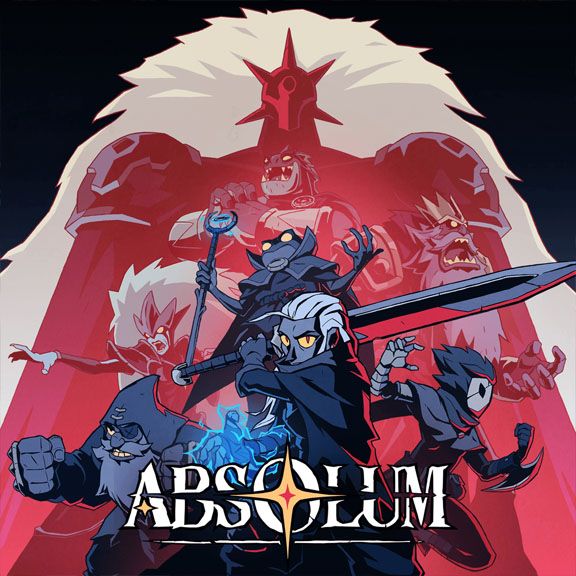
Title: | Absolum |
Developer: | Guard Crush Game |
Publisher: | DotEmu |
Release: | 30.06.2026 |
With the release of Streets of Rage 4 in 2020, it’s fair to say the beat ’em up genre received a substantial boost. We can thank SoR4 developer Dotemu for that. After the successful revival, it began showering players with excellent games in the genre, now as a publisher. There was TMNT: Shredder’s Revenge in 2022 and Marvel Cosmic Invasion in 2025. All of those games, though, have substantial legacies behind them.
That same Dotemu also helped bring out a game offering an entirely new approach to the beat ’em up. We’re talking about Absolum, which mixes traditional brawling gameplay with roguelike and RPG elements. No fewer than three studios worked on it, including Dotemu itself, its Guard Crush Game collaborators on Streets of Rage 4, and supporting studio Supamonks, responsible for the excellent visuals. The result is impressive.
Don’t expect anything extraordinary from the story in Absolum. This is a beat ’em up, after all, where the main objective is to pummel everyone in your path. An elaborate story isn’t especially necessary. Absolum takes place in the fairly conventional high-fantasy world of Talam, inhabited by humans, dwarves, goblins, gnolls, lizardfolk, and who knows what else. The conflict revolves around a global cataclysm caused by ill-advised use of magic. At some point, a figure named Azra, the Sun King, seized power and decided magic was too dangerous. He founded the Crimson Order of loyal fanatics to combat mages, outlawed magic entirely, and had all mages killed or imprisoned.
We play as magical resistance fighters who disagree with the king’s methods. The prologue introduces two protagonists, Galandra, an elf from the lands of necromancers, and Karl, the only living dwarf in all of Talam. Their first task is to free Mother Uchawi, the last of the Root Sisters who caused the cataclysm. After that, all that remains is to overthrow the Sun King. At this point, you might start wondering whether we’re fighting on the right side.
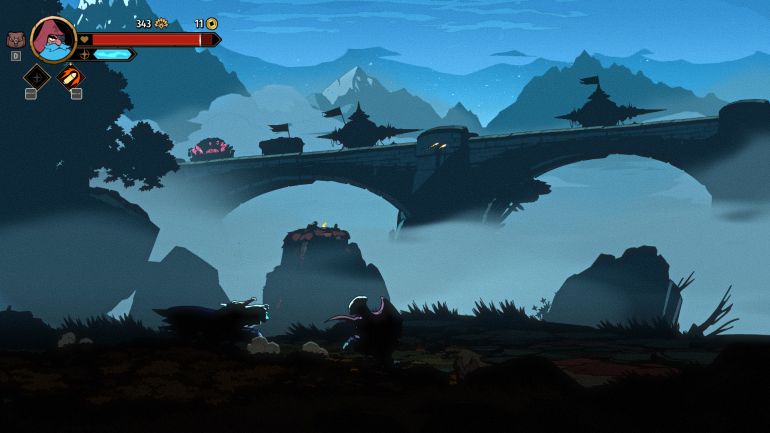
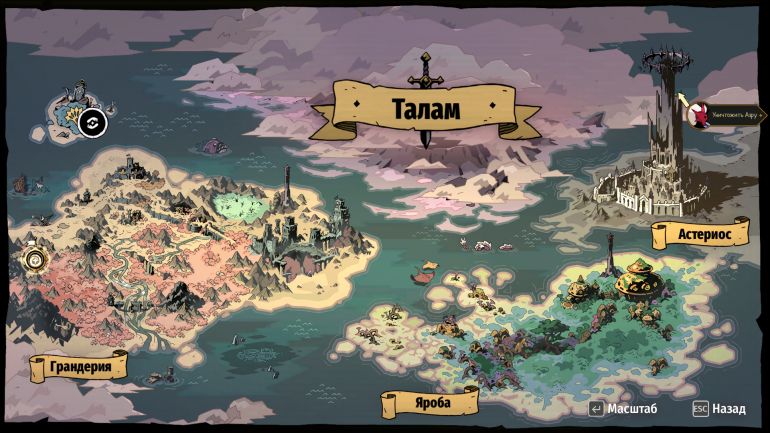
The ultimate objective in Absolum is perfectly clear. We’re fighting for everything good against everything bad. Yet the adventure is far from linear. On the way to your main goal, you can discover a huge number of branches that sometimes change your route dramatically. It fits the roguelike philosophy perfectly. Every run will differ from those before it. You might discover a previously hidden cave passage, have the floor collapse beneath you, find a rope to climb into the mountains, or encounter a full-fledged quest. Levels often contain snippets of lore, too. All this opens up gradually, drawing you deeper into the world’s backstory.
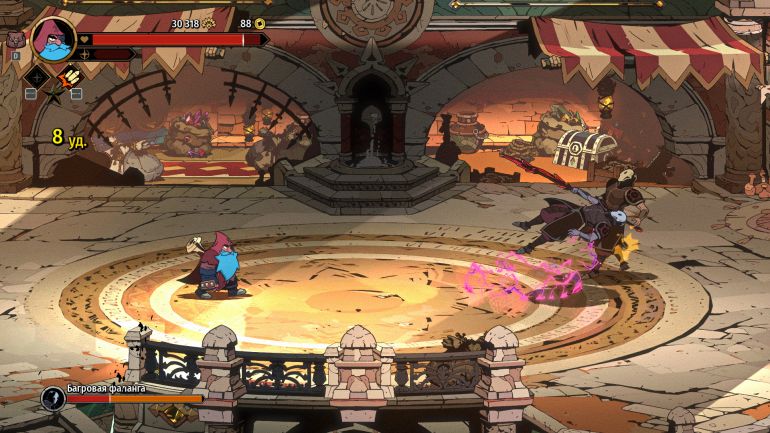
The core gameplay is, of course, a beat ’em up with a touch of hack-and-slash . In other words, you’ll face huge numbers of enemies eager to meet you in fierce combat. Absolum’s fighting can satisfy even the most devoted brawling fans. Each character has two attack types that combine beautifully into combos. You can also hit enemies with a running attack or grab and throw them. Juggling works wonderfully, letting you keep enemies airborne without giving them a chance. It even works on minibosses and story bosses.
if you want to get really damn pedantic
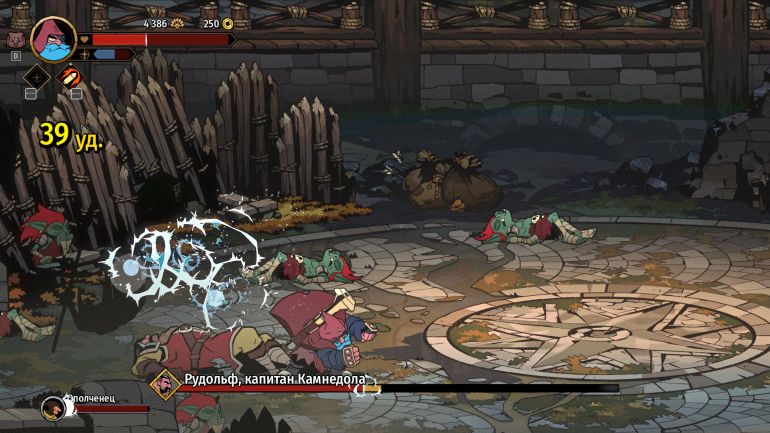
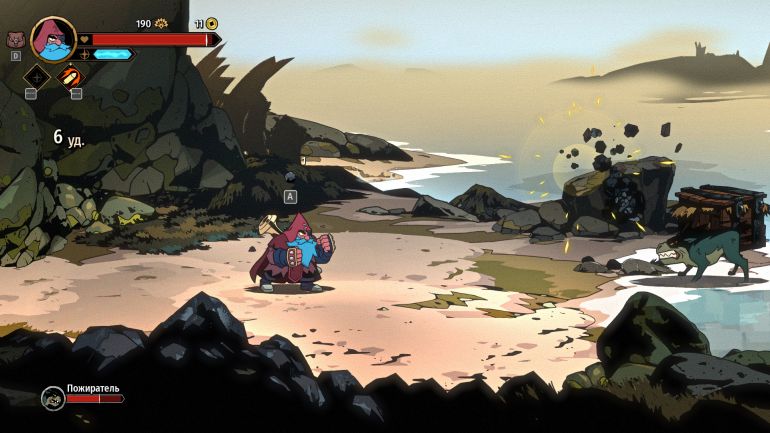
Each hero also has unique abilities, called “arcana.” These consume mana, which builds according to how effectively you fight. Each character has several abilities to unlock as you progress, and you can choose your favorites before starting a new run. Levels often provide generous supplies of throwing weapons that can do serious damage. In some locations, you can hire companions, and there are mounts, just like in Golden Axe.
To defend themselves, heroes can block, parry, or dodge enemy attacks. Dodging allows you to move left and right away from an enemy, as well as up and down. A vertical dodge also lets you counterattack. You have to admit, that’s something you don’t often see in games like this.
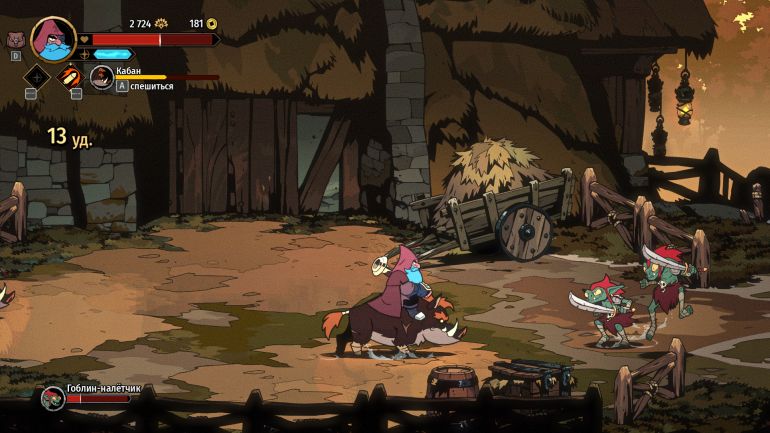
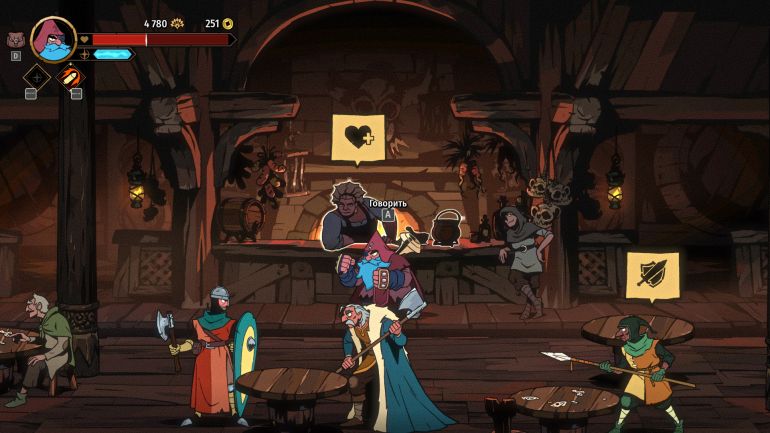
Beyond differences in enemy numbers, placement, and the branches you choose, runs also vary according to the build you put together. The game actually has two types of progression. The first is temporary, the build you assemble during a run. This works by acquiring new rituals, usually awarded for clearing areas and defeating minibosses or bosses. Sometimes you can simply find or even buy them.
Rituals generally attach to particular character actions, adding various elemental bonuses. There are eight elements, ranging from familiar fire and water to more exotic necromancy and thorns. For example, you can choose a ritual that leaves a trail of fire after you dodge, or a wind ritual that creates a small tornado when you jump. Different ritual types can be mixed into surprising combinations. There are plenty of ways to assemble a build, leaving enormous room for imagination. The only downside is that rituals are awarded randomly, making it very difficult to plan your build in advance. Fortunately, you can change the selection on offer, though rerolls cost resources, and each successive one is more expensive.
Your build is also affected by the equipment you acquire. Like rituals, it lasts only for the current run, and death costs you everything you found. Items are broadly divided by rarity, from common to epic. Artifacts provide passive bonuses such as more health, less incoming damage, more outgoing damage, and so on. You can earn them as victory rewards, find them in chests, or buy them from a merchant. There’s also an amusing discount system that slightly lowers prices, a sort of regular-customer coupon.
The second type of progression is permanent and handled at the hub. This, too, can be divided into several parts. First, there are general upgrades that benefit every hero. These are fairly dull, involving gathering magical crystals and giving them to a particular character in exchange for, say, 10 extra health points or greater mount damage. Second, you can strengthen rituals, though this requires different resources spent with another character. Third, individual heroes can be upgraded separately. There isn’t much to agonize over here, since you can eventually purchase every available upgrade.
Like any respectable beat ’em up, Absolum lets you explore Talam alone or with a friend, thanks to a clever co-op system. Its trick is avoiding spoilers for whichever player has spent less time in the game. The two players’ worlds “merge” into a shared one based on the less advanced player’s progress. Both players retain their own upgrades, however, and all progress carries over to single-player.
After fully completing the game, you also unlock a mode with various difficulty modifiers. That further increases replayability, despite a full playthrough already being capable of comfortably exceeding 20 hours. You can give enemies more health and increase their damage, speed, and aggression. There are also more playful settings, such as making enemies leave explosives when they die or preventing them from dropping loot. If the game feels too difficult, you can enable an assist mode in the settings, reducing enemy damage and increasing your own.
including bosses
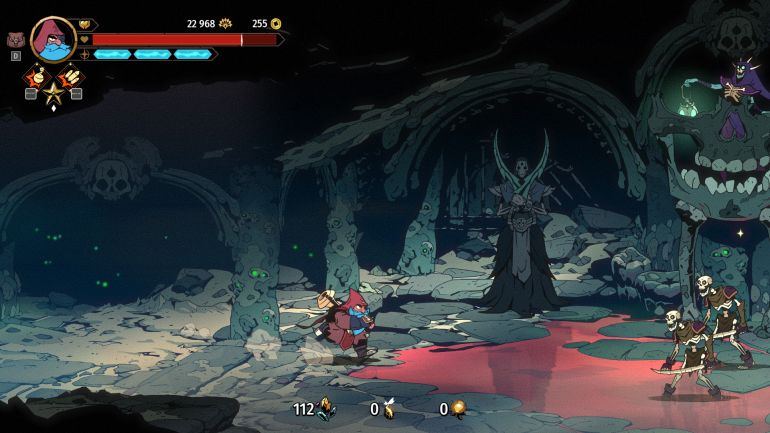
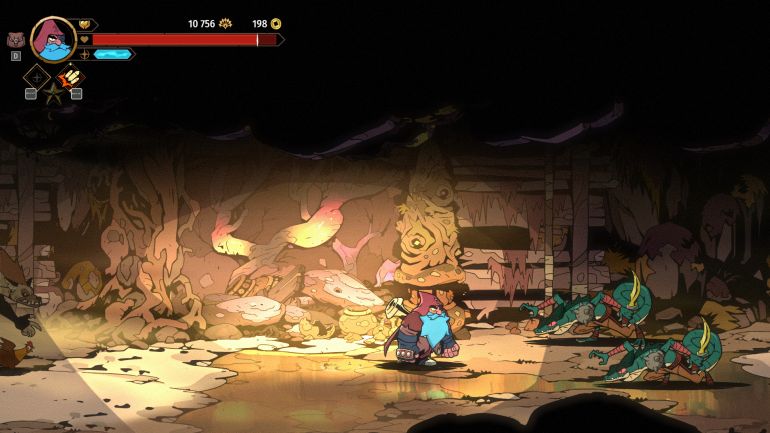
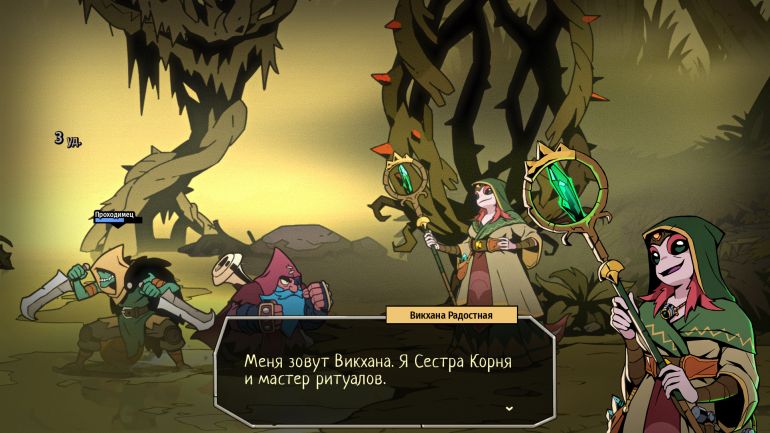
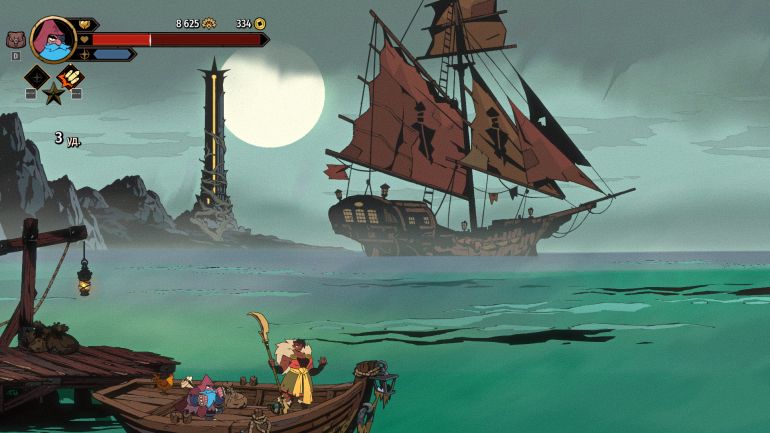
On top of everything else, Absolum confidently shows off excellent visuals and wonderful audio. As mentioned earlier, French animation studio Supamonks deserves the credit for the former. This is its first foray into video games. Previously, it worked exclusively on children’s animated series for French television. An animated series based on Absolum is already in production, too. The game boasts excellent character artwork, fluid cartoon animation, and gorgeous backgrounds that form the extraordinary fantasy world of Talam.
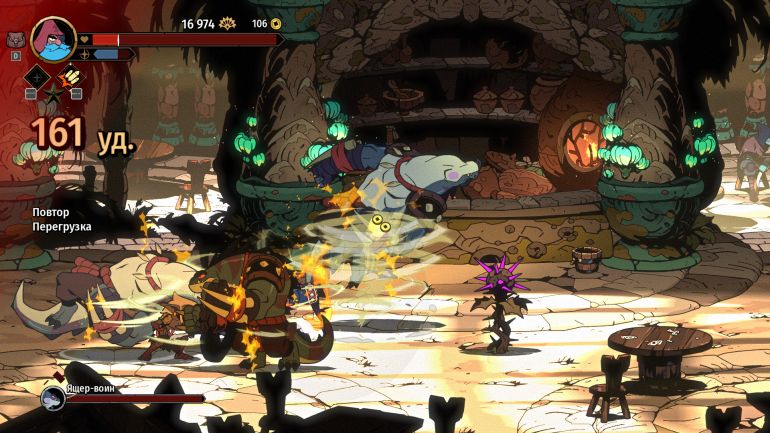
The only complaint is the sheer number of effects that can positively clog the screen with flashes, flickers of energy, and other visual clutter. This generally happens later in a run, when your build contains too many rituals and the number of enemies onscreen gets too high. Finding your bearings in that visual mess becomes rather difficult.
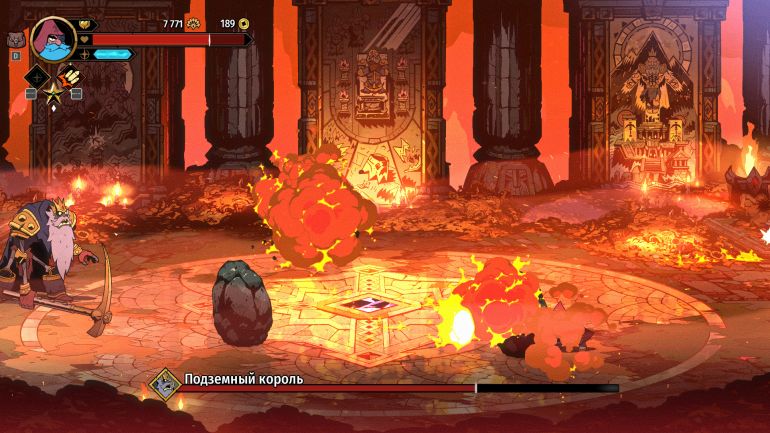
The sound and music are excellent, too. The incredible soundtrack deserves particular attention for how well it complements the game’s visual atmosphere. Lead composer Gareth Coker previously worked on both Ori games and Halo Infinite. Mick Gordon also contributed to the music for Absolum, with just one track, but what a track it is. You’ll recognize it the moment you begin fighting the resurrected dwarf king. There are also compositions by Yuka Kitamura and Motoi Sakuraba, whose music appeared in the Dark Souls series. Quite a collaboration, all told.
Overall, Absolum leaves an extremely pleasant impression. It’s almost surprising how naturally the beat ’em up and roguelite elements fit together. The game excels at everything from combat to its incredible music. It’s unquestionably one of the best games of 2025.
Enjoyed this article? Found it helpful? Support GameSpirit.org and help us create more great content.
Author: Godlike_Goblin for GameSpirit.org


