
Rockstar Games
31.03.2020
An orange logo with a black R and a white star has long been a seal of quality for gamers worldwide. Each new release reinforces the studio's status as the industry's rock stars. Almost everyone who's ever played a video game knows Grand Theft Auto and Red Dead Redemption. Even people far removed from gaming have probably seen memes such as Ah, shit, here we go again!, or the Russian-localized Wasted, Cool the fucking, and Carbon fiber.
The company's story is generally considered to have begun after the first Grand Theft Auto in 1998. That's broadly true, but Grand Theft Auto's own history began a little before Rockstar Games' did. The game that launched one of today's greatest series was developed at DMA Design, founded by David Jones. By the time work on GTA began, DMA already had a reputation as a strong developer. It released side-scrolling shooter Menace in 1988, followed in 1989 by Blood Money* in the same genre. Its hugely successful puzzle game Lemmings arrived in 1991. Several less successful projects followed, including Lemmings expansions and a direct sequel.
*Blood Money is also notable for displaying this phrase when you lost: YOU WERE WASTED! You know what that eventually became.


In 1993, everything changed for DMA Design. Sony Corporation bought its longtime publishing partner Psygnosis, ending their collaboration. David Jones quickly contacted Nintendo, however, and the new partnership worked well. DMA Design made Unirally for Nintendo. The Japanese bosses liked the result and signed the British studio to develop games for the upcoming Nintendo 64.
Around then, the studio began the project that would become the first GTA. David took an initial prototype, Race’n’Chase, to young London publisher BMG Interactive Entertainment. This was a pivotal moment: during that visit to BMG, he met Sam Houser. Their collaboration proved fruitful, and by early 1996 the game was almost ready. But there was a problem: it simply wasn't engaging. DMA urgently reworked it, releasing Grand Theft Auto on November 8, 1997. It immediately became a UK bestseller on both PC and the original PlayStation, selling over a million copies in a year.


While GTA conquered British and worldwide charts, serious trouble brewed at DMA Design. Busy making its dream game, the studio had fallen hopelessly behind on its Nintendo 64 projects. Nintendo terminated the contract and refused to publish its games. That could have been a fatal blow to DMA, but Gremlin Interactive bought the studio and all its debts. Under that publisher, David Jones's company finally released Body Harvest for Nintendo 64.
Meanwhile, publisher BMG, which worked with DMA Design, was also changing. In March 1998, larger publisher Take-Two Interactive bought it, and BMG Interactive ceased to exist. That summer, Take-Two acquired Lincoln-based Spidersoft Limited, immediately renaming it Tarantula Studios. Its main job was making Game Boy Color games, which it did until 2000, without much success.


Buying BMG proved more useful, giving Take-Two the rights to GTA and another DMA game, Space Station Silicon Valley. This was one of the games the developers hadn't finished for Nintendo 64. Under the new publisher, it finally reached the Japanese console and received warm reviews, though sales never approached GTA's. Nevertheless, producer Sam Houser was happy with Space Station Silicon Valley's outcome.
Sam then proposed a reorganization: create a separate label within Take-Two Interactive to make games in GTA's spirit. That became Rockstar Games. The plan included acquiring the original GTA's creators, DMA Design, but negotiations dragged on. Still, Rockstar and Take-Two held the GTA rights and hired DMA to make a full sequel. Alongside this outside commission, DMA was busy with other games. The Edinburgh developers released Wild Metal Country in May 1999, then Tanktics in September with American publisher Interplay.


In May 1999, Alternative Reality Technologies joined Rockstar Games, becoming Rockstar Canada. It worked on two expansions for the original GTA: Grand Theft Auto: London 1969 and Grand Theft Auto: London 1961.
Toward year's end, French publisher Infogrames Entertainment acquired Gremlin Interactive and reorganized it as Infogrames Sheffield House. Immediately afterward, founder David Jones and several other key employees left DMA. It was this reduced team that Take-Two Interactive acquired, but that didn't stop Sam Houser from forging his dream studio.


DMA Design's first release under its new publisher, Rockstar Games, was a sequel to the crime action game Grand Theft Auto: Grand Theft Auto 2. At first glance it looked very similar, but it actually introduced numerous changes. Sales were good, though critics were reluctant to award high scores, mainly noting the unchanged visuals.
Besides GTA 2, the only major release across 1999 and 2000 was arcade racer Midnight Club: Street Racing for PlayStation 2, developed by American Angel Studios, which later joined Rockstar Games. The publisher's other projects were niche releases. Nintendo 64 received Monster Truck Madness 64 and Earthworm Jim 3D. Sony's Japanese console got the very decent skateboarding game Thrasher: Skate and Destroy. Sega Dreamcast received ports of GTA 2 and Wild Metal. Meanwhile, Rockstar Games planned GTA3D and Grand Theft Auto Online. Work on the 3D GTA was already in full swing at DMA, under complete secrecy.


For the rock stars, 2001 began with a PlayStation 2 port of Oni, developed by Rockstar Canada and Tarantula Studios. Two days after Oni's release, Take-Two Interactive acquired Austrian Neo Software Produktions GmbH. The year ended with DMA Design's triumphant GTA III, initially for PlayStation 2. Calling the third Grand Theft Auto revolutionary barely covers it: an enormous open world, near-total freedom, and a proper crime thriller as cool as films by Tarantino and Ritchie. It was an undisputed masterpiece, profoundly influencing the industry and earning Rockstar enormous sums. GTA III's success also owed much to Sam Houser's younger brother, Dan. In December, Take-Two Interactive bought the Max Payne rights and immediately announced a sequel.
Six months later, in 2002, GTA III reached PC. The credited developer was Rockstar North, the renamed DMA Design. Other releases that year included decent beat 'em up State of Emergency, arcade racer The Italian Job, and a port of Smuggler's Run: Warzones for Nintendo's new GameCube, incidentally Rockstar Games' only release for it. Yet the third Grand Theft Auto, despite GTA III's popularity, wasn't 2002's biggest release. October brought Grand Theft Auto: Vice City, which became the year's bestselling game despite its late arrival, scoring only slightly below GTA III.


The year also brought restructuring. In August 2002, Take-Two acquired Barking Dog Studios, renamed it Rockstar Vancouver, and added it to Rockstar Games. Rockstar Canada became Rockstar Toronto to avoid confusion. November brought another addition: Angel Studios, creators of Midtown Madness and Midnight Club, joined as Rockstar San Diego. In January 2003, Austrian Neo Software Produktions GmbH, acquired two years earlier, became Rockstar Vienna. It subsequently ported games to Xbox and PS2. By April 2003, Rockstar San Diego released its first game under the new name: racing simulator Midnight Club II for PlayStation 2.
The next major release was a sequel to noir action game Max Payne, Max Payne 2: The Fall of Max Payne. Again, a Rockstar Games release enjoyed success, glowing reviews, and high scores. In 2003, Rockstar North also finished Manhunt, in development since the mid-1990s. It was undoubtedly Rockstar Games' most controversial game. Manhunt scored well but immediately drew serious criticism for its brutality, reasonably so, especially since many developers themselves worried about its violence. Yet Manhunt also had an attraction: an exceptionally thoughtful stealth system. Combined with the brutality, it made the game not merely good but defining for its generation.


The final notable development of 2003 was the start of stealth-action game Agent at Rockstar San Diego. No information was supplied to the press. As later emerged, development went badly, fostering a negative atmosphere and driving away key employees.The new year began with Rockstar Games porting Manhunt to PC and Xbox. In April, Rockstar Games expanded again. Take-Two bought Möbius Entertainment, immediately renamed it Rockstar Leeds, and tasked it with ports and supporting the main workhorses, Rockstar North and San Diego.
Angel Studios brought another project that fascinated the Houser brothers to Rockstar Games: Red Dead Revolver. Work began in 2000 under Capcom's supervision and funding, but the partnership failed and the project was canceled in 2003. That year, Rockstar Games bought all rights, and in May 2004, Red Dead Revolver arrived on PlayStation 2 and Xbox. Reviews were far below those of GTA III and GTA: Vice City, yet Red Dead Revolver became 2004's bestselling game.


Rockstar kept its tradition of releasing several major hits yearly. In 2004, another Grand Theft Auto arrived: GTA: San Andreas. It was another triumph. Critics and players shouted, “IT'S A MASTERPIECE!” and “Ten out of ten! My God, ten out of ten!” The Houser brothers, like all the rock stars, were swimming in money. It almost immediately became a cult classic, deservedly so.
Rockstar Games couldn't stop, and had no intention of doing so, though it slowed slightly. 2005 began with arcade racer Midnight Club 3: DUB Edition. Experienced from previous entries, Rockstar San Diego delivered again. Licensed cars and motorcycles were added, with consultants from American automotive publication DUB Magazine. Earlier releases Need for Speed: Underground and Need for Speed: Underground 2 encouraged tuning and styling features. Vehicle damage was added, too. Scores were high, fully meeting publisher and developer expectations, even surpassing the legendary Need for Speed: Most Wanted released late that year. Afterward, founder Diego Angel left.


There were no more big-name releases in 2005, but there were two very good games. The beat 'em up The Warriors, based on the 1979 film, faithfully recreated iconic scenes while enriching the story with background events. The Warriors received high scores from gaming publications. Essentially, The Warriors is the only complete game developed by Rockstar Toronto.
Rockstar Games' final 2005 release was another GTA, Grand Theft Auto: Liberty City Stories, for PSP. Rockstar Leeds developed it under Rockstar North's close supervision. It was the series' first handheld game and its first with multiplayer. Was its success ever in doubt? This first portable GTA, Liberty City Stories, became the bestselling PSP game.


Money kept flowing to Rockstar Games and Take-Two, enabling two new studios: Rockstar London and Rockstar Japan. Ironically, in 2006 London had to inherit the Manhunt sequel from the shuttered Rockstar Vienna, closed as a cost-cutting measure.
The first 2006 release was an unusual choice for Rockstar Games: table tennis simulator Rockstar Games Presents Table Tennis. It was notable as the first game using the new R.A.G.E. engine. Creating an engine became necessary after EA acquired the developers of RenderWare, used by many Rockstar Games titles.
Rockstar Advanced Game Engine


In summer 2006, Rockstar Games faced a major scandal. Former Rockstar San Diego employees filed a class-action lawsuit seeking allegedly unpaid overtime. The proceedings lasted three years and ended with nearly $3 million in compensation for the former employees.
Two games closed out 2006. One was the controversial Bully from Rockstar Vancouver, where the younger Houser again proved an excellent writer. This atmospheric game about school bullies was warmly received by players and critics. Initially PS2-only, it used RenderWare. A year later it reached Xbox 360 and Wii using Gamebryo, with PC following another year later. Two weeks after Bully, PSP received Grand Theft Auto: Vice City Stories, developed by Rockstar Leeds and Rockstar North.


The only major 2007 release was Manhunt's sequel, Manhunt 2. Controversial again, it wasn't as significant as the original. Giving it to another studio without experience was strange and, as time showed, unwise. Problems began before release with its age rating. Disputes ran from June through August 2007, ultimately forcing Rockstar to censor the game, undoubtedly affecting its reception. Yet the controversy helped somewhat: excitement around the banned game largely drove the second Manhunt's decent sales. PC players fared better, receiving it without censorship.
2008 began with the purchase of Mad Doc Software, immediately renamed Rockstar New England. Founded in 1999, it had mainly made smaller projects, the biggest being a sequel to the famous RTS, Empire Earth II. The new studio was immediately assigned the remaster Bully: Scholarship Edition, later moving to support larger projects.


October 2008 brought the fourth and, so far, final Midnight Club: Midnight Club: Los Angeles. Rockstar San Diego again developed it, using RAGE for much prettier, more detailed, realistic visuals. High scores followed, though nearly all critics agreed it was unjustifiably difficult. That same October brought rumors of a third Max Payne in development at Rockstar Vancouver.
The year ended with another triumphant GTA return. Fans finally received Grand Theft Auto IV, begun by Rockstar North immediately after San Andreas. Almost all the publisher's internal resources contributed, including Rockstar San Diego, Toronto, Lincoln, and even the new New England. Naturally, it delivered. What else is there to say? Sales were astonishing, glowing reviews kept coming, and players and critics worldwide loved it. That year, Rockstar also remembered an apparently forgotten project, Agent. This time, development went to Rockstar North, newly freed up after GTA IV.


After GTA IV's major launch, Rockstar's studios grew quieter. 2009 featured many ports. The fourth GTA received two substantial story DLCs, Grand Theft Auto IV: The Lost and Damned and Grand Theft Auto: The Ballad of Gay Tony. March brought spin-off Grand Theft Auto: Chinatown Wars to Nintendo DS. Critics welcomed it warmly and awarded high scores, but for some reason people weren't buying.
Late that year, music game Beaterator arrived on PSP. Made with American rapper Timbaland, it was a simple editor where you created compositions using samples.


After a year of development, Rockstar announced Max Payne 3 for late 2009. Rockstar Vancouver took over, later joined by London, Toronto, and Rockstar New England. Even that workforce couldn't meet the deadline. Another scandal over allegedly forced, unpaid overtime brought investigations, resignations, and dismissals, severely slowing new projects. In February 2010, Rockstar Leeds lost two lead developers, Lee Hutchinson and Matt Shepcar, far from the only key staff soon to leave.
Those staffing problems also briefly delayed Red Dead Redemption, from April to May 2010. Its launch generated as much excitement as GTA IV. RDR immediately topped lists, collected several Game of the Year awards, and sold well.


Like the preceding year, 2011 had few major releases. Its sole game was noir detective adventure L.A. Noire, developed by Australian Team Bondi. Sony Computer Entertainment Australia initially funded it in 2004, but all publishing rights and obligations transferred to Rockstar Games in 2006. Rockstar brought in Rockstar North, Rockstar Leeds, Rockstar San Diego, and Rockstar New England to help. The combined effort produced a strong result, praised for cinematic presentation and an interesting story. High sales backed up the critics' scores. That couldn't save Team Bondi from bankruptcy, though. Immediately after L.A. Noire, disputes over poor working conditions erupted, and the small company couldn't survive. It was declared bankrupt in 2011 and bought by Australian film company Kennedy Miller Mitchell.
High-profile departures from Rockstar continued. In 2011, Rockstar Lincoln head Mark Lloyd left, coinciding with the departure of Rockstar London founder and studio head Mark Washbrook.


2012 continued Rockstar Games' new tradition of one major annual release, this time the Max Payne sequel, Max Payne 3. Seriously, development lasted nine years, beginning practically after Max Payne 2. Rockstar Vienna initially handled it, but its 2006 closure left the project in limbo for three years. It moved to Rockstar Vancouver in 2009, later joined by other studios, with Remedy Entertainment consulting. Everyone working on Max Payne 3 was grouped under Rockstar Studios. After repeated delays, it finally launched in May 2012 to glowing reviews, though without major awards. Most criticism concerned its radically changed atmosphere and style.
2012 was no exception for departures from Rockstar. Rockstar Vancouver suffered most: two months after Max Payne 3, it was disbanded and merged into Rockstar Toronto. All employees could relocate to another Rockstar Games studio. In June, Rockstar Leeds lost senior designer Simon Iwaniszak, followed in August by cofounder Gordon Hall.


After Red Dead Redemption, L.A. Noire, and Max Payne 3, each its year's biggest release, 2013 brought Grand Theft Auto V. It became Rockstar Games' largest and most expensive project, involving about a thousand people across all internal studios. Its success speaks for itself: seven years later, it still rarely leaves the sales charts. Across the industry's entire history, GTA V firmly holds second place among the bestselling games ever.
Valuable employees kept leaving Rockstar. In August 2014, Rockstar Leeds lost art director Ian Bowden. After GTA V, the wave reached Rockstar North. In 2016, studio president and producer Leslie Benzies, producer of every GTA since the third, departed. His exit brought a $150 million unpaid-royalties lawsuit, resolved only in 2019.


For the next five years, Rockstar Games' studios mostly reissued games on different platforms while steadily developing Red Dead Redemption 2. In 2016, Rockstar Games opened Bangalore-based Rockstar India, which immediately joined RDR 2's development. The new Red Dead was officially announced in October 2016 for 2017, then delayed twice: first to early 2018, then October 2018. What followed was familiar: universal acclaim, high scores, and awards. At launch, Red Dead Redemption 2 became PSN's second-highest-grossing game, behind only its predecessor GTA V. After RDR 2, the Agent trademark was officially abandoned, ending development. Its page nevertheless remains on Rockstargames.com.
Currently, Red Dead Redemption 2 is Rockstar Games' latest release. The studio hasn't been idle: an online mode followed the main RDR 2. In 2019, it launched its own store and launcher, Rockstar Games Launcher, for buying and running games developed and published by Rockstar Games. The company also became embroiled in another scandal over alleged tax avoidance dating back to 2009. But the biggest shock for Rockstar Games was Dan Houser's departure.


For now, this great corporation's story pauses with three mysterious images posted on its website. Are they teasing a new GTA, another game, or something else entirely? Time will tell.
Developed games

Title: | GTA: Chinatown Wars |
Developer: | Rockstar Games |
Publisher: | General Publisher |
Release: | 17.03.2009 |

Title: | Grand Theft Auto Series |
Developer: | Rockstar Games |
Publisher: | Rockstar Games |
Release: | 28.11.1997 |

Title: | Manhunt Series |
Developer: | Rockstar Games |
Publisher: | Rockstar Games |
Release: | 19.11.2003 |

Title: | Red Dead Series |
Developer: | Rockstar Games |
Publisher: | Rockstar Games |
Release: | 04.05.2004 |

Title: | Bully |
Developer: | Rockstar Games |
Publisher: | Rockstar Games |
Release: | 17.10.2006 |
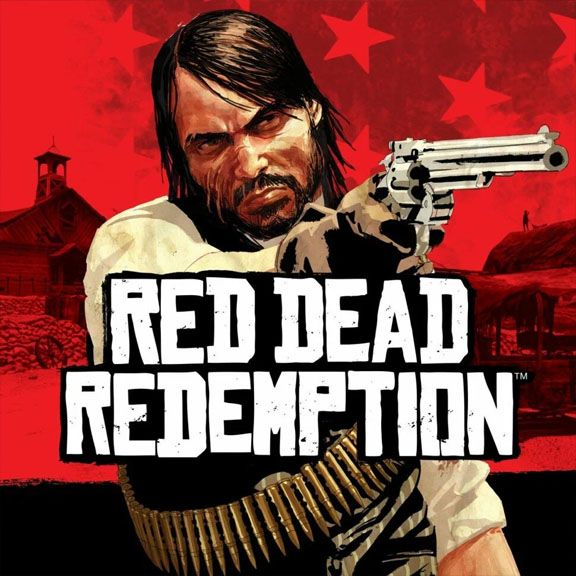
Title: | Red Dead Redemption (Remastered) |
Developer: | Rockstar Games |
Publisher: | Rockstar Games |
Release: | 29.10.2024 |


